


Fearless leadership story.
Your Review
Fearless leadership story.
LBJ's childhood fear of his father's failure shaped his ruthless yet empathetic pursuit of power, proving that trauma can fuel a leader's ability to lift marginalized communities out of poverty through strategic networking and unwavering ambition, though the constant tension between his manipulative tactics and genuine care for his constituents makes his character complex and difficult to fully admire despite the tangible results he achieved for rural Texans who desperately needed electricity and jobs during the Great Depression when his background as a struggling Hill Country kid made him uniquely understand their hardships better than any elite politician could have possibly imagined or grasped without that personal experience of powerlessness that defined every interaction he had throughout his entire political career.

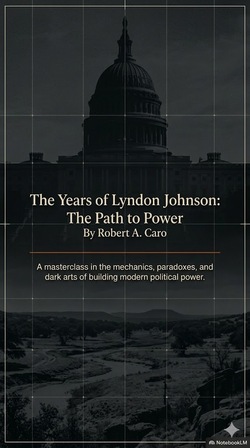
This book brilliantly explains how LBJ's childhood trauma of watching his father lose everything and fall into poverty drove his entire political career. Caro shows how the raw fear of powerlessness made Lyndon B. Johnson willing to bend any rule, manipulate allies, or dominate colleagues just to ensure he never felt helpless again. While his tactics were often ruthless and unethical, the narrative clearly connects his empathy for poor farmers to this deep-seated need for control, proving that his drive to serve was rooted in a desperate desire to escape the fate he saw in his own family's decline.

This book brilliantly shows how LBJ's childhood fear of powerlessness drove every ruthless choice he made while still helping the poor.


This book shows how childhood trauma shaped a leader's complex path to power.

Fascinating look at how fear of powerlessness shaped LBJ's ruthless rise to the top.

The book feels heavy but worth it if you want to understand how fear shapes a leader's choices.

The way Caro connects LBJ's childhood fear of powerlessness to his ruthless political tactics is brilliant. It shows how his empathy for the Hill Country farmers wasn't fake, but rooted in his own trauma of watching his father lose everything. This deep psychological insight makes his rise from a dusty kid to a master politician feel both tragic and inevitable. The book perfectly balances his manipulation of rules with his genuine desire to bring electricity to poor families. It forces you to question if his methods were necessary to achieve the good he did for so many people.

Caro shows how LBJ's childhood fear drove his ruthless tactics yet kept him fighting for the poor he once knew.

Caro brilliantly shows how LBJ's childhood fear of poverty drove his ruthless tactics, yet he never forgot to use that power to bring electricity to the struggling farmers in the Hill Country.

LBJ's ruthless tactics sometimes feel too calculated for my taste.

LBJ's fear of powerlessness drives his ruthless climb while he still fights for the poor.

Caro explains how LBJ shifted from a liberal to a pragmatist, proving that holding power is necessary to deliver results for the poor even if it means compromising ideals.

The story of how LBJ turned his rejection into a network of loyal allies shows that empathy and ambition can coexist when used to help people rather than just dominate them.

LBJ's ruthless tactics to win while helping his Hill Country neighbors show that power and empathy can coexist, though his shift to fund the HUAC and distance himself from Roosevelt's progressive policies reveals a painful truth that without holding onto power through pragmatism and adapting to conservative Texas voters rather than sticking rigidly to New Deal ideals, he could never deliver the rural electrification and NYA jobs that truly transformed lives for the poor families who suffered alongside him in the dust and despair of the Texas Hill Country during the Depression.

The detailed account of LBJ's early networking skills and how he built a machine of allies to protect his family from poverty makes his rise feel both inevitable and earned.

The book explores how LBJ's childhood trauma shaped his ruthless yet empathetic leadership style, showing that his fear of being powerless like his father fueled both his manipulation of political rules and his genuine desire to bring electricity and jobs to the Hill Country farmers he knew suffered just like his family, making his complex rise from a rejected college student to a powerful senator feel deeply personal and grounded in the harsh reality of the Great Depression rather than just abstract political ambition.
Caro shows how LBJ's childhood trauma shaped his ruthless tactics, yet his genuine empathy for Hill Country farmers kept him focused on delivering real results like rural electrification, proving that power works best when paired with a desire to lift others up rather than just dominate them for personal gain or survival.

This volume perfectly explains why LBJ could be so manipulative yet still deliver real results for poor Texans, blending his personal trauma with a genuine desire to lift others up.

LBJ's childhood trauma explains his drive.