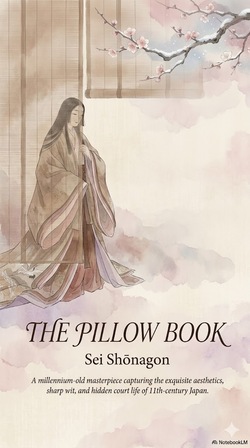
Sei Shonagon's diary proves that joy hides in tiny, messy moments we usually ignore, like a sneeze turning into an inside joke or a tearful dog being pardoned by an emperor. Her sharp wit cuts through the rigid Heian court formality to reveal how human connection thrives on unscripted banter and playful pranks rather than strict rituals. The story of the fake cherry tree stolen by the regent shows how even artificial beauty feels real when shared with friends, while her lists of annoying things like the pretentious monk falling asleep during exorcisms remind us that authenticity matters more than performance. Reading this feels like sitting beside a witty friend gossiping about daily life, proving that we don't need grand achievements to feel alive. Instead of chasing productivity, we should notice the warmth of a fire, the sound of rain, or a silly joke that breaks the tension. Sei's vulnerability when she panicked over poetry or hid behind screens makes her relatable, showing that even in a high-stakes palace, small gestures like a single petal sent in a letter could heal deep loneliness. This ancient text acts as a mirror for our modern burnout, teaching us that the most meaningful connections come from the messy, unplanned details we share with others. It is a gentle reminder to slow down and find magic in the ordinary, whether it's a dog weeping after being beaten or a snow pile melting because of a prank. Ultimately, her life teaches us that joy isn't curated; it's found in the cracks of protocol where real humanity shines through.