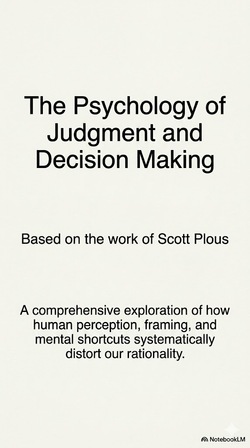

Plous explains how our brains use shortcuts that make us see things wrong, like when we only notice news that agrees with us. The experiment about the Beirut massacre video is a perfect example of this. Even though three groups watched the exact same footage, their preexisting beliefs made them see completely different stories. One group thought the coverage was unfair to Israel, another thought it favored Israel, and the neutral students saw it as balanced. This shows that our minds filter information to fit what we already believe, rather than looking at the facts objectively. It makes me realize how often I might be falling into the same trap without even noticing, especially when reading news or arguing with friends. Understanding this helps me question my own reactions instead of just accepting what I see or hear immediately. It is a powerful reminder that being smart doesn't mean we are immune to these hidden biases that shape our daily decisions and opinions.