


The Seven Madmen: Reader Reviews & Ratings

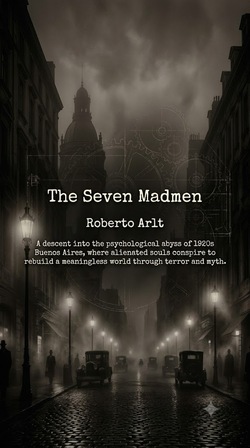
The Seven Madmen
Loading…

The Seven Madmen

Roberto Arlt

Write a Review

Your Review

0/500

Other reviews

37 total
Knox

Arlt shows how poverty drives people mad, not their own flaws. Augusto Erdosain is a heartbreaking character who steals just to survive, then joins a violent secret society because being seen matters more than being good. The story feels urgent today because it mirrors our gig economy struggles where workers feel disposable and invisible. Erdosain's fantasies of wealth and his eventual murder of Balzute show how desperation twists human behavior. The book doesn't judge the madmen but explains their madness as a rational response to a cruel system. It forces us to see the quiet desperation around us and question why society ignores the vulnerable until they break. This gritty novel is essential reading for anyone who wants to understand the cost of invisibility and the thin line between survival and madness in a world that doesn't care if you live or die.


Tonya

This book captures the crushing weight of poverty and invisibility so rawly that it feels personal, not just historical.

Elias

Raw and gritty. Erdosain feels invisible. Hard to read but true.

Collin

This book feels like a mirror for my own invisible life right now.

Zelda

The story of Augusto Erdosain shows how poverty forces ordinary people into madness when society offers no escape from humiliation and invisibility, making the characters' delusions feel like a tragic survival mechanism rather than simple insanity. Reading about his theft and eventual murder reveals that their violence is a desperate reaction to being treated as disposable ghosts by a system that refuses to see them, proving that what we call madness is often just a rational response to having nothing left to lose in a world that has already written off their existence and dignity.

Cory

This book captures the quiet desperation of poverty so rawly that it feels personal, showing how invisibility drives people to madness when society ignores their suffering.

Bridget

This book made me feel invisible and desperate like the main character really struggled to survive.

Claudia

Watching Erdosain wear the new suit feels hollow because it's just a costume covering a killer, proving that false power from a corrupt system never brings real dignity or peace.

Xavier99

Arlt captures the invisible struggle of the working class with brutal honesty, showing how systemic neglect forces ordinary people into madness not as a flaw but as a desperate survival mechanism when society refuses to see them, turning their delusions into a twisted mirror of a world that offers no escape from humiliation and leaves them with nothing but the quiet rage of being forgotten while the rich sleep soundly in their ignorance of the pain brewing right beneath their feet.

Xander

The pharmacist Elgarta believes Jesus told him roulette secrets, which highlights how hope becomes twisted into madness when the only way out of poverty seems to be through a lie.

Athena

A raw look at invisible poverty.

Orlando

Arawlt's raw style really hits hard. Seeing Augusto as a victim of the system instead of a villain makes his desperation feel incredibly real and painful to read.

Kim88

Arlt writes about Augusto's invisibility so vividly that you feel the crushing weight of being ignored by society every single day, making the character's eventual turn toward violence feel less like madness and more like a tragic, logical survival mechanism for someone who has been erased by the system around him, because when you are treated like nothing for so long, doing something terrible becomes the only way to prove that you actually exist as a person who matters to anyone else, and while the story is incredibly dark and uncomfortable to read, it forces us to confront our own complicity in ignoring the struggling people living in our own cities today, showing that what we call insanity is often just a rational response to a world that offers no escape from shame and hunger for those at the bottom of the economic ladder. The writing style is gritty and unpolished, which adds to the authenticity of the struggle, and the way the author connects Erdosain's personal failures to the broader failures of capitalism makes this novel feel urgent and relevant long after you have closed the last page, serving as a powerful reminder that madness is often just a symptom of a society that refuses to care for its most vulnerable members. I found myself questioning my own assumptions about success and failure, realizing that the line between dignity and despair is much thinner than we like to admit, and that sometimes the most radical act a person can take is simply to demand to be seen by the world that has turned its back on them.

Caiden

Arlt's raw portrayal of Erdosain's invisibility perfectly mirrors today's gig economy desperation where low-wage workers feel completely erased by society despite their daily struggles.

Taylor

Arlt exposes how systemic poverty forces ordinary people into madness, making Erdosain's descent from a humble clerk to a murderer feel tragically inevitable rather than just a random crime.

Lester

This book perfectly captures the quiet desperation of invisible workers today.

Claudia01

This story feels incredibly real and raw. It perfectly captures how poverty makes ordinary people feel invisible and desperate every single day.

Emmanuel

Too bleak

Guillermo

Arlt paints poverty so raw it hurts, showing how invisibility drives men to madness when society offers no escape or dignity for the forgotten.

Earnest

Erdosain’s decision to steal money for survival shows how poverty forces people into impossible choices, making his eventual violence feel tragically understandable rather than simply evil.