

The Third Chimpanzee: Reader Reviews & Ratings

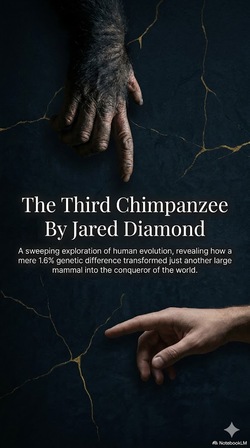
The Third Chimpanzee
Loading…

The Third Chimpanzee

Jared Diamond

Write a Review

Your Review

0/500

Other reviews

25 total
April95

Reading this changed how I view human nature. Jared Diamond dismantles the myth that we are fundamentally separate from other animals by revealing our 98% genetic match with chimpanzees. He brilliantly connects our primate instincts, like hidden ovulation and menopause, to our modern behaviors. The section on agricultural trade-offs was particularly eye-opening, showing how farming gave us civilization but cost us health and equality. While the geographic determinism argument feels a bit heavy, the overall message about balancing short-term gains with long-term survival is vital for understanding our current ecological crisis. It challenges the idea of linear progress and forces us to accept that every evolutionary step involves hidden costs.


Harvey

The idea that agriculture improved our lives but actually made us shorter and sicker was a shocking and disturbing revelation for me.

Bailey

Reading about hidden ovulation theories made me rethink how evolution shapes our most intimate behaviors and complex social bonds in ways I never expected.

Maddie

The book brilliantly explains how our primate past shapes modern behavior through evolutionary trade-offs and geographic luck, making complex biological concepts accessible and urgent for understanding why civilizations rise and fall based on resource limits rather than innate superiority, challenging the myth that humans are separate from animals.

Anthony01

The explanation of how the Great Leap Forward changed our lives through language and tools is fascinating and clear.

Ken

Diamond shows humans are just chimps.

Craig

Diamond shows how agriculture gave us cities but cost us health and equality, proving that every evolutionary gain requires a painful trade-off that still shapes our modern struggles with disease and social gaps today.

Vera

Reading about how geography determined the speed of civilization growth in Eurasia versus Australia was a mind-opening experience.

Anabel

Diamond reveals how our primate instincts drive modern behavior and societal choices, making us understand that we are not separate from animals but share deep biological roots, which explains our unique evolution through language and complex social structures that shaped our history. This insight challenges the myth of human uniqueness while offering a realistic view of our place in nature.

Dominique2

The idea that agriculture made us shorter and sicker changes how I see progress forever.

Fred

Diamond's argument that agriculture improved our lives but also caused health decline and inequality is a powerful insight.

Amanda23

The book explains how agriculture gave us cities but made us shorter and sicker than hunter gatherers did.

Daniel

Understanding how trade-offs in evolution explain traits like menopause helped me see human nature in a new light.

Leonardo

Diamond shows how our primate past shapes today.

Kristi

The argument that agriculture improved our lives while destroying our health and equality feels too blunt and ignores how much civilization saved us from chaos and starvation during harsh winters when hunting was impossible and resources were scarce so we needed stable food sources to survive and thrive as a species.

Xin

Diamond shows humans are just chimps with 2% different DNA.

Winston66

The section on hidden ovulation and menopause as evolutionary trade-offs challenged my understanding of human biology deeply.

Curt

Diamond proves we are just third chimpanzees.

Randall

The examples of ancient collapses felt a bit repetitive and less engaging than the scientific explanations earlier in the book.

Cade

A must read for anyone curious about why we are who we are today.