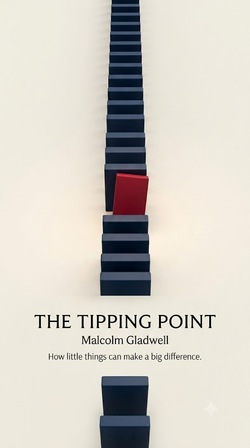
Gladwell argues trends need specific people, sticky messages, and the right environment to explode. Using Airwalk's rise and fall plus the broken windows theory, he shows how skipping one factor kills a movement. While his digital age updates on algorithms and micro-influencers feel relevant today, I worry he relies too much on cherry-picked success stories like Paul Revere or the subway cleanup. He rarely discusses why some products with all three ingredients still fail, or how systemic issues in marginalized communities override these rules entirely. His framework works well for short-term viral moments like a TikTok dance or a product launch, but it struggles to explain slow, deep societal shifts like gender equality or racial justice that take decades of incremental change rather than a single tipping point. The book is a great reminder to look past our bias for mass appeal and focus on small, targeted tweaks, yet I found the lack of large-scale data on prediction limits frustrating. Ultimately, it's a useful playbook for local initiatives and marketing, but not a universal theory for all cultural change.