



The section on the Lion-Man really helps explain why we feel scared of AI.
Your Review
The section on the Lion-Man really helps explain why we feel scared of AI.

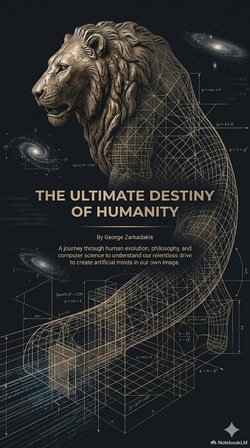
Zarkadakls links ancient Lion-Man myths to modern AI fears, showing how our brain tricks us into seeing human thoughts in machines.

Zarkadakls uses the Lion-Man to explain why we fear AI, making ancient history feel surprisingly relevant to today's anxiety.

The explanation of the Lion-Man sculpture perfectly shows how our ancient brain still drives our fear of robots today.

Finally a book that explains AI clearly without using scary sci-fi stories or complex technical jargon that confuses readers.

The author argues that current AI lacks true consciousness because it does not have a physical body to learn from real world experiences.

The Lion-Man story helped me understand why I feel so scared of AI thinking like a human.

The Lion-Man example made me realize why I feel scared when my phone acts too human. It feels creepy to think machines might have souls. This book explains that fear perfectly. I finally understand why AI feels so threatening sometimes. It is about our ancient brain, not just robots. The science part about genes was interesting too. I will read more about this topic soon.

This book helped me see why I fear AI, connecting ancient human history to modern tech worries.

The link between the Lion-Man sculpture and our modern fear of AI felt surprisingly clear, helping me understand why we project human feelings onto machines.
I felt relieved learning that our fear of AI comes from ancient instincts like anthropomorphism, which helps explain why we project human feelings onto machines.

The connection between the Lion-Man and our modern fear of AI was a shocking and powerful revelation that completely changed how I see the technology around me.

The section on the Lion-Man really changed how I see our ancient roots.

I struggled to accept that our fear of AI is just an ancient instinct to see human minds in animals, which makes the Lion-Man story feel surprisingly relevant.
The part about the Lion-Man really made me rethink how our ancient urge to see human traits in animals shapes our fear of AI today.

I found the section on metaphors fascinating because it explains why we think AI has a soul when it is just code running on hardware.

The idea that ancient myths explain our fear of AI is a fascinating angle that makes the whole book feel surprisingly relevant today.

The idea that ancient human cognition drives our modern AI fears is a fascinating perspective.

I found the part about the Lion-Man sculpture fascinating because it explains why we feel scared of AI, but I still worry if we can ever truly create a conscious machine without just copying human traits.