

The Unwomanly Face of War: Reader Reviews & Ratings

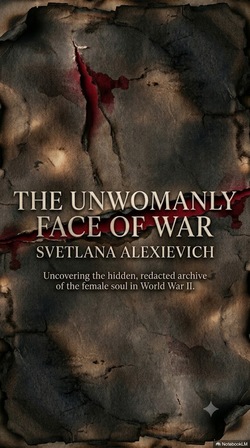
The Unwomanly Face of War
Loading…

The Unwomanly Face of War

Svetlana Alexievich

Write a Review

Your Review

0/500

Other reviews

33 total
Dominic

Alexievich captures the quiet, unspoken trauma of Soviet women who fought in WWII, revealing how society erased their identities after the war while their internal scars remained, making this oral history a vital, heartbreaking reminder that heroism often comes with a price society refuses to acknowledge, forcing us to listen to voices silenced by official narratives.


Zack

Alexievich gives voice to women erased by history, showing how their trauma and small acts of femininity survived the war's dehumanization, making this a necessary read for understanding the true human cost beyond battle statistics.

Charlotte

The way Alexievich captures the moral weight of killing a pony to feed starving soldiers is devastating. It reveals that survival in war isn't just about bravery, but about carrying a crushing guilt that never leaves, even when you live to tell the tale.

Gregg23

Maria hiding her earrings under her uniform felt like a quiet rebellion against the war erasing her identity as a woman.

Delia66

The contrast between Maria's fierce fighting and her later fear of fireworks is very moving.

Devon

Hearing Maria describe hiding her earrings felt like witnessing a quiet, desperate rebellion against a world that only saw her as a soldier.

Delia

Maria hiding her earrings to feel like a woman again after four years in a uniform was a heartbreaking detail that made me realize how hard it was to reclaim her identity after the war.

Clayton9

The book shows how women fought hard but society made them feel broken after the war ended.

Calvin

The book shows how women fought while keeping their humanity alive through tiny, secret acts like hiding earrings or wearing a red scarf, even when society called them unfeminine or damaged. Alexievich listens to their messy voices instead of forcing them into heroic myths, revealing the deep guilt over killing a pony and the quiet terror of returning home to a world that refused to see them as soldiers. These stories prove that war doesn't just kill bodies; it breaks souls, leaving women with scars that medals cannot heal and a loneliness that never truly ends after the guns stop firing.

Lynn88

The story of killing a pony to feed the unit reveals a guilt that medals cannot fix.

Alina08

Listening to these women speak feels like witnessing a hidden history that needs to be heard.

Augusta7

Maria's story about hiding earrings to feel like a woman again shows how small acts of femininity were lifelines in the chaos of war.

Rayna

Maria hiding earrings under her uniform feels like a quiet rebellion against the war trying to erase her femininity. It shows how they kept their humanity alive through tiny, deliberate acts when everything else was falling apart, making the story deeply moving.

Rodney8

Maria hiding her earrings feels like a quiet but powerful act of keeping her humanity alive when the world tries to erase it.

Amber

Alexievich gives voice to silenced women whose trauma never faded despite official narratives claiming victory.

Luke

Natalia enlisting just to stop her father from crying shows a love stronger than duty.

Les

Maria's quiet courage breaks my heart every time.

Blake66

The stories of women forced to kill yet keep their femininity reveal the messy truth of war where official histories erase guilt, trauma, and the duality of being both fierce soldiers and fragile women who still needed beauty, connection, and normalcy even while hiding medals or eating hard rations in mud because the war tried to strip their identity but small acts of resistance like wearing a red scarf or stashing earrings proved the human spirit refuses to be completely broken even when society labeled them unfeminine or damaged goods for surviving with scars that society forced them to hide while men were hailed as heroes and women were told to go back to being wives without a trace of the soldiers they had become after years of fighting leading and surviving in a war that never meant for them but gave them a sense of agency they had never known before until the state demanded they forget their wartime selves to fit back into narrow sanitized roles that did not fit the complex contradictory lives they had lived.

Kendra7

The detail about the red scarf getting her killed is heartbreaking and hard to read.

Alexa95

Vera leaving her acting career to follow her boyfriend feels like a tragic but real choice.