


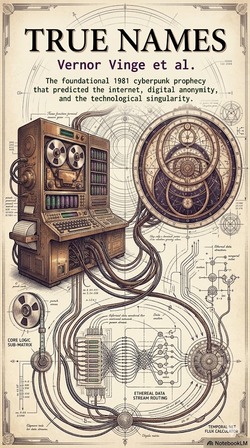
This book feels like it was written yesterday because it predicts today's surveillance and data privacy issues so accurately.
Your Review
This book feels like it was written yesterday because it predicts today's surveillance and data privacy issues so accurately.

While the plot about Slippery Jim is thrilling, I found the essay section on copyright laws and the Softlock system a bit too academic for my taste, though the real-world examples of students facing jail for sharing books did make the stakes feel very personal and urgent.
Scary and perfect for our times.

The book connects 1980s cyberpunk ideas to today's data mining and surveillance fears perfectly. The essays on crypto anarchism and copyright laws really explain how encryption fights power, while the story of Roger hiding his true name shows why anonymity matters for privacy against government tracking and corporate control.
The book's blend of fiction and essays makes its points about surveillance and copyright feel urgent and relevant today, not just like a sci-fi story from decades ago.
This book brilliantly connects Roger Pollack's fictional struggle against government agents to the very real battles we face today over data mining and mass surveillance. The included essays on crypto anarchism and the Habitat project explain how these concepts evolved from sci-fi ideas into the tools and virtual worlds we use now, proving that Vinge wasn't just predicting technology but anticipating the human need for autonomy against institutional control in an increasingly monitored digital landscape.
Great prescient warning about losing online anonymity to government control.
The concept of the singularity where wizards merge with the global network to become gods is cool, but the ethical dilemma of choosing to surrender power feels less exciting than the action scenes earlier in the book.
The story of Roger losing his anonymity when agents found his house felt very relevant given current doxxing issues, even if the ending where he surrenders his power felt a bit unsatisfying compared to the rest of the tension.
The idea that revealing your true name destroys your power online is a terrifying and brilliant concept that explains why we hide behind usernames and encrypted messaging apps today.

The story of Slippery Jim losing his anonymity hit hard, showing how easily digital privacy can be crushed by government overreach. It feels less like fiction and more like a warning letter written decades ago, because reading about the 'Other Plane' where wizards hide their true names mirrors our own struggle with usernames and encrypted chats today. The climax where Roger and Elsie gain godlike power over global networks then choose to surrender is terrifying; it forces us to ask if we have the moral maturity to handle such technology without becoming tyrants ourselves. While the copyright section about Dan Halbert and the illegal sharing of textbooks feels dystopian, it perfectly predicted how DRM and softlock systems now restrict access to knowledge, making the book essential reading for anyone worried about who controls our information. Ultimately, the essay collection on crypto anarchism proves that Vinge didn't just imagine a future but inspired real movements like the Cypherpunks, turning sci-fi concepts into tools we use now to fight for digital freedom and privacy against corporate and state surveillance.}

Vinge perfectly predicted our digital surveillance era. The blend of Slippery Jim's story with real essays on crypto anarchism and copyright makes this essential reading for understanding how power operates in the networked world we live in today.
Too much focus on essays.
Vinge predicts our data privacy nightmare perfectly. The story about Slippery Jim losing power when exposed feels terrifyingly real today. Reading the essays on crypto anarchism and copyright laws alongside the fiction made me understand how digital tools can either empower us or enslave us. It shows how encryption and anonymous identities were once radical ideas that now protect us, while copyright laws have become weapons to restrict knowledge access. The climax where wizards choose to surrender godlike power instead of ruling the world raises deep ethical questions about technology and responsibility that resonate now more than ever. It is a powerful reminder that our digital choices define our future freedom.

Reading the section on copyright laws made me worry about my own library access, as the story shows how expensive books can become and how students might fail if they can't afford textbooks. The character Dan Halbert faces a terrifying choice where sharing a computer to help a friend could lead to jail, mirroring real cases like Dmitry Sklyarov's arrest for exposing Adobe encryption flaws. This part of the book really highlights how strict copyright rules can stifle learning and innovation, turning knowledge into a commodity only the wealthy can buy. It's a powerful warning about the dangers of letting corporations control access to information instead of treating books as a public good for everyone to use freely.
The dystopian timeline where copyright laws lock knowledge behind expensive fees and criminalize debugging tools felt incredibly plausible when I remembered the Sklyarov case, making the warning about using intellectual property as a tool of oppression very clear.

A must read for understanding digital privacy.

Felt like reading the future of our digital lives today.
The idea that revealing your true name means losing all power is chilling and feels very real now.
Reading the section on the Cypherpunks and how they used tools like PGP encryption inspired by this book showed me that fiction can actually drive real political movements to protect privacy rights.