


Urban and Rural China: Reader Reviews & Ratings

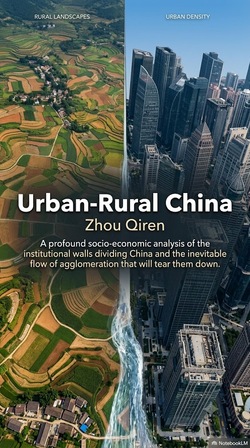
Urban and Rural China
Loading…

Urban and Rural China

Qiren Zhou

Write a Review

Your Review

0/500

Other reviews

31 total
Eddie

The story of the Gansu farmer really hit home. He loves the quiet rural life for himself but wants his son to leave for the city for a better future. This quiet paradox perfectly captures the deep pull of urban opportunity that even those who romanticize country living can't ignore when thinking about their children.


Gina

The contrast between Han Han's critique of cities and his own refusal to leave them really highlighted the book's point about urban pull.

Lynn88

Zhou explains how Soviet-style policies locked farmers to the land, creating a divide that still shapes China today.

Marc

The story of the Gansu farmer who loves rural life but wants his son to move to the city perfectly captures the quiet paradox of China's urbanization.

Rudy07

I found the story of the Gansu farmer very moving. He loves rural life but wants his son to go to the city for a better job. It shows how hard China is to balance tradition with opportunity for the next generation.

Elaine

Zhou shows how early Soviet policies locked farmers to land to fund factories, creating today's divide.

Darcy

The explanation of how Soviet policies locked farmers to the land while factories grew is really clear and helps explain why the gap exists today.

Marvin

Zhou explains how strict policies made cities grow slow while factories boomed. This gap caused big inequality between rich urban areas and poor rural villages.

Jenna

The story of the Gansu farmer who wants his son to leave the village for city jobs really hit home for me regarding opportunity.

Cory

Credible sources and careful framing.

Devon08

The story of the Gansu farmer wanting his son to leave for the city perfectly captures that quiet paradox where rural life is cherished but seen as a temporary stop for the next generation.

August

The part about how early policies tied farmers to the land to fund factories really explains why the wealth gap exists today.

Vanessa

The story of the Gansu farmer who loves rural life but wants his son to move to the city perfectly captures the deep paradox in China.

Winston

The book shows how cities promised better lives but often made them worse for workers.

Andrew86

This book makes sense of why cities in China grew so slowly despite huge industrial output, explaining the role of hukou and land rules.

Benedict7

The explanation of how early Soviet-style policies locked farmers to land really clarified why industrialization happened so fast while cities stayed small.

David

The story of the Gansu farmer who wants his son to leave for the city really highlights the deep conflict between rural life and the need for opportunity.

Edwin23

Interesting view on city life.

Debra3

Zhou explains how Soviet-style policies locked farmers to land, causing China's factories to boom while cities stayed too small for workers.

Ian

The book explains how strict migration rules and land policies created a deep divide between rich cities and poor rural areas, preventing millions of workers from fully enjoying the benefits of China's massive industrial growth and keeping them locked in a second-class status despite working hard in urban factories.