
WeChat Channels IP: Complete Chapter-by-Chapter Summary
Welcome to the world of WeChat Channels, where the rules of personal branding are being rewritten. Today, we're diving into a strategic playbook designed to transform your personal expertise into a powerful digital legacy and tangible commercial value.
In an era flooded with content creators, the real opportunity isn't just about being online; it's about becoming a Vertical Brand Expert. This means moving away from generic, scattered content and deeply specializing in a specific niche. Think of it as the difference between a generalist and a specialist: while everyone has an opinion, true professionals offer unique solutions that build instant trust with strangers.
WeChat Channels offers a unique advantage here. Unlike other platforms that rely purely on algorithms, WeChat leverages its massive social ecosystem of over 1200 million users. It acts as a powerful amplifier, allowing your content to spread through trusted social connections. When your friends engage with your content, it reaches their friends, creating a ripple effect of "social endorsement" that builds trust ten times faster than traditional channels.
But having the platform isn't enough; you need a strategy. This guide outlines how to position yourself as an authority in your field, craft content that resonates deeply with your audience, and ultimately monetize your influence. Whether you're looking to build a personal brand, launch a knowledge-based business, or simply establish yourself as a thought leader, we'll walk you through the exact steps to turn your skills into a thriving digital asset. Let's get started.

Let's dive into the core shift that defines the future of content: the move from an **Algorithmic** model to a **Social-First** one. As shown on your slide, this isn't just a minor update; it's a complete paradigm shift in how we build influence.
On the left, you see the traditional **Entertainment IP** approach. Here, traffic is purely algorithmic, pushing content directly to users like a broadcaster. The user state is passive—they are just seeking entertainment, scrolling endlessly. Trust building is incredibly slow because it relies entirely on massive view counts and vague metrics. Consequently, monetization is limited to impulse buys and low-ticket goods. You can have millions of views, but without a real connection, converting those viewers into loyal customers is nearly impossible.
Now, look at the right side: the **Social IP** model. This is the power of the "Social Graph." Instead of cold algorithms, we use **acquaintance recommendations**. Traffic distribution here is a mix of your social network and smart algorithms, meaning your friends validate your content to their friends. This creates a "10x faster" trust-building cycle. Why? Because trust comes from strong ties and friends' likes, not just a play button. The user state changes from passive consumption to being **conversational, learning, and purpose-driven**. People aren't just watching; they are engaging.
This shift fundamentally changes your monetization path. While the algorithmic model pushes low-ticket items, the social model unlocks **high-ticket services and deep knowledge products**. When people trust you personally, they are willing to invest in your expertise, your coaching, or your premium courses.
So, the lesson is clear: Don't just chase the algorithm. Build a social graph. Leverage the trust of your network to create a deeper, more valuable connection with your audience. That is how you move from being a content creator to becoming a trusted industry expert.

The IP Flywheel isn't just a buzzword; it's the compounding engine that turns a casual creator into a digital powerhouse. As the slide illustrates, building a personal brand isn't a straight line—it's a self-reinforcing loop where every phase feeds the next.
It all starts with **Positioning**. You need to define a high-value vertical and craft a persona so magnetic that people stop scrolling. Next comes **Content**. You aren't just posting videos; you're engineering vertical-specific content designed to trigger immediate social resonance. This is where the magic happens.
That resonance builds a **Community**. By leveraging the unique social fission of the WeChat ecosystem, you transform passive viewers into a highly sticky private network. And finally, that trust unlocks **Monetization**. You capture trapped value through ecosystem closed-loops, creating scalable revenue that feels less like selling and more like sharing.
When you execute these four phases correctly, your IP builds unstoppable momentum, turning every interaction into long-term asset.
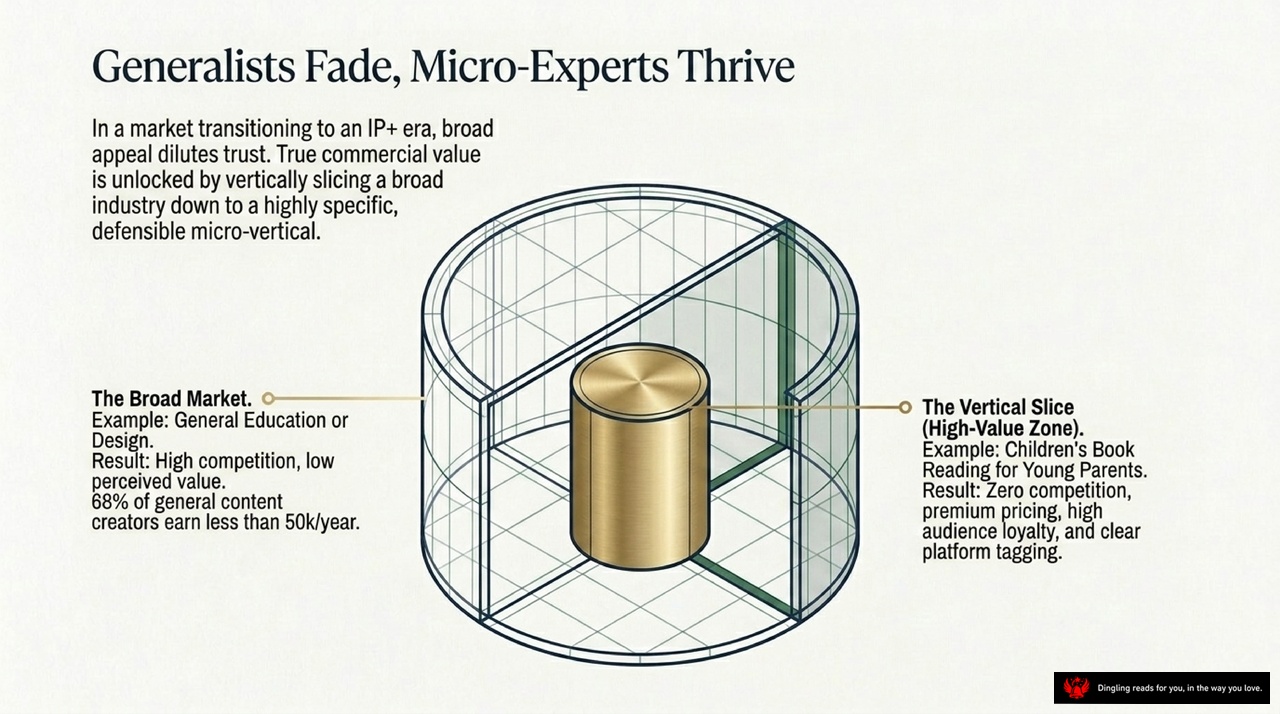
Imagine you're standing inside a giant, hollow cylinder. On the outside, you have "The Broad Market"—think general education or design. It's crowded, noisy, and brutally competitive. The slide tells us the hard truth: 68% of creators in this wide-open space earn less than $50k a year. Why? Because broad appeal dilutes trust. When you try to talk to everyone, no one trusts you enough to pay you.
But look at the center. That golden cylinder is "The Vertical Slice," or the High-Value Zone. This is where micro-experts thrive. Instead of trying to be everything to everyone, you slice your industry down to a highly specific, defensible niche. Think of it like this: instead of being a "Children's Book Expert," you become "Children's Book Reading for Young Parents." Suddenly, the competition drops to zero. You command premium pricing because you solve a very specific problem for a very specific group. You build deep loyalty because you understand their unique struggles.
The market is shifting from an era of generalists to one of micro-experts. True commercial value isn't found in being popular; it's unlocked by being indispensable in a tiny, specific corner of the market. So, stop trying to be a generalist. Find your vertical slice, and watch how the value—and the money—flows right to you.

To find your unique digital footprint, you need to triangulate three critical dimensions: yourself, the industry, and your competitors. Think of it as finding the "High-Value Zone" where these three circles overlap.
First, look inward at the **Self**. What are your innate advantages? It's about identifying your capabilities and passions, then transforming routine work into standardized, repeatable frameworks. This is your unique edge.
Next, scan the **Industry**. Where is the high-value monetization space? You need to target audiences with strong purchasing power and unmet needs. Don't just pick a popular trend; find where the real money and demand are hiding.
Finally, analyze the **Competitor**. What are the giants missing? Study top accounts to find their structural weaknesses or unserved sub-niches. This is your differentiation gap—the space they've left open for you.
When you intersect these three areas, you reveal an authentic, profitable, and defensible position. This isn't about being the biggest; it's about being the most relevant in the specific zone where your strengths meet market demand and competitor gaps. That intersection is where your true value lives.

To make your personal brand truly profitable, you need to stop selling random ideas and start selling a solid, interconnected knowledge system. Think of your expertise not as scattered tips, but as a tree with deep roots and strong branches. Without this logical structure, your audience just gets confused by random facts instead of trusting your professional authority.
The core of a strong knowledge system lies in two things: connection and utility. Your concepts must link together to form a complete story, and they must solve real problems, not just offer empty theory. For most creators, you don't need to build a massive system from day one. Start by focusing on a specific, actionable problem your audience faces—like "how to write a viral headline in three steps"—and build a simple, practical framework around it.
Once you have that system, turn it into a product. You can package it as a quick micro-course for beginners, an intensive workshop for serious learners, or even a paid community for ongoing support. The key is to design these products based on what your users actually need, not what you think is cool. By consistently delivering value through this structured approach, you transform yourself from a casual content creator into a trusted industry expert who people are willing to pay for.

Visual Delivery: Framing for the Vertical Era. Welcome to the art of making your content stop the scroll.
Let's break down the two golden rules for vertical video success. First, Static Integrity. Think of this as your visual anchor. The rule is simple: maintain absolute consistency in a primary reference point. In practice, this means locking your camera and character position. Whether you're changing outfits or tweaking the lighting, keep the frame stable. This creates a professional, polished look that builds trust instantly.
Next, Dynamic Transitions. Here, the goal is to bridge scenes using continuous physical movement. Imagine the camera following a subject as they walk; by crossing cuts seamlessly, you create the illusion of a one-take video. This fluid motion keeps viewers engaged, making the viewing experience feel effortless and cinematic.
Finally, remember your Cover Strategy. Use high-resolution, uniformly branded covers with high-contrast, curiosity-inducing typography. This isn't just decoration; it's your first hook designed to arrest the scroll. Master these framing techniques, and you transform passive viewers into loyal followers.
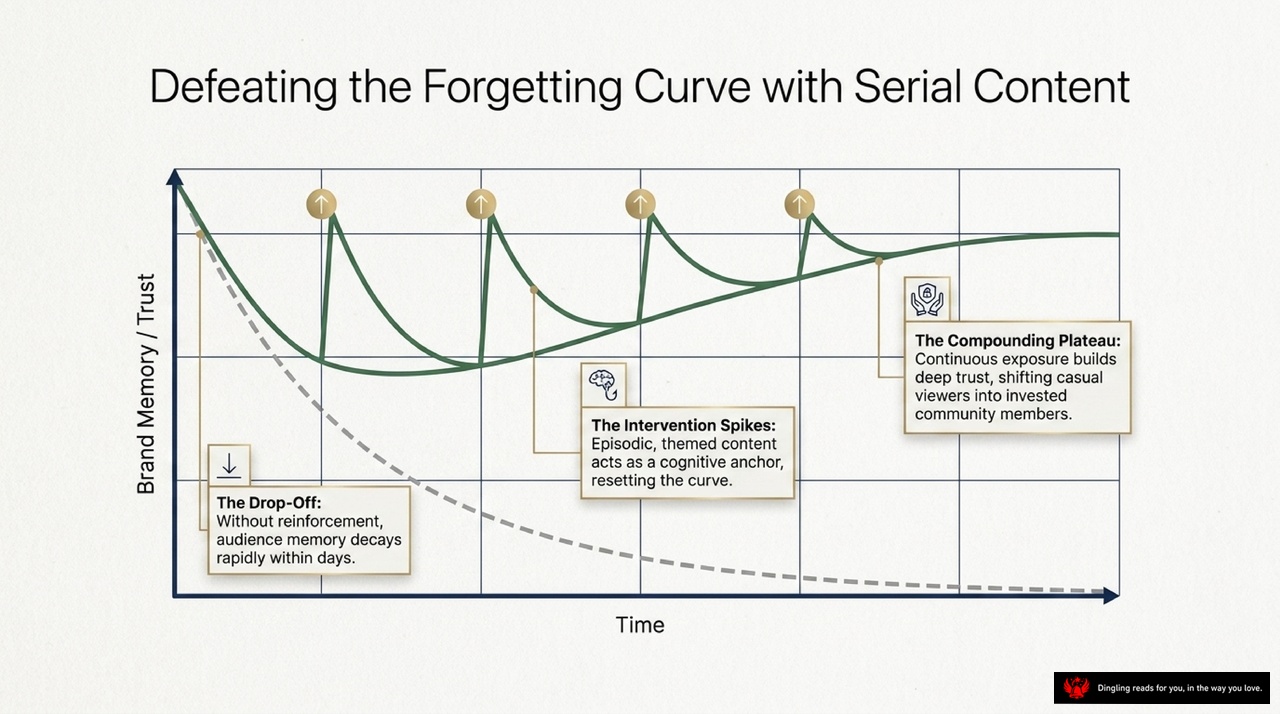
So, we've covered the mechanics of building your account, crafting viral content, and even diving into the specifics of monetization through ads and e-commerce. But here is the million-dollar question: How do you actually turn all that effort into a sustainable, high-value career?
The answer lies in one thing: Your IP. Think of your personal brand not just as a face, but as the ultimate engine for your business. When your audience truly trusts your IP, they stop thinking about a product and start trusting *you*. That trust slashes their decision-making time and allows you to charge a premium. For instance, a creator with a strong IP can sell products at a price point 20% higher than the competition simply because of that emotional connection.
But how do we measure this value? It's not about follower count. It's about three things: the quality of your audience, the reach of your content, and how well your unique personality fits different business models. To future-proof your career, you need to build a diverse ecosystem. Don't rely on just one platform or one income stream. Instead, create a content matrix that drives traffic, use your public channels to build a private community, and then convert that community into loyal customers through tiered products—from low-cost micro-courses to high-end consulting.
Finally, remember that your personal brand is powered by a solid knowledge system. You can't just be a content creator; you need to be an expert. By organizing your insights into a logical framework and constantly iterating based on user feedback, you transform from a fleeting influencer into a lasting industry authority. That is how you build a business that lasts.
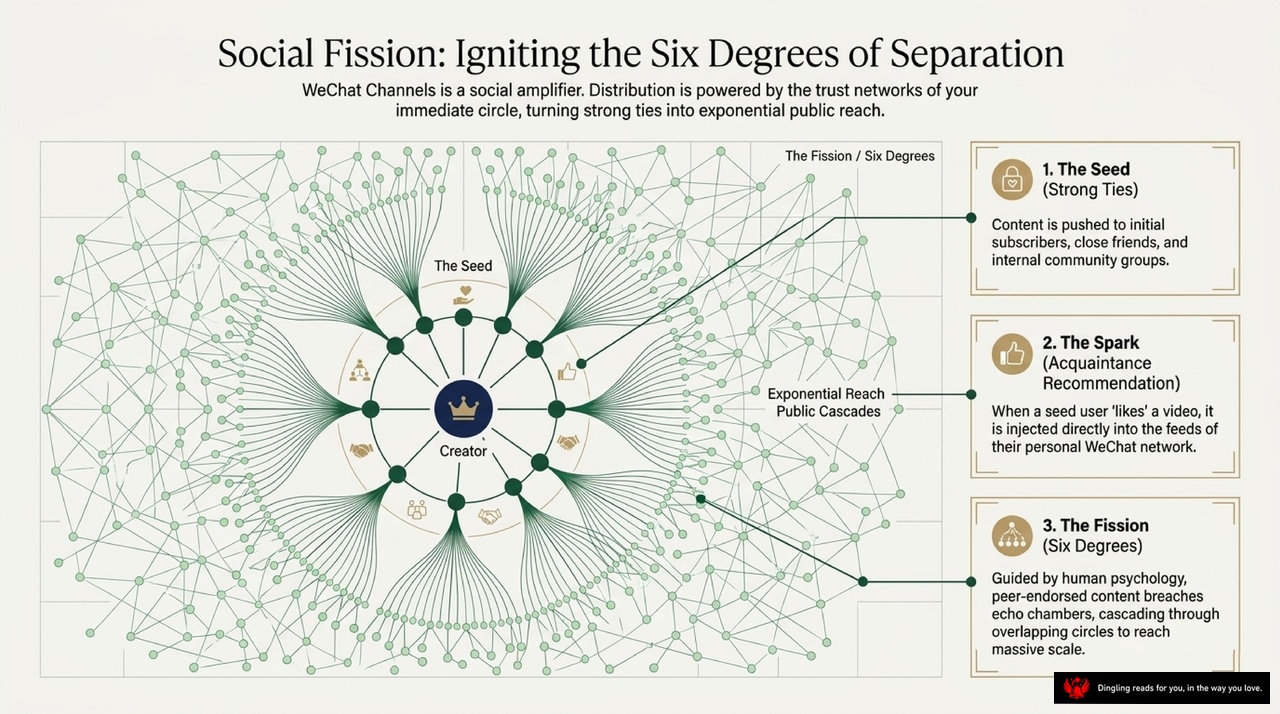
Imagine your content not just as a video, but as a seed planted in a vast, invisible network. This is the power of "Social Fission" on WeChat Channels. Unlike traditional platforms where you fight for the algorithm's attention, WeChat leverages your existing trust networks to turn strong personal ties into exponential public reach.
Let's break down this process into three distinct stages, exactly as shown in our diagram. First, we have **The Seed**. This represents your strong ties—your initial subscribers, close friends, and internal community groups. Here, your content is pushed to people who already know and trust you. It's the foundation.
Next comes **The Spark**. This is the moment of acquaintance recommendation. When a user in your inner circle hits "like" or shares your video, it doesn't just stay there; it gets injected directly into the feeds of their personal WeChat networks. That single action triggers a ripple effect, moving your content from a private circle to a wider audience based on social proof.
Finally, we reach **The Fission**, or the Six Degrees of Separation. Guided by human psychology and peer endorsement, your content breaches echo chambers. It cascades through overlapping circles, reaching massive scale. The diagram beautifully illustrates this "Public Cascade," showing how a single creator at the center can connect to thousands of nodes through these layered relationships.
In essence, WeChat Channels acts as a social amplifier. It takes the credibility of your immediate circle and transforms it into a powerful, public broadcasting tool. This is how you ignite the six degrees of separation to achieve viral growth without needing a massive starting audience.

A resilient personal brand doesn't just exist on one platform; it must colonize your user's entire WeChat ecosystem. Think of it as building a fortress where you capture both public traffic and private attention simultaneously.
At the very heart of this structure is "The Creator IP." This is your anchor. Radiating from this core, you deploy five strategic channels to ensure you are seen everywhere.
First, we have "Official Accounts." This is your deep-dive vault. Here, you publish long-form articles that establish intellectual authority and host detailed methodologies. It's where you prove your expertise in the trenches.
Second, "WeChat Moments." This acts as your persona canvas. Through frequent, low-friction updates, you humanize the brand. It's not about being perfect; it's about showing the person behind the professional, building that crucial emotional connection.
Third, "Private Groups." This is the cultivation core. These are high-barrier micro-communities designed to foster intimate, peer-to-peer interactions. It's where you move from being a broadcaster to being a community leader, nurturing loyalty through direct engagement.
Fourth, "Proximity & Discovery." Leveraging location-based features, this is your localized hook. By utilizing nearby features, you capture relevance for people physically close to you, turning geography into an advantage.
Finally, all these channels feed back into the center, creating a continuous loop. By mastering this Omni-Channel Trust Architecture, you stop chasing algorithms and start building a resilient, multi-dimensional presence that truly owns your audience's attention.
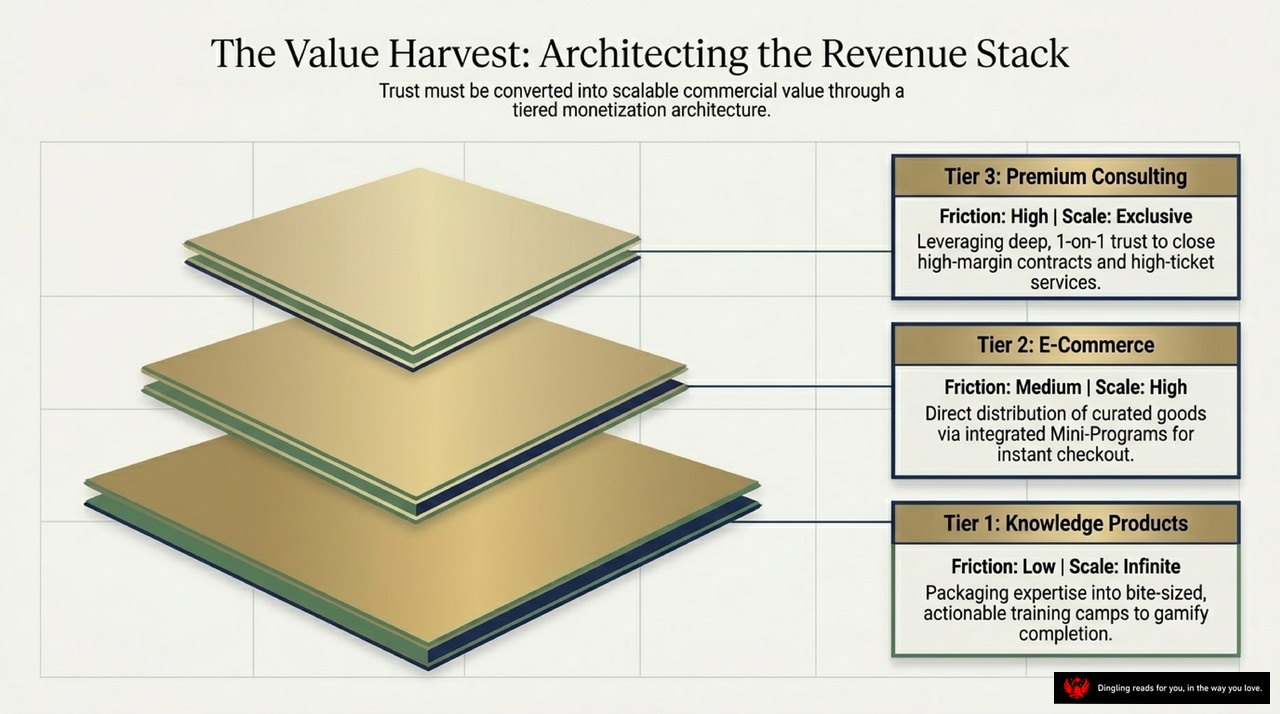
The Value Harvest: Architecting the Revenue Stack.
Imagine your business not as a single product, but as a layered cake designed to capture value at every level of trust you've built. This is the "Revenue Stack."
At the foundation, Tier 1, sits your **Knowledge Products**. Here, friction is low and scale is infinite. You package your expertise into bite-sized, actionable training camps. Think of it as gamifying completion—users get quick wins without needing deep personal time with you. This layer builds the initial trust and casts a wide net.
Moving up to Tier 2, we have **E-Commerce**. Friction increases to medium, but so does the scale. This is where you leverage that established trust for direct distribution. You aren't just selling a generic item; you're curating goods that align with your brand's identity, using integrated Mini-Programs for instant checkout. It's the natural next step for users who trust your taste.
Finally, at the top, sits Tier 3: **Premium Consulting**. This is the exclusive layer. Friction is high, but so is the margin. Here, you leverage that deep, 1-on-1 trust to close high-ticket contracts. This isn't about volume; it's about the unique value of your direct relationship with a client who knows you inside and out.
The secret to scaling isn't just making more content; it's converting that trust into a structured commercial architecture. By stacking these three tiers, you ensure that every interaction moves a user closer to a higher-value engagement, turning simple followers into loyal advocates and paying clients.

Here is the spoken-word script for Slide 11, tailored for an American audience with a natural, engaging tone.
The Ecosystem Closed-Loop. Think of this not just as a sales funnel, but as a self-sustaining cycle where every step happens right inside the app, keeping the user immersed from the first click to the final purchase. It starts with **Attraction** in the public pool. A viral short video hits the feed, and that strong hook is what grabs attention and drives the user to click the linked text. Once they're engaged, the journey moves to **Incubation** in the private domain. That link directs them to an official account article that establishes deep authority, building the trust necessary to prompt them to add your personal WeChat.
Now, here's where the real magic happens at the **Conversion** point. Trust isn't just built; it's cultivated through Moments and Groups. This is where the frictionless purchase actually executes via the Mini-Shop integration. But the loop doesn't end there. Satisfied clients become your biggest assets. They share the product back to their own Moments, reigniting the social fission algorithm and restarting the loop. This is **Evangelism**, and it's what turns a one-time buyer into a lifelong advocate, ensuring the cycle repeats itself endlessly without ever needing to leave the app.

So, we've reached the final synthesis of our journey: transitioning from a fleeting content creator into a lasting digital institution.
As we've seen throughout this book, the ultimate goal of the IP Flywheel isn't just about chasing views—it's about building an impregnable digital institution. By meticulously aligning your positioning, content, community, and monetization, you stop trading your time for money and start building compounding brand equity instead.
Look at these three pillars: Brand Equity, Pricing Power, and Ecosystem Defensibility. When you master these, your personal IP becomes the ultimate algorithm. It bypasses the volatility of platforms, commands premium pricing power, and transforms passive viewers into active stakeholders who truly own your success.
This is how you move from being just another voice in the noise to becoming a trusted authority with a legacy that outlasts any single trend.

So, we've come full circle. Let's recap the big picture. WeChat Channels isn't just another place to post videos; it represents a fundamental shift from chasing algorithms to building trust-based commerce. By embracing what we call the "IP Flywheel"—carving a clear niche, creating resonant content, sparking social connections, and closing that ecosystem loop—you transform scattered attention into a permanent, highly monetizable digital legacy.
This brings us to the most critical realization: The Era of the Individual is Here. In today's digital landscape, you need to ask yourself a hard question: If your digital footprint were evaluated right now, are you just a commodity waiting to be replaced, or are you a brand that is impossible to ignore?
The difference lies in your ability to stand out as a unique individual with a distinct voice and value proposition, rather than blending into the crowd. It's about becoming the expert your audience trusts, not just another creator they scroll past.