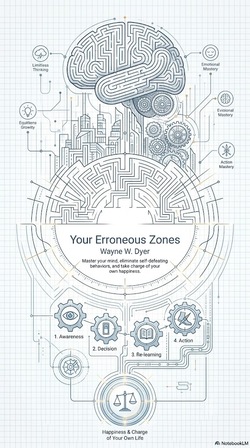


The story of Carl realizing his boss's comment was neutral changed my view on blame. I used to think external events controlled my mood, but Dyer explains clearly that my interpretation creates the pain. The example of the toddler forgetting a scraped knee versus adults overanalyzing a boss's words really stuck with me. It shows how we unnecessarily trap ourselves by attaching negative meanings to neutral situations. I now try to pause before reacting to comments, asking myself if the situation is actually as bad as I think. This shift helps me stop spiraling at night like Sarah in the story. Instead of blaming others for my unhappiness, I take responsibility for my thoughts. It feels liberating to realize I have control over my emotional state even when things go wrong. The book doesn't promise a quick fix, but offering this perspective on locus of control is powerful for breaking cycles of guilt and worry. I recommend it to anyone feeling stuck by past mistakes or future fears.