
Zeng Guofan's Family Letters: Complete Chapter-by-Chapter Summary

Welcome to today's session on *Zeng Guofan's Family Letters*. This isn't just a collection of old letters; it is a timeless blueprint for self-cultivation, family harmony, and enduring leadership. Written by Zeng Guofan himself, these words offer profound wisdom on how to navigate life's challenges, build a strong family foundation, and maintain integrity even when facing the most turbulent times. Whether you are looking to improve your personal discipline, strengthen your family bonds, or lead with wisdom, these letters provide practical and enduring guidance that remains just as relevant today as it was centuries ago.
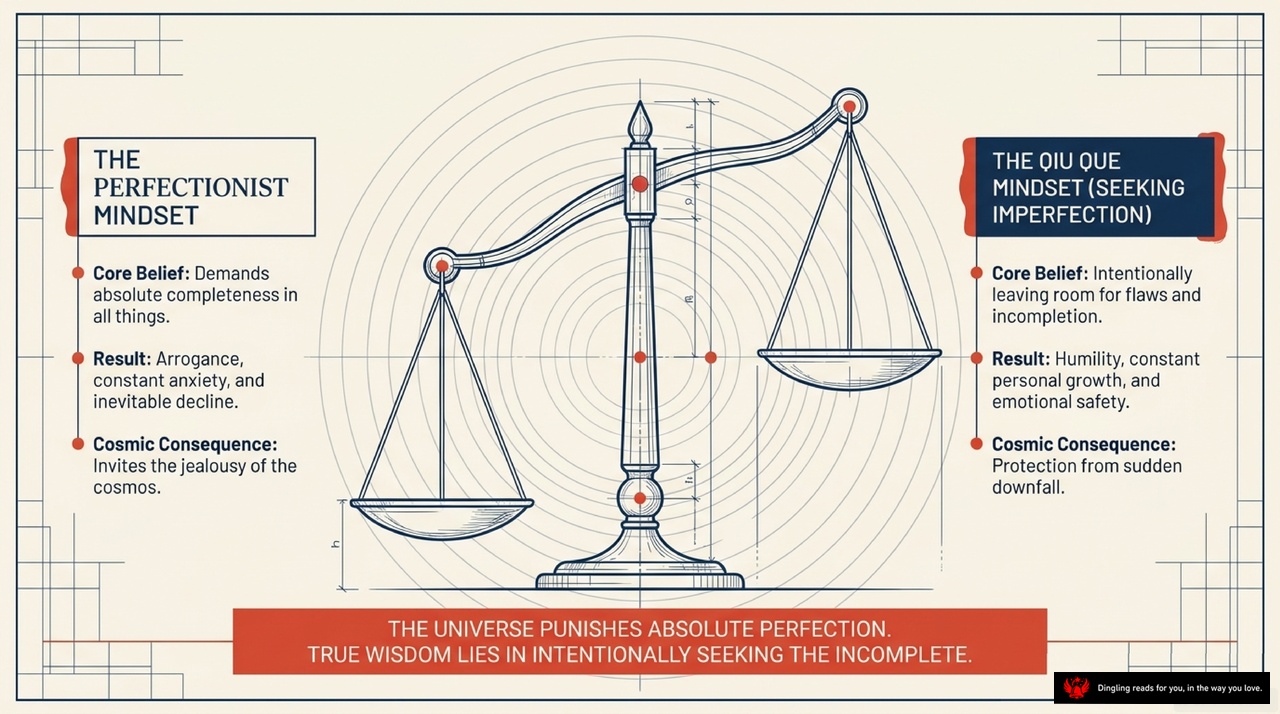
Look at this scale in the center. It's not just a drawing; it represents a fundamental choice we all face every single day. On the left, we have the Perfectionist Mindset. It demands absolute completeness. It believes that if things aren't flawless, they are failures. The result? As the text warns, this leads to arrogance, constant anxiety, and an inevitable decline. It invites the jealousy of the cosmos because nothing can sustain that level of pressure.
On the right, we see the Qiu Que Mindset. This is the wisdom of intentionally seeking imperfection. Instead of fearing flaws, it embraces them. It believes that leaving room for incompleteness actually brings humility, personal growth, and emotional safety. It protects us from sudden downfall.
The bottom line is clear: The universe punishes absolute perfection. True wisdom lies in accepting that we are works in progress. As we saw in the letters of Zeng Guofan, the great statesman who spent his life writing to his family, he realized that trying to be perfect in everything—from his career to his family life—was a trap. He learned that by admitting his own faults, by being humble, and by focusing on doing his best rather than being perfect, he could achieve lasting success and peace. So, don't fear the gap between where you are and where you want to be. That gap is where your real growth happens.
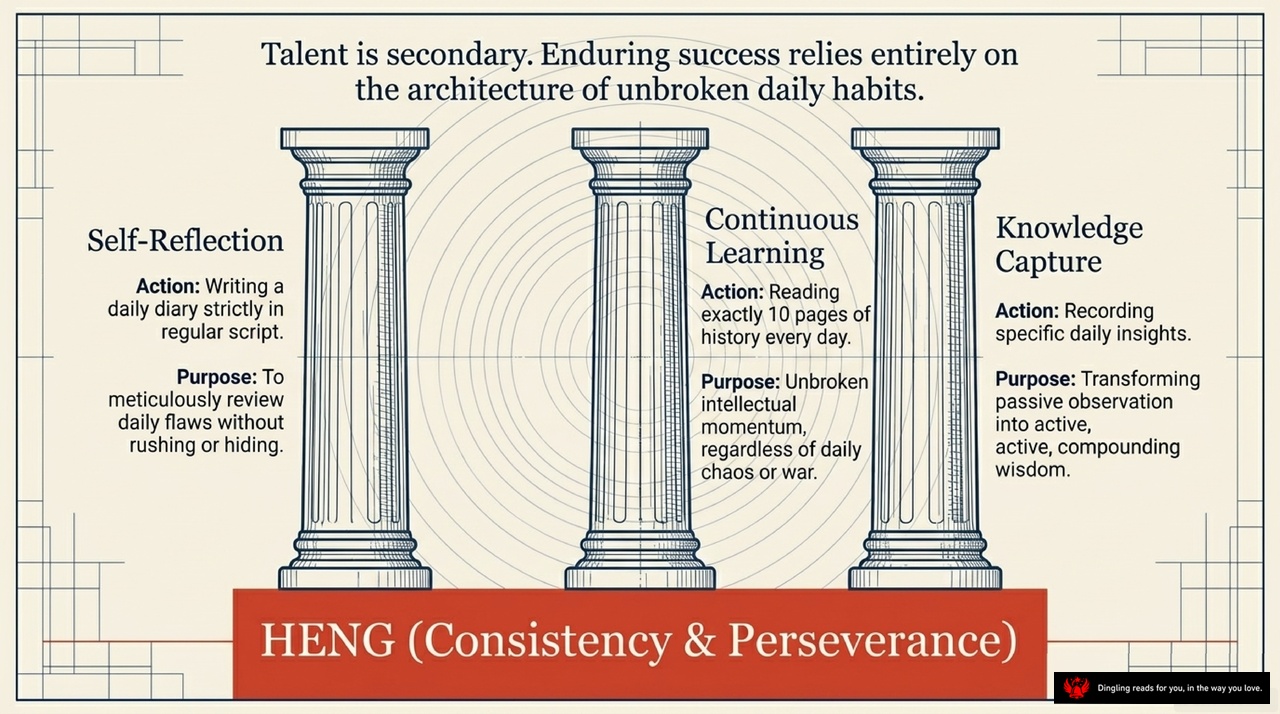
Look at this slide. We see three pillars standing firm, labeled Self-Reflection, Continuous Learning, and Knowledge Capture. Together, they form the architecture of "HENG"—which translates to consistency and perseverance. The slide makes a powerful point right at the top: talent is secondary; enduring success relies entirely on unbroken daily habits.
In the book, Zeng Guofan drives this home through his relentless self-discipline. He didn't rely on raw genius; he relied on a rigid system. For instance, he practiced "Self-Reflection" by writing a daily diary strictly in regular script, meticulously reviewing his flaws without rushing or hiding. He believed that unless you confront your mistakes daily, you cannot truly improve.
Then there is "Continuous Learning." Zeng set a non-negotiable rule: read exactly 10 pages of history every single day. He emphasized that intellectual momentum must remain unbroken, regardless of daily chaos or war. Even when he was a general on the front lines, he never skipped his reading. He understood that knowledge is a compound interest; you build it day by day.
Finally, "Knowledge Capture." This isn't just about reading; it's about retaining what you learn. Zeng insisted on recording specific daily insights, transforming passive observation into active, compounding wisdom. He famously said, "A day without reading is like a tree without roots."
The core message here is simple but profound: if you want lasting success, stop chasing shortcuts. Build the architecture of your habits. Make self-reflection, daily learning, and capturing insights your non-negotiable pillars. That is the only way to achieve true HENG.

When we talk about how to truly master a subject, there is a fundamental choice to make: do we skim the surface of many books, or do we dive deep into one? The slide clearly contrasts two distinct mindsets. On one side, we have the "Exam-Taker." This approach focuses on broad, superficial reading across many texts. The motivation here is purely transactional—studying solely to pass tests and gain immediate status. The outcome? It often leads to arrogance, shallow thinking, and eventually, irrelevance. You know the type: someone who can recite facts but has no depth of understanding.
On the other side, we see the "Scholar of Principle." This path demands deep, exhaustive mastery of a single text. The motivation shifts from external validation to extracting core ethics and practical truths. The result is long-term mastery and the capacity for true leadership. This isn't just about reading; it's about internalizing wisdom until it becomes part of who you are.
The final message at the bottom is a powerful command: "Never open a second book until the first is finished." In a world obsessed with speed and quantity, this advice is radical. It challenges us to stop jumping from topic to topic and instead commit to one thing until we truly understand it. True growth doesn't come from collecting information; it comes from the discipline of going all the way through, one book at a time.
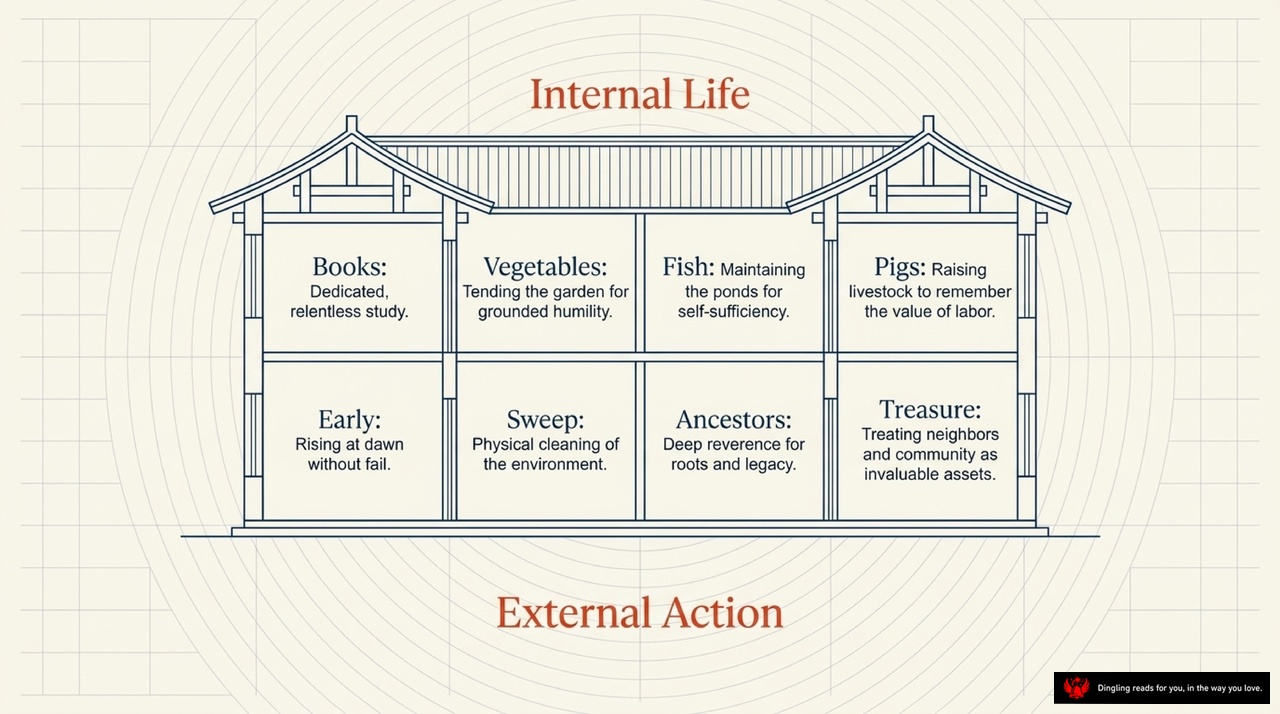
Think of the traditional Chinese home not just as a place to live, but as a living organism where every part serves a spiritual purpose. In Zeng Guofan's philosophy, the structure of a family mirrors the structure of a successful life. Look at the foundation of this house: "Early" rising and "Sweep"ing the environment. These aren't just chores; they are the external actions that cultivate discipline. By rising before dawn, you align your spirit with the universe. By sweeping, you clear not just the floor, but your mind of clutter and laziness.
But the real magic happens when we look at the internal life, the values that hold the roof up. Consider the "Books"—they represent relentless study, the fuel for your intellect. Then look at the "Vegetables"; tending a garden teaches grounded humility, reminding us that we must nurture the earth to survive. The "Fish" symbolize self-sufficiency, ensuring you are never dependent on others. And the "Pigs"? Raising livestock is a powerful metaphor for remembering the true value of labor. It grounds you in reality.
Finally, look at the pillars of your character. "Ancestors" teach us deep reverence for our roots and legacy, giving us a sense of belonging. "Treasure" isn't gold; it's treating your neighbors and community as your most valuable assets. When you combine these internal virtues with external actions, you build a life that is both resilient and meaningful. This is the essence of Zeng Guofan's wisdom: a life built on the solid foundation of character and action.

Look at this diagram. At its heart lies "Family Preservation," but protecting the family isn't just about keeping them safe; it's about building rational boundaries to shield them from external manipulation and internal decay. To do this, Zeng Guofan identified three specific enemies that could destroy a household: the Geomancers, the Miraculous Medicine, and the Monks and Shamans.
First, consider the Geomancers, or Feng Shui practitioners. Their rationale is a refusal to believe that manipulating geography guarantees wealth. Zeng argued that true success comes from virtue, not placement. If a family relies on the "energy" of a house or the direction of a grave, they are outsourcing their fate to superstition rather than cultivating their own character.
Second, there is the belief in Miraculous Medicine. This is the rejection of sudden, magical cures. Zeng's approach was grounded in reality: health is maintained through daily discipline and emotional balance, not by waiting for a wizard to fix everything. Relying on quick fixes ignores the root causes of illness and creates a fragile dependence on the unknown.
Finally, we have the Monks and Shamans. Their rationale involves banning spiritual outsourcing. Zeng believed that accountability must rest solely on the individual. Whether it's spiritual guidance or physical healing, the burden of responsibility cannot be handed off to a third party.
These three shields—rejecting the manipulation of geography, the promise of magical cures, and the outsourcing of spiritual or physical care—form the rational boundaries that protect the family. By refusing these external crutches, Zeng ensured that the family's strength remained internal, resilient, and truly their own.
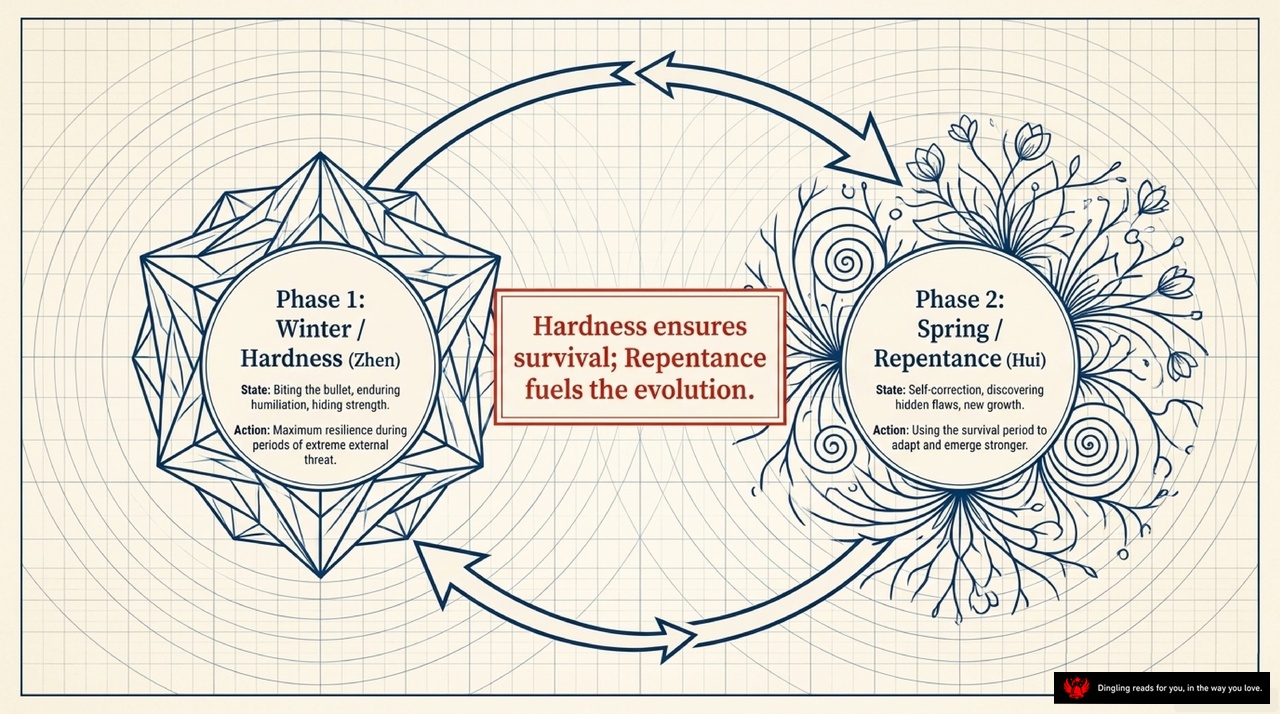
Imagine your life as a cycle between two distinct seasons: the harsh, unyielding winter and the vibrant, blossoming spring. In the diagram we see today, this cycle is mapped out as "Phase 1: Winter / Hardness" and "Phase 2: Spring / Repentance." Think of this not just as a metaphor, but as a survival strategy for your career and character.
In the first phase, Winter, the core principle is Hardness, or what the text calls "Zhen." This isn't about being cold or mean; it's about maximum resilience. It's the state of "biting the bullet"—enduring humiliation, hiding your true strength, and simply surviving when the external threats are at their peak. It's the time to be like a diamond under pressure, toughening up so you can endure the extreme challenges life throws at you.
But survival alone isn't enough for evolution. That's where the second phase, Spring, or "Hui," comes in. This is the season of Repentance. It's not about feeling sorry in a weak way; it's about self-correction and discovering hidden flaws. It's the moment you use the survival period from Winter to adapt and emerge stronger. As the central message of our slide states: "Hardness ensures survival; Repentance fuels the evolution."
Look at the transition in the image. You can't skip the winter. You can't skip the spring. If you don't endure the hardness, you won't survive to reach the spring. If you don't practice the repentance and self-reflection, you won't evolve into something better. This cycle is exactly what figures like Zeng Guofan taught his family: to face the storm with unyielding strength, and then, once the storm passes, to reflect, correct, and grow. That is the only way to turn a difficult season into a powerful spring.

Look at this concentric circle diagram. It perfectly visualizes the core philosophy of Zeng Guofan: that true success starts from the very center—the "Self"—and radiates outward to influence family, society, and even the state.
At the heart of it all is the Self. Zeng believed that everything begins with character. You see, right here, he defines character as being rooted in "absolute honesty." No lies. No pretense. This is the foundation. If you can't be honest with yourself, nothing else will hold.
Moving outward to the next ring, we find the Family. Zeng taught that a family thrives on two pillars: "Home," rooted in bringing joy to one another, and "Office," which means managing family affairs with zero corruption. He believed that if you can't manage your own household with integrity, you certainly can't manage a government.
The next layer is Society and Office. Here, the focus shifts to "Reading," rooted in etymology and truth, and "Poetry," rooted in tone and rhythm. For Zeng, culture and learning weren't just for show; they were tools to cultivate a truthful mind and a refined spirit.
Finally, at the outermost rim, we have Statecraft and War. This is where the ultimate responsibility lies. The Military, he argued, must be rooted in protecting the people without disturbing them. The goal isn't conquest for its own sake; it's service.
So, the lesson here is clear: you cannot build a stable nation if you cannot build a stable self. You cannot lead a family if you cannot be honest with yourself. Zeng Guofan's wisdom tells us that the path to greatness is always a journey inward first, before it ever becomes a journey outward.

True enduring success isn't born from innate genius or grand gestures. It comes from the relentless, humble execution of daily micro-disciplines—mastering the self to naturally lead the world.
Think about this: are you building your legacy on the fragile pursuit of perfection, or on the unstoppable power of daily persistence?
In the letters of Zeng Guofan, we see this principle in action. He didn't rely on moments of brilliance. Instead, he obsessed over the basics. He told his brothers that true strength lies in self-reflection, not in trying to outsmart others. He warned against the twin demons of pride and excessive talk, which he called the fatal flaws that destroy empires and families.
He broke down success into simple, repeatable habits. He insisted on rising early, keeping a clean home, and treating neighbors with respect. He famously advised his son: "Labor breeds virtue; idleness breeds vice." He understood that while talent might get you started, only the stubborn, boring work of showing up every single day builds an unshakeable foundation.
So, the question remains: are you chasing a high-flying ideal that might shatter, or are you quietly, consistently stacking small wins into a legacy that lasts? The answer lies not in what you dream, but in what you do, every single day.