Emotions Revealed
Loading…

Emotions Revealed

Paul Ekman

4.21346 learners

From pioneering cross-cultural fieldwork with isolated Papua New Guinea tribes to the creation of the revolutionary Facial Action Coding System (FACS), Paul Ekman’s *Emotions Revealed* lays bare the science of human emotions. Ekman challenges the long-held belief that emotional expressions are culturally learned, instead proving that seven core emotions—joy, sadness, anger, fear, disgust, contempt, and surprise—have universal, biologically rooted facial signals. He introduces the "display rule" theory to explain cultural variations in emotional expression, showing how societies shape when and how we show our feelings. The book breaks down each core emotion’s physical cues, from fleeting microexpressions to full-blown facial displays, and includes practical tests to help readers sharpen their emotion recognition skills. Whether you’re looking to understand your own emotional triggers or decode others’ hidden feelings, this work offers evidence-based insights to boost empathy, improve communication, and navigate social interactions with greater clarity.

Emotional TriggersmicroexpressionsDuchenne smileFacial Action Coding System (FACS)core emotions
1587, A Year of No Significance: The Ming Dynasty in Decline
Loading…

1587, A Year of No Significance: The Ming Dynasty in Decline

Ray Huang

4.31311 learners

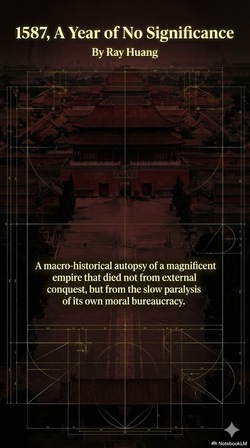
In 1587, a seemingly uneventful year in China’s Ming Dynasty, the cracks in the empire’s foundation began to widen irreparably. Ray Huang’s classic work uses this pivotal year to unpack the systemic failures that doomed the Ming, through the intertwined stories of key figures: Emperor Wanli, who retreated into passive defiance after losing a power struggle over heir selection; Grand Secretary Shen Shixing, a cautious mediator trapped between the emperor and rigid bureaucrats; Hai Rui, a morally inflexible official crushed by the system he tried to uphold; Qi Jiguang, a brilliant general undone by political alliances; and Li Zhi, a radical philosopher silenced for challenging Confucian orthodoxy. Huang reveals how the Ming’s overreliance on moral dogma instead of practical governance, its crippling civil-military divide, and its stagnant bureaucracy left no room for meaningful reform. Each character’s struggle exposes the empire’s fatal flaws, making 1587 not just a year in history, but a quiet turning point that sealed the Ming’s inevitable collapse.

Ming DynastyLi ZhiZhang JuzhengQi Jiguang1587 (Wanli 15)
The Presentation of Self in Everyday Life
Loading…

The Presentation of Self in Everyday Life

Erving Goffman

4.51261 learners

Erving Goffman’s seminal work *The Presentation of Self in Everyday Life* redefines social interaction through his groundbreaking dramaturgical theory, framing daily human encounters as theatrical performances. Using vivid, relatable examples—from Shetland Island innkeepers navigating class performances to hospital nurses managing patient perceptions, café waiters embodying their roles to corporate teams coordinating a unified image—Goffman breaks down how we craft, maintain, and adjust our public selves to guide others’ views. He introduces core concepts: frontstage (the curated space where we put on our polished "show"), backstage (the private area where we drop our facades), and the "dramaturgical cast"—groups that collaborate to uphold a shared definition of a situation. The book also explores impression management strategies, the tension between authentic identity and performed roles, and the impact of "discrepant roles" (like therapists or trainers) who hold behind-the-scenes knowledge. More than a sociological text, it’s a practical lens to understand the unspoken rules shaping every conversation, workplace interaction, and social gathering, revealing how we all balance being ourselves with meeting others’ expectations.

Social InteractionDramaturgical TheoryImpression ManagementFrontstageBackstage
Red Mars
Loading…

Red Mars

Kim Stanley Robinson

4.31243 learners

Set in the mid-21st century, as Earth’s ecosystem collapses and resources dwindle, humanity turns to Mars as its last hope for survival. *Red Mars* chronicles the epic journey of the first 100 colonists aboard the Ares, a multinational mission to establish a permanent settlement on the Red Planet. From the tense, politically fraught years of preparation on Earth to the grueling six-month voyage marked by zero-gravity adjustments, simulated crises, and simmering interpersonal conflicts, the novel immerses readers in the colonists’ struggles. Upon landing, they face harsh Martian conditions: frigid temperatures, deadly radiation, and limited resources, forcing them to build shelters, harness local materials, and debate the future of their new home. Central to the story is the clash between factions—some advocating for immediate terraforming to make Mars habitable, others fighting to preserve its pristine, ancient landscape—while personal rivalries and shifting alliances threaten to tear the colony apart. Kim Stanley Robinson weaves hard science with rich character drama, offering a vivid, thought-provoking exploration of humanity’s drive to survive, adapt, and redefine civilization beyond Earth.

Mars colonizationAres missionMartian terraformingPhobosAndes Base
Getting Things Done
Loading…

Getting Things Done

David Allen

4.11241 learners

Feeling swamped by endless tasks, overflowing inboxes, and constant mental clutter? David Allen’s *Getting Things Done* (GTD) is the game-changing system designed to help you break free from overwhelm and achieve stress-free productivity. Rooted in proven psychological principles, GTD teaches you to offload every unfinished task from your mind into a reliable external system, freeing up mental space for deep thinking and creativity. The system’s core lies in five interconnected horizontal stages—Capture, Clarify, Organize, Review, and Act—that guide you from collecting every loose thought to taking intentional, focused action. It also includes a vertical natural planning model for tackling complex projects, plus a six-level framework to align daily actions with long-term goals and values. Whether you’re a busy professional juggling deadlines, a parent balancing work and family, or anyone craving more control over their days, GTD provides actionable steps to turn chaos into calm, ensuring you always know exactly what to do next.

Next ActionGTD MethodCapture ProcessWeekly ReviewNatural Planning Model
Factional Strife and Northern Song Politics
Loading…

Factional Strife and Northern Song Politics

Luo Jiaxiang

4.31236 learners

Factional Strife and Northern Song Politics dives deep into the decades-long power struggles that tore apart China’s Northern Song Dynasty (960–1127). Starting with the dynasty’s founding, it unpacks how Emperor Taizu’s efforts to centralize power—including strict controls on the imperial exam system—unintentionally fueled partisan attacks, as officials weaponized accusations of 'clique-forming' to take down rivals. The book traces key turning points: the ideological clash between Wang Anshi’s reformist New Faction and Sima Guang’s conservative Old Faction during the Xifeng era, the brutal purges of the Yuanyou Restoration, the vengeful backlash of the Shaoshu period, and the devastating Chongning Party Purge that silenced all dissent. It reveals how the court’s 'divide and rule' policy (Yilun Xiangjiao) and the weaponization of censors turned political disagreement into violent infighting, crippling governance, draining state coffers, and leaving the dynasty vulnerable to foreign invasion. By the Jingkang Crisis of 1127, decades of factional warfare had already sealed the Northern Song’s fate, with lessons that resonate in discussions of political polarization today.

Northern Song DynastyFactional StrifeYilun Xiangjiao*On Factions*Wang Anshi
Blink
Loading…

Blink

Malcolm Gladwell

4.81229 learners

In Malcolm Gladwell’s *Blink*, we dive into the hidden power of split-second decisions—the unconscious judgments we make in the blink of an eye that often outperform hours of deliberate analysis. Opening with the shocking story of the Getty Museum’s fake marble statue, where art experts’ gut reactions trumped months of scientific testing, Gladwell introduces the concept of 'thin-slicing': the ability to extract critical insights from tiny, focused snippets of information. He explores the adaptive unconscious, the brain’s fast, intuitive processor that operates below our awareness, drawing on experiments like Iowa’s card game study and John Gottman’s marriage prediction research to reveal how it shapes our choices. But Gladwell also warns of the pitfalls of rapid cognition: the 'Warren Harding Effect,' where surface biases skew judgments, and implicit prejudices that undermine fair decision-making. Through real-world examples—from orchestras using blind auditions to reduce gender bias to Chicago’s Cook County Hospital overhauling chest pain diagnoses—*Blink* teaches readers to recognize, refine, and harness their instant instincts, turning quick thinking into a reliable tool rather than a source of error.

Implicit BiasThin-slice AnalysisAdaptive UnconsciousSplit-second Decision-makingWarren Harding Illusion
Good Strategy Bad Strategy
Loading…

Good Strategy Bad Strategy

Richard Rumelt

4.31205 learners

In *Good Strategy, Bad Strategy*, Richard Rumelt dismantles the myth that strategy equals lofty visions or vague goals, drawing on decades of research and real-world examples to define what makes a strategy effective. A good strategy isn’t about empty buzzwords—it’s about pinpointing core challenges, crafting a clear guiding policy, and aligning coordinated, focused actions to cut through complexity. Rumelt uses iconic cases like Admiral Nelson’s Trafalgar victory, Steve Jobs’ turnaround of Apple, and DARPA’s groundbreaking innovations to illustrate how concentrated resources and sharp analysis drive success. Conversely, he exposes bad strategy’s pitfalls: vague statements that mask inaction, unrealistic goal piles, and leaders who avoid tough trade-offs, as seen in the collapses of Lehman Brothers and General Motors. The book also outlines actionable frameworks for building good strategy—from identifying strategic proximate goals to leveraging competitive asymmetries—and teaches readers to overcome cognitive biases, corporate inertia, and herd mentality to make smarter, more impactful strategic decisions.

strategic analysisGood StrategyBad StrategyStrategic Proximate GoalCoherent Action
How Regulation Generates Revenue
Loading…

How Regulation Generates Revenue

Huang Huoxin

3.41182 learners

This book unpacks the core logic of the Qing Dynasty’s salt administration, revealing how systematic regulation turned salt—an indispensable daily commodity—into the empire’s second-largest fiscal revenue source. Centered on maximizing salt tax (yan ke) income, the Qing relied on four foundational systems: licensed merchant distribution, official performance assessments, anti-smuggling enforcement, and quota-based salt permits (yanyin). Leveraging salt’s concentrated production, inelastic demand, and flexible tax structure, the court avoided overburdening peasant households (unlike rigid land taxes) while securing critical funds for wars, disasters, and imperial needs. It explores the dynamic balance between tax revenue and administrative costs, detailing policy adjustments like the ticket salt reform when merchant burdens became unsustainable. The text also examines market-aligned quota tweaks and long-running salt zone disputes, driven by officials’ performance incentives and path dependence on inherited Ming systems. Ultimately, it frames Qing salt regulation as a 'revenue-generating control' model, balancing state fiscal goals with market realities and social stability.

Salt Tax (Yan Ke)Licensed Salt MerchantsSalt Permits (Yanyin)Fiscal RevenueTransaction Cost Balance
Alan Turing: The Enigma
Loading…

Alan Turing: The Enigma

Andrew Hodges

4.51174 learners

Andrew Hodges’ *Alan Turing: The Enigma* delivers a definitive, intimate portrait of one of the 20th century’s most brilliant and tragic minds. From his rebellious childhood at Sherborne School, where his friendship with Christopher Morcom ignited his scientific curiosity, to his groundbreaking 1936 paper introducing the Turing Machine—laying the foundation for modern computing—this biography traces Turing’s extraordinary journey. It vividly recounts his pivotal WWII role designing the Bombe machine to crack Nazi Germany’s Enigma code, a feat that shortened the war and saved countless lives. Post-war, Turing pushed boundaries again, leading the ACE computer project and pioneering morphogenesis research, using math to explain biological pattern formation. Yet despite his immense contributions, Turing faced brutal persecution for his homosexuality: convicted of gross indecency in 1952, he was subjected to chemical castration, ultimately dying by cyanide poisoning in 1954. Hodges balances technical depth with emotional resonance, exploring the tension between Turing’s radical intellect and rigid societal norms, cementing his legacy as the father of computing and a symbol of intolerance’s cost.

Turing MachineAlan TuringEnigma CodeBombe MachineACE Computer
The Model Thinker
Loading…

The Model Thinker

Scott E. Page

41168 learners

Written by Scott E. Page, *The Model Thinker* introduces a transformative framework for navigating the world’s complexity: multi-model thinking. Rejecting the limitations of single perspectives, Page argues that combining diverse models—spanning economics, statistics, game theory, and social sciences—unlocks a more nuanced understanding of real-world problems. The book guides readers through foundational concepts, core models (from normal distributions to system dynamics), and practical applications, using case studies like the U.S. opioid crisis and income inequality to demonstrate how multiple models can reveal hidden mechanisms and inform smarter decisions. It outlines seven key uses of models, from explanation to prediction, and addresses both the strengths and limitations of multi-model thinking, emphasizing that even a dozen well-chosen models can enhance reasoning, communication, and decision-making. Page also provides actionable strategies for integrating these models into daily life, making this book an essential toolkit for professionals, students, and anyone seeking to cut through confusion and make more informed choices.

Path DependenceCollective ActionReinforcement LearningGame TheorySystem Dynamics
Trend Following
Loading…

Trend Following

Michael W. Covel

4.11152 learners

Michael W. Covel’s *Trend Following* demystifies a time-tested trading strategy anchored in the core mantra: “cut losses short, let profits run.” Unlike traditional buy-and-hold investing or speculative guesswork, trend tracking focuses exclusively on price action, tuning out noise like fundamental analysis or expert predictions. Covel brings the strategy to life through legendary traders—from David Harding’s $300B AHL fund to Bill Dunn’s 40-year track record of outperforming during crises like the 2008 financial meltdown. He breaks down critical distinctions: separating speculation from passive investment, exposing the flaws of mainstream mutual funds, and explaining how behavioral finance reveals why trend tracking exploits human cognitive biases. Backed by 800 years of historical data and academic research, the book proves trend tracking delivers consistent absolute returns, reduces portfolio volatility, and thrives in extreme market conditions. It’s a practical guide for traders seeking to overcome emotional decision-making and build a disciplined, profitable approach to the markets.

Risk ManagementTrend FollowingTurtle Trading ExperimentRichard DonchianAbsolute Returns
The Extended Phenotype
Loading…

The Extended Phenotype

Richard Dawkins

4.21066 learners

Richard Dawkins’ *The Extended Phenotype* redefines evolutionary biology by shifting focus from individual organisms to the genes that drive them. Using the Necker Cube illusion as a metaphor, Dawkins argues that a gene’s influence doesn’t stop at an organism’s body—it extends to the entire world shaped by that organism’s behavior. This includes beaver dams, spider webs, parasite-induced host behavior changes, and even cultural memes, all labeled “extended phenotypes” shaped by natural selection. The book dismantles gene determinism, explaining how genes interact with environments to produce traits probabilistically, not absolutely. It also explores evolutionary constraints like time lag, genetic variation limits, and the asymmetric “life/dinner principle” in species arms races. Dawkins frames genes as the core “replicators” of evolution, introduces memes as cultural replicators, and delves into outlaw genes that prioritize their own survival over the genome. By redefining organisms as temporary “survival machines” for genes, this work offers a radical, eye-opening framework to understand life’s evolutionary logic.

Evolutionary Arms RacememesExtended PhenotypeGene Selection TheoryReplicators
The Ecology Of Chinese Culture
Loading…

The Ecology Of Chinese Culture

Feng Tianyu

3.11031 learners

Feng Tianyu’s *The Ecology of Chinese Culture* delivers a comprehensive, nuanced exploration of how Chinese culture took shape, evolved, and adapted over millennia. Grounded in the interdisciplinary concept of cultural ecology—intertwining natural environments, socio-economic systems, and institutional structures—the book unpacks the complex forces behind China’s unique cultural identity. It examines how East Asia’s vast, diverse geography provided both a buffer and a canvas for cultural development, the dynamic interplay between agricultural and nomadic economies, and the enduring influence of patriarchal clan systems and Confucian ethical-political frameworks. Traversing from multi-origin Neolithic cultures to the modern era of East-West fusion, the book also addresses the challenges of cultural transformation amid Western industrialization, arguing that China’s future lies in balancing global integration with preservation of its rich heritage. Ideal for readers seeking a deep, evidence-based understanding of Chinese culture’s ecological roots and evolving trajectory.

Cultural FusionCultural EcologyChinese Cultural HistoryGeographical InfluenceAgricultural-Nomadic Interaction
Yu Jun's Product Methodology
Loading…

Yu Jun's Product Methodology

Yu Jun

3.71025 learners

Yu Jun’s Product Methodology demystifies the evolving role of product managers (PMs) from its origins as Procter & Gamble’s brand-focused role to the data-driven, user-centric demands of the internet era. This comprehensive guide breaks down core frameworks defining successful PM work: mastering user models to predict behavior, designing sustainable transaction models for mutual value exchange, and applying rational decision-making strategies (data, logic, subjective judgment) to navigate trade-offs. It also addresses critical topics like balancing user and business value, reducing transaction costs, and navigating unique internet product iteration challenges. For aspiring and seasoned PMs alike, the book offers actionable career progression insights—from identifying high-potential candidates to overcoming mid-career bottlenecks—emphasizing that great PMs are shaped by practice, empathy, and deep understanding of economic and psychological principles.

Transaction CostRational Decision-MakingProduct ManagerUser ModelTransaction Model
Mini Habits
Loading…

Mini Habits

Stephen Guise

51021 learners

Fed up with failing at big self-improvement goals and losing motivation after a week? Stephen Guise, a former serial quitter, shares the game-changing strategy that transformed his life: Mini Habits. Instead of setting overwhelming targets like 2-hour daily workouts or 3,000-word writing sessions, Guise teaches you to shrink desired habits to absurdly tiny steps—think 1 pushup, 50 words, or 2 pages of reading. Backed by neuroscience (exploring the basal ganglia’s role in habit formation) and psychology research on willpower depletion, this method eliminates guilt and burnout that derail most plans. You’ll learn 8 actionable steps to build your own mini habits, plus 8 rules to stay on track, all while boosting self-efficacy with daily small wins. Perfect for anyone stuck in cycles of unmet goals, Mini Habits proves the smallest actions create lifelong, transformative change.

Micro HabitsWillpower DepletionBasal GangliaSelf-EfficacyHabit Formation
The Zulu Principle
Loading…

The Zulu Principle

Jim Slater

31012 learners

For individual investors feeling outmatched by Wall Street, Jim Slater’s *The Zulu Principle* is a game-changing guide that turns the tables. Slater reveals three inherent advantages individual investors hold over big institutions: the flexibility to invest in high-growth small-cap stocks, the ability to focus on a curated portfolio instead of over-diversifying, and the power to leverage personal expertise in niche sectors. At the heart of his strategy is the Zulu Principle—narrow your focus like a laser to become a relative expert in a specific area, rather than spreading yourself thin like a shotgun blast. The book breaks down a rigorous, step-by-step framework for selecting winning growth stocks, with the Price/Earnings to Growth (PEG) ratio as its cornerstone. It also covers critical metrics like cash flow health, relative strength, competitive moats, and executive stock transactions, while providing actionable advice on portfolio construction, sell strategies, and navigating market cycles. Packed with real-world examples and empirical data, this book equips individual investors to build a disciplined, profitable investment strategy that consistently outperforms the market.

Portfolio ManagementGrowth StocksZulu PrinciplePEG RatioSmall-Cap Investing
Zhuangzi
Loading…

Zhuangzi

Zhuang Zhou

4.41009 learners

Dive into the whimsical, profound world of Zhuangzi, a foundational text of Chinese Daoism packed with playful fables and radical wisdom that challenges rigid societal norms. Through tales like the giant Peng bird soaring 90,000 li, the butcher Paoding who masters the 'Way' of butchering without dulling his knife, and Zhuang Zhou’s dream of being a butterfly (or vice versa), Zhuangzi explores core ideas: the contrast between small-mindedness and great vision, the relativity of right and wrong, and the power of 'wu wei'—non-forced action aligned with nature’s flow. He argues that 'uselessness' can be a superpower, protecting one from harm and enabling authentic living. Zhuangzi also frames life and death as natural cycles, urging readers to let go of attachment to fame, wealth, and rigid morality to embrace 'xiaoyao'—unfettered freedom of the spirit. Whether critiquing hypocritical scholars or guiding readers through chaos, this text invites redefining success and finding peace in harmony with nature.

Dao (The Way)Xiaoyao (True Freedom)Wu Wei (Non-Action)RelativismNaturalness
Open Veins of Latin America
Loading…

Open Veins of Latin America

Eduardo Galeano

3.5997 learners

Eduardo Galeano’s *Open Veins of Latin America* lays bare 500 years of systemic plunder that has defined the region’s tragic fate. Starting with Columbus’s 1492 arrival, the book traces how Spanish and Portuguese colonizers drained Latin America of gold and silver, decimating indigenous populations through forced labor and violence. Later, British free trade policies crushed fledgling local industries, turning the continent into a raw material supplier and consumer of European goods. In the 20th century, U.S. corporations and political interference took over, controlling key sectors like mining, oil, and manufacturing while extracting massive profits that never benefited local communities. Galeano weaves together harrowing stories of indigenous uprisings, enslaved laborers, and exploited workers, exposing how neocolonial structures perpetuate poverty, inequality, and dependency. A landmark work of critical scholarship, it reveals why Latin America remains trapped in a cycle of resource wealth and widespread deprivation, making it essential reading for anyone seeking to understand global economic injustice.

Resource ExtractionEconomic DependencyIndigenous resistanceNeocolonialismSugar plantations
Encountering Your Inner Self
Loading…

Encountering Your Inner Self

Tiffany Chang

3.9991 learners

Meet Lila, a burnt-out NYC marketing manager trapped in a loveless marriage, toxic office dynamics, and a crippling sense of unworthiness. After an explosive fight with her husband, she flees to the Catskills, runs out of gas, and stumbles on a cabin where a wise elder poses a life-shaking question: “Who are you?” This sparks a transformative journey as Lila sheds the false identities she’s built her life on—job title, marital status, college credentials—and uncovers her true self: a core of love, joy, and peace buried under layers of physical habits, repressed emotions, overactive thoughts, and societal roles. Guided by the elder, she learns how energy vibrations shape her reality, how her subconscious drives repeated patterns, and how to heal childhood wounds trapped in her body. She discovers the difference between fleeting, external happiness and lasting, inner joy, and masters the art of surrendering to unchangeable facts while taking charge of her inner state. By the end, Lila emerges with clarity, resilience, and the tools to live authentically, free from the chains of others’ expectations.

Present MomentSurrenderEmotional HealingTrue SelfSubconscious Mind