Nudge
Loading…

Nudge

Richard H. Thaler;Cass R. Sunstein

4.31279 learners

Co-authored by Nobel Prize-winning economist Richard H. Thaler and legal scholar Cass R. Sunstein, *Nudge* introduces the transformative concept of "libertarian paternalism"—a gentle, freedom-preserving approach to guiding people toward better decisions. The book breaks down how our brains rely on two thinking systems: a fast, intuitive one prone to cognitive biases (like anchoring, loss aversion, and status quo bias) and a slow, deliberate, rational one. These biases lead us to make suboptimal choices, from neglecting retirement savings to overspending on unnecessary fees. Thaler and Sunstein illustrate how small, strategic "nudges"—such as setting automatic 401(k) enrollment as the default, simplifying complex insurance plans, or using social norms to encourage eco-friendly habits—can help us avoid common pitfalls. Packed with real-world examples from finance, healthcare, education, and public policy, *Nudge* proves that thoughtful choice architecture can boost personal well-being and societal good while keeping full choice in our hands.
Cognitive BiasesLoss AversionBehavioral EconomicsStatus Quo BiasLibertarian Paternalism
Blink
Loading…

Blink

Malcolm Gladwell

4.81229 learners

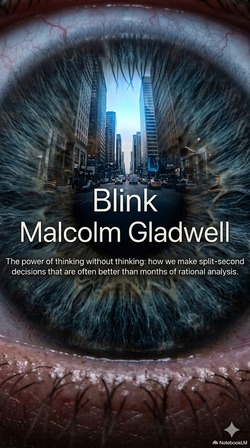
In Malcolm Gladwell’s *Blink*, we dive into the hidden power of split-second decisions—the unconscious judgments we make in the blink of an eye that often outperform hours of deliberate analysis. Opening with the shocking story of the Getty Museum’s fake marble statue, where art experts’ gut reactions trumped months of scientific testing, Gladwell introduces the concept of 'thin-slicing': the ability to extract critical insights from tiny, focused snippets of information. He explores the adaptive unconscious, the brain’s fast, intuitive processor that operates below our awareness, drawing on experiments like Iowa’s card game study and John Gottman’s marriage prediction research to reveal how it shapes our choices. But Gladwell also warns of the pitfalls of rapid cognition: the 'Warren Harding Effect,' where surface biases skew judgments, and implicit prejudices that undermine fair decision-making. Through real-world examples—from orchestras using blind auditions to reduce gender bias to Chicago’s Cook County Hospital overhauling chest pain diagnoses—*Blink* teaches readers to recognize, refine, and harness their instant instincts, turning quick thinking into a reliable tool rather than a source of error.

Implicit BiasThin-slice AnalysisAdaptive UnconsciousSplit-second Decision-makingWarren Harding Illusion
Weapons of Math Destruction
Loading…

Weapons of Math Destruction

Cathy O'Neil

4.11215 learners

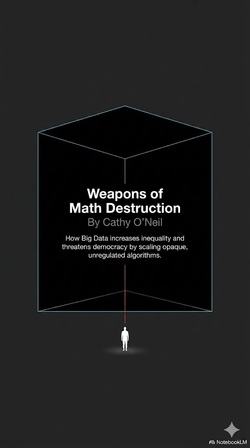
In *Weapons of Math Destruction*, former hedge fund mathematician Cathy O'Neil pulls back the curtain on seemingly neutral algorithms that operate as hidden tools of systemic oppression. She defines these "WMDs" by three core traits: opacity (their inner workings are kept secret), scalability (they target millions at once), and destructiveness (they trap marginalized groups in cycles of harm). Through gripping case studies—from criminal justice recidivism models that penalize poor communities to predatory for-profit college ads that exploit vulnerable individuals, from biased hiring tests that shut out qualified candidates to insurance pricing that overcharges low-income drivers—O'Neil exposes how these models encode societal prejudices into code, prioritizing efficiency and profit over fairness. She also highlights hopeful alternatives: algorithms designed to uplift rather than exploit, rooted in transparency, accountability, and a commitment to serving human needs. A must-read for anyone seeking to understand how data shapes power, inequality, and justice in the digital age.

Algorithmic BiasFeedback LoopsWeapons of Math DestructionRecidivism ModelsCredit Scoring
Noise
Loading…

Noise

Daniel Kahneman;Olivier Sibony;Cass R. Sunstein

4.71115 learners

In his eye-opening book *Noise*, Nobel Prize-winning psychologist Daniel Kahneman pulls back the curtain on a hidden flaw in human judgment: unnecessary variability in decisions we often dismiss as random or unimportant. Unlike bias—consistent errors pushing judgments in one direction—noise is the scattered, inconsistent calls made by experts judging the same scenario: a judge handing wildly different sentences for identical crimes, doctors disagreeing on a patient’s diagnosis, or insurance adjusters valuing the same claim drastically differently. Kahneman breaks system noise into three core types: level noise (differences in how strict or lenient judges are), pattern noise (individuals’ unique biases toward specific cases), and contextual noise (shifts in judgment due to mood or fatigue). He reveals how this silent saboteur costs businesses billions, undermines fairness in legal and medical systems, and distorts everyday choices. The book doesn’t just expose the problem; it offers actionable strategies—from decision hygiene practices to structured judgment frameworks and algorithmic tools—to cut through noise, boost accuracy, and build more fair, rational decision-making systems.

Biassystem noisedecision hygienepredictive judgmentalgorithmic decision-making
Cosmologies and the Modern World
Loading…

Cosmologies and the Modern World

Alan Macfarlane

3.11107 learners

Based on Alan Macfarlane’s 1982 Cambridge University lecture notes (updated with 30 years of new insights), *Cosmologies and the Modern World* traces 500 years of paradigm shifts in Western social science. It unpacks how changing worldviews—from cyclical time in pre-1700 Europe to Enlightenment progress, 19th-century evolutionary theory, mid-20th-century structuralism, and today’s global rebalancing—shaped disciplines like anthropology, sociology, and history. Drawing on thinkers like Thomas Kuhn, Michel Foucault, and Franz Boas, the book links time perception to technological change, political power, and colonial bias, critiquing the imperial arrogance embedded in 19th-century evolutionary frameworks. It also addresses 21st-century disruptions: AI’s rise, renewable energy innovations, and the shifting East-West power dynamic, offering a nuanced look at how intellectual paradigms reflect and drive global societal change.

GlobalizationArtificial IntelligencePower DynamicsEvolutionary TheoryParadigm Shifts
Fooled by Randomness
Loading…

Fooled by Randomness

Nassim Nicholas Taleb

4.31089 learners

In *Fooled by Randomness*, Nassim Nicholas Taleb dismantles the myth that success equals skill through vivid, relatable stories—like cautious trader Nero Tulip, who survives market crashes, and flashy John, whose luck-fueled wealth collapses overnight. Taleb exposes how our brains are wired to misinterpret randomness: we confuse luck with talent, fall prey to survivorship bias (ignoring hidden failures), and underestimate catastrophic "black swan" events. He breaks down cognitive flaws, from our inability to grasp probability to our obsession with linear cause-and-effect, while offering practical frameworks like the Monte Carlo method to visualize alternative outcomes. Rooted in philosophy (Popper’s falsification, Stoic resilience), this book isn’t just for traders—it’s a wake-up call for anyone navigating an unpredictable world, teaching us to prioritize long-term survival over short-term glory and embrace skepticism as a shield against randomness’s hidden traps.

Cognitive BiasStoicismNonlinearityRandomnessBlack Swan Event
Influence
Loading…

Influence

Robert B. Cialdini

4.61063 learners

Robert B. Cialdini’s *Influence* is a landmark deep dive into the hidden psychological triggers that drive human decision-making. Drawing on decades of rigorous research and relatable real-world anecdotes—from a turquoise jewelry store’s accidental price hike success to the infamous Milgram obedience experiments—Cialdini unpacks six core principles: Reciprocity, Commitment and Consistency, Social Proof, Liking, Authority, and Scarcity. These principles act as "click-whir" automatic response patterns, evolved to help us navigate life’s chaos efficiently but easily exploited by marketers, salespeople, and manipulators. Beyond exposing how these tactics work, Cialdini provides practical strategies to recognize when you’re being targeted, empowering you to make more intentional, rational choices instead of falling prey to mindless automatic reactions.

Reciprocity PrincipleCommitment and ConsistencySocial ProofLiking PrincipleAuthority Bias
The Psychology of Judgment and Decision Making
Loading…

The Psychology of Judgment and Decision Making

Scott Plous

4.3994 learners

Written by Scott Plous, *The Psychology of Judgment and Decision Making* offers a comprehensive exploration of the cognitive biases, psychological mechanisms, and social influences that drive human decision-making. Drawing on decades of landmark experiments and real-world case studies, the book breaks down why people often make irrational choices—from the hostility media effect and cognitive dissonance to anchoring bias and overconfidence. It examines core theories like prospect theory and expected utility theory, contrasts intuitive judgment shortcuts with rational decision models, and explores how social dynamics, groupthink, and self-serving biases shape individual and collective choices. Additionally, it delves into the evolutionary roots of these biases and their practical applications across fields like public policy, business, and healthcare, equipping readers with insights to recognize and mitigate common decision pitfalls.

cognitive dissonanceConfirmation BiasGroupthinkHindsight BiasProspect Theory
Blink: The Power of Thinking Without Thinking
Loading…

Blink: The Power of Thinking Without Thinking

Malcolm Gladwell

0971 learners

Blink: The Power of Thinking Without Thinking explores the untapped potential of rapid cognition—the split-second, unconscious judgments our brains make through a concept called "thin-slicing." Using gripping real-world examples, from the Getty Museum’s costly fake Greek statue fiasco to psychologist John Gottman’s 90% accurate marriage predictions from 15 minutes of couple interactions, Malcolm Gladwell breaks down how our minds distill decades of experience into instant, often precise decisions. He also reveals the pitfalls of intuition: the "Warren Harding Error," where superficial traits skew judgments, implicit biases that infiltrate hiring and policing, and how stress can turn quick thinking into a deadly liability. Blending psychology, sociology, and behavioral science, the book teaches readers to recognize when to trust their gut, how to avoid common intuition traps, and how to balance rapid cognition with deliberate analysis to make smarter, faster choices in a chaotic world.

Implicit BiasFacial Action Coding SystemThin-Slicing TheoryWarren Harding ErrorRapid Cognition
The Undoing Project
Loading…

The Undoing Project

Michael Lewis

4.3953 learners

In *The Undoing Project*, Michael Lewis expands on the themes of his hit *Moneyball* to explore the revolutionary partnership between psychologists Daniel Kahneman and Amos Tversky. This dynamic pair shattered the long-held assumption that humans make rational decisions, uncovering the hidden cognitive biases that shape everything from baseball scouting and medical diagnoses to political predictions and financial choices. Through vivid storytelling, Lewis traces their journey from their early lives in Israel to their groundbreaking research, which introduced game-changing concepts like the representativeness heuristic, loss aversion, and prospect theory. Their work proved that our judgments rely on mental shortcuts rather than logical calculation, revolutionizing economics (earning Kahneman a Nobel Prize) and transforming fields from medicine to military strategy. Lewis also chronicles the deep, complex friendship that fueled their insights, offering a revealing look at why we make the choices we do—and how understanding our flaws can lead to better decisions.

Cognitive BiasesheuristicsLoss AversionBehavioral EconomicsProspect Theory
How To Think Straight about Psychology
Loading…

How To Think Straight about Psychology

Keith E. Stanovich

4.5881 learners

This eye-opening guide dismantles pervasive myths about psychology—from the overstated influence of Sigmund Freud to the misperception that it’s just “common sense.” Keith E. Stanovich lays bare the scientific core of psychology, explaining how it relies on falsifiable theories, operational definitions, and rigorous experimental control to uncover patterns in human behavior. He breaks down critical concepts like causal inference, probabilistic thinking, and cognitive biases that distort public understanding of research. The book also equips readers to distinguish legitimate psychological science from pseudoscience, teaching them to spot red flags like untestable claims, reliance on anecdotes, and rejection of peer review. By demystifying the field’s methods and addressing long-held misconceptions, it empowers anyone to think critically about psychological claims and apply scientific reasoning to everyday life.

Cognitive BiasesProbabilistic ThinkingFalsifiabilityPseudoscienceOperationalism
The Art of Acting Clearly
Loading…

The Art of Acting Clearly

Rolf Dobelli

3872 learners

In The Art of Acting Clearly, bestselling author Rolf Dobelli demystifies the hidden cognitive biases that distort our daily decisions—from trivial shopping picks to high-stakes business and career moves. Drawing on decades of behavioral psychology research, real-world case studies, and eye-opening experiments, Dobelli breaks down over 30 common mental traps: how choice fatigue drains willpower and leads judges to deny parole at day’s end; why we irrationally reject a Hitler-owned sweater despite it being chemically clean; how the planning fallacy made Sydney Opera House cost 14x its budget and take 10 years longer than planned. More than just a catalog of biases, this book delivers actionable strategies to outsmart these pitfalls: from using external benchmarks to avoid overoptimism, to writing concrete plans to quiet the Zeigarnik Effect’s nagging reminders. Whether you’re a manager, investor, or simply someone wanting to make clearer, more rational choices, this guide equips you to cut through mental noise and act with intentionality.

Cognitive BiasesZeigarnik Effectdecision-makingInformation OverloadChoice Fatigue
Cognitive-Driven
Loading…

Cognitive-Driven

Zhou Ling

4855 learners

Ever feel stuck trading your time for paychecks, watching your growth hit a ceiling? *Cognitive-Driven* is your playbook to break free from this cycle. Drawing on real-world examples—from J.K. Rowling’s ongoing royalties to Li Ziqi’s global influence—this book unpacks the core difference between "trading time" (conversion) and "leveraging value replication" to build passive, long-term income. It dives into actionable frameworks: the 6-tier NLP Logical Hierarchy to elevate your thinking, strategies to balance rationality and intuition, and how to counter innate negative biases that steal your joy. You’ll learn to embrace altruism not as a buzzword, but as a proven path to success, plus how to use deep practice, cross-skilling, and intentional environment design to fuel growth. The final guide to "goal awakening" and the "7-year lifetime" concept gives you the patience and focus to turn vague aspirations into tangible, impactful achievements. Whether you’re a professional, creator, or anyone craving meaningful growth, this book turns cognitive clarity into lifelong control over your life.

Negative BiasNLP Logical HierarchyCognitive DriveValue ReplicationAltruistic Thinking
The Little Book of Behavioral Investing
Loading…

The Little Book of Behavioral Investing

James Montier

4.3848 learners

In The Little Book of Behavioral Investing, James Montier exposes the hidden psychological traps that trip up even seasoned investors—from overconfidence and loss aversion to confirmation bias and herd mentality. Packed with real-world experiments, iconic investing case studies, and insights from legends like Warren Buffett and Benjamin Graham, this book breaks down why we make irrational decisions when markets swing, and how to build disciplined strategies to fight back. You’ll learn to use pre-commitment plans to avoid impulsive trades, adopt a “kill the company” mindset to counter confirmation bias, and embrace contrarian thinking to capitalize on market bubbles and bear markets. Montier’s no-nonsense, relatable approach turns complex behavioral finance concepts into actionable steps, helping you rewire your brain for long-term investing success instead of chasing short-term wins.

Loss AversionEndowment EffectConfirmation BiasOverconfidenceContrarian Investing
Lean In
Loading…

Lean In

Sheryl Sandberg

4.4842 learners

Based on her journey as Facebook’s COO and decades of research, Sheryl Sandberg’s *Lean In* exposes the invisible barriers holding women back in the workplace. She dives into how internal self-doubt—like the pervasive imposter syndrome—and deep-seated societal biases push women to shrink themselves, avoid negotiation, and step back from career opportunities prematurely. Sandberg shares actionable strategies: leaning into confidence (even faking it till you make it), adopting a flexible "grid" career model instead of a rigid ladder, communicating authentically, and building equal partnerships at home. She also calls on women to stop staying silent about gender inequality and on men to become allies, arguing that true progress happens when everyone can thrive without being boxed in by gender expectations. Packed with relatable anecdotes and data-backed insights, this book is a rallying cry for women to own their power and build a more equitable world.

Work-Life BalanceMentorshipGender BiasfeminismImposter Syndrome
The Storied Life of A.J. Fikry
Loading…

The Storied Life of A.J. Fikry

Gabrielle Zevin

4.3802 learners

Set on cozy Alice Island, *The Storied Life of A.J. Fikry* centers on a gruff, grief-stricken bookstore owner trapped in stagnation after his wife Nicole’s death. Clinging to a rare Edgar Allan Poe first edition as his ticket out of his isolated existence, A.J.’s world unravels when the book vanishes—until a two-year-old named Maya is abandoned on his bookstore floor, forcing him to confront his loneliness and open his heart. As he learns to care for Maya, A.J. slowly lets go of his bitterness: he reconnects with Amelia, a quirky book rep he once dismissed, builds a lively book club with the local sheriff, and confronts long-buried family secrets. This warm, witty novel celebrates how books don’t just tell stories—they weave lives together, turning loss into love, isolation into community, and ordinary days into something deeply extraordinary.

RedemptionA.J. FikryMaya*Tamerlane*Island Books
Super Thinking
Loading…

Super Thinking

Gabriel Weinberg;Lauren McCann

4.6799 learners

Super Thinking is your ultimate playbook for mastering the mental models, frameworks, and strategies that set sharp decision-makers apart. Filled with relatable real-world examples—from workplace procrastination spirals to corporate incentive fails and global public health crises—it breaks down common cognitive traps like the tragedy of the commons, moral hazard, and analysis paralysis. Whether you’re navigating daily choices, leading a team, or competing in a crowded market, this book teaches you to spot hidden biases, use tools like decision trees and cost-benefit analysis to weigh options, and apply game theory and endgame thinking to stay ahead. It also covers building high-performing teams, creating sustainable competitive advantages, and adapting to disruptive change. By turning abstract concepts into actionable steps, Super Thinking helps you avoid costly mistakes, make more rational choices, and achieve better outcomes in every area of your life and career.

Cognitive BiasesMental ModelsDeliberate PracticeGame TheoryTragedy of the Commons
Beyond Feelings
Loading…

Beyond Feelings

Vincent Ruggiero

4.7723 learners

Beyond Feelings: A Guide to Critical Thinking is a foundational text that empowers readers to break free from cognitive biases, emotional reactions, and societal conditioning. Using relatable, American-centric examples—from political spin and advertising manipulation to the pitfalls of 'mine is better' thinking—it unpacks how external forces shape our beliefs, from childhood upbringing to modern social norms. The book systematically breaks down common thinking errors, including confirmation bias, hasty generalization, and straw man fallacies, while providing actionable frameworks for cultivating independent thought. It guides readers through key steps: recognizing personal cognitive blind spots, conducting rigorous research on controversial issues, evaluating evidence objectively, forming balanced judgments, and persuading others with respect and logic. Ideal for students, professionals, and anyone navigating today’s misinformation-saturated world, it emphasizes that critical thinking isn’t just an academic skill—it’s a lifelong practice for making wiser decisions and understanding the world more clearly.

Critical thinkingLogical fallaciesEvidence evaluationCognitive BiasesTruth
Don't Be a Normal Fool
Loading…

Don't Be a Normal Fool

Christopher Hsee

3.5722 learners

Drawing on behavioral economics and real-world case studies, *Don't Be a Normal Fool* exposes the hidden cognitive biases that drive irrational decisions in finance, career, and daily life. Author Christopher Hsee breaks down core mental traps: mental accounting (how we categorize and spend money differently based on its source), transaction bias (fixating on deals over utility or percentages over actual savings), sunk cost fallacy (chasing lost investments), overconfidence (overestimating our abilities), and adaptive bias (misjudging long-term emotional impacts of events). Through relatable examples—from splurging windfalls to clinging to failing projects—Hsee explains how these biases skew judgment, then offers practical strategies to overcome them. Readers learn to recognize these traps, shift to rational decision-making, and optimize their choices to avoid common pitfalls that hinder financial stability and intentional living.

Cognitive BiasBehavioral EconomicsSunk Cost FallacyRational Decision-MakingOverconfidence
Factfulness
Loading…

Factfulness

Hans Rosling;Anna Rosling Rönnlund;Ola Rosling

4.2688 learners

In Factfulness, Hans and Ola Rosling dismantle the 10 most common cognitive biases that distort our understanding of the world—from the binary 'us vs. them' split to the instinct to fixate on negative news. Using rigorous global data and on-the-ground stories, they debunk pervasive myths: the world isn’t divided into rich and poor extremes, but four income tiers where 75% of people live in the middle. They highlight underreported progress: extreme poverty has halved in 20 years, global life expectancy has risen to 73, and 88% of 1-year-olds are vaccinated. The book offers practical tools—like proportional thinking, multiple perspectives, and the 'possibilist' mindset—to help readers override instinctual biases, see the world as it truly is, and make more rational, effective decisions in work, life, and global engagement.

Cognitive BiasesFour-Tier Income ModelFact-Based Decision-MakingGlobal Development DataProportional Thinking