1587, A Year of No Significance: The Ming Dynasty in Decline
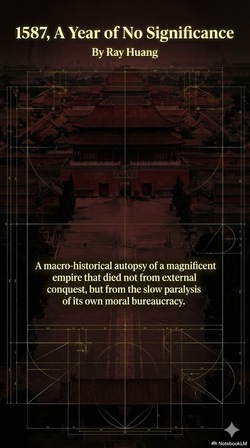
In 1587, a seemingly uneventful year in China’s Ming Dynasty, the cracks in the empire’s foundation began to widen irreparably. Ray Huang’s classic work uses this pivotal year to unpack the systemic failures that doomed the Ming, through the intertwined stories of key figures: Emperor Wanli, who retreated into passive defiance after losing a power struggle over heir selection; Grand Secretary Shen Shixing, a cautious mediator trapped between the emperor and rigid bureaucrats; Hai Rui, a morally inflexible official crushed by the system he tried to uphold; Qi Jiguang, a brilliant general undone by political alliances; and Li Zhi, a radical philosopher silenced for challenging Confucian orthodoxy. Huang reveals how the Ming’s overreliance on moral dogma instead of practical governance, its crippling civil-military divide, and its stagnant bureaucracy left no room for meaningful reform. Each character’s struggle exposes the empire’s fatal flaws, making 1587 not just a year in history, but a quiet turning point that sealed the Ming’s inevitable collapse.