Good to Great
Loading…

Good to Great

Jim Collins

4.41300 learners

Over five years, Jim Collins and his team analyzed 1435 Fortune-ranked companies to uncover why most businesses stay trapped in "good" instead of reaching "great." Their research shatters common myths—like hiring celebrity CEOs or chasing flashy tech as quick fixes—and proves that lasting transformation starts from within. Key game-changing frameworks drive the shift: Level 5 Leaders, humble yet fiercely determined executives who prioritize organizational success over personal glory; the "First Who Then What" principle, which places hiring the right people before setting strategy; the Stockdale Paradox, balancing unwavering faith with brutal honesty about reality; the Hedgehog Concept, focusing on the intersection of what you can do best, what drives profit, and what ignites passion; and the Flywheel Effect, building momentum through consistent, aligned actions until breakthrough hits. This actionable playbook gives any organization the tools to ditch complacency and build enduring excellence.

Stockdale ParadoxCore CompetenciesLevel 5 LeadershipFirst Who Then WhatHedgehog Concept
Fooled by Randomness
Loading…

Fooled by Randomness

Nassim Nicholas Taleb

4.31089 learners

In *Fooled by Randomness*, Nassim Nicholas Taleb dismantles the myth that success equals skill through vivid, relatable stories—like cautious trader Nero Tulip, who survives market crashes, and flashy John, whose luck-fueled wealth collapses overnight. Taleb exposes how our brains are wired to misinterpret randomness: we confuse luck with talent, fall prey to survivorship bias (ignoring hidden failures), and underestimate catastrophic "black swan" events. He breaks down cognitive flaws, from our inability to grasp probability to our obsession with linear cause-and-effect, while offering practical frameworks like the Monte Carlo method to visualize alternative outcomes. Rooted in philosophy (Popper’s falsification, Stoic resilience), this book isn’t just for traders—it’s a wake-up call for anyone navigating an unpredictable world, teaching us to prioritize long-term survival over short-term glory and embrace skepticism as a shield against randomness’s hidden traps.

Cognitive BiasStoicismNonlinearityRandomnessBlack Swan Event
On Becoming a Person
Loading…

On Becoming a Person

Carl R. Rogers

4.21085 learners

Drawing from decades of clinical practice, Carl R. Rogers’ *On Becoming a Person* redefines humanistic psychology with its radical focus on the individual’s innate drive toward self-actualization. Rejecting rigid, diagnostic-focused therapy models, Rogers outlines the three core pillars of person-centered care: congruence (genuine authenticity), unconditional positive regard (non-judgmental acceptance), and empathic understanding (seeing the world through the client’s lens). Through real clinical anecdotes and thoughtful analysis, the book demonstrates how letting go of external expectations and embracing one’s true self can spark profound personal transformation. It’s not just a manual for therapists; it’s a timeless roadmap for anyone seeking to live more authentically, build deeper connections, and unlock their full potential.

AuthenticityPerson-centered therapyUnconditional positive regardEmpathic understandingCongruence
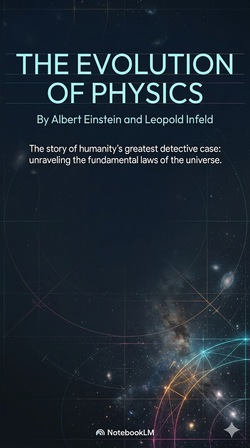
The Evolution of Physics
Loading…

The Evolution of Physics

Albert Einstein;Leopold Infeld

4.31025 learners

Co-authored by Albert Einstein and Leopold Infeld, *The Evolution of Physics* takes readers on a captivating, accessible journey through the most transformative shifts in physical thought. Starting with Aristotle’s intuitive, long-dominant views on motion, it traces how Galileo’s experimental rigor laid the groundwork for Newton’s classical mechanics—establishing laws that governed our understanding of the macro world for centuries. The book then explores the cracks in this "mechanical view": the rise of thermodynamics and electromagnetic theory, which challenged the idea that all phenomena could be reduced to particle interactions. It delves into the revolutionary concepts of fields, Einstein’s special and general relativity (redefining space, time, and gravity as curved spacetime), and the birth of quantum mechanics, which upended deterministic views with wave-particle duality and probability waves. More than a textbook, it focuses on the evolution of ideas, making complex physics approachable for anyone curious about how we’ve unlocked the universe’s secrets.

General Relativitywave-particle dualityClassical MechanicsQuantum TheoryField Concept
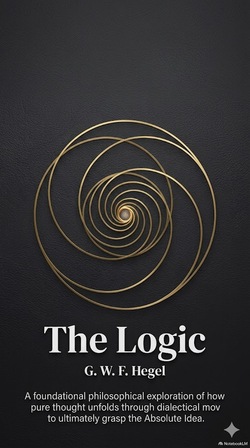
Shorter Logic
Loading…

Shorter Logic

G. W. F. Hegel

4.3879 learners

This condensed edition of G.W.F. Hegel’s foundational Logic distills his complex dialectical system for both new readers and seasoned philosophers. It opens by framing philosophy as a unique discipline—distinct from science and religion—that examines reality through rigorous conceptual thought, not surface perceptions or untested assumptions. Hegel critiques outdated metaphysics, Kant’s critical philosophy, and theories of immediate knowledge, while laying out his core maxim: what is rational is real, and what is real is rational. The text guides readers through the dialectical evolution of logical categories, starting from the abstract "pure being" and moving through essence, concept, and finally the absolute idea, the culmination of universal truth. It explores how contradiction drives all change, how finite concepts evolve into true infinity, and why logic is not just a formal tool but the key to grasping absolute, concrete truth—one that unifies opposing ideas rather than treating them as isolated abstractions.

contradictionEssenceConceptDialectical LogicPure Being
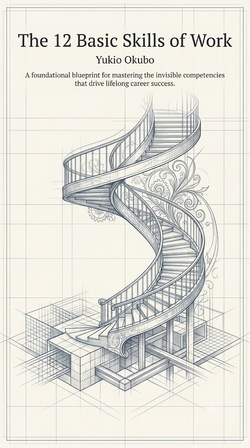
12 Basic Skills of Work
Loading…

12 Basic Skills of Work

Yukio Okubo

3.4717 learners

Based on decades of career consulting experience, Yukio Okubo’s *12 Basic Skills of Work* exposes the massive gap between what job seekers fixate on—like fancy degrees, certifications, and rigid career blueprints—and what employers actually value: foundational, transferable work skills. Okubo busts pervasive myths, from the overhyped importance of university degrees to the false narrative that workers over 35 can’t switch careers. He then outlines 12 critical skills, ranging from active listening and rapport-building to delegation, consulting, and cross-domain coordination, each paired with actionable strategies to develop them. Okubo also shares practical career planning wisdom: adopt a "drift" approach to explore opportunities in your 20s, then shift to a targeted "climb" mode by 30. Rooted in real-world examples and research, this guide helps readers build a resilient, fulfilling career by focusing on skills that truly drive professional success, not just surface-level credentials.

career planningData Interpretationinformation gathering12 Core Work SkillsCareer Misconceptions
Factfulness
Loading…

Factfulness

Hans Rosling;Anna Rosling Rönnlund;Ola Rosling

4.2688 learners

In Factfulness, Hans and Ola Rosling dismantle the 10 most common cognitive biases that distort our understanding of the world—from the binary 'us vs. them' split to the instinct to fixate on negative news. Using rigorous global data and on-the-ground stories, they debunk pervasive myths: the world isn’t divided into rich and poor extremes, but four income tiers where 75% of people live in the middle. They highlight underreported progress: extreme poverty has halved in 20 years, global life expectancy has risen to 73, and 88% of 1-year-olds are vaccinated. The book offers practical tools—like proportional thinking, multiple perspectives, and the 'possibilist' mindset—to help readers override instinctual biases, see the world as it truly is, and make more rational, effective decisions in work, life, and global engagement.

Cognitive BiasesFour-Tier Income ModelFact-Based Decision-MakingGlobal Development DataProportional Thinking
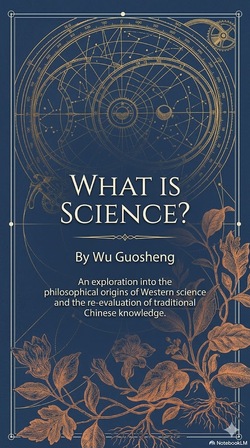
What is Science
Loading…

What is Science

Wu Guosheng

4.1568 learners

Wu Guosheng’s *What is Science* demystifies the often-muddled concept of science by bridging East-West perspectives and tracing its deep historical roots. It opens with how modern Chinese understandings of science—shaped by 19th-century quests for national survival and Western technological adoption—blur the line between science and practical technology, tying the term to national strength rather than its Western philosophical origins. The book then dives into Western science’s foundations: Greek rational science, a non-utilitarian pursuit of truth centered on deduction and free scholarship; its fusion with Christian theology during the Middle Ages, which laid groundwork for modern universities and rigorous scientific thought; and the shift to power-oriented, mathematical experimental science in the early modern era. It also highlights the overlooked natural history tradition, a parallel scientific path focused on observation, classification, and empirical documentation. Finally, it reexamines ancient Chinese natural knowledge, arguing that while China lacked Western-style rational science, it boasted a rich, holistic natural history tradition rooted in astronomy, geography, agriculture, and medicine. This eye-opening work challenges readers to move beyond narrow definitions and grasp science’s diverse cultural identities.

Greek rational scienceChristian theologymodern mathematical experimental sciencenatural historyChinese traditional natural knowledge
Great and Small in History
Loading…

Great and Small in History

Ma Boyong

3.1530 learners

From helping his son memorize ancient Chinese texts and uncovering the tender, paternal side of Zhuge Liang, to tracing the rollercoaster career of ghost-story legend Pu Songling, to highlighting forgotten heroes like Xu Yihou—an ordinary merchant who secretly changed the course of a war—*Great and Small in History* by Ma Boyong turns dry historical facts into relatable, engaging tales. Blending personal anecdotes, on-site explorations, and deep dives into quirky historical details (think ancient book piracy, imperial abdication persuasion tactics, and even famous literati’s toothache woes), this collection proves history isn’t just about emperors and battles. It’s the small, human moments—the frustrated bricklayer’s graffiti, the nervous exam-taker’s bold essay, the homesick merchant’s secret intelligence—that truly reveal the past. Perfect for casual history buffs and anyone who loves seeing history through a modern, everyday lens.

Pu SonglingZhuge Liangeveryday historical figureson-site historical explorationancient book piracy
The Great Mental Models, Volume 1: General Thinking Concepts
Loading…

The Great Mental Models, Volume 1: General Thinking Concepts

Shane Parrish;Rhiannon Beaubien

4.3418 learners

Frustrated by the gap between academic theories and real-world decision-making during his early intelligence career, Shane Parrish turned to Charlie Munger’s "latticework of mental models" to navigate uncertainty. In *The Great Mental Models*, Parrish distills cross-disciplinary core principles into actionable cognitive tools—from the foundational "map is not the territory" to practical frameworks like the circle of competence, first principles thinking, and probabilistic reasoning. He walks readers through building, refining, and applying these models to break cognitive biases, avoid decision traps, and approach problems from multiple angles. Packed with real-world examples, from Warren Buffett’s investment strategies to the Cuban Missile Crisis, the book emphasizes that mastering these timeless models isn’t just about smarter thinking; it’s about developing a robust, adaptable decision-making system that thrives in complex, unpredictable environments.

Mental ModelsCircle of CompetenceFirst PrinciplesProbabilistic ThinkingSecond-Order Thinking
Insight

Township Nurtures Public Spirit

Local self-rule works like basic education for freedom: regular people get to practice running public affairs directly, so they develop real respect for liberty instead of just hearing abstract concepts.

public spiritliberty cultivation
Concept

City of God Concept

City of God is the community of people who love God above all—they are pilgrims on earth, looking forward to eternal life.

AugustineTheologyCity of God
Concept

Intimate Public Concept

Lauren Berlant’s 'intimate public' is a community built on shared emotions (e.g., romance novel readers). It uses sentiment to connect but can exclude marginalized groups.

CommunityIntimacyCultural Studies
Concept

Subworld Concept

A parallel space coexisting with our world, created by black magic. Used to trap souls or hide sacrifices, accessible via ritual portals.

Parallel SpaceBlack MagicSubworld
Concept

Risk Gap Definition

The risk gap is the difference between what you think is risky and what actually is. For example, you might fear flying more than driving—even though driving is deadlier.

Cognitive BiasRisk Misconception
Concept

Language Game

A core later concept: Language is a game with rules tied to specific contexts (life forms). Words get meaning from their use, not fixed definitions.

ContextLanguageLater Philosophy
Concept

Danshari Core Essence

Danshari is a 'tidying method without tidying'—it skips traditional organizing by filtering items using two axes: relationship (you vs the item) and time (focus on the present). Keep only what matters to the current you.

Core ConceptDanshariTidying