
Loading…
What is Science

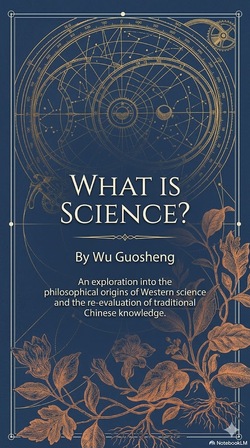
Wu Guosheng’s *What is Science* demystifies the often-muddled concept of science by bridging East-West perspectives and tracing its deep historical roots. It opens with how modern Chinese understandings of science—shaped by 19th-century quests for national survival and Western technological adoption—blur the line between science and practical technology, tying the term to national strength rather than its Western philosophical origins. The book then dives into Western science’s foundations: Greek rational science, a non-utilitarian pursuit of truth centered on deduction and free scholarship; its fusion with Christian theology during the Middle Ages, which laid groundwork for modern universities and rigorous scientific thought; and the shift to power-oriented, mathematical experimental science in the early modern era. It also highlights the overlooked natural history tradition, a parallel scientific path focused on observation, classification, and empirical documentation. Finally, it reexamines ancient Chinese natural knowledge, arguing that while China lacked Western-style rational science, it boasted a rich, holistic natural history tradition rooted in astronomy, geography, agriculture, and medicine. This eye-opening work challenges readers to move beyond narrow definitions and grasp science’s diverse cultural identities.
Understand the Book
Choose how you want to explore this book.




Explore with AI
 Ask about the book's ideas and how they relate to your life.