The Fiscal Code of the Central Empire
Loading…

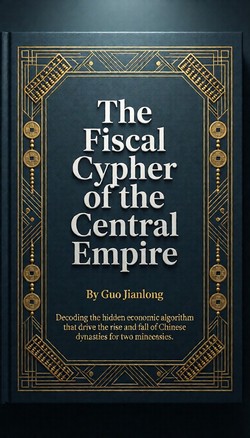
The Fiscal Code of the Central Empire

Guo Jianlong

3.11203 learners

Spanning over 2,000 years from the Qin Dynasty to the fall of the Qing, *The Fiscal Code of the Central Empire* unpacks how fiscal policies shaped the rise and collapse of China’s imperial dynasties. Guo Jianlong traces the origins of centralized finance in Qin’s aggressive unification reforms, explores failed experiments like Wang Mang’s retro fiscal overhauls, and analyzes the delicate balance between state control and economic vitality in eras like the Han, Tang, and Song. The book reveals how dynasties grappled with fiscal dilemmas: from funding wars and suppressing local elites to managing currency systems and adapting to changing economic realities. It also examines the fatal flaws of imperial finance—such as over-reliance on land taxes, state monopolies stifling private enterprise, and reckless currency printing—that eventually led to systemic collapse. Finally, it chronicles the Qing’s failed attempts at modernizing its fiscal system amid Western pressures, offering a compelling lens into how financial decisions determined the fate of one of history’s longest-lasting imperial systems.
Two-Tax SystemFiscal CrisisCentralized Fiscal SystemEqual Field SystemSingle Whip Law
This Time Is Different
Loading…

This Time Is Different

Carmen M. Reinhart;Kenneth S. Rogoff

4.4917 learners

This book dismantles the persistent 'This Time Is Different' myth by drawing on centuries of global financial crisis data—from 14th-century sovereign defaults to the 2008 subprime meltdown. Carmen Reinhart and Kenneth Rogoff systematically unpack recurring patterns across crises, including sovereign debt defaults, banking collapses, hyperinflation, and currency devaluations, revealing that overconfidence, excessive borrowing, and disregard for historical precedents drive every crisis. They introduce pivotal concepts like 'debt intolerance,' explaining why emerging markets face default risks at far lower debt thresholds than developed nations, and shed light on the overlooked role of domestic public debt in triggering financial meltdowns. By cross-referencing cross-country and historical case studies, the authors prove financial crises are predictable, not random, and urge policymakers and investors to prioritize historical warning signs over the illusion of 'new era' immunity.

HyperinflationThis Time Is Different SyndromeSovereign Debt DefaultDebt IntoleranceBanking Crisis
Principles for Navigating Big Debt Crises
Loading…

Principles for Navigating Big Debt Crises

Ray Dalio

4.4721 learners

Drawing on decades of research and real-world market experience, Ray Dalio’s *Big Debt Crisis* demystifies the complex mechanics of debt cycles and financial crises. Through deep dives into iconic historical cases—from Weimar Germany’s hyperinflation and the U.S. Great Depression to the 2008 subprime meltdown and Eurozone debt crises—Dalio breaks down how bubbles form, why they burst, and the critical differences between deflationary and inflationary depressions. He outlines the four core tools policymakers use to manage deleveraging: fiscal austerity, debt restructuring, money printing, and wealth transfers, emphasizing the delicate balance needed to achieve 'beautiful deleveraging' that minimizes economic pain. This book equips readers, from investors to policymakers, with a framework to identify crisis warning signs, understand policy tradeoffs, and navigate turbulent financial landscapes with confidence.

Monetary Policyquantitative easingDebt cyclesDeleveragingDeflationary depression
The Logic of Economy Operation
Loading…

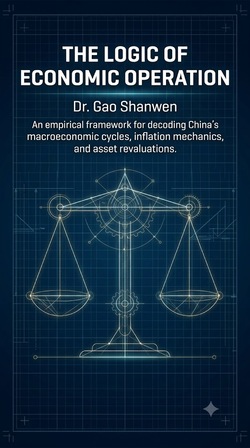
The Logic of Economy Operation

Gao Shanwen

3.2676 learners

Drawing on rigorous scientific research frameworks, *The Logic of Economy Operation* demystifies the inner workings of China’s economy for investors, analysts, and economic enthusiasts. Starting with a deep dive into the core principles of empirical research—contrasting Western logical rigor with traditional Chinese thinking gaps—the book unpacks critical economic pillars: the drivers behind China’s inflation dynamics (including the Lewis Turning Point’s impact on food prices), the cyclical patterns of capacity expansion and contraction, and the theory of asset revaluation linking real economy trends to financial market movements. Using concrete case studies from the 2000s to the post-2008 crisis era, it offers actionable insights into distinguishing supply vs. demand shocks, interpreting monetary policy effects, and navigating asset allocation across cycles. The final sections address the evolving role of financial analysts and the unique valuation dynamics of China’s A-share market, making this a go-to guide for anyone seeking to understand and leverage China’s economic logic.

Capacity CycleLewis Turning PointPhillips CurveA-Share ValuationInflation Analysis
Free to Choose
Loading…

Free to Choose

Milton Friedman;Rose D. Friedman

4.2577 learners

In Free to Choose, Milton and Rose Friedman deliver a sharp, evidence-backed argument for the transformative power of free markets and limited government, framing voluntary exchange and the price system as the bedrock of prosperity and individual freedom. Drawing on real-world examples—from Hong Kong’s thriving laissez-faire economy to the failure of Soviet central planning, the Fed’s catastrophic role in the Great Depression to the inefficiencies of U.S. welfare programs—the Friedmans dismantle pervasive myths about government intervention. They explain how price signals coordinate global economic activity without central control, critique the harm of union power, regulatory overreach, and equality-of-outcome policies, and outline practical reforms: school vouchers to revitalize education, a negative income tax to replace broken welfare systems, and constitutional amendments to rein in big government. The book clarifies the critical distinction between equality of opportunity (compatible with freedom) and equality of outcome (destructive to it), urging readers to reclaim economic liberty as the foundation of a just, thriving society.

Limited GovernmentSchool VouchersNegative Income TaxGreat DepressionInflation
How An Economy Grows and Why It Crashes
Loading…

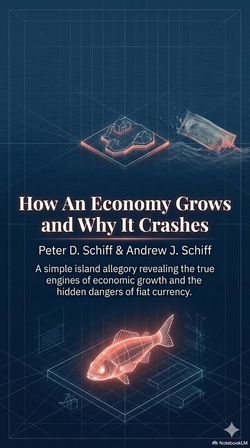
How An Economy Grows and Why It Crashes

Peter D. Schiff;Andrew J. Schiff

4.5556 learners

Using a playful, easy-to-follow story of a tropical island community starting from hand-to-mouth fishing, How An Economy Grows and Why It Crashes demystifies complex economic principles. Authors Peter and Andrew Schiff contrast the Austrian School’s focus on savings, productivity, and free markets with the flawed Keynesian policies that dominate modern economics. The book exposes how government intervention—from excessive money printing and deficit spending to trade barriers and artificial credit expansion—creates false prosperity, bubbles, and eventual crashes. Through relatable analogies, it connects the island’s journey to real-world crises like the 2008 housing bubble and quantitative easing, arguing that sustainable growth only comes from prioritizing production, responsible saving, and unshackling markets from harmful political meddling. Perfect for readers tired of confusing jargon, it cuts through economic myths to reveal the straightforward truths behind growth and collapse.

InflationProductivityComparative AdvantageSavingsKeynesianism
Method

Asset Allocation 3 Parts

Split assets: 1. Survival (cash/equivalents), 2. Beat inflation (index funds), 3. Beat market (undervalued core assets, only use spare money).

Asset ManagementInvestment
Insight

Inflation vs Unemployment Trade-off

Short-term: higher inflation lowers unemployment (more spending = more jobs). Long-term: this trade-off disappears.

Inflationunemployment
Scenario

Minimum Wage Stagnation

US minimum wage has not kept up with inflation. A full-time minimum wage worker can’t afford basic needs, pushing many into poverty.

Minimum WageInflationPoverty
View

Money & Inflation

Friedman said inflation is monetary, but this holds only in high inflation. In low inflation, excess money may go to assets instead of pushing up prices.

InflationMoney Supply
Concept

Stagflation Definition

Stagflation is high inflation plus high unemployment. The U.S. faced this in the 1970s due to oil shocks, excessive government spending, and loose monetary policy.

InflationStagflation1970s Economy
Scenario

Vanderbilt Wealth Collapse

Vanderbilt family's $200M wealth vanished in 20 years after William's death. Reason: Overspending to keep up with elites, no boundaries.

OverspendingWealth MismanagementLifestyle Inflation
Scenario

WWII Inflation Dynamics

WWII saw money supply double, but price controls and high savings kept inflation slow. Post-war, controls lifted—prices surged as people spent saved cash.

SavingsPrice ControlsWWII Inflation
Scenario

1953 Bond Market Crisis

Fed tightened policy in1953 to curb inflation, causing bond prices to drop sharply. They reversed course quickly, easing the economic downturn.

Fed Policy1953 CrisisBond Market
Concept

Money Illusion

People focus on nominal price, not real value. 5% raise in 5% inflation (real +1%) makes people happier than 2% raise in 0% inflation (real +2%).

InflationPricingMoney Illusion
Golden Sentence

Inflation is Monetary Phenomenon

"Inflation is always and everywhere a monetary phenomenon." – Milton Friedman, emphasizing excessive money supply causes inflation.

Monetary PolicyInflationFriedman Quote
Concept

Wage Stagnation Issue

Low-wage workers’ wages haven’t kept up with inflation. Even with raises, Ehrenreich’s income can’t cover basic needs like rent and food.

InflationPovertyWage stagnation
Concept

Long-Term Debt Cycle

Formed by repeated short cycles: debt grows faster than income until it’s unsustainable. Ends in a crisis (deflationary or inflationary) when repayment becomes impossible.

CrisisLong-Term CycleUnsustainability