Low-Risk Entrepreneurship
Loading…

Low-Risk Entrepreneurship

Fan Deng

3.11369 learners

"Low-Risk Entrepreneurship" by Fan Deng pulls back the curtain on why so many entrepreneurs fall into unnecessary high-risk traps, starting with how childhood experiences and personality traits unconsciously drive self-sabotaging decisions. It lays out a practical framework for building sustainable, profitable businesses by focusing on elegant solutions to real social problems—turning customer complaints into actionable opportunities, distinguishing true pain points from superficial needs, and avoiding the inventor’s trap of prioritizing tech over user demand. The book emphasizes building uncopyable "core secrets" as competitive barriers, designing antifragile structures to thrive amid uncertainty, and adopting biological team management to unlock collective creativity. It also introduces the MGM (Member Gets Member) model for organic customer growth and breaks down strategies for exponential scaling by leveraging zero-marginal-cost operations and shared resources. Packed with real-world case studies from Tencent, Google, and Airbnb, this guide equips aspiring and existing entrepreneurs to build successful ventures without gambling their livelihoods.

AntifragilityExponential GrowthLow-Risk EntrepreneurshipValue HypothesisMGM Growth Model
The Science of Distributing Wealth
Loading…

The Science of Distributing Wealth

Bian Zhihan

41328 learners

The Science of Distributing Wealth by Bian Zhihan demystifies the complex economic and social mechanisms shaping how wealth is divided across societies. Blending rigorous data analysis, historical case studies, and actionable policy insights, this book moves beyond ideological debates to present evidence-based approaches to balancing economic efficiency and social equity. It examines successful models from around the world—from Nordic welfare systems to targeted U.S. policy reforms—while dissecting root causes of growing wealth gaps, including inheritance structures, tax policies, and access to education. Designed for both economics enthusiasts and policymakers, it breaks down technical concepts into accessible language, offering practical strategies to build more sustainable and fair wealth distribution systems. Whether you’re curious about reducing inequality or understanding the science behind equitable growth, this book provides a comprehensive roadmap to navigate one of today’s most pressing global challenges.

Social MobilityWealth Distribution ModelsProgressive TaxationGini CoefficientInheritance Tax
Quit
Loading…

Quit

Annie Duke

3.91322 learners

Annie Duke’s *Quit* upends the cultural myth that persistence equals success, arguing that knowing when to walk away is the unsung skill of high achievers. Drawing on real-world examples—from 1996 Everest climbers who survived by abandoning their summit goal to Stewart Butterfield’s pivot from failed games to create Slack—Duke breaks down the cognitive biases that trap us in unproductive paths: loss aversion, sunk cost fallacy, endowment effect, and the fear of losing our identity tied to a project or role. She provides actionable tools to make rational quitting decisions, including calculating expected value, setting pre-defined ending criteria, and using the 'Monkey & Pedestal' model to focus on core, unsolvable problems first. Duke also emphasizes the power of active exploration, urging readers to avoid complacency and keep backup options open, so they can pivot proactively instead of waiting for crisis to force a change. This book is a roadmap to navigating uncertainty, cutting losses, and redirecting energy toward opportunities that truly align with your goals.

Loss AversionExpected Value CalculationSunk Cost FallacyEnding CriteriaMonkey & Pedestal Model
China's Modernization
Loading…

China's Modernization

Li Huaiyin

3.71293 learners

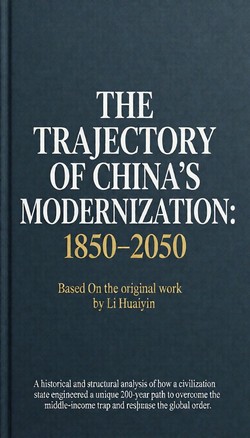
China's Modernization delivers a provocative, non-Western-centric deep dive into one of the 21st century's most pivotal global shifts. It first unpacks the evolution of Western modernization theory—from Weber's rationalization framework to its Cold War role as a U.S. ideological tool—before dismantling the myth that Western models are universal. The book then traces China's 200-year journey: starting with the late Qing's reluctant embrace of modernity, the chaotic nation-building of the Republican era, the foundational industrialization of the pre-reform decades, and the explosive growth of the reform era. It introduces the game-changing concept of 'meta-strength'—a unique combination of population scale, ethnic homogeneity, secular values, high human capital, and state capacity—that drives China's sustained growth. By contrasting China's path with failed import-substitution strategies and the limitations of the Washington Consensus, the book argues that China's success lies in leveraging its historical and cultural heritage, offering a new blueprint for non-Western nations navigating modernization.

Modernization TheoryChinese Modernization PathMeta-StrengthTriple Equilibrium TrapState Capacity
Acquiring Customers
Loading…

Acquiring Customers

He Run;Zhang Yanlin

3.61284 learners

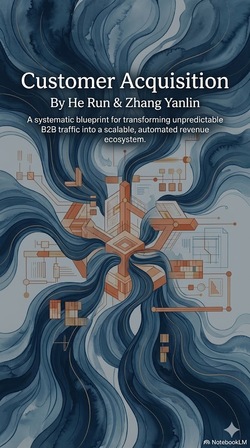
For CMOs and B2B/high-ticket business leaders grappling with skyrocketing customer acquisition costs and stagnant growth, *Acquiring Customers* delivers a data-backed, actionable playbook to turn marketing from a cost center into a profit driver. The book opens by addressing urgent industry pain points: 60% of B2B CMOs still waste time on outdated traditional tactics, while 40% face blame for missed revenue targets. It introduces the game-changing "Fishpond Nurturing Model"—framing customers as fish, businesses build dedicated pools to attract, qualify, and nurture leads instead of casting wide, inefficient nets. Dive into step-by-step strategies: build multi-channel content matrices tailored to buyer journeys, leverage inbound marketing and Account-Based Marketing (ABM) for targeted reach, use SCRM tools to unify lead data, and implement scientific lead scoring and nurturing to boost conversion rates. Real-world case studies from Microsoft China, Budweiser APAC, and Sigma prove these tactics work, showing how to cut acquisition costs by 67%, boost lead conversion by 47%, and align marketing and sales teams for seamless, sustainable growth.

Fishpond Nurturing ModelSCRMContent MarketingInbound MarketingAccount-Based Marketing (ABM)
Blitzscaling
Loading…

Blitzscaling

Reid Hoffman;Chris Yeh

4.31279 learners

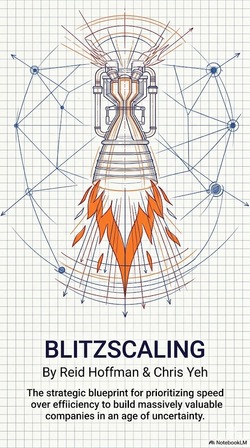
In Blitzscaling, Reid Hoffman and Chris Yeh lay out a groundbreaking growth strategy that prioritizes speed over short-term efficiency to build dominant, scalable businesses in volatile markets. Unlike traditional growth models focused on stability and optimization, blitzscaling embraces controlled chaos—accepting inefficiencies and calculated risks to rapidly hit critical mass and lock in unbeatable competitive advantages, as seen in Airbnb’s fight against Wimdu, WeChat’s explosive user surge, and Zara’s fast-fashion dominance. The book breaks down actionable frameworks: designing scalable business models with network effects and high margins, navigating five distinct organizational phases (from "Family" to "Nation"), and adopting counterintuitive management rules like hiring "good enough" talent and launching imperfect products. It extends beyond tech, demonstrating how traditional industries, nonprofits, and even political campaigns can leverage blitzscaling. Crucially, Hoffman and Yeh emphasize responsible blitzscaling, guiding readers to balance speed with ethical accountability to ensure long-term sustainability, making this playbook essential for startup founders, corporate leaders, and innovators aiming to outpace competitors and build enduring market leaders.

Corporate ResponsibilityNetwork EffectsGrowth StrategyViral GrowthBusiness Model Innovation
Getting Things Done
Loading…

Getting Things Done

David Allen

4.11241 learners

Feeling swamped by endless tasks, overflowing inboxes, and constant mental clutter? David Allen’s *Getting Things Done* (GTD) is the game-changing system designed to help you break free from overwhelm and achieve stress-free productivity. Rooted in proven psychological principles, GTD teaches you to offload every unfinished task from your mind into a reliable external system, freeing up mental space for deep thinking and creativity. The system’s core lies in five interconnected horizontal stages—Capture, Clarify, Organize, Review, and Act—that guide you from collecting every loose thought to taking intentional, focused action. It also includes a vertical natural planning model for tackling complex projects, plus a six-level framework to align daily actions with long-term goals and values. Whether you’re a busy professional juggling deadlines, a parent balancing work and family, or anyone craving more control over their days, GTD provides actionable steps to turn chaos into calm, ensuring you always know exactly what to do next.

Next ActionGTD MethodCapture ProcessWeekly ReviewNatural Planning Model
Weapons of Math Destruction
Loading…

Weapons of Math Destruction

Cathy O'Neil

4.11215 learners

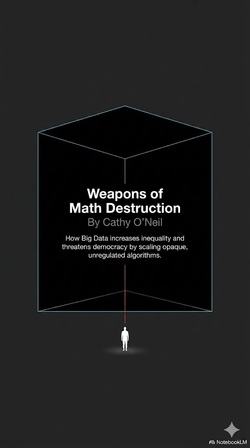
In *Weapons of Math Destruction*, former hedge fund mathematician Cathy O'Neil pulls back the curtain on seemingly neutral algorithms that operate as hidden tools of systemic oppression. She defines these "WMDs" by three core traits: opacity (their inner workings are kept secret), scalability (they target millions at once), and destructiveness (they trap marginalized groups in cycles of harm). Through gripping case studies—from criminal justice recidivism models that penalize poor communities to predatory for-profit college ads that exploit vulnerable individuals, from biased hiring tests that shut out qualified candidates to insurance pricing that overcharges low-income drivers—O'Neil exposes how these models encode societal prejudices into code, prioritizing efficiency and profit over fairness. She also highlights hopeful alternatives: algorithms designed to uplift rather than exploit, rooted in transparency, accountability, and a commitment to serving human needs. A must-read for anyone seeking to understand how data shapes power, inequality, and justice in the digital age.

Algorithmic BiasFeedback LoopsWeapons of Math DestructionRecidivism ModelsCredit Scoring
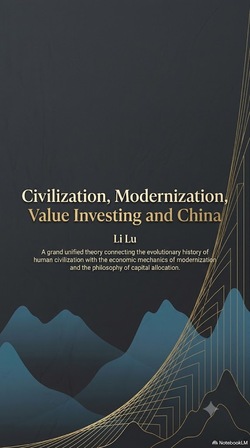
Civilization, Modernization, Value Investment and China
Loading…

Civilization, Modernization, Value Investment and China

Li Lu

4.21206 learners

Li Lu’s *Civilization, Modernization, Value Investment and China* blends cross-disciplinary historical research, economic analysis, and hands-on investment expertise to demystify China’s rise and its place in global civilization. Drawing on Jared Diamond’s geographic determinism and Ian Morris’s Social Development Index, Lu traces 16,000 years of human progress, breaking down why the West pulled ahead after 1800 and how China is now catching up. He unpacks the Malthusian trap that constrained agricultural civilizations, the catalysts of modernization (free markets, constitutional democracy, steam power), and China’s turbulent journey from Opium Wars to reform-era growth. Shifting to investing, Lu makes a compelling case for value investing’s viability in China, using examples like BYD to show how focusing on business ownership, safety margins, and staying within one’s circle of competence delivers long-term returns. His unique perspective—shaped by 20+ years in both China and the U.S.—bridges East-West divides, offering investors and global thinkers a clear roadmap to understand China’s past, present, and future.

ModernizationCircle of CompetenceValue InvestingSafety MarginSocial Development Index
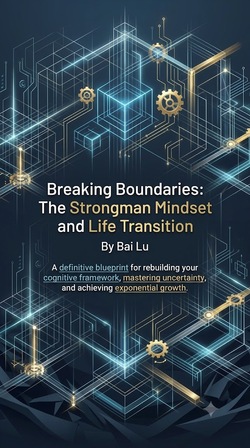
Unconventional
Loading…

Unconventional

Bai Lu

31194 learners

Unconventional isn’t another generic self-help guide—it’s a no-nonsense playbook for building unshakable mental strength, mastering your deepest desires, and crafting a life on your own terms. Drawing on real-life anecdotes, timeless wisdom from thinkers like Seneca and Viktor Frankl, and actionable frameworks, author Bai Lu breaks down how to thrive in an uncertain world. You’ll learn to separate what you can control from what you can’t, reframe setbacks as growth fuel, and stop letting external chaos derail your focus. The book also dives into harnessing core desires (not suppressing them), identifying your unique strengths to stand out, turning knowledge into results through effective practice, and leveraging mindset models like compound growth and gray thinking. Plus, it shares practical strategies for building high-value relationships—from learning from relatable role models to connecting with industry leaders by offering genuine value. Whether you’re stuck in a career rut, struggling with decision-making, or craving more purpose, Unconventional gives you the tools to take charge and achieve lasting success.

personal growthCompound GrowthValue ExchangeRole Modeleffective practice
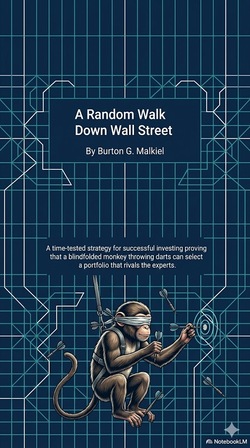
A Random Walk Down Wall Street
Loading…

A Random Walk Down Wall Street

Burton G. Malkiel

4.11189 learners

Burton G. Malkiel’s *A Random Walk Down Wall Street* demystifies investing chaos by centering the random walk concept—short-term stock price movements are entirely unpredictable, making technical analysis and market timing futile. Malkiel contrasts two foundational theories: the Firm Foundation approach, which focuses on calculating a stock’s intrinsic value, and the Castle in the Air strategy, which leverages market sentiment. He dissects historic speculative bubbles, from Tulip Mania to the 2008 housing crash, to illustrate how irrational investor behavior fuels market extremes. Backed by the Efficient Market Hypothesis, the book argues most active fund managers fail to outperform broad market indices long-term. It also explores Modern Portfolio Theory, behavioral finance biases, and practical tactics for everyday investors: building diversified portfolios, using low-cost index funds, aligning asset allocation with life stages, and following tax-efficient saving plans. Whether novice or seasoned, this guide delivers actionable insights to build sustainable wealth while avoiding common pitfalls.

Asset AllocationEfficient Market HypothesisIndex FundsBehavioral FinanceRandom Walk Theory
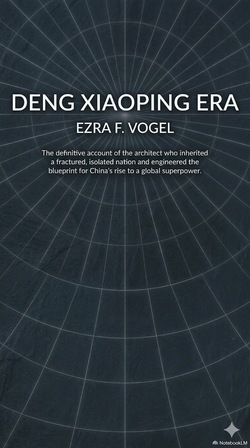
Deng Xiaoping and the Transformation of China
Loading…

Deng Xiaoping and the Transformation of China

Ezra F. Vogel

4.21186 learners

Ezra F. Vogel’s definitive biography traces Deng Xiaoping’s extraordinary journey from a young patriotic activist in 1920s France to the architect of China’s modern transformation. Detailing his political ups and downs—from purges during the Cultural Revolution to his triumphant comebacks—the book unpacks Deng’s pragmatic governance: his push for Special Economic Zones, the household contract system that revolutionized agriculture, and the bold normalization of Sino-US and Sino-Japanese relations. It explores his unyielding stance on national sovereignty, including the 'One Country, Two Systems' framework for Hong Kong’s return, and his efforts to modernize the PLA while prioritizing economic growth. Vogel also examines the tensions and trade-offs of Deng’s era: balancing reform with stability, addressing corruption risks, and navigating ideological divides. More than a political portrait, this work reveals how Deng’s leadership lifted hundreds of millions out of poverty and shifted China from a closed, stagnant state to a global economic powerhouse.

Special Economic ZonesDeng XiaopingReform and Opening UpOne Country Two SystemsSino-US Diplomatic Relations
The Grand Design
Loading…

The Grand Design

Stephen Hawking;Leonard Mlodinow

4.51177 learners

Stephen Hawking’s *The Grand Design* redefines humanity’s grasp of the cosmos, merging cutting-edge physics with timeless questions about reality, existence, and our place in the universe. Moving past traditional religious and philosophical explanations, Hawking argues that science—not philosophy—now holds the keys to unraveling the universe’s deepest mysteries. He introduces model-dependent realism, a framework positing our perception of reality stems from brain-built models that interpret observations, not a direct reflection of absolute truth. The book dives into quantum mechanics’ oddities, including Feynman’s path integral formulation and the radical idea that the universe has no single history. It explores M-theory, the leading candidate for a unified "theory of everything" tying all fundamental forces together, and the multiverse hypothesis, which suggests our universe is just one of countless others with varying physical laws. Hawking also uses the weak anthropic principle to explain why our universe’s constants are perfectly tuned for life: we exist because we’re in a universe that allows it, not due to divine design. Accessible yet profound, this book challenges long-held assumptions and invites readers to see the cosmos through a revolutionary scientific lens.

MultiverseModel-dependent realismM-theoryQuantum mechanicsBig Bang
Alan Turing: The Enigma
Loading…

Alan Turing: The Enigma

Andrew Hodges

4.51174 learners

Andrew Hodges’ *Alan Turing: The Enigma* delivers a definitive, intimate portrait of one of the 20th century’s most brilliant and tragic minds. From his rebellious childhood at Sherborne School, where his friendship with Christopher Morcom ignited his scientific curiosity, to his groundbreaking 1936 paper introducing the Turing Machine—laying the foundation for modern computing—this biography traces Turing’s extraordinary journey. It vividly recounts his pivotal WWII role designing the Bombe machine to crack Nazi Germany’s Enigma code, a feat that shortened the war and saved countless lives. Post-war, Turing pushed boundaries again, leading the ACE computer project and pioneering morphogenesis research, using math to explain biological pattern formation. Yet despite his immense contributions, Turing faced brutal persecution for his homosexuality: convicted of gross indecency in 1952, he was subjected to chemical castration, ultimately dying by cyanide poisoning in 1954. Hodges balances technical depth with emotional resonance, exploring the tension between Turing’s radical intellect and rigid societal norms, cementing his legacy as the father of computing and a symbol of intolerance’s cost.

Turing MachineAlan TuringEnigma CodeBombe MachineACE Computer
The Model Thinker
Loading…

The Model Thinker

Scott E. Page

41168 learners

Written by Scott E. Page, *The Model Thinker* introduces a transformative framework for navigating the world’s complexity: multi-model thinking. Rejecting the limitations of single perspectives, Page argues that combining diverse models—spanning economics, statistics, game theory, and social sciences—unlocks a more nuanced understanding of real-world problems. The book guides readers through foundational concepts, core models (from normal distributions to system dynamics), and practical applications, using case studies like the U.S. opioid crisis and income inequality to demonstrate how multiple models can reveal hidden mechanisms and inform smarter decisions. It outlines seven key uses of models, from explanation to prediction, and addresses both the strengths and limitations of multi-model thinking, emphasizing that even a dozen well-chosen models can enhance reasoning, communication, and decision-making. Page also provides actionable strategies for integrating these models into daily life, making this book an essential toolkit for professionals, students, and anyone seeking to cut through confusion and make more informed choices.

Path DependenceCollective ActionReinforcement LearningGame TheorySystem Dynamics
Shi and Chinese Culture
Loading…

Shi and Chinese Culture

Yu Ying-shih

4.71154 learners

Yu Ying-shih's *Shi and Chinese Culture* delivers a sweeping, nuanced exploration of the shi—China's scholar-official class—tracking its evolution from low-ranking feudal nobles in the Zhou Dynasty to the intellectual backbone that shaped Chinese civilization for millennia. The book unpacks how the shi transitioned from a warrior-scholar elite bound by feudal duties to a mobile, self-aware community of thinkers after the Zhou order collapsed, embracing the ethos of "upholding the Dao" to balance imperial power. It delves into Han Dynasty "xun-li" (model officials) who brought Confucian values to rural China, Eastern Han gentry clans that underpinned the dynasty, the Wei-Jin era's "shi consciousness" that sparked metaphysical debates, and late imperial merchants shaped by Neo-Confucian and religious ethics. By linking political, social, and intellectual shifts, this work reveals the shi's enduring role as cultural stewards, political critics, and social integrators, illuminating the tensions between individual autonomy and collective order at the heart of Chinese culture.

Shi ClassConfucian EthosDaoXun-li (Model Officials)Gentry Clans
Adaptive Markets
Loading…

Adaptive Markets

Andrew W. Lo

41150 learners

Andrew W. Lo’s *Adaptive Markets* upends decades of financial orthodoxy by replacing the rigid Efficient Market Hypothesis with a dynamic framework rooted in evolution and neuroscience. Lo argues that financial markets aren’t governed by perfectly rational “economic men” but by humans shaped by millions of years of survival instincts—instructions that often misfire in the fast-paced, modern financial landscape. Drawing on real-world examples, from a pilot’s life-saving fear response to the 2008 financial crisis and 2007 quant crash, he explains how market efficiency shifts as investors adapt to changing environments. The book also explores how evolutionary logic applies to hedge fund evolution, regulatory design, and even using financial tools to solve global challenges like cancer research and climate change. By bridging biology, neuroscience, and finance, Lo offers a compelling new lens to decode market chaos, identify opportunities, and reimagine finance’s role in advancing human well-being.

Efficient Market HypothesisBehavioral FinanceAdaptive Market HypothesisSystemic RiskHedge Funds
Drive
Loading…

Drive

Daniel H. Pink

4.21136 learners

In *Drive*, Daniel H. Pink dismantles the outdated 'carrot-and-stick' model of motivation (Drive 2.0) that fueled the industrial age, arguing it falls flat in today’s creative, complex work environments. Drawing on decades of behavioral science research and real-world examples—from Google’s 20% time policy to TOMS Shoes’ 'one-for-one' model—Pink introduces Drive 3.0, a framework rooted in three core intrinsic motivators: autonomy (the desire to direct our own lives), mastery (the urge to get better at something that matters), and purpose (the yearning to serve something larger than ourselves). He demonstrates that when individuals and organizations prioritize these elements over external rewards, they unlock higher productivity, greater job satisfaction, and more sustainable success. Whether you’re a leader energizing a team or an individual seeking deeper fulfillment, *Drive* offers actionable strategies to shift from extrinsic to intrinsic motivation.

AutonomyFlow StatePurposeDeliberate PracticeDrive 3.0
The Beauty of Mathematics
Loading…

The Beauty of Mathematics

Wu Jun

4.31125 learners

Ever wondered how your favorite search engine nails your query, or how voice recognition understands your speech? The Beauty of Mathematics demystifies the hidden math powering these everyday technologies. Written by Wu Jun, this book breaks down complex concepts—from statistical language models and hidden Markov models to information entropy and Boolean algebra—and shows how they transformed natural language processing, web search, and AI from lab experiments to real-world tools. It also shares fascinating stories of pioneers like Fred Jelinek, who revolutionized speech recognition by ditching rule-based methods for statistics, and Amit Singhal, Google’s master of simple, efficient algorithms. Whether you’re a tech enthusiast, student, or professional, this book reveals math isn’t just abstract formulas—it’s the backbone of the digital world you rely on daily.

Statistical Language ModelHidden Markov ModelInformation EntropyBoolean AlgebraTF-IDF Algorithm
Value-Based Selling
Loading…

Value-Based Selling

Cui Jianzhong

31115 learners

Tired of being trapped in endless price wars and fleeting client deals? *Value-Based Selling* transforms B2B sales from a product-pushing grind into a strategic partnership focused on driving client organizational performance. Unlike traditional sales methods that react to surface-level client demands, this framework empowers sales teams to proactively uncover hidden client pain points, deliver measurable value beyond product features, and build long-term, profitable relationships. It breaks down the sales journey into actionable phases: qualifying high-value leads, converting leads into active opportunities, shaping client expectations to align with your strengths, creating performance-driven value via the Reference Framework, and closing deals by syncing with the client’s procurement process. Packed with practical tools like the MEN Model (Expectations, Needs, Motivation) and real-world strategies, this guide helps you escape commodity competition, boost profit margins, and position yourself as a trusted client performance advisor—perfect for navigating today’s informed, value-focused B2B market.

Value CreationLead QualificationValue-Based SellingMEN ModelReference Framework