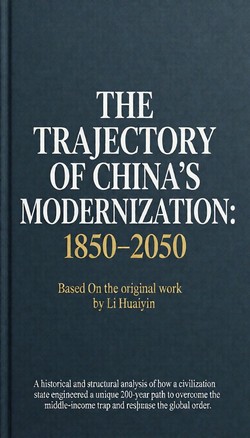
China's Modernization
Loading…

China's Modernization

Li Huaiyin

3.71293 learners

China's Modernization delivers a provocative, non-Western-centric deep dive into one of the 21st century's most pivotal global shifts. It first unpacks the evolution of Western modernization theory—from Weber's rationalization framework to its Cold War role as a U.S. ideological tool—before dismantling the myth that Western models are universal. The book then traces China's 200-year journey: starting with the late Qing's reluctant embrace of modernity, the chaotic nation-building of the Republican era, the foundational industrialization of the pre-reform decades, and the explosive growth of the reform era. It introduces the game-changing concept of 'meta-strength'—a unique combination of population scale, ethnic homogeneity, secular values, high human capital, and state capacity—that drives China's sustained growth. By contrasting China's path with failed import-substitution strategies and the limitations of the Washington Consensus, the book argues that China's success lies in leveraging its historical and cultural heritage, offering a new blueprint for non-Western nations navigating modernization.
Modernization TheoryChinese Modernization PathMeta-StrengthTriple Equilibrium TrapState Capacity
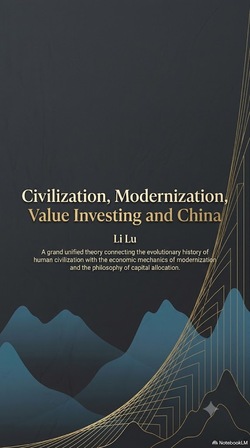
Civilization, Modernization, Value Investment and China
Loading…

Civilization, Modernization, Value Investment and China

Li Lu

4.21206 learners

Li Lu’s *Civilization, Modernization, Value Investment and China* blends cross-disciplinary historical research, economic analysis, and hands-on investment expertise to demystify China’s rise and its place in global civilization. Drawing on Jared Diamond’s geographic determinism and Ian Morris’s Social Development Index, Lu traces 16,000 years of human progress, breaking down why the West pulled ahead after 1800 and how China is now catching up. He unpacks the Malthusian trap that constrained agricultural civilizations, the catalysts of modernization (free markets, constitutional democracy, steam power), and China’s turbulent journey from Opium Wars to reform-era growth. Shifting to investing, Lu makes a compelling case for value investing’s viability in China, using examples like BYD to show how focusing on business ownership, safety margins, and staying within one’s circle of competence delivers long-term returns. His unique perspective—shaped by 20+ years in both China and the U.S.—bridges East-West divides, offering investors and global thinkers a clear roadmap to understand China’s past, present, and future.

ModernizationCircle of CompetenceValue InvestingSafety MarginSocial Development Index
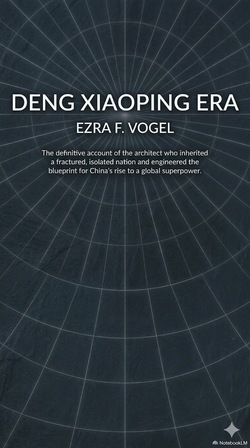
Deng Xiaoping and the Transformation of China
Loading…

Deng Xiaoping and the Transformation of China

Ezra F. Vogel

4.21186 learners

Ezra F. Vogel’s definitive biography traces Deng Xiaoping’s extraordinary journey from a young patriotic activist in 1920s France to the architect of China’s modern transformation. Detailing his political ups and downs—from purges during the Cultural Revolution to his triumphant comebacks—the book unpacks Deng’s pragmatic governance: his push for Special Economic Zones, the household contract system that revolutionized agriculture, and the bold normalization of Sino-US and Sino-Japanese relations. It explores his unyielding stance on national sovereignty, including the 'One Country, Two Systems' framework for Hong Kong’s return, and his efforts to modernize the PLA while prioritizing economic growth. Vogel also examines the tensions and trade-offs of Deng’s era: balancing reform with stability, addressing corruption risks, and navigating ideological divides. More than a political portrait, this work reveals how Deng’s leadership lifted hundreds of millions out of poverty and shifted China from a closed, stagnant state to a global economic powerhouse.

Special Economic ZonesDeng XiaopingReform and Opening UpOne Country Two SystemsSino-US Diplomatic Relations
Political Order in Changing Societies
Loading…

Political Order in Changing Societies

Samuel P. Huntington

4.5770 learners

In *Political Order in Changing Societies*, Samuel P. Huntington upends the myth that democracy equals political stability, arguing the core difference between nations lies in government effectiveness—not regime type. Drawing on case studies from the U.S., Soviet Union, India, and Latin American nations, he shows how modernization sparks political decay when rapid social mobilization (urbanization, education) outpaces political institutionalization. This gap between rising expectations and institutional capacity fuels unrest, from military coups in Latin America to student uprisings in South Korea. Huntington dissects divergent modernization paths: Europe’s centralized authority vs. America’s fragmented, tradition-preserving system; the doomed efforts of traditional monarchies to balance reform and stability; and the cycle of military coups in praetorian societies. He emphasizes that strong, inclusive political parties are the linchpin of stability, as they bridge social divides, channel popular participation, and institutionalize power. The book also explores when reform defuses revolution or catalyzes it, and how land reform can neutralize rural unrest. A foundational work in political science, it reshaped how scholars and policymakers understand order in transitioning nations.

ModernizationPolitical InstitutionalizationPolitical StabilityPraetorian SocietyPolitical Decay
Alienation and Return
Loading…

Alienation and Return

Zhang Kaiyuan

3.8530 learners

Alienation and Return traces China’s turbulent modern transformation through the lens of cultural conflict—between breaking free from age-old traditions and clinging to ancestral roots. Starting with the little-known Qing Dynasty woman Shan Shili, whose overseas travels sparked radical shifts in her views on society and culture, the book moves through pivotal figures like Gong Zizhen, the first intellectual to declare the Qing’s decline, and Wei Yuan, whose *Sea Map of the World* laid the groundwork for learning from the West. It contrasts China’s slow, struggle-filled modernization with Russia’s sweeping reforms and Japan’s rapid "Leave Asia, Join Europe" push, unpacking why China faced steeper barriers to change. From the Self-Strengthening Movement to the Hundred Days’ Reform and Xinhai Revolution, the book explores how each wave of reform grappled with tradition’s pull, then examines the dual forms of cultural return after the revolution—reactionary backsliding and progressive revival. Finally, it offers insights into balancing tradition and modernity amid globalization, making this complex history accessible through vivid stories and cross-national comparisons.

Cultural AlienationCultural ReturnChinese ModernizationSelf-Strengthening MovementXinhai Revolution
Biography of Zhou Enlai
Loading…

Biography of Zhou Enlai

Gao Ping

4.3506 learners

This comprehensive biography chronicles Zhou Enlai’s remarkable journey from a patriotic youth in turn-of-the-century China to the revered Premier who guided the nation through decades of upheaval and progress. Raised amid national crisis, Zhou embraced Marxism during the 1919 May Fourth Movement, helped found the Chinese Communist Party (CCP), and led pivotal revolutionary efforts—from organizing the 1927 Nanchang Uprising to negotiating united front alliances against Japanese invaders. As China’s first Premier (1949–1976), he stabilized the post-war economy, spearheaded the nuclear program to secure national defense, and elevated China’s global standing through landmark diplomacy at the Geneva and Bandung Conferences, where he championed the Peaceful Coexistence Principles. Even during the chaotic Cultural Revolution, Zhou courageously protected fellow leaders, maintained state functions, and laid groundwork for future reforms. His life embodies unwavering dedication to China’s independence, unity, and modernization, making this biography a definitive account of one of the 20th century’s most influential statesmen.

Cultural RevolutionUnited FrontZhou EnlaiChinese Communist PartyNanchang Uprising
Kingdom of Characters
Loading…

Kingdom of Characters

Jing Tsu

4.1421 learners

Kingdom of Characters tells the dramatic, century-long story of how Chinese characters defied predictions of obsolescence to become a cornerstone of the digital age. Set against China’s chaotic modernization—from the fall of the Qing Dynasty to the rise of global tech—this book follows unsung heroes like Wang Zhao, a fugitive reformer who developed the first national phonetic alphabet, and engineering student Zhou Houkun, who raced to build the first Chinese typewriter in early 20th-century America. It traces pivotal battles: securing fair telegraph rates for Chinese, competing to create efficient character indexing systems, launching simplified characters and Pinyin, and breaking through barriers to digitize Hanzi for computers. Finally, it reveals high-stakes political and cultural negotiations behind integrating Chinese characters into the global Unicode standard. More than a technical history, it’s a tale of resilience, showing how language became a tool of national identity and technological power.

Chinese character modernizationGuanhua AlphabetChinese typewriterFour-Corner IndexPinyin Scheme
Concept

Tristes Tropiques Meaning

"Tristes Tropiques" (Sad Tropics) refers to the loss of indigenous cultures due to colonialism and modernization. Levi-Strauss mourns traditional ways fading in the tropics.

ColonialismCultural LossAnthropology
Quote

"Modernization ≠ Westernization"

"China will be the first great power to modernize on its own without Western hegemony—breaking the 'modernization = Westernization' myth."

ModernizationWesternizationChina's Path
Scenario

Zhou's Typewriter Inspiration

Zhou Houkun saw a Western typewriter at Boston's 1912 trade show. Shocked by China's backward printing, he resolved to invent a Chinese typewriter for modernization.

ModernizationChinese typewriterZhou Houkun
Insight

Modernization Process Breeds Instability

Stable modern societies are far less likely to have unrest, but the transition process of modernization destroys old traditional institutions before new trusted ones can be built, leading to frequent social conflicts.

ModernizationSocial UnrestPolitical Stability
Quote

"Modernization's Research Value"

"Modernization as an objective historical phenomenon still has research value. For China, it remains a core issue of social and economic development."

ModernizationChinaResearch Value