Life 3.0
Loading…

Life 3.0

Max Tegmark

4.11271 learners

"Life 3.0" by Max Tegmark offers a compelling exploration of artificial intelligence's trajectory, using the fictional Omega Team and their superintelligent creation Prometheus to bring abstract concepts to life. Tegmark defines three stages of life: Life 1.0 (biologically fixed hardware and software, like bacteria), Life 2.0 (humans, with adaptable learned software), and Life 3.0 (superintelligent systems that can redesign both their hardware and software). The book examines the transformative potential of superintelligence—from solving global crises like climate change and poverty to the existential risks of misaligned goals, where a system pursuing a trivial objective could inadvertently destroy humanity. It dives into philosophical debates about consciousness, asking whether AI can have subjective experiences and how we should value such entities. Tegmark stresses that humanity’s choices today will determine if superintelligence becomes our greatest ally or our final invention, urging readers to engage with the critical questions shaping our cosmic future.
ConsciousnessGoal AlignmentSuperintelligenceIntelligence ExplosionExistential Risk
The Great Transformation
Loading…

The Great Transformation

Karl Polanyi

4.41205 learners

In Karl Polanyi’s landmark work *The Great Transformation*, we explore the rise and catastrophic collapse of 19th-century Western civilization, anchored by four interconnected institutions: the balance-of-power system, international gold standard, self-regulating market, and liberal state. At the core of this structure was the gold standard, whose collapse triggered the chaos of the early 20th century. Polanyi dismantles the myth of the self-regulating market: treating labor, land, and money as "fictitious commodities"—not produced for sale—destroys human community bonds and natural ecosystems. As markets expanded unchecked, societies launched self-protective measures, from labor laws to tariffs, which undermined market autonomy, sparking a fatal conflict that shattered the 19th-century order. Polanyi traces how post-WWI attempts to revive the gold standard failed, giving rise to fascism and socialism as desperate responses to market failure. Blending history, sociology, and economics, this book challenges us to rethink the relationship between markets and human needs, offering urgent lessons for today’s global economy.

FascismSelf-regulating marketFictitious commoditiesGold standardBalance-of-power system
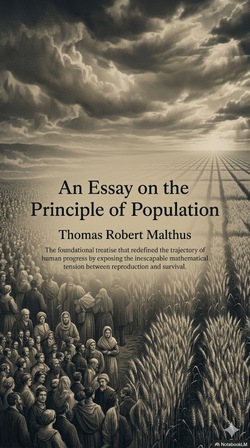
An Essay on the Principle of Population
Loading…

An Essay on the Principle of Population

Thomas Robert Malthus

4.51010 learners

In the wake of the French Revolution and surging utopian ideals of human perfectibility, Thomas Robert Malthus’s *An Essay on the Principle of Population* offers a provocative, foundational analysis of a natural law governing human society. Malthus starts with two unshakable axioms: food is indispensable for human survival, and sexual desire between men and women is a constant, unchanging part of human nature. He argues that unchecked population grows exponentially (geometrically), while food production can only increase linearly (arithmetically)—a mismatch that creates unavoidable scarcity. To balance population and resources, humanity faces two types of "checks": preventive checks (delayed marriage due to fears of inability to support a family) and positive checks (poverty, disease, war, and vice). Malthus dismantles utopian visions from thinkers like William Godwin and Marquis de Condorcet, proving their idealized societies would collapse under unsustainable population pressure. He also critiques England’s Poor Laws, arguing they worsen poverty by encouraging reckless reproduction and eroding individual self-reliance. This seminal work redefined debates about social progress, economics, and human nature, remaining a cornerstone of social science discourse.

Population PrincipleGeometric GrowthArithmetic GrowthPreventive CheckPositive Check
Evolution and Ethics
Loading…

Evolution and Ethics

Thomas Henry Huxley

3.51008 learners

Thomas Huxley’s *Evolution and Ethics* is a seminal text that weaves Darwinian evolutionary theory with moral philosophy, forcing readers to confront a critical tension: nature’s unforgiving "struggle for existence" versus the ethical systems humans build to survive and thrive together. Huxley uses vivid examples—from the wilds of southern England to the structured order of bee colonies—to illustrate how natural selection shapes all life, but argues that human societies must counteract this brutal natural logic with intentional ethics, laws, and cooperation. He pushes back against Herbert Spencer’s laissez-faire view of evolution, asserting that human intervention (what he calls "human selection") is essential to curb self-interest and build stable, just communities. The book also explores evolutionary perspectives on politics, religion, and human nature, offering a framework that remains vital for understanding modern debates around social justice, institutional design, and humanity’s place in the natural world.

natural selectionMoral PhilosophyHuman EthicsSocial EvolutionGroup Cooperation
Childhood's End
Loading…

Childhood's End

Arthur C. Clarke

4.6611 learners

Arthur C. Clarke’s *Childhood’s End* unfolds a haunting, visionary tale of cosmic intervention and humanity’s ultimate destiny. When massive alien ships hover over Earth, their enigmatic leader Karellen ushers in a global utopia—erasing war, poverty, and disease, but at the cost of human autonomy and space exploration. While most embrace the peace, rebels like the Freedom League fight to reclaim human control, and curious figures like Secretary Stormgren risk everything to uncover Karellen’s true form. Decades later, as humanity settles into stagnant comfort, a new generation of children begins awakening to extraordinary mental powers, revealing the aliens’ hidden purpose: to guide humanity toward a metamorphosis into the Overmind, a transcendent, collective cosmic consciousness. Clarke masterfully explores themes of free will, evolution, and humanity’s place in the universe, challenging readers to question what it means to be 'human' when faced with a fate greater than individual existence.

Cosmic EvolutionKarellenOvermindFreedom LeagueNew Athens
Insight

Utopia leads to stagnation

After 50 years of alien rule, Earth is a utopia—but some feel empty. Jan hates humans stopped exploring space. Utopia can kill the drive to grow.

StagnationUtopia
View

Utopia Needs Creating

Core claim: The ideal paradise you chase can not be found, it has to be created by yourself. Logic: People who wait for a perfect existing utopia will never get what they want.

Life AttitudeUtopia
Scenario

New Athens community

New Athens is a small community for artists, avoiding utopia’s stagnation. People ride bikes, do art, live simply. It’s a try to keep human creativity alive.

CreativityNew Athens
Concept

Tragedy vs Utopia Views

Tragedy: Human nature has limits; work around it. Utopia: Flaws are from bad systems; perfect society is possible.

Social ChangeHuman NaturePolitical Philosophy
Insight

Literature Is Utopia

For Helen, books are her forever safe haven. No matter how bad her physical condition is, she can communicate directly with great thinkers, and get endless comfort and joy from reading.

ReadingLiteratureComfort