Blink
Loading…

Blink

Malcolm Gladwell

4.81229 learners

In Malcolm Gladwell’s *Blink*, we dive into the hidden power of split-second decisions—the unconscious judgments we make in the blink of an eye that often outperform hours of deliberate analysis. Opening with the shocking story of the Getty Museum’s fake marble statue, where art experts’ gut reactions trumped months of scientific testing, Gladwell introduces the concept of 'thin-slicing': the ability to extract critical insights from tiny, focused snippets of information. He explores the adaptive unconscious, the brain’s fast, intuitive processor that operates below our awareness, drawing on experiments like Iowa’s card game study and John Gottman’s marriage prediction research to reveal how it shapes our choices. But Gladwell also warns of the pitfalls of rapid cognition: the 'Warren Harding Effect,' where surface biases skew judgments, and implicit prejudices that undermine fair decision-making. Through real-world examples—from orchestras using blind auditions to reduce gender bias to Chicago’s Cook County Hospital overhauling chest pain diagnoses—*Blink* teaches readers to recognize, refine, and harness their instant instincts, turning quick thinking into a reliable tool rather than a source of error.
Implicit BiasThin-slice AnalysisAdaptive UnconsciousSplit-second Decision-makingWarren Harding Illusion
Adaptive Markets
Loading…

Adaptive Markets

Andrew W. Lo

41150 learners

Andrew W. Lo’s *Adaptive Markets* upends decades of financial orthodoxy by replacing the rigid Efficient Market Hypothesis with a dynamic framework rooted in evolution and neuroscience. Lo argues that financial markets aren’t governed by perfectly rational “economic men” but by humans shaped by millions of years of survival instincts—instructions that often misfire in the fast-paced, modern financial landscape. Drawing on real-world examples, from a pilot’s life-saving fear response to the 2008 financial crisis and 2007 quant crash, he explains how market efficiency shifts as investors adapt to changing environments. The book also explores how evolutionary logic applies to hedge fund evolution, regulatory design, and even using financial tools to solve global challenges like cancer research and climate change. By bridging biology, neuroscience, and finance, Lo offers a compelling new lens to decode market chaos, identify opportunities, and reimagine finance’s role in advancing human well-being.

Efficient Market HypothesisBehavioral FinanceAdaptive Market HypothesisSystemic RiskHedge Funds
True Needs
Loading…

True Needs

Liang Ning

3.61124 learners

True Needs by Liang Ning is a no-nonsense guide that cuts through the noise of modern life to help you distinguish between fleeting wants and the core needs that drive genuine fulfillment. Packed with relatable real-world examples—from the professional who thinks they crave a promotion but actually longs for respect, to the person chasing luxury goods to fill a void of belonging—this book breaks down actionable frameworks to uncover what you truly need. Ning walks readers through step-by-step reflection exercises, practical conversation techniques to identify others’ true needs, and strategies to align daily choices with your core values. Whether you’re feeling stuck in your career, unfulfilled in relationships, or overwhelmed by endless consumer demands, True Needs gives you the tools to stop chasing empty desires, reduce mental clutter, and build a life that feels purposeful and authentic. It’s not about eliminating wants entirely; it’s about prioritizing the needs that actually matter, so you can live with intention rather than reaction.

decision-makingSelf-ReflectionIntentional livingTrue NeedsNeeds-Wants Framework
Noise
Loading…

Noise

Daniel Kahneman;Olivier Sibony;Cass R. Sunstein

4.71115 learners

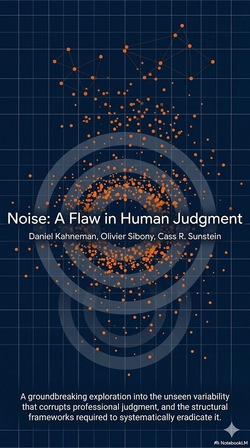
In his eye-opening book *Noise*, Nobel Prize-winning psychologist Daniel Kahneman pulls back the curtain on a hidden flaw in human judgment: unnecessary variability in decisions we often dismiss as random or unimportant. Unlike bias—consistent errors pushing judgments in one direction—noise is the scattered, inconsistent calls made by experts judging the same scenario: a judge handing wildly different sentences for identical crimes, doctors disagreeing on a patient’s diagnosis, or insurance adjusters valuing the same claim drastically differently. Kahneman breaks system noise into three core types: level noise (differences in how strict or lenient judges are), pattern noise (individuals’ unique biases toward specific cases), and contextual noise (shifts in judgment due to mood or fatigue). He reveals how this silent saboteur costs businesses billions, undermines fairness in legal and medical systems, and distorts everyday choices. The book doesn’t just expose the problem; it offers actionable strategies—from decision hygiene practices to structured judgment frameworks and algorithmic tools—to cut through noise, boost accuracy, and build more fair, rational decision-making systems.

Biassystem noisedecision hygienepredictive judgmentalgorithmic decision-making
The outsiders
Loading…

The outsiders

William N. Thorndike,Jr.

4.51108 learners

Forget Jack Welch—the real rockstar CEOs are the unsung outsiders profiled in *The Outsiders*. Author William N. Thorndike Jr. pulls back the curtain on eight visionary leaders, from Henry Singleton to Warren Buffett, who defied corporate norms to deliver jaw-dropping shareholder returns. Unlike high-profile executives obsessed with scale and media hype, these outliers prioritized capital allocation as their core duty, paired with decentralized management, rational data-driven decisions, and a laser focus on long-term value over quarterly earnings. Singleton turned $1 into $180 at Teledyne (3.75x Welch’s GE return), while Tom Murphy grew Capital Cities’ shareholder value 204-fold. Thorndike breaks down their shared playbook: strict return thresholds, strategic stock buybacks, avoiding herd mentality, and balancing frugality with smart investments. This isn’t just a business book—it’s a masterclass in rethinking what it means to lead, offering actionable insights for CEOs, investors, and anyone looking to cut through noise and build lasting value.

Cash Flow ManagementRational Decision-MakingCapital AllocationDecentralized ManagementShareholder Value Maximization
The Effective Executive
Loading…

The Effective Executive

Peter F. Drucker

4.61096 learners

In the era of knowledge work, where individual output directly shapes organizational success, Peter F. Drucker’s *The Effective Executive* redefines what it means to lead with impact. Drucker argues that effectiveness isn’t an innate talent—it’s a learnable skill, critical for every knowledge worker and manager. The book breaks down five core habits that turn busywork into results: mastering your time by eliminating waste, focusing on external contributions instead of internal politics, leveraging strengths in yourself and others, prioritizing high-impact tasks over urgent distractions, and making strategic decisions rooted in diverse perspectives. Packed with real-world examples from corporate leaders, government officials, and nonprofits, this guide addresses the unique challenges of the modern workplace—from endless meetings to misaligned team goals—and provides actionable steps to transform how you work. Whether you’re a new manager or a seasoned executive, *The Effective Executive* equips you to drive meaningful change for your team and organization.

time managementPriority SettingEffective ExecutiveContribution OrientationStrengths-Based Leadership
Being Mortal
Loading…

Being Mortal

Atul Gawande

4.11049 learners

Atul Gawande’s Being Mortal upends long-held assumptions about aging, death, and caregiving through intimate personal stories and eye-opening research. Drawing on his experience caring for his father through a terminal illness, Gawande exposes the failures of traditional nursing homes—where rigid safety protocols prioritize order over dignity, leaving residents feeling powerless and isolated. He introduces game-changing models like assisted living, pioneered by Keren Brown Wilson, which centers on autonomy and a sense of "home" for seniors. The book also shines a light on palliative care and hospice, arguing that end-of-life care should focus on quality of life rather than aggressive, often futile, treatments. Gawande emphasizes the critical role of shared decision-making between doctors and patients, urging readers to confront mortality and redefine what it means to live well, even when facing life’s final chapters.

Patient AutonomyPalliative CareAssisted LivingEden AlternativeEnd-of-Life Decision-Making
Yu Jun's Product Methodology
Loading…

Yu Jun's Product Methodology

Yu Jun

3.71025 learners

Yu Jun’s Product Methodology demystifies the evolving role of product managers (PMs) from its origins as Procter & Gamble’s brand-focused role to the data-driven, user-centric demands of the internet era. This comprehensive guide breaks down core frameworks defining successful PM work: mastering user models to predict behavior, designing sustainable transaction models for mutual value exchange, and applying rational decision-making strategies (data, logic, subjective judgment) to navigate trade-offs. It also addresses critical topics like balancing user and business value, reducing transaction costs, and navigating unique internet product iteration challenges. For aspiring and seasoned PMs alike, the book offers actionable career progression insights—from identifying high-potential candidates to overcoming mid-career bottlenecks—emphasizing that great PMs are shaped by practice, empathy, and deep understanding of economic and psychological principles.

Transaction CostRational Decision-MakingProduct ManagerUser ModelTransaction Model
Altitude
Loading…

Altitude

Wu Jun

31024 learners

From former Google engineer and seasoned investor Jun Wu comes *Altitude*—a no-nonsense guide to thriving in an era of constant change, drawing on decades of cross-cultural experience between China and the U.S. Wu distills hard-earned lessons on career strategy, personal growth, and decision-making, challenging readers to reject herd mentality and embrace proactive action. He breaks down why "fake busywork" traps people in stagnation, how to communicate effectively in high-stakes workplaces, and the critical role of mentorship in long-term success. The book also explores bigger-picture themes: the clash between agrarian and commercial civilizations, the pitfalls of pessimism in a rapidly evolving world, and the keys to creating rare, irreplaceable value in the digital age. Packed with relatable anecdotes (from Google’s office culture to ancient wisdom) and actionable strategies, *Altitude* equips readers to elevate their mindset, navigate uncertainty, and build a life of purpose and impact.

Decision-Making FrameworkMindset ElevationWorkplace StrategyOpportunity AvoidanceScarcity Creation
Descartes’ Error
Loading…

Descartes’ Error

Antonio Damasio

4.4989 learners

For centuries, we’ve clung to Descartes’ belief that reason and emotion are opposing forces—with cool logic as the sole driver of wise decisions. But in *Descartes’ Error*, neuroscientist Antonio Damasio upends this dogma through groundbreaking clinical cases, starting with the iconic story of Phineas Gage, a 19th-century railroad worker whose frontal lobe injury erased his emotional capacity while leaving his intellect intact. Gage’s catastrophic life collapse, alongside modern patients like Elliott (a once-successful manager rendered incapable of sound choices after similar brain damage), reveals a radical truth: emotions aren’t distractions to reason—they’re its critical foundation. Damasio introduces the somatic marker hypothesis, explaining how emotional signals encoded in bodily states guide our decision-making, helping us navigate complex choices efficiently. He dismantles mind-body dualism, arguing that the mind is deeply rooted in the body, with brain and body functioning as an inseparable, dynamic system. This book redefines our understanding of human cognition, proving that rationality can’t exist without the warmth and guidance of our emotional lives.

Rational Decision-MakingSomatic Marker HypothesisVentromedial Prefrontal CortexPhineas GageElliott
Blink: The Power of Thinking Without Thinking
Loading…

Blink: The Power of Thinking Without Thinking

Malcolm Gladwell

0971 learners

Blink: The Power of Thinking Without Thinking explores the untapped potential of rapid cognition—the split-second, unconscious judgments our brains make through a concept called "thin-slicing." Using gripping real-world examples, from the Getty Museum’s costly fake Greek statue fiasco to psychologist John Gottman’s 90% accurate marriage predictions from 15 minutes of couple interactions, Malcolm Gladwell breaks down how our minds distill decades of experience into instant, often precise decisions. He also reveals the pitfalls of intuition: the "Warren Harding Error," where superficial traits skew judgments, implicit biases that infiltrate hiring and policing, and how stress can turn quick thinking into a deadly liability. Blending psychology, sociology, and behavioral science, the book teaches readers to recognize when to trust their gut, how to avoid common intuition traps, and how to balance rapid cognition with deliberate analysis to make smarter, faster choices in a chaotic world.

Implicit BiasFacial Action Coding SystemThin-Slicing TheoryWarren Harding ErrorRapid Cognition
Poor Charlie's Almanack
Loading…

Poor Charlie's Almanack

Charles T. Munger

4.3960 learners

Poor Charlie's Almanack is a definitive collection of Charlie Munger’s decades of hard-earned wisdom, distilling his unique approach to investing, decision-making, and living a rational, fulfilling life. As Warren Buffett’s trusted partner at Berkshire Hathaway, Munger lays out foundational principles like the circle of competence, margin of safety, and concentrated investing—strategies that fueled Berkshire’s unparalleled long-term success. Beyond finance, he emphasizes the power of multidisciplinary mental models to avoid the "hammer man tendency" and solve complex problems, while breaking down 25 cognitive misjudgment biases that derail even the smartest choices. Munger also offers timeless life advice: prioritize avoiding mistakes over chasing grand successes, embrace lifelong learning, and uphold unwavering integrity. Packed with real-world examples, from Costco’s innovative retail model to Darwin’s intellectual rigor, this book is a playbook for anyone seeking to build lasting wealth, make smarter decisions, and navigate life with clarity and purpose.

Rational Decision-MakingMental ModelsCircle of CompetenceCompound interestMargin of safety
The Art of Acting Clearly
Loading…

The Art of Acting Clearly

Rolf Dobelli

3872 learners

In The Art of Acting Clearly, bestselling author Rolf Dobelli demystifies the hidden cognitive biases that distort our daily decisions—from trivial shopping picks to high-stakes business and career moves. Drawing on decades of behavioral psychology research, real-world case studies, and eye-opening experiments, Dobelli breaks down over 30 common mental traps: how choice fatigue drains willpower and leads judges to deny parole at day’s end; why we irrationally reject a Hitler-owned sweater despite it being chemically clean; how the planning fallacy made Sydney Opera House cost 14x its budget and take 10 years longer than planned. More than just a catalog of biases, this book delivers actionable strategies to outsmart these pitfalls: from using external benchmarks to avoid overoptimism, to writing concrete plans to quiet the Zeigarnik Effect’s nagging reminders. Whether you’re a manager, investor, or simply someone wanting to make clearer, more rational choices, this guide equips you to cut through mental noise and act with intentionality.

Cognitive BiasesZeigarnik Effectdecision-makingInformation OverloadChoice Fatigue
How Google Works
Loading…

How Google Works

Eric Schmidt;Jonathan Rosenberg

4.2807 learners

Authored by former Google CEO Eric Schmidt and top executives Jonathan Rosenberg and Alan Eagle, *How Google Works* pulls back the curtain on the tech giant’s groundbreaking strategies for building a thriving, innovation-driven organization. Drawing on decades of hands-on experience, the book breaks down Google’s core principles: prioritizing creative elite talent over rigid hierarchies, fostering a culture of transparency and 'don’t be evil' ethics, and leaning into technical insights rather than conventional market research. Real-world anecdotes—like the weekend fix that birthed the billion-dollar AdWords platform, the 20% time policy that spawned Gmail, and the OKR system that aligns teams around bold goals—illustrate how these practices fuel sustained growth. It also covers Google’s data-driven decision-making, flat organizational structure, and strategies for navigating digital disruption, offering actionable advice for leaders and entrepreneurs looking to adapt their own companies to the fast-paced 21st-century business landscape.

Innovation CultureCreative EliteAdWordsOKR Framework20% Time Policy
The Danaher Way
Loading…

The Danaher Way

Yang Yi;Chen Chaowei

4.2782 learners

Dive into the playbook that turned Danaher from a small industrial firm into a global powerhouse with The Danaher Way. This book breaks down the iconic Danaher Business System (DBS)—the operational framework driving relentless improvement, cross-functional alignment, and consistent results across every subsidiary. It pulls back the curtain on how Danaher executes strategic mergers, integrating acquired companies into its culture without losing their core strengths, and shares actionable tools for leaders to embed lean thinking, data-driven decision-making, and a culture of continuous learning into their own teams. Whether you’re a startup founder, mid-level manager, or Fortune 500 executive, this guide offers real-world insights to streamline operations, boost productivity, and build a business that thrives through market shifts and growth phases.

Continuous ImprovementOperational ExcellenceData-Driven Decision-MakingMerger IntegrationDanaher Business System (DBS)
Xue Zhaofeng's Economics Lectures
Loading…

Xue Zhaofeng's Economics Lectures

Xue Zhaofeng

4.4749 learners

Forget dry textbooks stuffed with jargon—Xue Zhaofeng’s Economics Lectures turns everyday moments into accessible masterclasses in economic thinking. Tailored for regular people, not just finance experts, this book uses relatable scenarios: why train tickets sell out during peak travel seasons, why rent climbs in desirable neighborhoods, and even why we pick one coffee order over another. Xue breaks down core concepts like scarcity, opportunity cost, property rights, and transaction costs into simple, actionable lessons, showing how these ideas shape every choice we make—from career moves to grocery runs. Ditching complex equations, it teaches you to view the world through an economist’s lens, helping you spot hidden incentives, make smarter decisions, and cut through noise in debates about policy, business, and daily life. Whether you’re a student, professional, or curious learner, this book turns economics from an intimidating subject into a practical tool for navigating modern life.

Property RightsScarcityOpportunity costTransaction costsSupply-Demand Model
Don't Be a Normal Fool
Loading…

Don't Be a Normal Fool

Christopher Hsee

3.5722 learners

Drawing on behavioral economics and real-world case studies, *Don't Be a Normal Fool* exposes the hidden cognitive biases that drive irrational decisions in finance, career, and daily life. Author Christopher Hsee breaks down core mental traps: mental accounting (how we categorize and spend money differently based on its source), transaction bias (fixating on deals over utility or percentages over actual savings), sunk cost fallacy (chasing lost investments), overconfidence (overestimating our abilities), and adaptive bias (misjudging long-term emotional impacts of events). Through relatable examples—from splurging windfalls to clinging to failing projects—Hsee explains how these biases skew judgment, then offers practical strategies to overcome them. Readers learn to recognize these traps, shift to rational decision-making, and optimize their choices to avoid common pitfalls that hinder financial stability and intentional living.

Cognitive BiasBehavioral EconomicsSunk Cost FallacyRational Decision-MakingOverconfidence
You Are What You Risk
Loading…

You Are What You Risk

Michele Wucker

2.9708 learners

Most of us see risk as something to avoid—a threat to our safety, success, or stability. But in *You Are What You Risk*, risk expert Michele Wucker turns that idea on its head. She argues that risk isn’t just a challenge to navigate; it’s a core part of who we are. Each of us has a unique “risk fingerprint,” shaped by our life experiences, cultural background, values, and even our biology. Wucker uses real-world stories—from entrepreneurs betting on startups to parents making family decisions—to break down how our risk preferences drive every choice we make. She shows readers how to identify their own risk fingerprint, understand why they make certain risky calls, and leverage this self-awareness to make smarter decisions in career, finance, and daily life. Instead of fearing risk, you’ll learn to see it as a tool for growth, self-discovery, and thriving in an uncertain world.

Behavioral Economicsdecision-makingRisk PerceptionRisk PreferenceIdentity formation
Factfulness
Loading…

Factfulness

Hans Rosling;Anna Rosling Rönnlund;Ola Rosling

4.2688 learners

In Factfulness, Hans and Ola Rosling dismantle the 10 most common cognitive biases that distort our understanding of the world—from the binary 'us vs. them' split to the instinct to fixate on negative news. Using rigorous global data and on-the-ground stories, they debunk pervasive myths: the world isn’t divided into rich and poor extremes, but four income tiers where 75% of people live in the middle. They highlight underreported progress: extreme poverty has halved in 20 years, global life expectancy has risen to 73, and 88% of 1-year-olds are vaccinated. The book offers practical tools—like proportional thinking, multiple perspectives, and the 'possibilist' mindset—to help readers override instinctual biases, see the world as it truly is, and make more rational, effective decisions in work, life, and global engagement.

Cognitive BiasesFour-Tier Income ModelFact-Based Decision-MakingGlobal Development DataProportional Thinking
Danshari
Loading…

Danshari

Hideko Yamashita

4.6611 learners

Danshari, or the practice of “discard, detach, let go,” isn’t just a tidying trick—it’s a life-changing framework that puts your present self at the center of every choice. Unlike traditional organizing methods that focus on squeezing more into tight spaces, this approach uses two core axes to filter belongings: your relationship to the item and its relevance to your current life. By letting go of unused, ill-fitting, or emotionally draining items, you clear not just physical space, but also break free from attachments to the past, anxieties about the future, and self-limiting beliefs. Through practical steps like starting small (a drawer, a cabinet), using the 3-category sorting method, and setting quantity limits, you’ll shift from hesitant clutter-hoarding to intentional, confident decision-making. Along the way, you’ll unlock emotional freedom, deepen self-awareness, and even reshape how others interact with you—all while building a living space that truly nurtures the person you are today.

Self-AwarenessEmotional FreedomDanshariDeclutteringPresent-moment focus