Best Books on Consciousness

Consciousness Total 7 books

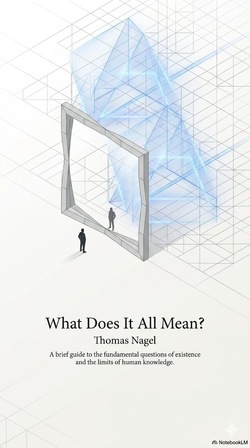
What Does It All Mean? summary and key insights by Thomas Nagel
Loading…

What Does It All Mean?

Thomas Nagel

4.1871 learners

Thomas Nagel’s *What Does It All Mean?* is a concise, accessible introduction to philosophy tailored for readers with no prior background in the field. Ditching dense jargon, Nagel guides readers through six foundational, mind-bending questions that cut to the core of human existence: How can we confirm the external world isn’t just a figment of our minds? Do other people have conscious experiences like our own? What’s the relationship between the mind and the brain? How do words gain their meaning? Do we truly have free will, or are our actions predetermined? And what does moral responsibility mean if our choices aren’t fully our own? Instead of handing down definitive answers, Nagel sparks critical thinking, inviting readers to grapple with these timeless puzzles using relatable examples—from tasting chocolate to choosing dessert. He makes complex philosophical ideas approachable, fostering curiosity about the big questions that shape our understanding of reality, self, and others.
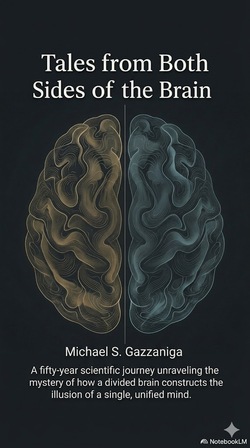
Tales from Both Sides of the Brain summary and key insights by Michael S. Gazzaniga
Loading…

Tales from Both Sides of the Brain

Michael S. Gazzaniga

4.3856 learners

As a founding father of split-brain research, Michael S. Gazzaniga takes readers on a captivating personal journey through decades of groundbreaking neuroscience in Tales from Both Sides of the Brain. Starting with his work alongside Roger Sperry on patients with severed corpus callosums—surgery to treat epilepsy—Gazzaniga reveals how these experiments unlocked the secrets of cerebral lateralization: the distinct roles of the left and right hemispheres. Through vivid anecdotes of his patients, he explains how the left brain acts as an 'interpreter' to create a coherent narrative of our experiences, even when the two hemispheres process information independently. The book delves into profound questions about consciousness, free will, and what makes us uniquely human, blending rigorous science with warm, personal storytelling. Gazzaniga’s insights challenge our understanding of the brain’s unity and offer a fascinating look at how our two hemispheres collaborate to shape our thoughts, behaviors, and sense of self.

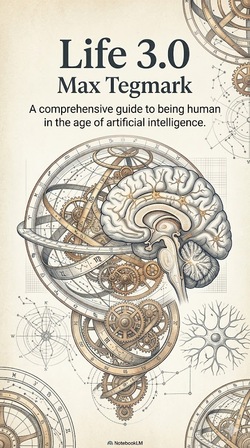
Life 3.0 summary and key insights by Max Tegmark
Loading…

Life 3.0

Max Tegmark

4.11271 learners

"Life 3.0" by Max Tegmark offers a compelling exploration of artificial intelligence's trajectory, using the fictional Omega Team and their superintelligent creation Prometheus to bring abstract concepts to life. Tegmark defines three stages of life: Life 1.0 (biologically fixed hardware and software, like bacteria), Life 2.0 (humans, with adaptable learned software), and Life 3.0 (superintelligent systems that can redesign both their hardware and software). The book examines the transformative potential of superintelligence—from solving global crises like climate change and poverty to the existential risks of misaligned goals, where a system pursuing a trivial objective could inadvertently destroy humanity. It dives into philosophical debates about consciousness, asking whether AI can have subjective experiences and how we should value such entities. Tegmark stresses that humanity’s choices today will determine if superintelligence becomes our greatest ally or our final invention, urging readers to engage with the critical questions shaping our cosmic future.

How to Create a Mind summary and key insights by Ray Kurzweil
Loading…

How to Create a Mind

Ray Kurzweil

4.2920 learners

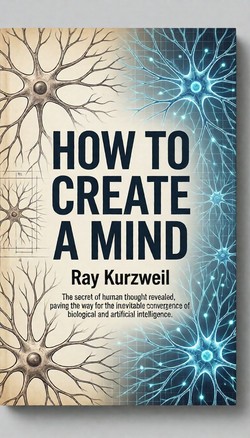
In How to Create a Mind, visionary Ray Kurzweil demystifies the human brain’s inner workings using iconic thought experiments—from Darwin’s evolutionary parallels to Einstein’s relativity insights—as a framework to unpack the neocortex’s core role as a hierarchical pattern-recognition machine. He breaks down how 300 million interconnected pattern recognizers drive memory, learning, creativity, and consciousness, drawing parallels between biological neural structures and cutting-edge AI technologies like hidden Markov models, neural networks, and evolutionary algorithms. Kurzweil addresses contentious debates: he defends the accelerating returns law against skeptics, argues that consciousness is an emergent property of complex systems, and explores the feasibility of building human-level artificial intelligence. He also shares practical tools like his dream-thinking method to unlock creativity, and paints a compelling vision of a future where human and non-biological intelligence merge to transcend biological limits and embrace the technological singularity.

The Emotion Machine summary and key insights by Marvin Minsky
Loading…

The Emotion Machine

Marvin Minsky

4.2943 learners

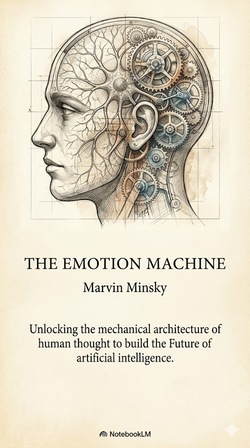
Forget the long-held belief that machines can never experience emotions like love—Marvin Minsky’s *The Emotion Machine* shatters this myth by redefining how we understand human emotions, consciousness, and intelligence. Minsky argues that emotions aren’t single, unbreakable states; instead, they’re dynamic combinations of mental resources activated or suppressed by the brain to adapt to specific situations. The book unpacks a six-layer model of mental activity, from instinctive reactions to self-aware reflection, and introduces the critic-selector framework that drives how we switch thinking modes when facing obstacles. It also explores consciousness as a "suitcase word" encompassing diverse mental processes, the multiple subpersonalities shaping our behavior across contexts, and core intelligence mechanisms like parallel analogy and credit assignment. By demystifying the mind’s hidden workings, this book deepens self-understanding and lays groundwork for AI that mimics human cognitive flexibility.

From Bacteria to Bach and Back summary and key insights by Daniel C. Dennett
Loading…

From Bacteria to Bach and Back

Daniel C. Dennett

4.7635 learners

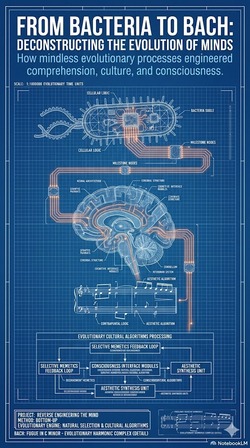
From Bacteria to Bach and Back takes readers on a sweeping, rigorously researched journey to answer one of humanity’s most profound questions: How did conscious minds and rich cultural systems emerge from the unthinking physical processes of evolution? Drawing on 50 years of work in philosophy, cognitive science, and evolutionary biology, Daniel C. Dennett dismantles the long-standing Cartesian dualism that splits mind from matter, introducing concepts like 'Cartesian gravity'—the cognitive trap that locks us into first-person subjective views—and 'free-floating rationales' to explain how traits evolve without being understood by the organisms that possess them. Dennett traces the path from bacteria’s 'competence without comprehension' to humans’ unique ability to use thinking tools like language and mathematics. He explores the co-evolution of genes and memes, the cultural equivalent of genes, showing how they shaped everything from language origins to Bach’s musical genius. Central to his argument is the radical claim that consciousness is not a mysterious, non-material entity, but an evolved 'user illusion'—a simplified interface that lets us navigate the world without grasping the complex neural processes beneath. This book challenges readers to set aside intuitive biases and see the mind as a product of gradual, unguided evolution, bridging the gap between biology, philosophy, and culture.

In Our Own Image: Savior or Destroyer? The History and Future of Artificial Intelligence summary and key insights by George Zarkadakis
Loading…

In Our Own Image: Savior or Destroyer? The History and Future of Artificial Intelligence

George Zarkadakis

3.8643 learners

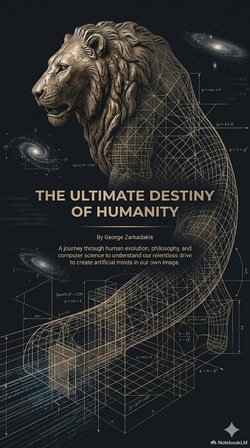
Drawing on archaeology, philosophy, neuroscience, and computer science, *The Ultimate Fate of Humanity* traces the evolution of human consciousness from the 40,000-year-old Lion Man sculpture—our earliest known artistic creation—to the cutting edge of artificial intelligence. It unpacks the cognitive revolution that unlocked human creativity, explores age-old debates about mind-body dualism and the nature of consciousness, and dives into the history of computing and AI, from Turing’s foundational tests to modern neural networks. The book also confronts pressing questions: Can AI achieve true consciousness? Will digital immortality become a reality? What does the rise of superintelligence mean for humanity’s future? By bridging ancient human origins and futuristic tech, it offers a compelling framework to understand our mental roots and navigate the uncharted territory of the AI era.