
Best Books on Ming Dynasty

Ming Dynasty Total 3 books

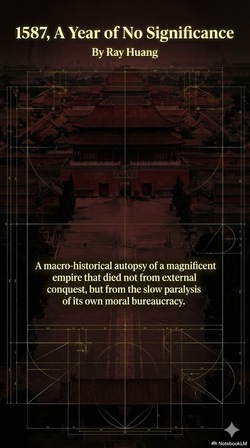
1587, A Year of No Significance: The Ming Dynasty in Decline summary and key insights by Ray Huang
Loading…

1587, A Year of No Significance: The Ming Dynasty in Decline

Ray Huang

4.31311 learners

In 1587, a seemingly uneventful year in China’s Ming Dynasty, the cracks in the empire’s foundation began to widen irreparably. Ray Huang’s classic work uses this pivotal year to unpack the systemic failures that doomed the Ming, through the intertwined stories of key figures: Emperor Wanli, who retreated into passive defiance after losing a power struggle over heir selection; Grand Secretary Shen Shixing, a cautious mediator trapped between the emperor and rigid bureaucrats; Hai Rui, a morally inflexible official crushed by the system he tried to uphold; Qi Jiguang, a brilliant general undone by political alliances; and Li Zhi, a radical philosopher silenced for challenging Confucian orthodoxy. Huang reveals how the Ming’s overreliance on moral dogma instead of practical governance, its crippling civil-military divide, and its stagnant bureaucracy left no room for meaningful reform. Each character’s struggle exposes the empire’s fatal flaws, making 1587 not just a year in history, but a quiet turning point that sealed the Ming’s inevitable collapse.
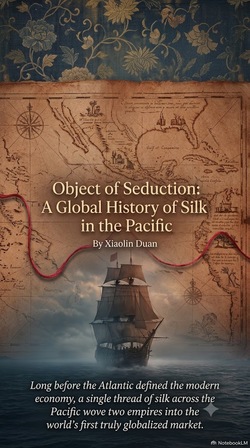
Object of Seduction summary and key insights by Xiaolin Duan
Loading…

Object of Seduction

Xiaolin Duan

3.1758 learners

"Object of Seduction" traces the global rise of silk from the 16th century onward, weaving together the intertwined histories of Ming China and colonial Mexico. It explores how silk production transformed economies—from Jiangnan’s booming sericulture and commercialization to Mexico’s colonial silk industry integrated into Spanish imperial systems. The book delves into the game-changing Manila Galleon Trade, which flooded the Americas with Chinese silk, reshaping consumption patterns, sparking fashion revolutions, and triggering silver flows that destabilized the Ming Dynasty. It also examines sumptuary laws in both regions: Ming edicts aimed at preserving social hierarchies, and Mexican rules enforcing racial segregation, while both failed to curb the allure of silk. Through vivid primary sources like *Convenience Manual for Farmers* and *Codex Sierra*, the book reveals silk’s role as a catalyst for cultural fusion, labor shifts, and power struggles, offering insights into how this luxury commodity connected distant worlds and shaped modern global trade.

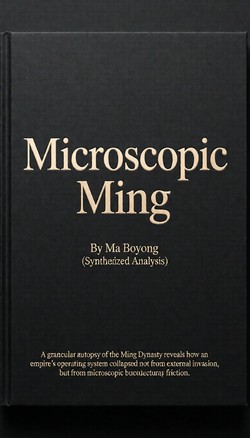
Microscope Ming summary and key insights by Ma Boyong
Loading…

Microscope Ming

Ma Boyong

4630 learners

Dive into the untold, gritty stories of the Ming Dynasty’s grassroots through *Microscope Ming*. This collection of true, meticulously researched cases pulls back the curtain on the empire’s hidden underbelly: a scholar’s decade-long fight to fix a skewed silk tax burden across Huizhou counties, a bitter battle over a “dragon vein” tied to exam fortunes, an 8-year lawsuit to reclaim an ancestral grave from corrupt monks, the slow collapse of the Xuanwu Lake Yellow Register Archives (the empire’s once-perfect tax record system), and petty officials exploiting power to extort ordinary people. Each story reveals how grand imperial policies unraveled at the local level, exposing the tangled web of bureaucratic inertia, elite privilege, and the quiet resilience of common folks caught in the crossfire. It’s a micro-history that turns dry institutional details into vivid, relatable tales of power, justice, and survival.