Economics & Finance Book Summaries & Key Insights

Economics & Finance Total 39 books

Freakonomics summary and key insights by Steven D. Levitt;Stephen J. Dubner
Loading…

Freakonomics

Steven D. Levitt;Stephen J. Dubner

4.51372 learners

Freakonomics, by Steven D. Levitt and Stephen J. Dubner, upends conventional wisdom by applying data-driven economic analysis to everyday mysteries. The book unpacks hidden motives behind seemingly ordinary behaviors: why a $3 daycare fine doubled late pickups (replacing moral guilt with a cheap "service"), how Stetson Kennedy dismantled the KKK by exposing its secret rituals to the public, and why low-level drug dealers earn less than minimum wage despite the gang’s violent reputation. It also dives into counterintuitive truths—like how 1973's Roe v. Wade contributed to the 1990s crime drop, and why parenting "hacks" have far less impact on kids than peer groups do. Blending quirky case studies with rigorous research, Freakonomics teaches readers to look beyond surface-level assumptions and recognize the incentives shaping every choice, big or small.

The Road to Wealth Freedom summary and key insights by Li Xiaolai
Loading…

The Road to Wealth Freedom

Li Xiaolai

4.1942 learners

Forget get-rich-quick hype—The Road to Wealth Freedom by Li Xiaolai offers a no-nonsense, actionable framework to build lasting financial independence rooted in mindset and intentional choices. It redefines wealth freedom not as a finish line, but as the ability to stop selling your time for basic needs. You’ll learn to avoid three silent time drains: mindlessly following trends, obsessing over others’ lives, and wasting energy on trivial drama. The book breaks down core principles like prioritizing growth over salary, managing your attention (your most valuable asset), and reframing paid services as investments in your time. It demystifies investing too, teaching you to focus on long-term value, use dollar-cost averaging, and start small with virtual practice. Plus, it outlines three personal business models to scale your income: selling time once, selling the same time repeatedly (like content creation), and buying others’ time to create more value. Packed with real-world examples, this guide is about taking control of your life and growing into the person who can sustain true freedom.

One Up On Wall Street summary and key insights by Peter Lynch;John Rothchild
Loading…

One Up On Wall Street

Peter Lynch;John Rothchild

4.4674 learners

Peter Lynch, one of Wall Street’s most legendary fund managers, pulls back the curtain in *One Up On Wall Street* to show everyday investors they have a secret edge over the pros: their own lives. You don’t need fancy financial models or insider connections to find winning stocks—just pay attention to the coffee shop with lines out the door, the software your coworkers can’t stop using, or the product your family raves about. Lynch breaks down how to spot "10-bagger" stocks (those that jump 10x in value) by categorizing companies into six types, shares real-world success stories of regular folks who struck gold, and warns against common pitfalls like chasing hot trends or trusting overhyped analyst tips. He also lays out practical rules for building a portfolio, knowing when to buy or sell, and ignoring market noise to focus on what matters: a company’s actual fundamentals. Whether you’re new to investing or tired of underperforming with Wall Street’s "expert" advice, this book turns your daily observations into a powerful investment strategy.

MONEY Master the Game summary and key insights by Tony Robbins
Loading…

MONEY Master the Game

Tony Robbins

4907 learners

Tony Robbins’ *MONEY Master the Game* demystifies finance by distilling wisdom from 50 top global investors—including Ray Dalio, John Bogle, and David Swensen—into an actionable 7-step framework for lasting financial freedom. Beyond investment tactics, Robbins addresses psychological barriers trapping people in financial stress cycles, debunks myths like “high risk equals high reward,” and exposes hidden fees and conflicts of interest in the industry. He breaks down automating savings, building diversified portfolios, leveraging tax-advantaged tools, and creating reliable lifetime income streams. The book emphasizes true wealth isn’t just numbers; it’s the freedom to live on your own terms—pursuing passions, supporting loved ones, or giving back. With real-world examples and straightforward advice, Robbins proves financial independence is achievable for anyone, regardless of their starting point.

Adaptive Markets summary and key insights by Andrew W. Lo
Loading…

Adaptive Markets

Andrew W. Lo

41150 learners

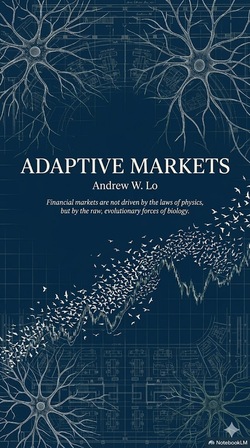
Andrew W. Lo’s *Adaptive Markets* upends decades of financial orthodoxy by replacing the rigid Efficient Market Hypothesis with a dynamic framework rooted in evolution and neuroscience. Lo argues that financial markets aren’t governed by perfectly rational “economic men” but by humans shaped by millions of years of survival instincts—instructions that often misfire in the fast-paced, modern financial landscape. Drawing on real-world examples, from a pilot’s life-saving fear response to the 2008 financial crisis and 2007 quant crash, he explains how market efficiency shifts as investors adapt to changing environments. The book also explores how evolutionary logic applies to hedge fund evolution, regulatory design, and even using financial tools to solve global challenges like cancer research and climate change. By bridging biology, neuroscience, and finance, Lo offers a compelling new lens to decode market chaos, identify opportunities, and reimagine finance’s role in advancing human well-being.

A Man for All Markets summary and key insights by Edward O. Thorp
Loading…

A Man for All Markets

Edward O. Thorp

4.11307 learners

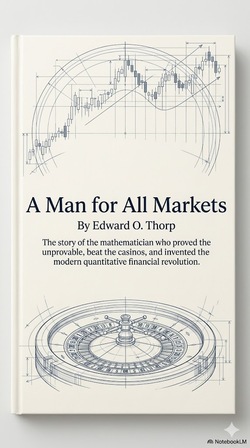
Edward O. Thorp’s memoir, *A Man for All Markets*, is a riveting journey of how a numbers-obsessed kid turned math into a superpower—first beating Las Vegas casinos at their own game, then revolutionizing Wall Street with the first quantitative hedge funds. Raised during the Great Depression, Thorp honed his love for experiments and critical thinking early on, cracking 21-point with a card-counting strategy that proved the “unbeatable” game could be won with logic. He teamed up with Claude Shannon to build a wearable computer predicting roulette outcomes, then brought his data-driven approach to finance, founding Princeton-Newport Partners, a hedge fund that delivered consistent returns even during market crashes. Along the way, he exposed Bernie Madoff’s Ponzi scheme years before it collapsed, shared hard-won lessons on compound interest, index funds, and risk management, and reflected on using wealth to fund stem cell research and education. More than a memoir, it’s a playbook for rational decision-making, showing how math and discipline can turn odds in your favor—whether at the casino or in the stock market.

Institutions, Institutional Change and Economic Performance summary and key insights by Douglass C. North
Loading…

Institutions, Institutional Change and Economic Performance

Douglass C. North

4.4741 learners

Douglass C. North’s seminal work redefines our understanding of economic success by centering institutions—the formal rules (laws, constitutions) and informal constraints (norms, cultural traditions) that structure human political, economic, and social interaction. Departing from neoclassical economics’ frictionless market assumptions, North argues transaction costs (which account for over 45% of U.S. national income) and institutional frameworks are the true drivers of long-term economic performance. He unpacks three core puzzles: why institutional change deeply impacts economic outcomes, why inefficient institutions persist despite competitive pressures, and why nations diverge into growth or stagnation paths due to path dependence. Using real-world examples—from 19th-century America’s rise to Latin America’s stalled development, and the QWERTY keyboard’s lock-in effect—North explains how organizations shape and are shaped by institutions, and introduces adaptive efficiency as the key to sustained prosperity. This cornerstone of new institutional economics provides a framework to explain global economic disparities and guide policy.

A Random Walk Down Wall Street summary and key insights by Burton G. Malkiel
Loading…

A Random Walk Down Wall Street

Burton G. Malkiel

4.11189 learners

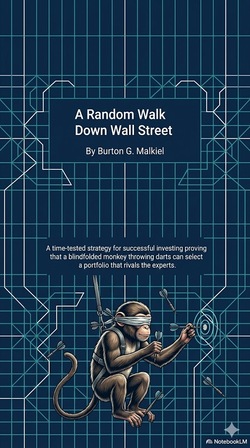
Burton G. Malkiel’s *A Random Walk Down Wall Street* demystifies investing chaos by centering the random walk concept—short-term stock price movements are entirely unpredictable, making technical analysis and market timing futile. Malkiel contrasts two foundational theories: the Firm Foundation approach, which focuses on calculating a stock’s intrinsic value, and the Castle in the Air strategy, which leverages market sentiment. He dissects historic speculative bubbles, from Tulip Mania to the 2008 housing crash, to illustrate how irrational investor behavior fuels market extremes. Backed by the Efficient Market Hypothesis, the book argues most active fund managers fail to outperform broad market indices long-term. It also explores Modern Portfolio Theory, behavioral finance biases, and practical tactics for everyday investors: building diversified portfolios, using low-cost index funds, aligning asset allocation with life stages, and following tax-efficient saving plans. Whether novice or seasoned, this guide delivers actionable insights to build sustainable wealth while avoiding common pitfalls.

The Intelligent Investor summary and key insights by Benjamin Graham
Loading…

The Intelligent Investor

Benjamin Graham

4.4600 learners

First published in 1949, Benjamin Graham’s *The Intelligent Investor* is the definitive guide to value investing, a timeless framework that has shaped generations of successful investors—including Warren Buffett, Graham’s most famous protégé. This book demystifies the stock market by drawing a clear line between investing (focused on long-term, fundamental value) and speculating (chasing short-term market fluctuations). Graham introduces core principles like the 'margin of safety,' a strategy to protect capital by buying assets priced well below their intrinsic value, and emphasizes the importance of emotional discipline to avoid common investor pitfalls like greed and fear. Packed with practical advice, real-world examples, and actionable strategies, it equips readers of all experience levels to build sustainable wealth, navigate market volatility, and make rational, informed financial decisions that stand the test of time.

The Alchemy of Finance summary and key insights by George Soros
Loading…

The Alchemy of Finance

George Soros

4.1853 learners

George Soros, the legendary hedge fund manager, dismantles mainstream economics’ core equilibrium assumption in *The Alchemy of Finance* with his revolutionary theory of reflexivity. Unlike the idea that markets naturally stabilize to reflect intrinsic value, Soros argues that participants’ biased, incomplete perceptions shape market behavior, which in turn distorts their understanding—creating a self-reinforcing cycle that keeps markets in constant flux. He puts this theory to the test with a two-year real-time investment experiment, documenting how applying reflexivity helped his Quantum Fund deliver over 100% returns in one phase, even amid volatile markets. Beyond investing, Soros dissects the inherent instability of unregulated financial systems, from floating exchange rates to international debt crises, and proposes bold reforms: a global central bank, oil buffer stock plans, and a stable world currency to mitigate systemic risks. This book isn’t just an investment playbook—it’s a radical rethinking of how social sciences can approach markets, rejecting the false precision of natural science models for a dynamic, reflexive framework.

The Five Rules for Successful Stock Investing summary and key insights by Pat Dorsey
Loading…

The Five Rules for Successful Stock Investing

Pat Dorsey

4.5579 learners

Written by Pat Dorsey, a renowned investment strategist, *The Five Rules for Successful Stock Investing* delivers a practical, battle-tested framework for building a durable, high-return stock portfolio. Drawing on iconic examples like Warren Buffett’s Berkshire Hathaway, Coca-Cola, and Southwest Airlines, Dorsey outlines five non-negotiable rules: conduct thorough research on target companies, prioritize businesses with strong competitive advantages, always invest with a margin of safety, hold quality stocks long-term, and know exactly when to sell. Beyond these core principles, the book teaches readers to avoid costly common mistakes—such as chasing "hot" stocks, timing the market, or falling for accounting tricks—and provides step-by-step guidance on analyzing financial statements, evaluating management integrity, and conducting deep industry-specific research. Tailored for both new and experienced U.S. investors, this book demystifies complex investment concepts into actionable strategies to minimize risk and unlock consistent long-term returns.

The Origin of Wealth summary and key insights by Eric D. Beinhocker
Loading…

The Origin of Wealth

Eric D. Beinhocker

4.31071 learners

For centuries, economists have relied on equilibrium-based models that treat the economy as a predictable machine—but they’ve failed to explain real-world phenomena like innovation surges, market bubbles, and persistent inequality. In *The Origin of Wealth*, Eric D. Beinhocker upends this outdated thinking by framing the economy as a dynamic, complex adaptive system driven by evolutionary logic: variation, selection, and amplification. He dismantles mainstream economics’ flawed assumptions, from “perfect rationality” to its disregard for time delays and positive feedback loops. Beinhocker then lays out the three core forces of economic evolution—business design, physical technology, and social technology—and redefines wealth as “fit order”: information tailored to meet human needs. Finally, he applies this framework to practical fields, guiding firms to build evolutionary strategies, reimagining financial markets as adaptive ecosystems, and crafting public policies rooted in strong reciprocity and social capital. This is a groundbreaking blueprint for understanding how wealth is truly created and how economies evolve.

The Psychology of Money summary and key insights by Morgan Housel
Loading…

The Psychology of Money

Morgan Housel

4.5572 learners

In The Psychology of Money, Morgan Housel dismantles the myth that wealth hinges on high IQ or advanced financial expertise, using vivid real-world anecdotes to reveal that behavioral habits, emotional discipline, and a nuanced grasp of luck and risk are the true pillars of lasting prosperity. He contrasts a brilliant tech executive who squandered millions on reckless displays of wealth with Ronald Read, a humble gas station attendant and janitor who amassed $8 million through consistent saving and long-term blue-chip investments. Housel explores how unique life experiences shape our money mindsets, why luck plays a far bigger role in success than we’re willing to admit, and how compound interest—often dismissed for its slow start—unleashes exponential wealth over time. He also unpacks the hidden cost of chasing status, the true meaning of financial freedom (control over your time, not luxury goods), and practical strategies to build resilient wealth, from prioritizing saving to embracing uncertainty. This book isn’t about complex formulas; it’s about mastering the human side of money to live on your own terms.

The Science of Distributing Wealth summary and key insights by Bian Zhihan
Loading…

The Science of Distributing Wealth

Bian Zhihan

41328 learners

The Science of Distributing Wealth by Bian Zhihan demystifies the complex economic and social mechanisms shaping how wealth is divided across societies. Blending rigorous data analysis, historical case studies, and actionable policy insights, this book moves beyond ideological debates to present evidence-based approaches to balancing economic efficiency and social equity. It examines successful models from around the world—from Nordic welfare systems to targeted U.S. policy reforms—while dissecting root causes of growing wealth gaps, including inheritance structures, tax policies, and access to education. Designed for both economics enthusiasts and policymakers, it breaks down technical concepts into accessible language, offering practical strategies to build more sustainable and fair wealth distribution systems. Whether you’re curious about reducing inequality or understanding the science behind equitable growth, this book provides a comprehensive roadmap to navigate one of today’s most pressing global challenges.

The Economic Naturalist summary and key insights by Robert H. Frank
Loading…

The Economic Naturalist

Robert H. Frank

4.21255 learners

Robert H. Frank’s *The Economic Naturalist* turns dry economic theory into a captivating exploration of everyday life. Using relatable real-world examples—from why ATM keyboards have braille to why bars serve free peanuts but charge for water—Frank demystifies core principles like cost-benefit analysis, supply-demand dynamics, property rights, and signaling theory. Unlike traditional textbooks relying on abstract models, this book teaches readers to think like "economic naturalists": observing the world around them to uncover hidden decision-making logic behind seemingly trivial choices. Drawing on his Cornell University teaching experience, Frank shows how economic thinking isn’t just for experts—it’s a tool to understand product design, workplace rules, relationship dynamics, and social norms. By the end, readers gain a new lens to interpret the world, making smarter decisions and recognizing the economic forces shaping their daily lives.

The Black Swan summary and key insights by Nassim Nicholas Taleb
Loading…

The Black Swan

Nassim Nicholas Taleb

4.61216 learners

In *The Black Swan*, Nassim Nicholas Taleb shatters our illusion of a predictable world, exposing the rare, massive 'black swan' events that shape history, economics, and daily life yet are invisible to conventional thinking. Using vivid real-world examples—from the sudden collapse of Lebanon’s once-thriving Levant region to an unknown novelist’s blockbuster success that upended publishing—Taleb reveals how cognitive biases like the inductive 'turkey problem', narrative fallacy, and blind spot for silent evidence keep us blind to these game-changing moments. He contrasts 'Extremistan' (where outliers dominate, like wealth or book sales) with 'Mediocristan' (where averages rule, like human height), then lays out practical strategies like the barbell approach to thrive in uncertainty. This eye-opening book challenges readers to abandon false certainty, embrace intentional ignorance, and build resilience against the unexpected.

Poor Charlie's Almanack summary and key insights by Charles T. Munger
Loading…

Poor Charlie's Almanack

Charles T. Munger

4.3960 learners

Poor Charlie's Almanack is a definitive collection of Charlie Munger’s decades of hard-earned wisdom, distilling his unique approach to investing, decision-making, and living a rational, fulfilling life. As Warren Buffett’s trusted partner at Berkshire Hathaway, Munger lays out foundational principles like the circle of competence, margin of safety, and concentrated investing—strategies that fueled Berkshire’s unparalleled long-term success. Beyond finance, he emphasizes the power of multidisciplinary mental models to avoid the "hammer man tendency" and solve complex problems, while breaking down 25 cognitive misjudgment biases that derail even the smartest choices. Munger also offers timeless life advice: prioritize avoiding mistakes over chasing grand successes, embrace lifelong learning, and uphold unwavering integrity. Packed with real-world examples, from Costco’s innovative retail model to Darwin’s intellectual rigor, this book is a playbook for anyone seeking to build lasting wealth, make smarter decisions, and navigate life with clarity and purpose.

Demystifying the Chinese Economy summary and key insights by Justin Yifu Lin
Loading…

Demystifying the Chinese Economy

Justin Yifu Lin

4.1643 learners

Justin Yifu Lin’s *Demystifying the Chinese Economy* breaks down China’s extraordinary economic rise since its 1978 reform opening. Starting with deep dives into historical puzzles like the Needham Mystery—why pre-modern China led in technology but fell behind after the Industrial Revolution—Lin connects ancient institutions (such as the imperial exam system) to modern growth trajectories. He unpacks how China leveraged its late-comer advantage, adopting comparative advantage strategies to transition from a poverty-stricken agrarian nation to the world’s second-largest economy, lifting over 200 million people out of poverty. The book also confronts pressing challenges: widening income gaps, environmental degradation, and state-owned enterprise inefficiencies. Lin introduces the critical concept of "firm viability" to explain why catch-up strategies fail in many developing nations, while China’s dual-track reform balanced stability and growth. He concludes with a roadmap for China’s future, arguing it still has potential for 20 more years of robust growth if it addresses structural issues, offering valuable lessons for other emerging economies.

Capitalism and Freedom summary and key insights by Milton Friedman
Loading…

Capitalism and Freedom

Milton Friedman

4.21127 learners

In *Capitalism and Freedom*, Nobel Prize-winning economist Milton Friedman dismantles the myth that politics and economics operate independently, arguing that economic freedom is not just a path to prosperity—it’s the bedrock of political liberty. He critiques decades of government overreach, from the New Deal’s interventionist policies to occupational licensing, mandatory Social Security, and progressive taxation, showing how these measures erode individual choice and stifle innovation. Friedman reframes the Great Depression as a failure of Federal Reserve policy, not inherent flaws in capitalism, and outlines a vision of limited government: acting as a rule-maker and referee, addressing only market failures like externalities or natural monopolies, while leaving most economic activity to voluntary exchange. He proposes concrete reforms—school vouchers to expand educational choice, a negative income tax to replace inefficient welfare programs, floating exchange rates for global trade—to restore freedom and equity, proving that free markets protect minorities, check concentrated power, and deliver greater prosperity than centralized control.