History Book Summaries & Key Insights

History Total 180 books

The Spy and the Traitor summary and key insights by Ben Macintyre
Loading…

The Spy and the Traitor

Ben Macintyre

4.4482 learners

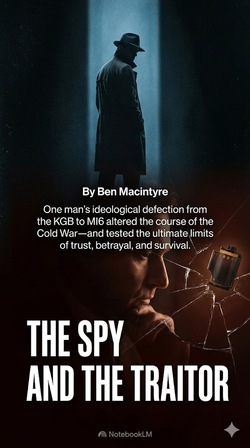
Oleg Gordievsky grew up steeped in the KGB’s shadow—his father was a loyal officer, and Soviet privilege came with constant surveillance and ideological control. But the 1968 Prague Spring invasion shattered his faith in the USSR: as his brother helped crush Czechoslovakia’s reforms, Gordievsky watched from Denmark, horrified by his regime’s brutality. He turned to MI6, becoming one of the Cold War’s most valuable double agents. For years, he leaked top-secret KGB intel, exposing Soviet paranoia during Operation RYAN and warning the West that the USSR believed NATO’s 1983 'Able Archer' exercise was a nuclear strike prelude—defusing a crisis that could have sparked Armageddon. When Aldrich Ames betrayed him to the KGB, Gordievsky executed a daring escape across the Finnish border, leaving his family behind. This gripping true story reveals how one man’s courage altered the course of the Cold War, at the cost of his homeland and years of family separation.

The Narrow Corridor summary and key insights by Daron Acemoglu;James A. Robinson
Loading…

The Narrow Corridor

Daron Acemoglu;James A. Robinson

4.11019 learners

Daron Acemoglu and James A. Robinson’s *The Narrow Corridor* redefines freedom by arguing that true liberty emerges not from weak states or unchallenged authority, but in a delicate "narrow corridor" where state power and societal capacity balance, compete, and strengthen in tandem—driven by the "Red Queen Effect." Drawing on global history from ancient Athens to modern-day South Africa, the book contrasts the chaos of anarchy (exemplified by Congo’s failed governance) and the oppression of authoritarian regimes (like Nazi Germany or Saudi Arabia) with societies that struck this critical balance. It explores how Europe’s fusion of Germanic tribal councils and Roman legal systems laid groundwork for modern democracy, while cases like Sweden’s welfare state show how state expansion can coexist with social checks. The authors warn this balance is fragile: polarization, elite capture, or weak social mobilization can push nations into tyranny or chaos, making constant vigilance key to sustaining freedom and prosperity.

The Man in the High Castle summary and key insights by Philip K. Dick
Loading…

The Man in the High Castle

Philip K. Dick

4.4747 learners

Set in 1962, Philip K. Dick’s *The Man in the High Castle* paints a chilling alternate reality where the Axis Powers won World War II. The United States is split into three zones: the Pacific States under Imperial Japanese control, the Nazi-dominated Eastern States, and a neutral Rocky Mountain buffer. Amidst this oppressive regime, ordinary people navigate daily life—from Robert Childan, a struggling antique dealer catering to Japanese elites, to Frank Frink, a Jewish refugee hiding his identity while trying to build a new life as a jeweler. At the heart of the story is *The Grasshopper Lies Heavy*, a forbidden book that depicts a world where the Allies triumphed. This subversive text sparks existential doubt and dangerous intrigue, drawing characters like Juliana Crain into a web of spies, assassins, and secret plots. As tensions between Germany and Japan escalate toward nuclear conflict, the book’s hidden truth challenges everything the characters believe about their world, forcing them to confront the fragile line between reality and fiction.

The Lychees of Chang'an summary and key insights by Ma Boyong
Loading…

The Lychees of Chang'an

Ma Boyong

3.81094 learners

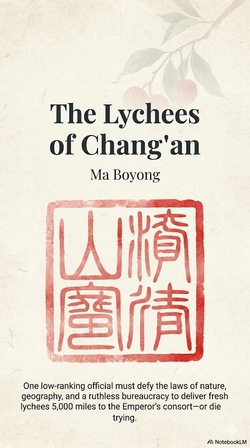
Set in the bustling, corrupt Tang Dynasty capital of Chang’an, *The Lychees of Chang’an* follows Li Shande, a low-ranking, math-savvy government clerk who stumbles into an impossible mission: delivering fresh lychees from the tropical Lingnan region—over 3,000 miles away—to the Emperor’s favorite concubine, Yang Guifei, in just 11 days. Tasked with a death sentence if he fails, Li navigates cutthroat court politics, treacherous terrain, and bureaucratic red tape to crack the code of lychee preservation and rapid transit. Along the way, he confronts the brutal cost of imperial indulgence: exploited villagers, exhausted couriers, and broken friendships. As he succeeds against all odds, Li realizes the hollow glory of court success, choosing integrity over power and retreating to Lingnan to rebuild his life. Ma Boyong’s witty, tightly woven narrative humanizes the hidden struggles of ordinary people in a grand, unforgiving empire, offering a sharp critique of bureaucratic corruption and the price of luxury.

The Looming Tower summary and key insights by Lawrence Wright
Loading…

The Looming Tower

Lawrence Wright

4.1463 learners

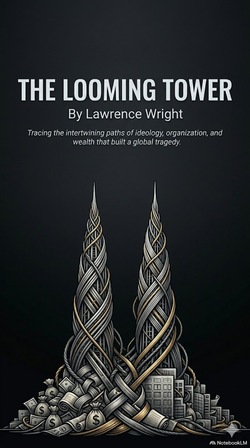
Lawrence Wright’s The Looming Tower delivers a meticulously researched, narrative-driven exploration of the ideological roots of Al-Qaeda and the personal journeys that laid the groundwork for the 9/11 attacks. The book traces the radicalization of three pivotal figures: Sayyid Qutb, whose disillusioning 1940s stay in the U.S. transformed him into a fierce critic of Western materialism and a foundational thinker for Islamic extremism; Ayman al-Zawahiri, the Egyptian doctor whose prison torture and unwavering devotion to Qutb’s ideas fueled his commitment to violent jihad; and Osama bin Laden, the Saudi heir whose religious awakening and family connections enabled him to build the terrorist network that became Al-Qaeda. Wright weaves together their stories, the rise of the Muslim Brotherhood, and Middle Eastern geopolitical tensions to reveal how a fringe ideology evolved into a global threat, offering critical context for understanding modern Islamic radicalism.

The Art of Not Being Governed summary and key insights by James C. Scott
Loading…

The Art of Not Being Governed

James C. Scott

4.6839 learners

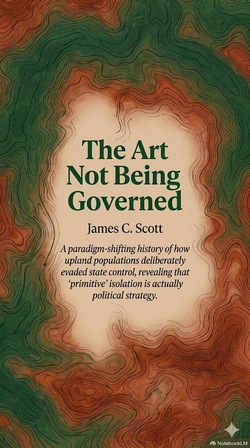
James C. Scott’s *The Art of Not Being Governed* upends conventional state-centered history by spotlighting Zomia—a vast, 250,000-square-mile mountain region spanning nine Southeast Asian countries. Far from a “primitive” backwater, Zomia is revealed as a millennia-old refuge for people fleeing valley states’ crushing taxes, forced labor, slavery, and warfare. Scott argues that the region’s diverse ethnic groups, swidden (slash-and-burn) agriculture, decentralized social structures, and rejection of written language aren’t relics of an earlier era—they’re deliberate, strategic choices to evade state control. He unpacks the symbiotic, often tense relationship between Zomia’s mountain communities and valley kingdoms, showing how each shaped the other’s development. Finally, he traces how modern nation-states, armed with roads, technology, and assimilation policies, are rapidly eroding Zomia’s autonomy, closing the last great stateless frontier on Earth. This groundbreaking work challenges our assumptions about “civilization” and what it means to live beyond state rule.

The Aquariums of Pyongyang summary and key insights by Chol-hwan Kang;Pierre Rigoulot
Loading…

The Aquariums of Pyongyang

Chol-hwan Kang;Pierre Rigoulot

4.41318 learners

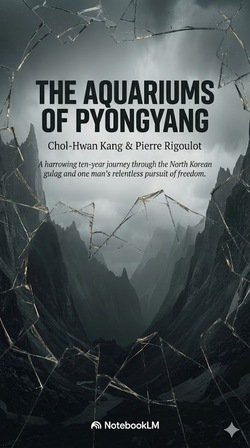
In The Aquariums of Pyongyang, Kang Chol-Hwan shares his searing firsthand account of growing up in 1960s Pyongyang—where his family lived in luxury as privileged Japanese-Korean returnees, revering Kim Il-sung as a god-like figure—before their world collapsed. At 11, his grandfather was falsely accused of treason, and the entire family was sent to Yodok, North Korea’s brutal political prison camp. For 10 years, Kang endured starvation, forced labor, psychological torture, public executions, and a dehumanizing system that pitted prisoners against each other to survive. He vividly describes the slow erosion of his childhood innocence and the unyielding will to live that kept him going. After his release in 1987, he navigated a broken North Korean society, eventually risking everything to escape to China and then South Korea. This memoir is a powerful testament to the horrors of totalitarian oppression and the human spirit’s relentless quest for freedom.

Open Veins of Latin America summary and key insights by Eduardo Galeano
Loading…

Open Veins of Latin America

Eduardo Galeano

3.5997 learners

Eduardo Galeano’s *Open Veins of Latin America* lays bare 500 years of systemic plunder that has defined the region’s tragic fate. Starting with Columbus’s 1492 arrival, the book traces how Spanish and Portuguese colonizers drained Latin America of gold and silver, decimating indigenous populations through forced labor and violence. Later, British free trade policies crushed fledgling local industries, turning the continent into a raw material supplier and consumer of European goods. In the 20th century, U.S. corporations and political interference took over, controlling key sectors like mining, oil, and manufacturing while extracting massive profits that never benefited local communities. Galeano weaves together harrowing stories of indigenous uprisings, enslaved laborers, and exploited workers, exposing how neocolonial structures perpetuate poverty, inequality, and dependency. A landmark work of critical scholarship, it reveals why Latin America remains trapped in a cycle of resource wealth and widespread deprivation, making it essential reading for anyone seeking to understand global economic injustice.

My Liangshan Brothers summary and key insights by Qiu Dongmao
Loading…

My Liangshan Brothers

Qiu Dongmao

3.7691 learners

In *My Liangshan Brothers*, anthropologist Qiu Dongmao takes readers deep into remote Lim Township in Sichuan’s Liangshan region, where the Nuosu people (officially categorized as Yi) have weathered a century of dizzying modern upheaval—from autonomous tribal life to socialist collective communes, then to unregulated market capitalism. Over 20 months of immersive fieldwork starting in 2005, Qiu uncovers how rapid, externally driven modernization spawned a devastating dual crisis of heroin addiction and HIV, which ravaged Nuosu communities by the late 1990s. Through intimate stories of local leaders, former addicts, and struggling youth (like his trusted assistant Qubi Muga), he explores the Nuosu’s grassroots clan-led anti-drug efforts, the failed top-down Sino-UK HIV prevention program, and how well-meaning external interventions inadvertently created HIV stigma where none existed. This raw, compassionate account reveals how marginalized groups bear the brunt of conflicting modernity forces, while highlighting the Nuosu’s quiet resilience amid loss and cultural erasure.

Modernity and the Holocaust summary and key insights by Zygmunt Bauman
Loading…

Modernity and the Holocaust

Zygmunt Bauman

4.1902 learners

In *Modernity and the Holocaust*, sociologist Zygmunt Bauman dismantles two flawed mainstream interpretations of the Holocaust: framing it as either a unique product of European anti-Semitism or a burst of primal human aggression. Instead, he argues the Holocaust wasn’t a failure of modernity—it was a direct outcome of its core traits. Bauman exposes how the Nazi regime leveraged modern bureaucracy’s division of labor, rational efficiency, and dehumanizing systems to turn ordinary people into complicit perpetrators. He explores how anti-Semitism merged with modern racial science and social engineering, and how victims’ rational attempts at self-preservation inadvertently aided their own destruction. The book also challenges traditional sociological views of morality, arguing that true moral responsibility lies in individual judgment, not blind obedience to social norms. Most urgently, Bauman warns that the structural conditions that enabled the Holocaust—unaccountable state power, bureaucratic detachment, and dehumanization—still persist in modern societies, making similar atrocities possible.

Gulag: A History summary and key insights by Anne Applebaum
Loading…

Gulag: A History

Anne Applebaum

4.2509 learners

Anne Applebaum’s *Gulag: A History* is a definitive, unflinching account of the Soviet Union’s sprawling forced labor camp system, tracing its origins from post-1917 revolutionary repressions to its collapse in the late 20th century. Starting with repurposed WWI POW camps and Lenin’s directives to detain "unreliable elements," the book chronicles the Gulag’s evolution from a political tool to a core pillar of Stalin’s industrialization drive—epitomized by the deadly White Sea Canal project, where over 2.5 prisoners died. It exposes the horrors of the Great Purge, where millions were arbitrarily arrested, tortured, and sent to remote camps, as well as the system’s expansion during WWII, when foreign POWs and occupied-region civilians were added to its ranks. Applebaum also details the Gulag’s decline after Stalin’s death, driven by reforms, prisoner uprisings, and international pressure, and explores its enduring legacy in Russian society’s fractured memory of totalitarianism.

Fire in the Valley summary and key insights by Michael Swaine;Paul Freiberger
Loading…

Fire in the Valley

Michael Swaine;Paul Freiberger

4.21041 learners

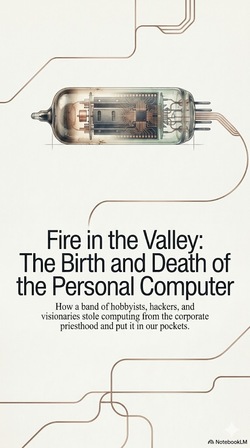
Fire in the Valley is the definitive chronicle of the personal computer revolution that birthed Silicon Valley and transformed global technology. Starting with 19th-century visionaries like Charles Babbage and Ada Lovelace, it traces the evolution from early vacuum tube machines like ENIAC to the invention of the microprocessor, the game-changing Altair 8800, and the grassroots Homebrew Computer Club that fueled amateur innovation. The book dives into the rivalries, triumphs, and failures of iconic figures—Steve Jobs and Steve Wozniak building Apple in a garage, Bill Gates and Paul Allen launching Microsoft, and IBM’s entry that reshaped the industry. It also chronicles the shift to the post-PC era, from the iPod and iPhone to cloud computing, capturing the chaotic, passionate spirit of engineers, entrepreneurs, and tinkerers who turned a niche hobby into a global phenomenon that redefined how we work, connect, and live.

Deng Xiaoping and the Transformation of China summary and key insights by Ezra F. Vogel
Loading…

Deng Xiaoping and the Transformation of China

Ezra F. Vogel

4.21186 learners

Ezra F. Vogel’s definitive biography traces Deng Xiaoping’s extraordinary journey from a young patriotic activist in 1920s France to the architect of China’s modern transformation. Detailing his political ups and downs—from purges during the Cultural Revolution to his triumphant comebacks—the book unpacks Deng’s pragmatic governance: his push for Special Economic Zones, the household contract system that revolutionized agriculture, and the bold normalization of Sino-US and Sino-Japanese relations. It explores his unyielding stance on national sovereignty, including the 'One Country, Two Systems' framework for Hong Kong’s return, and his efforts to modernize the PLA while prioritizing economic growth. Vogel also examines the tensions and trade-offs of Deng’s era: balancing reform with stability, addressing corruption risks, and navigating ideological divides. More than a political portrait, this work reveals how Deng’s leadership lifted hundreds of millions out of poverty and shifted China from a closed, stagnant state to a global economic powerhouse.

Capitalism in America summary and key insights by Alan Greenspan;Adrian Wooldridge
Loading…

Capitalism in America

Alan Greenspan;Adrian Wooldridge

4.4987 learners

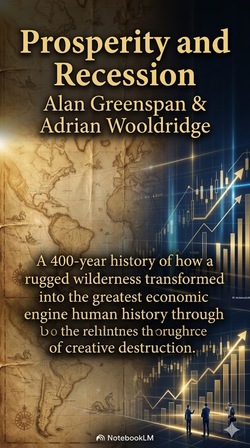
From the colonial era’s resource-rich, free-spirited foundations to today’s tech-driven, globally dominant economy, *Capitalism in America* by Alan Greenspan and Adrian Wooldridge traces the wild, transformative journey of U.S. capitalism. This sweeping history unpacks how key turning points—from Hamilton’s financial system and the Civil War’s resolution of slavery to the Gilded Age’s robber barons, the Great Depression’s New Deal, and the post-WWII golden age—shaped the nation’s economic identity. It highlights the central role of 'creative destruction': how entrepreneurs like Ford, Rockefeller, and Silicon Valley innovators disrupted old systems to drive prosperity, even as crises (2008’s financial crash, 1970s stagflation) and challenges (ballooning welfare costs, stagnant productivity) tested its resilience. The book argues that America’s unique blend of entrepreneurial grit, institutional flexibility, and a willingness to adapt remains its greatest asset, even as it faces modern threats to its economic vitality.

Black Flags summary and key insights by Joby Warrick
Loading…

Black Flags

Joby Warrick

4.3478 learners

"Black Flags" traces the brutal rise of Abu Musab al-Zarqawi, from a petty Jordanian street thug to the ruthless architect of Iraq’s sectarian chaos, and his legacy that birthed the Islamic State (ISIS). Drawing on exclusive intelligence, interviews, and firsthand accounts, Jody Warrick chronicles Zarqawi’s transformation in Jafar Prison, his tense alliance with Al-Qaeda, his reign of terror in Iraq—including beheadings, suicide bombings, and chemical weapon plots—and his eventual death in a 2006 U.S. airstrike. The book also exposes how Zarqawi’s extremist ideology and tactics were adopted by Abu Bakr al-Baghdadi, who built ISIS into a global terror threat amid the chaos of the Syrian civil war. It’s a gripping, meticulously researched account of how one man’s violence reshaped the Middle East and fueled a decades-long terror crisis.

Life is Unfinished summary and key insights by Benedict Anderson
Loading…

Life is Unfinished

Benedict Anderson

4.3757 learners

In *Imagined Communities*, Benedict Anderson redefines how we understand nationalism by arguing that nations are not innate, natural groups—but "imagined communities." Most members will never meet, yet they bond over shared myths, histories, and cultural symbols, viewing themselves as part of a collective whole. Anderson traces the origins of modern nationalism to 18th-century America, highlighting how print capitalism—mass-produced newspapers, books, and pamphlets in standardized vernaculars—created a shared sense of belonging across geographically dispersed people. He then explores how this model adapted across Europe, Asia, and colonial contexts, examining how anti-colonial movements reimagined these communities to challenge imperial rule. This landmark work reshapes our grasp of identity, sovereignty, and the forces that bind modern societies, offering a foundational framework for anyone seeking to unpack the complexities of nationhood and collective belonging.

Imagined Communities summary and key insights by Benedict Anderson
Loading…

Imagined Communities

Benedict Anderson

4.21297 learners

Benedict Anderson’s *Imagined Communities* redefines the nation as an “imagined political community—limited and sovereign,” a groundbreaking framework that reshaped global understandings of nationalism. Anderson traces this modern cultural artifact’s origins to late 18th-century shifts: print capitalism, which forged shared linguistic bonds among dispersed readers; the decline of religious authority and dynastic legitimacy, creating a vacuum for secular collective belonging; and the rise of “homogeneous, empty time” through novels and newspapers, fostering simultaneous connection between strangers. The book dissects distinct waves of nationalism—from early American colonial movements to European linguistic nationalism, conservative official nationalism adopted by empires, and post-WWII anti-colonial struggles. It also distinguishes nationalism from racism, emphasizing the former’s rootedness in inclusive, affective belonging rather than hierarchical fear. A core text across disciplines, it offers a critical lens to unpack how imagined bonds shape global politics and identity.

Che Guevara: A Revolutionary Life summary and key insights by Jon Lee Anderson
Loading…

Che Guevara: A Revolutionary Life

Jon Lee Anderson

4.4880 learners

Jon Lee Anderson’s definitive biography traces Ernesto “Che” Guevara’s extraordinary journey from a privileged Argentine asthmatic youth to a global revolutionary icon. Born into a wealthy landowning family, Che’s childhood was shaped by his mother’s communist leanings, his grandmother’s free-thinking influence, and a lifelong battle with asthma that forged his relentless grit. A transformative 8-month South American motorcycle trip exposed him to widespread poverty and colonial oppression, shifting his focus from medicine to radical social change. The book chronicles his pivotal alliance with Fidel Castro, his role in the Cuban Revolution, his controversial tenure as Cuba’s central bank president, and his ill-fated guerrilla campaigns in the Congo and Bolivia. Anderson vividly captures Che’s unwavering commitment to Marxist ideals, his tragic death in 1967, and his enduring legacy as a symbol of resistance against inequality worldwide.

A Terrible Beauty summary and key insights by Peter Watson
Loading…

A Terrible Beauty

Peter Watson

3.1684 learners

A Terrible Beauty offers a sweeping, vivid journey through the 20th century’s most transformative shifts in art, science, philosophy, and politics. Starting with the seismic cultural upheavals of 1900—from Picasso’s radical reimagining of art in Paris to Vienna’s café-fueled clashes between rationalism and mysticism—the book traces how ideas evolved amid war, revolution, and crisis. It unpacks the rise of social Darwinism, the quantum physics revolution that rewrote our understanding of the universe, the existentialist movement that gave voice to post-WWII despair, and the cultural wars that divided late-century America. Along the way, it highlights towering figures like Einstein, Sartre, and Toni Morrison, and explores how breakthroughs in genetics, computing, and postcolonial thought reshaped global society. Blending rigorous scholarship with engaging storytelling, this book reveals how the 20th century’s terrible beauty—its genius and destruction, its progress and chaos—created the world we live in today.

The Clash of Civilizations and the Remaking of World Order summary and key insights by Samuel P. Huntington
Loading…

The Clash of Civilizations and the Remaking of World Order

Samuel P. Huntington

4.1959 learners

In *The Clash of Civilizations and the Remaking of World Order*, Samuel P. Huntington reshapes post-Cold War global analysis, arguing ideological conflicts have been replaced by clashes between distinct civilizations—the broadest form of cultural identity. He details how Western dominance is fading as non-Western civilizations like China, Islam, and India regain influence, driven by economic growth, demographic shifts, and cultural revival. Huntington breaks down key frameworks: core states leading civilizational blocs, "torn countries" grappling with identity crises, and "fault line wars" erupting along cultural divides, especially between Muslim and non-Muslim groups. He critiques Western universalism, warning forcing Western values on other cultures sparks backlash, and outlines principles for a stable multi-civilizational order, emphasizing respect for cultural autonomy and cross-civilizational mediation.