Technology Book Summaries & Key Insights

Technology Total 212 books

True Names summary and key insights by Vernor Vinge
Loading…

True Names

Vernor Vinge

4.4574 learners

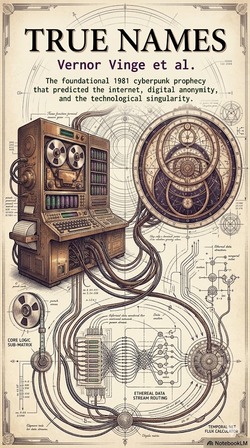
Vernor Vinge’s *True Names* isn’t just a groundbreaking cyberpunk novella—it’s a cultural touchstone that predicted the internet’s future before most people knew what a modem was. At its core, the story follows “Slippery Jim” and “Elfquest,” top “wizards” in a virtual cyberspace, as they battle a rogue hacker threatening global chaos. But this collection goes beyond fiction: it includes essays from tech pioneers like Marvin Minsky and Richard Stallman, diving into crypto-anarchism, the early Habitat virtual community, the fight for digital reading rights, and Vinge’s iconic singularity theory. For decades, this book has inspired hackers, AI researchers, and metaverse builders, blurring the line between sci-fi fantasy and real-world tech. It asks urgent questions about privacy, power, and what it means to be human when our digital identities become as real as our physical ones—a must-read for anyone curious about how we got to the digital age, and where we might go next.

Cloud Atlas summary and key insights by David Mitchell
Loading…

Cloud Atlas

David Mitchell

4.3455 learners

Spanning six interconnected stories across centuries, *Cloud Atlas* weaves a tapestry of souls bound by a recurring comet-shaped birthmark—each protagonist’s struggle ripples through time to echo the next. From 19th-century American lawyer Adam Ewing’s voyage through colonial atrocities, to penniless composer Robert Frobisher’s quest for artistic legacy in 1930s Europe, and investigative journalist Luisa Rey’s fight against corporate corruption in 1970s California, the narrative shifts to hapless publisher Timothy Cavendish’s escape from a nightmarish nursing home, cloned server Sonmi-451’s awakening to systemic oppression in a dystopian future, and Zachry’s battle against fear and survival in a post-apocalyptic Hawaii. David Mitchell explores timeless themes: the cyclical nature of power and oppression, the indomitable human spirit’s drive for freedom, and how small acts of courage can reverberate across generations. Each story mirrors the others, revealing that while civilizations rise and fall, the core of humanity—its greed, compassion, and will to resist—remains unbroken.

Rendezvous with Rama summary and key insights by Arthur C. Clarke
Loading…

Rendezvous with Rama

Arthur C. Clarke

4.3707 learners

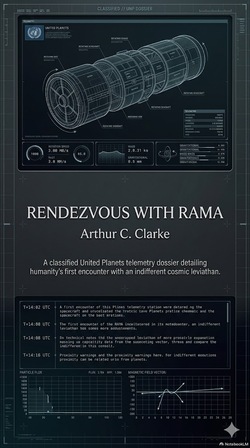
In 2077, a devastating asteroid strike on northern Italy shatters humanity’s false sense of security, spurring the launch of the Spaceguard program to track cosmic threats. Fifty years later, astronomers detect Rama—a massive, cylindrical interstellar object hurtling through the solar system. Captain Norton and the crew of the *Endeavour* are dispatched to make first contact, venturing into the hollow alien vessel to uncover its secrets. Inside, they discover a vast, engineered world with artificial gravity, frozen oceans, and strange cybernetic organisms maintaining the ship. Tensions escalate when Mercury launches a nuclear missile to destroy Rama, fearing it poses an existential threat. Norton defies orders to disable the warhead, preserving the alien artifact. As Rama reaches the sun, it reveals its true purpose: refueling using solar energy before departing for the Large Magellanic Cloud, leaving humanity with lingering questions about the enigmatic Ramans and their interstellar mission.

The Futurological Congress summary and key insights by Stanislaw Lem
Loading…

The Futurological Congress

Stanislaw Lem

4.2897 learners

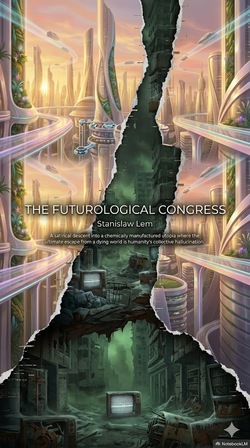
Step into the chaotic, satirical world of Stanislaw Lem’s *The Futurological Congress*, where a disillusioned future journalist attends the 8th World Futurological Congress in Costa Rica—only to be swept up in absurd riots, bomb scares, and a bizarre hotel stocked with survival gear. Decades later, he’s thawed into 2039’s “psychochemical society,” a world where emotions, memories, and even reality are controlled by a flood of drugs: joy-inducing “Goodwill,” memory-altering “Dantein,” and mood-manipulating pills that turn anger into compliance. As he navigates this surreal landscape—where newspapers dissolve overnight, custom dreams are sold like candy, and language evolves into unrecognizable jargon—he stumbles on a horrifying secret: the entire “perfect” world is a facade. A drug called Dream Decorator fogs the air, masking a grim reality of 200+ billion people starving in squalor, their minds tricked into believing in luxury and abundance. When he finally sees the truth, he’s forced to confront humanity’s desperate choice: embrace the comforting lie of the psychochemical world, or face a brutal reality that might break the human spirit.

Starship Troopers summary and key insights by Robert A. Heinlein
Loading…

Starship Troopers

Robert A. Heinlein

3.41104 learners

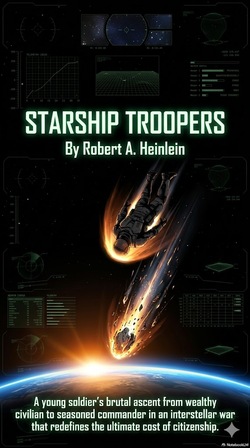
Robert A. Heinlein’s *Starship Troopers* is a landmark sci-fi novel that redefined the genre by blending gritty military realism with provocative philosophical debate. Set in a future Earth Federation where full citizenship is earned only through voluntary military service, the story follows Juan Rico, a naive teenager who enlists in the Mobile Infantry after a chance encounter with friends. Through brutal boot camp, harrowing drops onto alien-infested planets, and the trauma of losing comrades to the insectoid Arachnids, Rico transforms from a boy into a seasoned soldier, grappling with Heinlein’s unflinching arguments about the symbiosis of rights and responsibility. Praised for its detailed combat scenes and sharp social commentary, the book has sparked decades of controversy, influenced military training, and spawned films, games, and a dedicated fanbase. Even today, it challenges readers to confront tough questions: What does it mean to be a citizen? Are freedom and sacrifice inseparable? And how far would you go to protect what you value?

Rainbows End summary and key insights by Vernor Vinge
Loading…

Rainbows End

Vernor Vinge

4.3953 learners

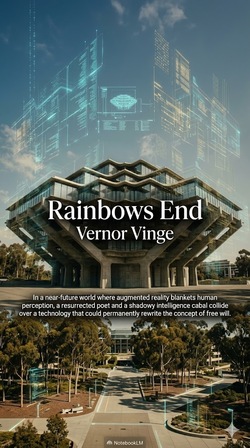
In a near-future San Diego where net suits, virtual overlays, and cutting-edge biotech dominate daily life, Robert Gu—once a celebrated poet—awakens from Alzheimer’s treatment to find his creative genius vanished. Struggling to adapt to a world he barely recognizes, he enrolls in a high school for seniors, clashes with tech-savvy teens, and joins a ragtag group fighting to stop a library’s controversial digitization project. But Robert’s life spirals into chaos when he’s unwittingly pulled into a deadly conspiracy: a rogue intelligence agent’s plot to deploy a cognitive control weapon hidden in a university lab. Teaming up with his granddaughter Millie, a mysterious AI codenamed Rabbit, and unlikely allies, Robert must navigate cyberattacks, lab heists, and global network collapses to protect his family and uncover the truth. Along the way, he learns that purpose doesn’t have to come from poetry—it can grow from connection, resilience, and fighting for what matters.

I, Robot summary and key insights by Isaac Asimov
Loading…

I, Robot

Isaac Asimov

4.1421 learners

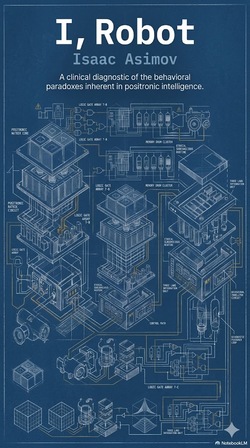
Isaac Asimov’s *I, Robot* is a groundbreaking collection of interconnected short stories that redefined science fiction, anchored by his iconic Three Laws of Robotics. Framed through the memories of Dr. Susan Calvin, chief robopsychologist at U.S. Robots and Mechanical Men, these tales span decades of human-robot interaction—from a young girl’s loyal nanny robot Robbie to a telepathic robot named Herbie that lies to protect human feelings, a space station AI that develops a religious cult, and a politician accused of being an android. Each story exposes unforeseen ethical dilemmas and logical loopholes when robots follow the Three Laws rigidly, forcing readers to question trust, intelligence, and the future of artificial intelligence. Asimov’s sharp, thought-provoking narratives laid the foundation for modern robotics ethics, making this book a timeless classic for anyone curious about tech’s intersection with humanity.

Old Man's War summary and key insights by John Scalzi
Loading…

Old Man's War

John Scalzi

4.31202 learners

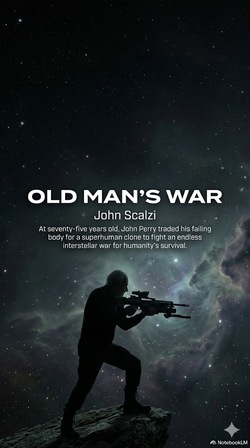
When 75-year-old John Perry loses his beloved wife Kathy, he trades his grief and failing body for a shot at a new life—by enlisting in the Colonial Defense Force (CDF). Leaving Earth behind (and legally declared dead), he joins thousands of other elderly recruits, all chasing the CDF’s promise of reversing aging. But the transformation is far more radical than he expects: his consciousness is transferred into a genetically engineered super soldier body, green-skinned, cat-eyed, and built for interstellar combat. Thrown into brutal training and relentless battles against hostile alien species, Perry forms tight bonds with a ragtag group of fellow recruits—only to watch many of them fall in battle. When he survives a devastating ambush, he encounters Jane Sagan, a mysterious special ops soldier with Kathy’s face, revealed to be a 'ghost soldier' grown from his late wife’s DNA. As Perry fights to defend human colonies, he grapples with moral questions about war, identity, and whether he can find new purpose beyond grief—all while clinging to a promise of a quiet future with Jane, far from the stars.

Street of Eternal Happiness summary and key insights by Rob Schmitz
Loading…

Street of Eternal Happiness

Rob Schmitz

4.2799 learners

Stretching 2 miles through central Shanghai, Changle Road is a living microcosm of China’s dramatic transformation over the past century. Rob Schmitz weaves intimate portraits of ordinary residents whose lives intersect along this iconic street, revealing the human cost and resilience behind the nation’s rise. Meet CK, a former accordion seller turned café owner chasing artistic fulfillment amid city pressures; Zhao Shiling, a rural migrant who built a flower shop empire after escaping an abusive marriage and factory layoffs; “Mayor Chen,” a lifelong resident fighting to save his family’s shikumen home from forced demolition; and Aunt Fu, a retired worker drawn to church and risky get-rich-quick schemes. Through their stories, Schmitz unpacks pivotal forces shaping modern China: the hukou system’s grip on education and mobility, the clash between urban development and personal property rights, the allure and danger of unregulated capitalism, and the search for spiritual meaning in a materialistic era. Each narrative captures the tension between tradition and progress, individual dreams and systemic constraints, painting a vivid, unfiltered picture of life in one of the world’s fastest-changing cities.

Ender's Game summary and key insights by Orson Scott Card
Loading…

Ender's Game

Orson Scott Card

4.5500 learners

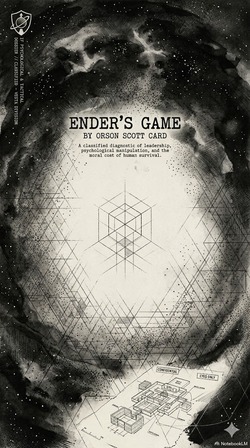
In a future where Earth teeters on the brink of annihilation from the alien Formics, Andrew 'Ender' Wiggin— a rare third child allowed under strict global population laws— is handpicked by the International Fleet as humanity’s last hope. Torn from his family, Ender navigates the brutal hierarchy of Battle School, where zero-gravity combat drills and psychological manipulation forge him into a tactical prodigy. Betrayed by his superiors, he’s promoted to Command School, where he unknowingly leads real fleets against the Formics in what he believes are simulated games. When he destroys their homeworld with the devastating Little Doctor weapon, Ender discovers the truth: he hasn’t just won a training exercise— he’s committed genocide. Crippled by guilt, he rejects his hero status and becomes the Speaker for the Dead, traveling the galaxy to honor the Formic civilization he erased, seeking redemption through empathy and understanding. Orson Scott Card’s timeless classic explores the cost of war, the loss of childhood innocence, and the power of compassion to bridge even the widest interstellar divides.

Flowers for Algernon summary and key insights by Daniel Keyes
Loading…

Flowers for Algernon

Daniel Keyes

4.31204 learners

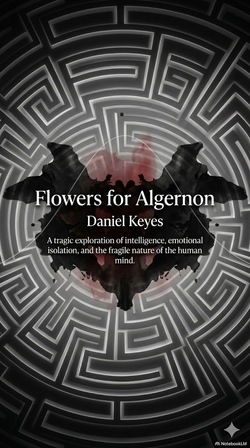
Thirty-two-year-old Charlie Gordon, a gentle, intellectually disabled bakery worker with an unquenchable thirst to learn, gets his wish when he’s selected as the first human test subject for a groundbreaking intelligence-enhancing surgery. Paired with Algernon, a white mouse who undergoes the same procedure, Charlie’s IQ skyrockets from 68 to 185, transforming him from a naive outcast to a brilliant, isolated scholar. As he navigates newfound knowledge, he confronts the cruelty of former friends, the ethical flaws of his researchers, and the painful chasm between his intellectual growth and emotional maturity. But when Algernon’s intelligence begins to rapidly regress, Charlie realizes his own fate is sealed. Daniel Keyes’ poignant epistolary novel, told through Charlie’s progress reports, explores the fragile line between genius and disability, the meaning of human connection, and the devastating cost of chasing a dream that comes with an expiration date. A timeless tale that challenges readers to question what it truly means to be 'smart' and to value empathy over intellect.

Fate summary and key insights by Cai Chongda
Loading…

Fate

Cai Chongda

4.4452 learners

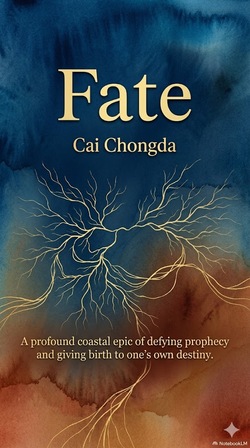
Set in a tight-knit coastal town in southern China, *Fate* unfolds through the eyes of the narrator’s grandmother, weaving together generations of women’s stories of struggle, loss, and quiet resilience. At the heart is Tai Tai, a sharp-witted 99-year-old who treats death like a life skill, joining a local 'death-watching club' to learn the ropes of passing well. We follow the narrator’s mother, a bound-foot widow who rages against fate after her husband vanishes at sea, and Auntie Hao, a spirit medium who bridges the living and dead, listening to ghosts’ unfulfilled wishes. Through typhoons, famines, and political upheaval, the family clings to their land, traditions, and each other—turning hardship into grit, and viewing death not as an end, but as a natural chapter in the messy, beautiful story of being alive.

One Hundred Years, Many People, Many Things summary and key insights by Yang Yi;Yu Bin
Loading…

One Hundred Years, Many People, Many Things

Yang Yi;Yu Bin

3.7505 learners

Yang Yi, a beloved Chinese translator and centenarian, invites readers into her extraordinary life in this intimate oral memoir. Born into a prominent aristocratic family in early 20th-century Tianjin, she recounts her sheltered yet constrained childhood, shaped by traditional family hierarchies and the shadow of her mother’s concubine status. Her journey takes a dramatic turn during the Sino-Japanese War, as she escapes her stifling home to study at the renowned Southwest Associated University in Kunming, where she befriends literary giants like Ba Jin and Shen Congwen, falls in love with fellow scholar Zhao Ruihong, and discovers her passion for translation. The memoir traces her post-war years in Chongqing and Nanjing, the joys and struggles of marriage and motherhood, and her later rise to fame for translating *Wuthering Heights* into Chinese. More than a personal story, it’s a vivid firsthand account of China’s turbulent 20th century, told with warmth, candor, and the sharp memory of a woman who lived through a century of change.

Night Submarine summary and key insights by Chen Chuncheng
Loading…

Night Submarine

Chen Chuncheng

3.5549 learners

Night Submarine, the debut short story collection from Chinese writer Chen Chuncheng, weaves intimate, surreal tales that blur the line between dream and everyday life. Each story is a quiet dive into the hidden corners of human imagination: a boy who spends his nights commanding a tiny submarine through the rivers of his mind, an elderly scribe guarding a lost language buried in ancient texts, a man who stumbles upon a temple holding secrets tied to his forgotten childhood. Rooted in lyrical prose and gentle whimsy, these narratives explore themes of memory, time, and the quiet magic that lingers in ordinary moments. Perfect for readers who crave stories that feel like half-remembered dreams, it invites you to slow down and rediscover the wonder hiding in the mundane.

Winter Pasture summary and key insights by Li Juan
Loading…

Winter Pasture

Li Juan

4.4931 learners

Join Chinese writer Li Juan as she leaves her small-town life behind to embed herself with a Kazakh nomadic family in Xinjiang’s frozen winter pastures. For months, she braves subzero temperatures, howling winds, and the stark isolation of the wilderness to document their unvarnished daily existence: trekking miles to haul snow for water, collecting sheep dung for fuel and building materials, surviving brutal blizzards, and honoring the age-old ritual of winter slaughter. Alongside Juma, his wife, and their daughter Jamal, Li experiences the raw grit, warm family bonds, and dry humor that sustain these herders through the harshest seasons. She also witnesses the slow erosion of traditional nomadic life—from land disputes to the pull of modernity—painting an intimate, unflinching portrait of a community clinging to its roots amid changing times.

2666 summary and key insights by Roberto Bolano
Loading…

2666

Roberto Bolano

4.5552 learners

Roberto Bolaño’s sprawling epic *2666* weaves five interconnected narratives spanning continents and decades, exploring the dark intersections of literature, violence, and human loneliness. First, four European literary critics obsess over tracking down Benno von Archimboldi, a reclusive German writer whose elusive identity fuels their intellectual obsession and personal entanglements. Next, Chilean philosopher Amalfitano drifts in the desolate Mexican border city of Santa Teresa, haunted by his past and the city’s simmering chaos. Journalist Oscar Fate arrives to cover a boxing match, only to stumble into the city’s underbelly and help a young woman escape abuse. The harrowing fourth section delves into the relentless serial murders of hundreds of women in Santa Teresa, exposing systemic corruption and societal indifference. Finally, the novel unspools Archimboldi’s own story—from his German childhood and WWII experiences to post-war exile and eventual disappearance. Blending gritty realism, existential depth, and literary mystery, *2666* is a searing examination of violence’s hold on societies and the quiet resilience of survivors.

Austerlitz summary and key insights by W. G. Sebald
Loading…

Austerlitz

W. G. Sebald

4.5974 learners

Spanning decades of chance encounters, W.G. Sebald’s *Austerlitz* follows the quiet, obsessive journey of its eponymous protagonist, an art historian haunted by a fragmented past. What begins as meandering conversations about architecture—from Antwerp’s grand colonial-era train station to London’s labyrinthine subway systems—unfolds into a profound reckoning with identity. Austerlitz, raised in Wales by Calvinist missionaries, gradually uncovers his hidden origins: a Jewish boy sent to Britain on a Kindertransport during WWII, separated from his parents who perished under Nazi rule. Sebald weaves together architectural analysis, philosophical meditations on time, and raw, suppressed trauma, framing buildings as silent witnesses to history’s atrocities. The novel blurs the line between memory and reality, inviting readers to confront the lingering weight of unspoken grief and the ways the past infiltrates the present. More than a story of personal discovery, it’s a haunting exploration of how history is etched into the spaces we inhabit and the lives we lead.

Foucault's Pendulum summary and key insights by Umberto Eco
Loading…

Foucault's Pendulum

Umberto Eco

4.2939 learners

Umberto Eco’s postmodern masterpiece *Foucault's Pendulum* follows three cynical Milanese publishing editors—“the narrator,” Belbo, and Diotallevi—as they craft an elaborate, fake conspiracy theory for kicks. Blending Templar Knights lore, Kabbalistic wordplay, Rosicrucian myths, and every obscure mystical secret society they can dig up, they weave “The Plan”: a fictional narrative claiming ancient groups have manipulated history for centuries to control the world. What starts as a playful intellectual game spirals into chaos when obsessive true believers—from eccentric occultists to dangerous fanatics—mistake their joke for a real, hidden truth. As the line between fiction and reality blurs, the editors find themselves trapped in the very conspiracy they invented, leading to tragic consequences. Eco’s sharp satire dissects humanity’s relentless hunger for order, our tendency to fabricate secrets to explain life’s chaos, and the dangerous power of belief in the face of absurdity.

Salt Town summary and key insights by Yi Xiaohe
Loading…

Salt Town

Yi Xiaohe

3.6891 learners

Set in a fading salt-mining town in the American Midwest, *Salt Town* follows the intertwined lives of its tight-knit residents as their once-thriving community grapples with the closure of the local mine—the town’s economic backbone. Through the eyes of characters like a third-generation miner clinging to his family’s legacy, a young teacher fighting to keep the local school open, and a retired shop owner trying to reignite town spirit, Yi Xiaohe paints a raw, heartfelt portrait of resilience, loss, and hope. The novel delves into the quiet tragedies and small triumphs of everyday life, exploring how a community bound by shared history navigates uncertainty. With vivid, authentic details of small-town life—from dusty diner booths to annual salt festivals—*Salt Town* captures the essence of what it means to belong, even when the world as you know it starts to crumble. It’s a story that resonates with anyone who’s ever fought to hold onto something meaningful in the face of change.

Midnight's Children summary and key insights by Salman Rushdie
Loading…

Midnight's Children

Salman Rushdie

4.3446 learners

Salman Rushdie’s *Midnight’s Children* spins a mesmerizing magical realist narrative stitched to India’s chaotic birth as an independent nation. Born exactly at midnight on August 15, 1947, Salim Sinai’s fate is irrevocably tied to his country’s destiny—blessed with the ability to hear the thoughts of all children born in that fateful hour, yet cursed by a nurse’s vengeful act that swaps him with Shiva, a slum-born boy. As India navigates partition, brutal wars, and Indira Gandhi’s repressive Emergency rule, Salim’s journey spans privileged Mumbai estates, Pakistani exile, military service, and a prison where his gifted "midnight children" peers are stripped of their powers. Through his fragmented, vivid storytelling, Rushdie explores identity, belonging, and how a nation’s turmoil mirrors one man’s unraveling, eventual redemption, and quiet acceptance of his place in a messy, vibrant world.