Literature Book Summaries & Key Insights

Literature Total 212 books

Underworld summary and key insights by Don DeLillo
Loading…

Underworld

Don DeLillo

4.4957 learners

Don DeLillo’s *Underworld* spins a sweeping, immersive narrative of 20th-century America, anchored by the 1951 baseball playoff where Bobby Thomson’s legendary home run collided with the Soviet Union’s first nuclear test. Spanning decades, the novel weaves together interconnected lives: Nick Shay, a waste management executive haunted by a teenage manslaughter conviction; Klara Sax, an artist transforming decommissioned B-52 bombers in the desert; and Matt Shay, Nick’s brother entangled in top-secret nuclear weapons research. DeLillo digs into the quiet chaos beneath American prosperity—Cold War paranoia, the weight of unspoken secrets, the absurdity of consumer excess, and the fragile line between public spectacle and private despair. Through gritty vignettes of Bronx street life, comedy clubs during the Cuban Missile Crisis, and nuclear test sites, the novel reveals how history’s shadows shape ordinary lives, turning a single baseball into a symbol of a nation’s hidden underworld.
Neuromancer summary and key insights by William Gibson
Loading…

Neuromancer

William Gibson

4.4845 learners

Case, a washed-up cyberspace cowboy, has lost everything—his ability to jack into the matrix, his reputation, and his will to live—after his former employer poisoned his neural system. Stranded in the gritty, neon-lit streets of Chiba City, Japan, he’s given a second chance by the mysterious Armitage, a man with a hidden past tied to a botched military mission called Screaming Fist. Teaming up with Molly Millions, a lethal “razor-girl” with retractable blades in her fingernails, Case agrees to pull off an impossible heist: infiltrate the impenetrable data fortress of Tessier-Ashpool, a reclusive corporate clan, to merge two rogue AIs—Wintermute and Neuromancer. As they navigate the dark underbelly of the Sprawl, space stations, and the clan’s surreal private estate, Case uncovers the truth about Armitage’s identity, the AIs’ hidden agenda, and his own chance at redemption. William Gibson’s cyberpunk classic redefined the genre, exploring blurred lines between humanity, technology, and consciousness in a dystopian future where data is the ultimate currency.

Hopscotch summary and key insights by Julio Cortazar
Loading…

Hopscotch

Julio Cortazar

4.5952 learners

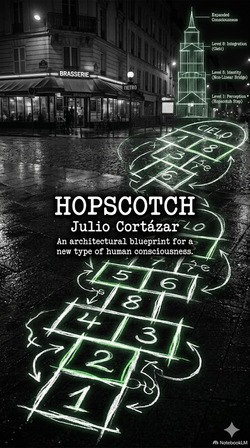
Julio Cortázar’s iconic experimental novel *Hopscotch* throws readers into the chaotic, wandering world of Horacio Oliveira, a disillusioned intellectual adrift between Paris and Buenos Aires. In Paris, Oliveira navigates messy love with the free-spirited Magda, chaotic nights with his ragtag bohemian crew (the Snake Society), and crippling existential doubt about his place in the world. When he returns to Argentina, he finds no solace—only more absurdity alongside old friend Traveler, Traveler’s sharp, playful wife Talita, and the lingering ghost of Magda’s memory. Blending nonlinear storytelling (readers can “hop” through chapters in any order, like the childhood game that gives the book its name), raw meditations on loneliness, and rebellious literary ideas from enigmatic writer Morelli, *Hopscotch* isn’t just a novel—it’s a radical invitation to question the rules of life, love, and storytelling itself.

The Ministry of Pain summary and key insights by Dubravka Ugrešić
Loading…

The Ministry of Pain

Dubravka Ugrešić

4.2834 learners

Set in 1990s Amsterdam, *The Ministry of Pain* follows a Croatian literature professor exiled from war-torn Yugoslavia as she teaches Serbian-Croatian to a ragtag group of fellow exiles—refugees, draft dodgers, and survivors clinging to legal residency. Together, they navigate the disorientation of displacement: grappling with shattered identities, the absurdity of a language split into three official tongues overnight, and the quiet trauma of a lost nation. Through classroom conversations, late-night café gatherings, and shared memories of Yugoslavia’s everyday joys and wartime horrors, the group confronts the weight of their past—from Uroš’s devastating suicide tied to his father’s war crimes trial to the hollow justice of the Hague Tribunal. As the professor clashes with her student Igor and faces her own unraveling, the novel lays bare the messy, painful reality of exile: how memory binds and breaks, how language becomes both a lifeline and a weapon, and how survivors carry the scars of a shattered home long after the guns fall silent.

The Old-Fashioned Girl's Shopping Route summary and key insights by Hung Ai-Chu
Loading…

The Old-Fashioned Girl's Shopping Route

Hung Ai-Chu

3.3748 learners

Follow Hung Ai-Chu, an old-fashioned Taiwanese girl, as she weaves together stories of kitchens, markets, and the food that anchors her family’s legacy. Starting with her tiny 40cm-countertop apartment kitchen, she takes readers back to her grandmother’s open-air rural kitchen with a brick stove, her mother’s sleek Western-style kitchen filled with childhood treats, and the cherished kitchen tools passed down through generations—from a patched clay pot to a hand-forged brass ice spoon. She shares her pandemic-era grocery hacks for stocking up on durable ingredients, her go-to traditional markets in Luzhou and Taipei’s Dadaocheng, and the comfort of dishes like braised pork, rice congee, and family-style New Year’s meals. Alongside local tales, she recounts her travels to Hong Kong and Southeast Asia, where familiar flavors and old friendships rekindle memories of her mother. This warm, vivid narrative celebrates the quiet joy of old-fashioned living, where every ingredient and recipe carries the weight of love and tradition.

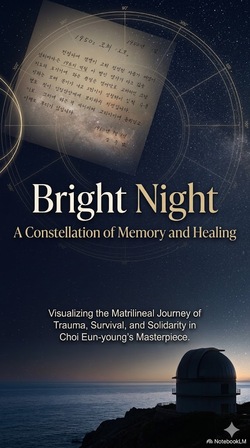
Bright Night summary and key insights by Choi Eun-young
Loading…

Bright Night

Choi Eun-young

3.61049 learners

After a devastating divorce at 32, Ji-yeon leaves the suffocating hustle of Seoul behind to take a job at Seongnyeong Observatory, trading her old life’s baggage—from shared furniture to unspoken heartache—for the quiet calm of a small coastal town. What begins as a desperate escape evolves into a profound journey of self-discovery: she reconnects with her long-lost grandmother, uncovers her great-grandmother’s enduring friendship with a fellow war refugee, and confronts the generational trauma and rigid societal expectations that have weighed on her family for decades. Along the way, she finds solace in small, transformative joys: warm home-cooked meals, late-night stargazing sessions, and a scrawny stray puppy named Oatmeal who teaches her about unconditional love and presence. Through tearful arguments with her traditional mother, the pain of losing Oatmeal, and the quiet healing of coastal days, Ji-yeon learns to let go of self-doubt, embrace her true identity, and realize that healing isn’t about running from the past—it’s about carrying its warmth forward as she steps into a brave, unapologetic future.

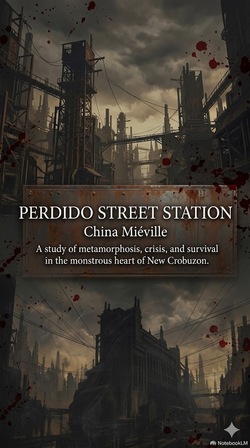
Perdido Street Station summary and key insights by China Miéville
Loading…

Perdido Street Station

China Miéville

4.4779 learners

Set in the gritty, steam-punk infused metropolis of New Crobuzon—a chaotic melting pot of humans, insectoid khepri, bird-like garuda, and modified cyborgs—*Perdido Street Station* follows ragtag scientist Isaac Dan der Grimnebulin, khepri artist Lin, and exiled garuda Yagharek. When Isaac takes on Yagharek’s desperate request to restore his flight, and Lin is coerced into creating a sculpture for the grotesque crime lord Motley, their lives collide with a terrifying threat: a mysterious caterpillar that mutates into slake moths, nightmarish creatures that feed on subconscious minds, unleashing a city-wide plague of hallucinatory nightmares. As the city spirals into chaos, Isaac, Lin, and their allies must navigate political corruption, ancient magical entities, and rogue machine intelligences to stop the moths from devouring New Crobuzon’s collective sanity. Miéville weaves a dark, vivid tale of survival, ambition, and the fragile line between science and magic in a world where nothing is as it seems.

Walden summary and key insights by Henry David Thoreau
Loading…

Walden

Henry David Thoreau

4.5626 learners

In 1845, Henry David Thoreau built a tiny cabin on the shores of Walden Pond in Concord, Massachusetts, and lived there for two years and two months—self-reliant, hands-on, and intentionally disconnected from mainstream society’s hustle. Walden is his raw, unflinching account of this simple living experiment, where he grew his own food, chopped his own wood, and rejected the consumerist trap he saw ensnaring his neighbors. Part memoir, part philosophical treatise, the book challenges readers to question the cost of chasing wealth and status, arguing true freedom comes from stripping life down to essentials: food, shelter, clothing, and fuel. Thoreau weaves vivid nature observations—from the pond’s shifting seasons to forest creatures’ antics—with meditations on solitude, self-discovery, and the quiet rebellion of living deliberately. More than a cabin life story, it’s a timeless call to wake up to the present’s beauty and truth, and live aligned with personal values, not others’ expectations.

The Stars My Destination summary and key insights by Alfred Bester
Loading…

The Stars My Destination

Alfred Bester

4.11070 learners

In the 25th century, humanity has mastered jaunting—the ability to teleport via sheer will—upending global order, collapsing economies, and sparking interplanetary war. Enter Gully Foyle, a crude, unskilled mechanic left for dead aboard the wrecked *Nomad*, adrift in space for 170 days. Abandoned by the *Vorga*, a sister ship, Foyle’s rage ignites a ruthless quest for revenge. Captured by the reclusive Scientific People, imprisoned in a subterranean asylum, and forced to confront brutal interrogations, Foyle evolves: he learns, schemes, and adopts elaborate disguises to hunt down those who betrayed him. Along the way, he uncovers a deadly secret: PyrE, a mind-activated superweapon capable of destroying the solar system, and the shocking truth behind his abandonment—ordered by Olivia Presteign, the blind, vengeful daughter of a powerful tycoon. Transformed by love and a crisis of conscience, Foyle abandons his vendetta, choosing to empower humanity by spreading PyrE across the globe, before achieving the impossible: a star-spanning jaunt that redefines human potential.

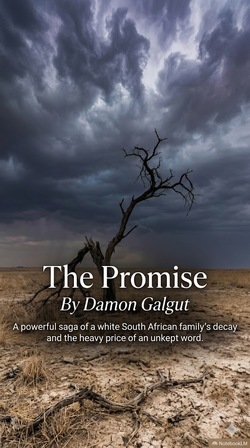
The Promise summary and key insights by Damon Galgut
Loading…

The Promise

Damon Galgut

4.2514 learners

Spanning decades of South Africa’s turbulent transition—from the final years of apartheid to the post-democracy era—Damon Galgut’s *The Promise* traces the fractured fate of the Swart family, anchored by a single unfulfilled vow. When young Amor Swart learns of her mother Rachel’s death, she overhears Rachel’s dying wish: that the family’s maid Salome be given the small Lombard house on their farm. Over the next three decades, this promise becomes a ghost haunting the Swarts: Anton, the rebellious son who deserts the army and struggles with crippling regret; Astrid, the vain daughter trapped in a cycle of infidelity and existential fear; and Amor, the quiet outsider who carries the vow like a lifelong weight. As the family navigates loss, betrayal, and the shifting tides of South African society—from Mandela’s historic rise to Zuma’s dramatic resignation—Amor finally confronts her family’s failures, choosing to honor the promise that binds them to their past, and to the woman who served them silently for years. A searing exploration of family, race, and redemption, the novel lays bare the cost of broken trust and the power of belated justice.

Sentimental Education summary and key insights by Gustave Flaubert
Loading…

Sentimental Education

Gustave Flaubert

4.2712 learners

Set against the roiling backdrop of 19th-century France—from the quiet Seine-side town of Nogent to the chaotic streets of the 1848 February Revolution—*Sentimental Education* traces the meandering life of Frederic Moreau, a dreamy young man adrift between desire and disillusionment. After a chance steamship encounter with the elegant, married Madame Arnoux, Frederic becomes obsessed with her, a quiet longing that shapes decades of his life. As he navigates Paris’s glittering salons, turbulent political circles, and messy romantic entanglements—with fiery actress Rosanette and cunning social climber Madame Dambreuse—Frederic chases love, wealth, and status, only to squander his inheritance and fray his lifelong friendship with sharp, ambitious Deslauriers. The revolution that once stirred his idealism leaves him empty-handed, and by middle age, he looks back on his youth, realizing the most precious moments were the ones he took for granted, trapped between unfulfilled desire and the harsh mediocrity of middle-class life.

Artificial Respiration summary and key insights by Ricardo Piglia
Loading…

Artificial Respiration

Ricardo Piglia

4.11392 learners

Ricardo Piglia’s *Respiración Artificial* (Artificial Respiration) is a labyrinthine postmodern novel that weaves fragmented letters, personal monologues, and forgotten archival texts to blur the line between history and fiction in Argentina. Through writer Emilio Renzi’s correspondence with his enigmatic uncle Marcelo Maggi, exiled patriot Enrique Ossorio’s memoirs, and Polish philosopher Taduesz’s reflections, the book unpacks buried truths of Argentina’s turbulent past—from the Rosas dictatorship to Peronist upheavals, and the lives of displaced European intellectuals. Piglia explores how history is often a constructed narrative, manipulated by those in power, while literature acts as "artificial respiration": a desperate attempt to revive forgotten voices, even as it acknowledges the futility of recapturing unfiltered truth. Blending literary criticism of Borges, Arlt, and European thinkers with fictionalized historical accounts, the novel challenges readers to question what we accept as "fact" and how storytelling shapes our understanding of the past.