Philosophy Book Summaries & Key Insights

Philosophy Total 212 books

Hamlet summary and key insights by William Shakespeare
Loading…

Hamlet

William Shakespeare

4.6752 learners

Set in the shadowy castle of Elsinore, William Shakespeare’s *Hamlet* follows the brooding Danish prince as he grapples with grief, doubt, and a vengeful mission. When his father’s ghost reveals he was murdered by Hamlet’s uncle Claudius—who seized the throne and married Hamlet’s mother Gertrude—Hamlet feigns madness to uncover the truth and plot retribution. Torn between moral scruples and the ghost’s demand for justice, he confronts existential questions (“To be or not to be?”) that lay bare the complexity of human nature, guilt, and power. As his plan unravels, the play spirals into a tragic climax of betrayal, poison, and death, leaving no character unscathed. A cornerstone of Western literature, *Hamlet* explores timeless themes of revenge, moral ambiguity, and the fragility of sanity, inviting readers to confront the darkness within themselves and the corrupting cost of ambition.
Officialdom Unmasked summary and key insights by Li Baojia
Loading…

Officialdom Unmasked

Li Baojia

4.1928 learners

Set in the late Qing Dynasty, *Officialdom Unmasked* pulls back the curtain on the rotten core of imperial Chinese bureaucracy through a series of darkly humorous, interconnected tales. Follow naive scholar Zhao Wen as he stumbles through cutthroat Beijing officialdom after passing the imperial exam, watch schemers like Mao Deguan buy fake credentials or sell family members to climb ranks, and witness corrupt officials like Diao Maipeng embezzle millions from widows and manipulate court cases to save their skins. From local magistrates ignoring people’s suffering to curry favor with superiors, to provincial leaders groveling before foreign powers to avoid diplomatic trouble, every story lays bare the greed, hypocrisy, and absurdity that defined late Qing officialdom. Li Baojia’s sharp satirical pen doesn’t just mock individual crooks—it exposes a system where corruption wasn’t an exception, but the rule, making this classic a timeless critique of power and greed.

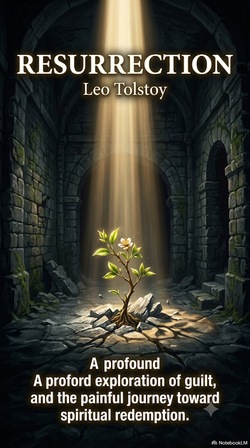
Resurrection summary and key insights by Leo Tolstoy
Loading…

Resurrection

Leo Tolstoy

4.5885 learners

Leo Tolstoy’s *Resurrection* is a searing, timeless masterpiece set in late 19th-century Russia, exploring guilt, redemption, and systemic decay. When complacent aristocrat Prince Dmitri Nekhlyudov serves as a juror, he is jolted into a spiritual awakening by recognizing Katya Maslova—a young woman he once seduced and abandoned—wrongfully on trial for murder. Her conviction to four years of hard labor shatters his privileged bubble, driving him to embark on a relentless quest for atonement: fighting to overturn her sentence, renouncing his inherited land to empower oppressed peasants, and following her into Siberian exile. As Maslova finds solace and purpose among political prisoners, both undergo profound transformation—Nekhlyudov shedding his hypocrisy to confront institutional injustice, and Maslova reclaiming her dignity after years of trauma. Tolstoy’s unflinching critique of Russia’s corrupt legal system, dehumanizing prisons, and aristocratic indifference makes this a powerful exploration of renewal amid despair.

Faust summary and key insights by Johann Wolfgang von Goethe
Loading…

Faust

Johann Wolfgang von Goethe

3.91021 learners

Johann Wolfgang von Goethe’s *Faust* is a timeless epic tracing the relentless quest of its eponymous scholar, who grows disillusioned with the limits of human knowledge. Frustrated by empty academic honors and unfulfilled longing, Faust strikes a pact with Mephistopheles, a cynical devil: in exchange for his soul after death, the demon will grant him every earthly experience—from passionate romance with the innocent Gretchen, which ends in tragedy, to obsession with the classical beauty Helen of Troy, and a ruthless pursuit of imperial power and worldly achievement. As Faust chases one desire after another, he grapples with guilt, despair, and the weight of his choices. Yet his unyielding drive to create meaning and strive for something greater ultimately earns him redemption, as angels intervene to save his soul, affirming that endless striving can transcend even the darkest bargains.

Six Records of a Floating Life summary and key insights by Shen Fu
Loading…

Six Records of a Floating Life

Shen Fu

4.21279 learners

Six Records of a Floating Life is a tender, unfiltered 18th-century Chinese memoir penned by Shen Fu, a scholar from a minor official family. At its core is his lifelong, passionate bond with Chen Yun, his cousin and wife—an intelligent, resilient woman who defied societal norms with her wit, love of poetry, and quiet courage. The book weaves intimate moments of domestic bliss: shared moonlit conversations, playful adventures like cross-dressing to visit a temple, and quiet joys of tending to flowers or crafting elegant household items. It also lays bare the harsh realities of their later years: financial ruin, family estrangement, and Chen Yun’s tragic decline after losing a potential companion. Interspersed are Shen Fu’s vivid travel accounts across China, from West Lake’s misty peaks to Guangzhou’s bustling streets, and his reflections on the fleeting, bittersweet nature of "floating life"—a journey of transience, joy, and sorrow that resonates across cultures.

David Copperfield summary and key insights by Charles Dickens
Loading…

David Copperfield

Charles Dickens

4.6990 learners

Follow David Copperfield, a resilient orphan whose life unfolds like a rollercoaster of heartbreak and hope. From his idyllic early days with his mother and loyal nurse Peggotty, David’s world shatters when his mother marries the cruel Mr. Murdstone, who subjects him to abuse and forces him into child labor in London’s grim docks. There, he befriends the whimsical Mr. Micawber, a man perpetually on the brink of financial ruin but full of unshakable optimism. Escaping to his sharp-tongued yet kind-hearted aunt Betsey Trotwood, David finds a chance at education and stability. Along the way, he navigates turbulent friendships—with the charming but treacherous Steerforth—and tender love affairs, including his childlike marriage to Dora Spenlow. He also confronts the scheming Uriah Heep, whose fraud threatens the lives of those he loves. Through loss, betrayal, and hard-won growth, David transforms from a vulnerable boy into a successful writer, learning that resilience and compassion are the true pillars of a meaningful life.

The Lady of the Camellias summary and key insights by Alexandre Dumas fils
Loading…

The Lady of the Camellias

Alexandre Dumas fils

4.51110 learners

Set against the glitzy, unforgiving backdrop of 19th-century Paris, *The Lady of the Camellias* unfolds the tragic love story between Marguerite Gautier, a celebrated courtesan known for her signature white camellias, and Armand Duval, a young, idealistic nobleman. Their passionate affair blossoms amid the chaos of Marguerite’s lavish yet empty life, offering her a glimpse of genuine love and redemption. But when Armand’s father intervenes—fearing Marguerite’s reputation will ruin his family’s honor and his daughter’s upcoming marriage—Marguerite makes a heart-wrenching choice: she pretends to betray Armand to protect his future. Misled by her cold facade, Armand spirals into revenge, unaware of her silent sacrifice until her death from tuberculosis. Alexandre Dumas weaves a raw, poignant tale that exposes the cruelties of class prejudice, the fragility of love, and the quiet courage of a woman trapped by society’s unforgiving judgment.

Madame Bovary summary and key insights by Gustave Flaubert
Loading…

Madame Bovary

Gustave Flaubert

4.3480 learners

Gustave Flaubert’s *Madame Bovary* lays bare the tragic unraveling of Emma Rouault, a restless small-town wife trapped between her fevered romantic fantasies and the suffocating drudgery of 19th-century provincial France. Married to Charles Bovary, a gentle but unimaginative country doctor, Emma craves the passion and luxury she devours in novels—think knights, grand balls, and all-consuming love. Her discontent leads her into two torrid affairs: first with the charismatic landowner Rodolphe Boulanger, then with the once-idealistic clerk Leon Dupuis. Each tryst promises escape, yet leaves her emptier, more isolated, and drowning in debt from lavish purchases to impress her lovers. When her creditors close in and her lovers abandon her, Emma’s last shred of hope shatters. She turns to arsenic, ending her life in agonizing despair. Flaubert’s unflinching portrayal exposes the brutal gap between romantic idealism and harsh reality, making this novel a timeless exploration of desire and disillusionment.

The Idiot summary and key insights by Fyodor Dostoevsky
Loading…

The Idiot

Fyodor Dostoevsky

4.41219 learners

Returning to 19th-century St. Petersburg after years of epilepsy treatment in Switzerland, the penniless, naive Prince Myshkin seeks refuge with distant relatives. Almost immediately, he is drawn into a tangled web of passion, greed, and moral decay centered on the fiery, self-destructive Nastasya Filippovna—coveted by the obsessive millionaire Parfyon Rogozhin and the social-climbing Ganya Ivolgin. As Myshkin navigates high society’s hypocrisies, he falls for the sharp-witted, privileged Aglaya Yepanchina, sparking a devastating love triangle. His unique perspective, shaped by illness and innocence, exposes the dark underbelly of the era’s elite, but his inability to resolve conflicting demands of love and compassion leads to tragedy: Nastasya’s murder by Rogozhin, Aglaya’s ruinous marriage, and Myshkin’s descent back into mental illness. Dostoevsky’s masterpiece explores goodness’s fragility in a world corrupted by greed and cruelty.

The Hunchback of Notre Dame summary and key insights by Victor Hugo
Loading…

The Hunchback of Notre Dame

Victor Hugo

4.4823 learners

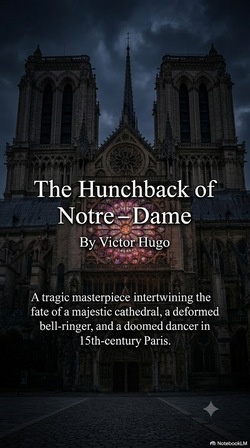
Set against the grand, weathered spires of 15th-century Paris’s Notre-Dame Cathedral, Victor Hugo’s *The Hunchback of Notre Dame* unfolds a haunting, timeless tale of love, prejudice, and the hidden complexity of human nature. At its heart is Quasimodo, the deformed bell-ringer shunned by society yet fiercely devoted to the cathedral that’s his only sanctuary. His quiet loyalty collides with the twisted obsession of Claude Frollo, a pious archdeacon whose religious fervor curdles into destructive lust for Esmeralda—a free-spirited Romani dancer whose beauty and kindness captivate all who cross her path. Hugo doesn’t just craft a tragic romance; he paints a vivid portrait of medieval Paris, from its bustling marketplaces to the shadowy corners of the cathedral, while confronting harsh truths about social inequality, religious hypocrisy, and the chasm between outward appearance and inner goodness. This classic challenges readers to look beyond surface judgments and recognize the dignity in every soul.

Pride and Prejudice summary and key insights by Jane Austen
Loading…

Pride and Prejudice

Jane Austen

4.2826 learners

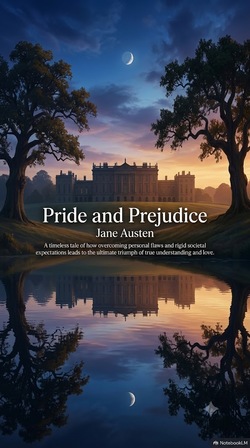
Set in early 19th-century rural England, Jane Austen’s *Pride and Prejudice* centers on the Bennet family, where Mrs. Bennet’s all-consuming goal is to secure suitable marriages for her five daughters. When wealthy, amiable Mr. Bingley rents Netherfield Park, he and the gentle eldest Bennet, Jane, form a warm bond—only to be separated by Bingley’s snobbish sisters and his proud, aristocratic friend Mr. Darcy. Sharp-witted Elizabeth Bennet, meanwhile, clashes with Darcy after he dismisses her as “not handsome enough to tempt him,” igniting a feud fueled by his elitist arrogance and her quick, judgmental prejudice. As the story unfolds, Elizabeth uncovers Darcy’s hidden acts of kindness (including secretly resolving her wayward sister Lydia’s scandalous elopement) and confronts her own blind biases, while Darcy learns to shed his pride. Through sparkling dialogue and vivid, relatable characters, Austen explores themes of love, class, and the importance of looking beyond first impressions in this timeless romance that celebrates personal growth and genuine connection.

In the Wilderness summary and key insights by Liu Qing
Loading…

In the Wilderness

Liu Qing

3.4951 learners

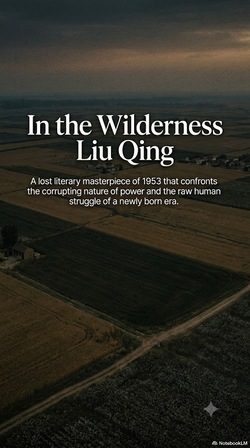
Set in the sweltering summer of 1951, just two years after the founding of the People’s Republic of China, *In the Wilderness* follows Zhu Mingshan, a tough, idealistic cadre from northern Shaanxi who leaves a comfortable regional government post to take charge of a rural county in the Wei River Plain. Tasked with leading a desperate fight against a devastating cotton aphid infestation that threatens farmers’ livelihoods and national industrial supply, Zhu must navigate simmering tensions between old revolutionary cadres struggling to adapt to peacetime governance and young, educated officials eager to impose top-down solutions. Alongside coordinating grassroots pest control efforts—using homemade remedies like chili water and tobacco infusions—he grapples with personal struggles: his wife’s fading revolutionary zeal, old comrades’ crises of purpose, and bureaucratic clashes with a stubborn county mayor more focused on grand speeches than on-the-ground action. Through vivid, intimate scenes of rural life, the novel captures the grit, idealism, and messy realities of building a new nation from the fields up.

Ernest Hemingway: A Life Story summary and key insights by Carlos Baker
Loading…

Ernest Hemingway: A Life Story

Carlos Baker

4.3525 learners

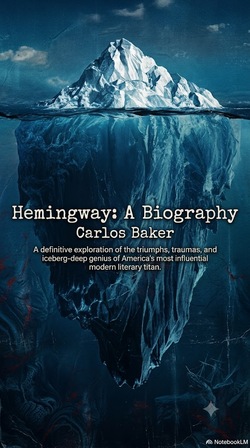
Carlos Baker’s definitive biography of Ernest Hemingway traces the legendary author’s turbulent journey from his Oak Park childhood—shaped by his outdoorsman father and artistic mother—to his rise as one of the 20th century’s most influential literary voices. Drawing on intimate details and firsthand accounts, Baker unpacks how Hemingway’s experiences as a Kansas City Star reporter, WWI ambulance driver, Spanish Civil War correspondent, and WWII combatant forged his iconic sparse, hard-hitting prose. The book delves into his complex personal life: his four marriages, passionate romances, friendships with literary giants like F. Scott Fitzgerald and Gertrude Stein, and the trauma that fueled classics such as *The Sun Also Rises*, *A Farewell to Arms*, *For Whom the Bell Tolls*, and *The Old Man and the Sea*. It also chronicles his later years, including his 1954 Nobel Prize win, struggles with injury and mental health, and enduring legacy as a symbol of American grit and literary authenticity.

Cuore summary and key insights by Edmondo De Amicis
Loading…

Cuore

Edmondo De Amicis

4.2704 learners

Follow 10-year-old Enrico’s school year diary in *Cuore*, a timeless tale of love, friendship, and moral growth set in 19th-century Italy. Through his eyes, we witness the quiet heroism of everyday life: Carlo, the gentle giant classmate who stands up for bullied peers; Percy, the resilient young blacksmith’s son who excels despite a harsh home life; and dedicated teachers who pour their hearts into their students. Interwoven with Enrico’s daily school adventures are stirring stories of courage—like Marco, a teen who crosses oceans to find his missing mother—and lessons in compassion, respect, and national pride. As the school year ends and Enrico prepares to move away, he learns that true growth comes from cherishing connections, standing up for what’s right, and carrying kindness in every act. This beloved classic reminds readers of all ages that small, heartfelt moments shape the strongest, most compassionate hearts.

Becoming summary and key insights by Michelle Obama
Loading…

Becoming

Michelle Obama

4.1613 learners

In Becoming, Michelle Obama pulls back the curtain on her extraordinary journey from a tight-knit, working-class neighborhood on Chicago’s South Side to the historic role of America’s first Black First Lady. She lays bare the quiet struggles and defining moments that shaped her: the strict piano lessons with Aunt Robbie, the sting of being labeled “too white” for her speech, the grit that got her into Princeton and Harvard Law, and the fateful meeting with a charismatic summer intern named Barack Obama. Beyond the glamour of the White House, she candidly shares the tensions of balancing a high-powered career with motherhood, the weight of public scrutiny, and her relentless push to advocate for healthy school meals, military families, and girls’ education worldwide. This memoir is a raw, heartfelt testament to self-discovery, resilience, and the power of staying true to one’s roots while reaching for greater purpose.

Franz Kafka: A Biography summary and key insights by Max Brod
Loading…

Franz Kafka: A Biography

Max Brod

4.6882 learners

Written by Max Brod, Kafka’s closest lifelong friend, *Franz Kafka: A Biography* shatters the myth of the reclusive, despairing genius to reveal the real man behind the iconic works. Drawing on intimate conversations, unpublished letters, and firsthand observations, Brod traces Kafka’s life from his Prague childhood dominated by his tyrannical father—whose shadow shaped *The Metamorphosis* and *The Trial*—to his struggles with unfulfilled love, soul-crushing office work, and debilitating illness. He highlights Kafka’s hidden warmth, dry humor, and relentless dedication to writing as a form of prayer, while exploring how his Jewish identity, friendships, and fleeting moments of happiness (like his late-life relationship with Dora Diamant) fueled his unparalleled literary vision. This biography offers an unfiltered look at the man who turned personal anguish into universal tales of alienation and hope.

The Life and Times of Su Tungpo summary and key insights by Lin Yutang
Loading…

The Life and Times of Su Tungpo

Lin Yutang

4.61098 learners

Lin Yutang’s *The Life and Times of Su Tungpo* delivers a vivid, heartfelt portrait of one of China’s most cherished literary and cultural icons. Set in the Northern Song Dynasty, this biography traces Su’s extraordinary journey: from a prodigious young scholar who excelled in imperial exams to a fearless official who dared oppose Wang Anshi’s controversial New Policies, enduring repeated exiles to remote, harsh regions like Huangzhou, Huizhou, and Hainan. Beyond his unmatched genius in poetry, ci lyrics, prose, calligraphy, and painting, Su was a compassionate leader who built flood defenses, established public hospitals, and saved abandoned infants. Even in dire hardship, his irrepressible humor, love for nature, and fusion of Confucian, Buddhist, and Taoist ideals turned adversity into inspiration, producing timeless masterpieces like the *Red Cliff Rhapsodies*. Lin captures Su’s essence: a man of unwavering integrity who found joy in simplicity and left an indelible mark on Chinese culture.

News of the Empire summary and key insights by Fernando del Paso
Loading…

News of the Empire

Fernando del Paso

4.81304 learners

Locked away in Belgium’s Bouchout Castle for 60 years, Empress Carlota of Mexico clings to the ghost of her husband, Emperor Maximilian I, and the fleeting empire they built. In *News of the Empire*, Fernando del Paso weaves Carlota’s fragmented, mad recollections with the brutal reality of Mexico’s short-lived Second Empire. Born from Napoleon III’s imperial ambitions—taking advantage of the U.S. Civil War to install a European puppet—Maximilian, a Habsburg archduke, is lured by dreams of building a progressive New World monarchy. But their reign collapses as French troops withdraw, Mexican republicans led by Benito Juárez fight back, and betrayal eats away at the empire’s core. Maximilian’s execution in 1867 pushes Carlota into irreversible madness, her life a tragic testament to the cost of colonial meddling, idealism crushed by geopolitics, and love enduring beyond empire and sanity. This sweeping narrative bridges European court intrigue and Mexican national struggle, revealing the human toll of a forgotten chapter in hemispheric history.

The Rebels summary and key insights by Sandor Marai
Loading…

The Rebels

Sandor Marai

3.51210 learners

Set against the gritty backdrop of WWII-era Hungary, *The Rebels* follows a ragtag group of teenage boys—Abel, Béla, Diótár, and Elnő—as they carve out a fragile escape from the suffocating rules of adulthood. Fed up with strict parents, looming military conscription, and the quiet despair of a town slowly crumbling under war, they create a secret hideout in the abandoned Furča resort. There, they indulge in absurd, rule-bound games: stealing from homes, wearing outlandish custom clothes, and defying every social norm to feel seen. But their reckless freedom unravels when Béla’s thefts spiral out of control, a scandal involving a flamboyant actor threatens their reputations, and Elnő, driven by resentment of the group’s unspoken class divides, betrays their trust. As conscription looms and their hideout is abandoned, the boys are forced to confront the harsh reality that their rebellion can’t shield them from war, betrayal, and the painful leap into adulthood.

Embers summary and key insights by Sandor Marai
Loading…

Embers

Sandor Marai

4.1648 learners

For forty-one years, an aging Hungarian general has waited in his remote countryside estate for Conrad, his oldest and only true friend. When Conrad finally arrives at dusk, the two men spend a long, tense night confronting the secrets that tore them apart decades earlier: a 1899 hunting trip where Conrad aimed his rifle at the general, the mysterious disappearance of their shared love Kristina, and the quiet betrayal that shattered their unbreakable bond. As they sip vintage wine and revisit memories of the vanished Austro-Hungarian Empire, they grapple with the weight of loyalty, the nature of male friendship, and the guilt of outliving the world—and the woman—they once cherished. By dawn, the old wounds begin to heal, not with clear answers, but with a quiet acceptance that some secrets are better left to the embers of the past.