Philosophy Book Summaries & Key Insights

Philosophy Total 212 books

Hard-Boiled Wonderland and the End of the World summary and key insights by Haruki Murakami
Loading…

Hard-Boiled Wonderland and the End of the World

Haruki Murakami

4.51222 learners

Haruki Murakami’s *Hard-Boiled Wonderland and the End of the World* weaves a mesmerizing dual narrative that blurs the line between reality and the subconscious. In the gritty, neon-drenched streets of Tokyo’s “Hard-Boiled Wonderland,” a freelance “calculator” is drawn into a dangerous conspiracy involving a rogue scientist’s mind-altering experiments, shadowy “Symbolists,” and subterranean “Night Crawlers.” As he uncovers the truth—his own consciousness is tethered to a parallel realm—we follow his other self in “The End of the World,” a walled, eerily utopian town where he lives without a shadow, working as a “Dream Reader” who unlocks memories stored in animal skulls. As the two worlds collide, he faces an impossible choice: return to the chaotic, lived reality of Tokyo, or embrace the quiet, constructed peace of the town, where love and belonging await. Blending existential philosophy, cyberpunk thrills, and Murakami’s signature whimsical melancholy, the novel explores identity, the cost of escape, and the fragile boundary between self and imagination.
Confessions summary and key insights by Kanae Minato
Loading…

Confessions

Kanae Minato

4.4709 learners

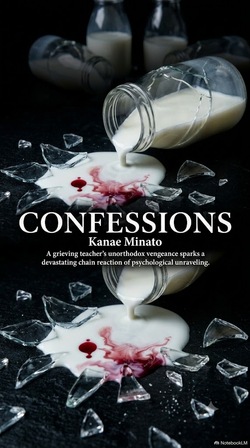
Set in a Japanese middle school, Confessions follows the tragic story of Makoto Ohba, a transfer student targeted by relentless bullying that pushes him to a fatal jump from the school roof. Grieving father Takeshi Ohba abandons his family’s restaurant to uncover the truth behind his son’s death, unspooling a web of dark secrets: a sadistic PE coach’s brutal punishments, a photographer teacher’s twisted obsession with documenting suffering, and a quiet classmate’s conflicting loyalty to Makoto. As Takeshi’s quest turns to revenge, the novel exposes the silent complicity of teachers, students, and even family members who ignored Makoto’s pain. Through multiple perspectives, Kanae Minato delves into the corrosive effects of bullying, the destructive nature of revenge, and the fragile line between justice and vengeance, forcing readers to confront the ugly realities of human cruelty and the cost of looking away.

Autumn Courtyard summary and key insights by Yang Benfen
Loading…

Autumn Courtyard

Yang Benfen

3.21001 learners

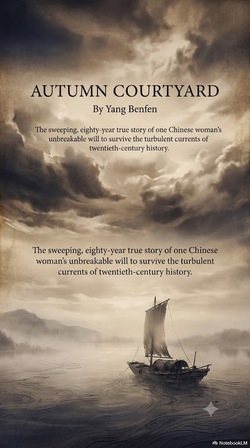
Set against the sweeping chaos of 20th-century China, *Autumn Courtyard* tells the intimate, unflinching story of Qiuyuan, a young girl from a well-to-do pharmacy family in Luoyang who grows into a woman forged by hardship. From the agony of foot-binding and arranged marriage, to fleeing war-torn Nanjing for rural Hunan, to surviving famine, political persecution, and the loss of beloved children, Qiuyuan’s life is a testament to quiet, unbreakable resilience. She navigates displacement, poverty, and societal judgment, clinging fiercely to the hope of keeping her family alive and giving her kids a shot at education. Through her eyes, we witness the untold struggles of ordinary people caught in history’s tide—small acts of kindness, quiet defiance, and unshakable love that sustain them through the darkest times. This isn’t just one woman’s story; it’s a raw, heartfelt portrait of a generation’s fight to hold on to humanity amid overwhelming adversity.

Father Goriot summary and key insights by Honore de Balzac
Loading…

Father Goriot

Honore de Balzac

4.21193 learners

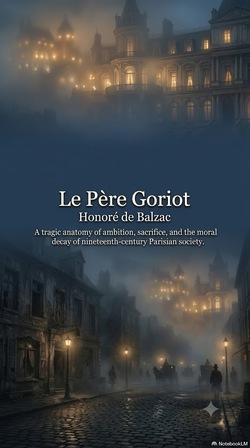
Set in the grim, cramped Vauquer Boarding House—an unforgiving refuge for Paris’s down-and-out—Honoré de Balzac’s *Father Goriot* lays bare the cold, merciless underbelly of 19th-century French high society. At its core is Jean-Joachim Goriot, a once-wealthy pasta merchant who drains every franc to fund the lavish lifestyles of his two daughters, Anastasie and Delphine, after they marry into aristocratic and banking families. As Goriot descends into poverty and isolation, his daughters shun him as an embarrassment, only reaching out when they need more money to fuel their vanity. Parallel to his tragedy is Eugene Rastignac, a naive provincial law student hungry to climb the social ladder. Guided by the cynical wisdom of Vautrin, a mysterious escaped convict, and the worldly Countess de Beauseant, Rastignac witnesses Goriot’s slow ruin and confronts a brutal truth: in Paris’s elite circles, money trumps family, and ambition demands sacrificing morality. By the novel’s end, Goriot’s lonely, neglected death forces Rastignac to abandon his innocence, embracing the cutthroat rules of the society he once admired.

Ulysses summary and key insights by James Joyce
Loading…

Ulysses

James Joyce

4.3868 learners

Set on a single ordinary day—June 16, 1904—in Dublin, James Joyce’s *Ulysses* weaves the intertwined lives of two unlikely men: Stephen Dedalus, a disillusioned young poet grappling with grief over his mother’s death and a search for intellectual identity, and Leopold Bloom, a gentle advertising canvasser haunted by the loss of his infant son Rudy and navigating the quiet tensions of his marriage to Molly. Through Joyce’s revolutionary stream-of-consciousness technique, the novel plunges into the unfiltered thoughts, memories, and mundane moments of its characters, capturing the chaos and profundity of modern urban life. From funeral processions and pub brawls to intimate domestic reflections, *Ulysses* paints a vivid portrait of Dublin’s social, religious, and political landscape, while exploring universal themes of loneliness, connection, and the quiet heroism of everyday existence. A landmark of modernist literature, it redefined what a novel could achieve by turning the banal into the extraordinary.

Great Expectations summary and key insights by Charles Dickens
Loading…

Great Expectations

Charles Dickens

4.4660 learners

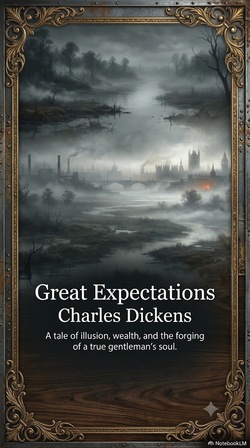
Follow Pip, a humble blacksmith’s apprentice in rural England, whose life is upended after a chance encounter with an escaped convict in the desolate marshes. When a mysterious benefactor funds his transformation into a “gentleman” in London, Pip becomes consumed by dreams of winning the heart of the icy, beautiful Estella, raised by the jilted, vengeful Miss Havisham. But his grand expectations crumble when he discovers his benefactor is not the wealthy Havisham, but the convict he once helped—Abel Magwitch, who sacrificed everything to give Pip a better life. Through betrayal, loss, and hard-won humility, Pip confronts the emptiness of class pretensions, learns to value the quiet kindness of his childhood friend Joe, and finds redemption in embracing his true self. Charles Dickens’ timeless novel explores the illusions of social status, the cost of unrequited love, and the enduring power of human connection.

The Castle summary and key insights by Franz Kafka
Loading…

The Castle

Franz Kafka

4.1459 learners

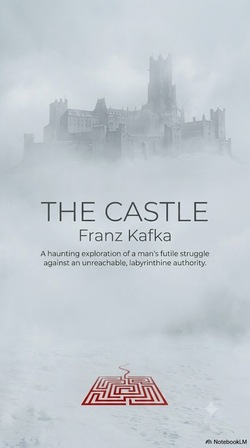
K, a land surveyor, arrives uninvited at a remote village huddled beneath the imposing, unreachable Castle, only to find himself trapped in a labyrinth of bureaucratic absurdity. Tasked with a job the village insists it never requested, he navigates a world where rules shift without warning, officials are maddeningly unreachable, and villagers oscillate between suspicion and reluctant aid. His desperate quest to gain entry to the Castle—and thus validate his identity and purpose—leads him into tangled relationships: with Frieda, a former barmaid who becomes his fiancée; the Barnabas family, whose ties to the Castle are fraught with hidden trauma; and petty bureaucrats who toy with his fragile hopes. As K’s efforts to break through the Castle’s impenetrable barriers grow increasingly futile, Franz Kafka’s masterpiece lays bare the existential dread of an individual pitted against an indifferent, dehumanizing system, posing profound questions about identity, belonging, and the illusion of control.

Three Masters summary and key insights by Stefan Zweig
Loading…

Three Masters

Stefan Zweig

4.3629 learners

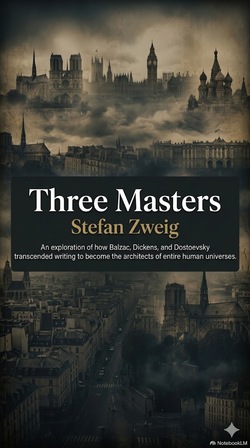
Stefan Zweig’s *Three Masters* delivers a vivid, soul-stirring exploration of three 19th-century literary titans—Honoré de Balzac, Charles Dickens, and Fyodor Dostoevsky—unpacking the fiery passions, crippling struggles, and relentless obsessions that shaped their groundbreaking work. Zweig goes beyond dry biography, diving into the core of each writer’s identity: he reveals how Balzac’s Napoleon-like ambition birthed the sprawling *La Comédie Humaine*, a literary empire capturing every facet of French society. He celebrates Dickens’ warm, populist humor and his quiet power to reform Victorian England, from pushing for better workhouse conditions to sparking empathy for the marginalized. Most profoundly, he examines Dostoevsky’s brutal journey through poverty, prison, and epilepsy, framing his suffering as the crucible for his unflinching exploration of human darkness, faith, and redemption. Blending sharp literary analysis with intimate storytelling, Zweig illuminates how each master turned life’s chaos into timeless art, making this book an essential read for anyone seeking to understand the heart of great literature.

Just Kids summary and key insights by Patti Smith
Loading…

Just Kids

Patti Smith

4.2977 learners

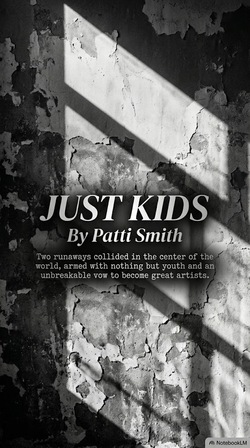
Just Kids is Patti Smith’s intimate, gritty memoir of her decades-long bond with artist Robert Mapplethorpe, tracing their journey from starving, idealistic kids in 1960s New York to iconic figures in the city’s countercultural art scene. Smith recounts their chaotic, tender beginnings—crashing in empty apartments, scrounging for art supplies, and clinging to each other amid poverty and uncertainty. As they navigate Chelsea Hotel’s bohemian halls, rub shoulders with Warhol’s Factory crowd, and hone their craft (Smith’s poetry and music, Mapplethorpe’s groundbreaking photography), their relationship evolves from romantic partners to unshakable artistic soulmates. The book doesn’t shy away from their struggles: addiction, identity crises, and the devastating impact of the AIDS crisis that eventually claimed Mapplethorpe. More than a memoir, it’s a love letter to art, friendship, and the raw, unfiltered magic of 1970s New York, capturing the quiet moments of hope and resilience that forged two legendary careers.

Adventures of a Bystander summary and key insights by Peter F. Drucker
Loading…

Adventures of a Bystander

Peter F. Drucker

3489 learners

Peter Drucker’s *Adventures of a Bystander* is a vivid, intimate memoir that chronicles his journey from a curious Viennese teenager to the father of modern management. Adopting the quiet, perceptive lens of a bystander, Drucker recounts encounters with a cast of extraordinary characters—from his sharp-witted grandmother and radical social activists to corporate titans like Alfred Sloan and media mogul Henry Luce. Each story offers a window into pivotal 20th-century moments, from the rise of Nazism to the birth of America’s corporate empire, while revealing how these interactions shaped his groundbreaking ideas about management, society, and human behavior. More than a personal narrative, this book is a masterclass in observation: Drucker shows how stepping back to watch, listen, and question can unlock profound insights that drive innovation and understanding.

On Heroes and Tombs summary and key insights by Ernesto Sabato
Loading…

On Heroes and Tombs

Ernesto Sabato

4.31208 learners

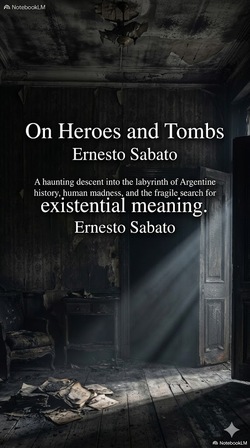
Set in mid-20th-century Buenos Aires, Ernesto Sabato’s *On Heroes and Tombs* weaves two haunting, interconnected narratives that dig into the raw edges of human loneliness, intergenerational trauma, and the inescapable grip of fate. Seventeen-year-old Martin, broken by his mother’s lifelong rejection, stumbles into a passionate, turbulent love affair with Alejandra—a mysterious woman haunted by her family’s violent past, including an ancestor who hid her father’s severed head in their crumbling mansion for 80 years. Their relationship burns bright but unravels fast, tangled in Alejandra’s inner demons and the city’s simmering political unrest. Parallel to their tragic romance is Fernando Vidal Olmos, a man consumed by a paranoid obsession with a secret society of blind people he believes controls the world from the shadows. His descent into madness takes him on a frantic cross-continental chase, blurring the line between conspiracy and delusion. Sabato masterfully blends intimate personal drama with Argentina’s brutal historical legacy, painting a searing portrait of individuals trapped by their pasts, their minds, and a nation grappling with its own ghosts.

Journey to the West summary and key insights by Wu Cheng'en
Loading…

Journey to the West

Wu Cheng'en

4.8558 learners

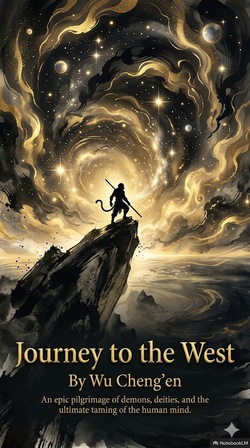
Journey to the West, one of China’s most beloved classical epics, follows the legendary quest of Tang Sanzang, a devout Buddhist monk, to retrieve sacred scriptures from the Western Paradise. Accompanying him are three flawed yet loyal disciples: Sun Wukong, a rebellious stone monkey imprisoned under Five Elements Mountain for defying heaven; Zhu Bajie, a gluttonous former celestial marshal trapped in a pig’s form; and Sha Wujing, a quiet ex-curtain guard condemned to a river of sand. Together, they endure 81 harrowing trials—battling shape-shifting demons, navigating enchanted realms, and confronting their own vices—each obstacle forging their character and deepening their faith. What starts as a mission for texts evolves into a transformative journey of redemption: Sun Wukong learns discipline, Zhu Bajie curbs his greed, Sha Wujing embraces steadfastness, and Tang Sanzang’s unwavering devotion guides them all toward enlightenment. Blending myth, adventure, and spiritual wisdom, this timeless tale explores the power of perseverance and the true meaning of spiritual awakening.

Don Quixote summary and key insights by Miguel de Cervantes
Loading…

Don Quixote

Miguel de Cervantes

4.2699 learners

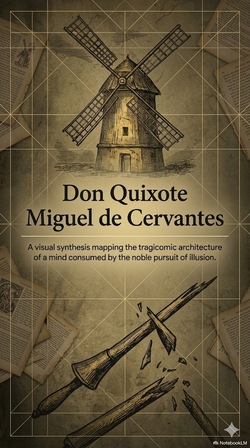
Step into the whimsical, tragic, and timeless world of Don Quixote, the iconic knight errant from La Mancha who loses himself in chivalric novels and sets off on three absurd, heartwarming adventures. Joined by his pragmatic, greedy-yet-loyal squire Sancho Panza, Don Quixote mistakes windmills for giants, inns for castles, and peasant girls for noble ladies, chasing a romanticized vision of justice that clashes hilariously with 17th-century Spanish reality. Along the way, they encounter pranking nobles, heartbroken lovers, and skeptical villagers, all while the line between madness and idealism blurs. By the end, the once-unshakable knight confronts his delusions, leaving behind a legacy that explores the cost of blind idealism, the bond between master and servant, and the enduring power of storytelling. Celebrated as a cornerstone of Western literature, Don Quixote has inspired generations with its mix of comedy, tragedy, and profound insight into human nature.

War and Peace summary and key insights by Leo Tolstoy
Loading…

War and Peace

Leo Tolstoy

4.21100 learners

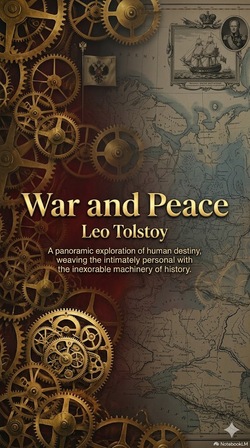
Leo Tolstoy’s magnum opus *War and Peace* isn’t just a historical novel—it’s an immersive tapestry of 19th-century Russian life, weaving together the fates of four noble families and the sweeping tides of war over 15 years (1805–1820). Begun as a story about the Decembrists, Tolstoy expanded his vision to encompass the Napoleonic Wars, culminating in the pivotal 1812 Russian Campaign. Through vivid, realistic battle scenes—from Austerlitz to Borodino—and intimate portraits of characters like the idealistic Andrei Bolkonsky, the searching Pierre Bezukhov, and the spirited Natasha Rostov, Tolstoy challenges the myth of "great men" shaping history, arguing instead that ordinary people are the true architects of change. Blending meticulous historical research, profound psychological insight, and unflinching critiques of aristocratic decay, the novel celebrates the redemptive power of love, community, and the quiet dignity of peace amid chaos.

Jean-Christophe summary and key insights by Romain Rolland
Loading…

Jean-Christophe

Romain Rolland

3.9883 learners

Romain Rolland’s *Jean-Christophe* is a sweeping coming-of-age epic tracing the fiery journey of a German musical prodigy from his turbulent small-town childhood to his spiritual transcendence as a seasoned artist. Born into a struggling musical family, Jean finds solace in music—nurtured by his loving grandfather, yet tormented by his alcoholic father. As he matures, he navigates crushing romantic losses, from the quiet warmth of Sapina to the betrayal of Ada, while defying the hypocrisy of Germany’s rigid music establishment. Fleeing to Paris, he meets Olivier Jeannin, his soulmate, whose gentle intellect balances Jean’s fiery passion. After Olivier’s tragic death amid Parisian unrest, Jean retreats to the Swiss mountains, where he confronts grief and redefines his art: shifting from rebellious outcry to serene, compassionate expression. In his later years, he embraces life’s cycles, mentors young artists, and finds peace in the enduring legacy of love and creativity.

Crime and Punishment summary and key insights by Fyodor Dostoevsky
Loading…

Crime and Punishment

Fyodor Dostoevsky

4.5914 learners

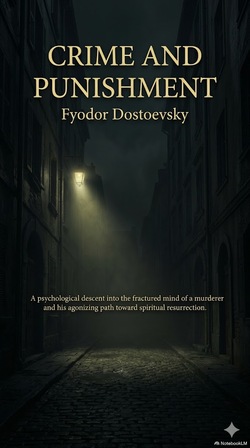
Set in the gritty, poverty-stricken streets of 19th-century St. Petersburg, Fyodor Dostoevsky’s *Crime and Punishment* follows Rodion Raskolnikov, a disillusioned ex-law student trapped in destitution. Tormented by a radical theory that divides humanity into “ordinary” followers and “extraordinary” men who can break moral rules for a greater purpose, Raskolnikov plots to murder a cruel pawnbroker, seeing her as a “useless parasite.” But the act unleashes crippling guilt and paranoia, as he grapples with the consequences of his crime. Guided by the selfless faith of Sonia Marmeladova, a destitute prostitute who sacrifices everything for her family, Raskolnikov confronts his moral decay, abandons his twisted ideology, and embarks on a painful journey toward redemption—first through a public confession, then through years of hard labor in Siberia. A searing exploration of guilt, existential struggle, and the power of compassion, this classic exposes the fragility of human morality and the hope of atonement.

The Sea of Life summary and key insights by Mai Jia
Loading…

The Sea of Life

Mai Jia

4.2526 learners

Set in a remote mountain village in Zhejiang, *The Sea of Life* unfolds the extraordinary, tangled life of the enigmatic 'Colonel'—a man haunted by wartime secrets, shamed by small-town gossip, and bound by quiet, unyielding resilience. Once a celebrated military surgeon nicknamed 'Golden Knife' for his masterful work with gold-plated tools, he returns home to live in seclusion, only to be labeled a 'eunuch' by narrow-minded villagers. As the Cultural Revolution erupts, his hidden past catches up: a forced tattoo on his abdomen, a legacy of torture by the Japanese, turns him into a target of public humiliation and persecution. Through decades of betrayal, escape, and eventual redemption, we see him find solace in the lifelong love of Lin Ayi, a former army nurse who stands by him even as his mind fades. This sweeping tale weaves together village politics, wartime trauma, and the quiet courage of ordinary people, ultimately exploring the universal truth: no life is perfect, and it’s our flaws that make us fully human.

One Sentence Is Ten Thousand Sentences summary and key insights by Liu Zhenyun
Loading…

One Sentence Is Ten Thousand Sentences

Liu Zhenyun

3.5571 learners

Set in the dusty small towns of northern China, *One Sentence Is Ten Thousand Sentences* traces two generations of relentless searching for genuine connection. Yang Baishun, a poor tofu seller’s son in Yanjin County, spends his life chasing someone who truly "gets" him—first clinging to a one-sided friendship, then bouncing between jobs, changing his name three times (to Yang Moxi, Wu Moxi, finally Luo Changli) as he flees heartbreak and disappointment. His young stepdaughter Qiaoling is kidnapped, growing up as Cao Qing’e in a new family, carrying the ghost of her lost father into old age. Decades later, her son Niu Aiguo, trapped in a loveless marriage and haunted by his mother’s unspoken final wish, retreads her past to uncover the truth of her childhood. At its core, this novel is a raw, intimate portrait of loneliness: the pain of talking past each other, the joy of a rare conversation that feels like home, and the quiet courage it takes to keep looking when the world feels empty.

The Razor's Edge summary and key insights by W. Somerset Maugham
Loading…

The Razor's Edge

W. Somerset Maugham

3.9892 learners

W. Somerset Maugham’s *The Razor's Edge* breaks traditional novel conventions to chronicle the unorthodox journey of Larry Darrell, a disillusioned American WWI veteran. Rejecting the expected path of wealth and social prestige, Larry ends his engagement to the glamorous Isabel Bradley and sets out to pursue spiritual fulfillment. His quest takes him from book-filled garrets in Paris, to backbreaking work in French coal mines, to wandering across Europe as a farmhand, and finally to India, where he finds enlightenment under a revered yogi. Interwoven with Larry’s story are the lives of those around him: Eliot Templeton, a snobbish yet generous social climber obsessed with European high society; Isabel, who chooses luxury and stability with wealthy businessman Gray Maturin; and Sophie MacDonald, a tragic figure undone by grief and addiction. Maugham’s intimate, semi-fictional narrative invites readers to confront the timeless question: what does it mean to live a truly meaningful life?

My Country and My People summary and key insights by Lin Yutang
Loading…

My Country and My People

Lin Yutang

4.41270 learners

Lin Yutang’s *My Country and My People* is a timeless, warm-eyed introduction to Chinese culture that has captivated Western readers for generations. Far from a dry academic treatise, this beloved work uses wit, personal anecdotes, and sharp observation to demystify the Chinese character, social structure, and way of life. Yutang explores the stark divides between northern and southern Chinese identities, the enduring influence of family systems and the civil service exam, and the philosophical underpinnings of Confucianism and Taoism that shape daily choices. He delves into the core traits of resilience, contentment, and quiet humor that define Chinese life, as well as the art of finding beauty in ordinary moments—from tea ceremonies to garden design. More than a cultural guide, it’s a celebration of the “autumn spirit” of Chinese civilization: a mature, pragmatic wisdom that prioritizes harmony, family, and present-moment joy over grand ambition. This book remains an essential read for anyone seeking to understand the depth and complexity of Chinese culture beyond stereotypes.