Others Book Summaries & Key Insights

Others Total 155 books

Free to Choose summary and key insights by Milton Friedman;Rose D. Friedman
Loading…

Free to Choose

Milton Friedman;Rose D. Friedman

4.2577 learners

In Free to Choose, Milton and Rose Friedman deliver a sharp, evidence-backed argument for the transformative power of free markets and limited government, framing voluntary exchange and the price system as the bedrock of prosperity and individual freedom. Drawing on real-world examples—from Hong Kong’s thriving laissez-faire economy to the failure of Soviet central planning, the Fed’s catastrophic role in the Great Depression to the inefficiencies of U.S. welfare programs—the Friedmans dismantle pervasive myths about government intervention. They explain how price signals coordinate global economic activity without central control, critique the harm of union power, regulatory overreach, and equality-of-outcome policies, and outline practical reforms: school vouchers to revitalize education, a negative income tax to replace broken welfare systems, and constitutional amendments to rein in big government. The book clarifies the critical distinction between equality of opportunity (compatible with freedom) and equality of outcome (destructive to it), urging readers to reclaim economic liberty as the foundation of a just, thriving society.
Fortress Besieged summary and key insights by Qian Zhongshu
Loading…

Fortress Besieged

Qian Zhongshu

4.21011 learners

Follow Fang Hung-chien, a bumbling yet relatable Chinese intellectual in the 1930s, as he navigates the messy, absurd realities of love, career, and marriage. After buying a fake doctorate for $40 to please his family, he returns home and gets tangled in a shipboard love triangle. In Shanghai, he falls for the charming Tang Hsiao-fu, only to have his lies exposed by a scorned suitor. Desperate to escape, he takes a teaching job at remote San Lü University, where he’s caught in petty faculty politics and false pretenses. Eventually, he marries quiet colleague Sun Jou-chia, but their marriage quickly devolves into bickering and resentment. Qian Zhongshu’s sharp satire lays bare the iconic 'fortress besieged' truth: everyone longs to enter relationships, jobs, and social circles, yet once inside, they’re desperate to break free. A hilarious, poignant look at the universal struggle to find belonging without feeling trapped.

Fooled by Randomness summary and key insights by Nassim Nicholas Taleb
Loading…

Fooled by Randomness

Nassim Nicholas Taleb

4.31089 learners

In *Fooled by Randomness*, Nassim Nicholas Taleb dismantles the myth that success equals skill through vivid, relatable stories—like cautious trader Nero Tulip, who survives market crashes, and flashy John, whose luck-fueled wealth collapses overnight. Taleb exposes how our brains are wired to misinterpret randomness: we confuse luck with talent, fall prey to survivorship bias (ignoring hidden failures), and underestimate catastrophic "black swan" events. He breaks down cognitive flaws, from our inability to grasp probability to our obsession with linear cause-and-effect, while offering practical frameworks like the Monte Carlo method to visualize alternative outcomes. Rooted in philosophy (Popper’s falsification, Stoic resilience), this book isn’t just for traders—it’s a wake-up call for anyone navigating an unpredictable world, teaching us to prioritize long-term survival over short-term glory and embrace skepticism as a shield against randomness’s hidden traps.

Five Kinds of Time summary and key insights by Wang Xiao
Loading…

Five Kinds of Time

Wang Xiao

3.21026 learners

From Wang Xiao, creator of China’s best-selling Chenzao Efficiency Planner—dubbed the 'Aladdin’s Lamp' for helping hundreds of thousands turn written wishes into real achievements—comes a game-changing time-management system. After discovering 99% of planner users fixated solely on worldly goals (promotions, homes, marriages) while sidelining personal joy, Wang set out to solve a universal struggle: How do we take back control of our time and live intentionally? The Five Kinds of Time framework breaks daily life into five distinct, actionable categories: Survival Time (the unavoidable grind we must overcome), Money-Making Time (building core competitiveness for long-term success), Beauty Time (nurturing physical vitality and confidence), Fun Time (embracing curiosity and unstructured joy), and Flow Time (the peak state of focused, fulfilling immersion). Packed with practical tools—like the Endgame Judgment Method (visualizing your funeral to clarify true priorities) and the Hardcore Life Equation (inspired by Alex Honnold’s historic free climb of El Capitan)—this book guides readers to 'fold' time, prioritize what matters most, and build a personalized 'time garden' that balances ambition and fulfillment. Real-world data, like Chenzao’s 100-day fitness challenge with a 74% completion rate, and examples from top athletes and creators prove this system works for anyone ready to stop just surviving and start thriving.

Fight the Fear summary and key insights by Mandie Holgate
Loading…

Fight the Fear

Mandie Holgate

3.1819 learners

Tired of letting fear hold you back from the career and life you truly want? In *Fight the Fear*, Mandie Holgate pulls back the curtain on the hidden and not-so-hidden anxieties that keep professionals stuck—from hiding your true self to fearing failure, avoiding asking for help, dreading public speaking, and obsessing over what others think. Drawing on her own journey overcoming autoimmune disease and decades of coaching clients, Holgate delivers actionable, no-nonsense exercises to help you break free from these mental chains. You’ll learn how to identify your core values, set goals that light you up (not just impress others), break negative thought cycles, build unshakable confidence, master the art of saying "no" and asking for support, and even step away from work without guilt. Packed with relatable stories and practical strategies, this book isn’t just about conquering fear—it’s about reclaiming your authenticity, aligning your career with what matters most, and building sustainable success that feels truly yours.

Dark Time summary and key insights by Liu Weipeng
Loading…

Dark Time

Liu Weipeng

3.8481 learners

Unlock your brain’s hidden potential with *Dark Time*, a practical guide to maximizing mental efficiency and accelerating learning. Written by Liu Weipeng, this book introduces the concept of "dark time"—the untapped mental hours spent waiting, commuting, or doing routine tasks where your subconscious can keep processing deep thoughts. You’ll learn how to cut down on context-switching costs, build sustained focus, and turn passive learning into active knowledge retention. Weipeng also dives into cognitive pitfalls like self-serving attribution and the clash between primitive emotional brains and rational thinking, offering actionable strategies to overcome bias and make better decisions. Packed with real-life anecdotes, research-backed techniques, and insights from his own tech and academic journey, this book teaches you to leverage every minute of mental energy, master problem-solving heuristics, and use Bayesian thinking to navigate uncertainty. Whether you’re a student, professional, or lifelong learner, *Dark Time* gives you the tools to outperform by working smarter, not harder.

Crimson Rain summary and key insights by William T. Rowe
Loading…

Crimson Rain

William T. Rowe

2.8461 learners

Set in Macheng, a strategic mountain town in eastern China’s Dabie Mountains, *Crimson Rain* traces centuries of violence, rebellion, and social upheaval from the late Yuan Dynasty to the mid-20th century. William T.Rowe unpacks how Macheng’s pivotal location, rigid social hierarchies (including a brutal hereditary slave system), and deep-seated cultural tensions fueled recurring chaos—from bandit raids and clan feuds to slave uprisings, anti-Qing rebellions, and the fiery Communist revolution of the 1920s. Through vivid stories of key figures like the Ming loyalist Mei Zhihuan, the Qing official Yu Chenglong, and Communist leader Wang Shusheng, the book reveals how local conflicts intertwined with national political shifts, shaping Macheng’s identity as a hotbed of resistance. It offers a nuanced look at how violence wasn’t just a breakdown of order, but a persistent force that defined the town’s social structure, cultural memory, and place in China’s turbulent history.

Confessions of a Mask summary and key insights by Yukio Mishima
Loading…

Confessions of a Mask

Yukio Mishima

4.5811 learners

Yukio Mishima’s semi-autobiographical masterpiece Confessions of a Mask lays bare the quiet, torturous journey of a young man trapped between his secret desires and the rigid expectations of 20th-century Japanese society. From childhood memories of fixating on male figures and violent, erotic fantasies to his adolescent crush on the rebellious classmate Omi, the narrator hides his true self behind a carefully crafted mask of “normalcy.” Wartime brings a fleeting, forced romance with Sonoko, a young woman he tries desperately to love—yet fails to feel the expected desire. Postwar, as he confronts his inability to conform to heterosexual norms, the mask begins to crack: a chance encounter with a muscular young man shatters his carefully constructed facade, leaving him to confront the agony of a life lived inauthenticity. Mishima’s raw, unflinching prose captures the universal struggle of hiding one’s identity, making this a timeless exploration of self-deception and the cost of fitting in.

Beyond Feelings summary and key insights by Vincent Ruggiero
Loading…

Beyond Feelings

Vincent Ruggiero

4.7723 learners

Beyond Feelings: A Guide to Critical Thinking is a foundational text that empowers readers to break free from cognitive biases, emotional reactions, and societal conditioning. Using relatable, American-centric examples—from political spin and advertising manipulation to the pitfalls of 'mine is better' thinking—it unpacks how external forces shape our beliefs, from childhood upbringing to modern social norms. The book systematically breaks down common thinking errors, including confirmation bias, hasty generalization, and straw man fallacies, while providing actionable frameworks for cultivating independent thought. It guides readers through key steps: recognizing personal cognitive blind spots, conducting rigorous research on controversial issues, evaluating evidence objectively, forming balanced judgments, and persuading others with respect and logic. Ideal for students, professionals, and anyone navigating today’s misinformation-saturated world, it emphasizes that critical thinking isn’t just an academic skill—it’s a lifelong practice for making wiser decisions and understanding the world more clearly.

Autumn in the Heavenly Kingdom summary and key insights by Stephen R. Platt
Loading…

Autumn in the Heavenly Kingdom

Stephen R. Platt

4.2427 learners

Stephen R. Platt’s *Autumn in the Heavenly Kingdom* delivers a vivid, immersive account of the 19th-century Taiping Rebellion, one of China’s deadliest civil wars. At its core is Hong Rengan, cousin of Taiping leader Hong Xiuquan, whose escape from imperial forces led him to Hong Kong, where he absorbed Western political and scientific ideas. Upon joining the Taiping in Nanjing, he drafted the *Zizheng Xinpian*—a radical modernization blueprint advocating railroads, banks, and equal foreign relations. Platt masterfully interweaves Hong’s story with the tangled role of Western powers: British officials wavered between curiosity about the Taiping’s Christian-inspired ideology, neutrality, and eventual support for the Qing Dynasty to protect trade interests. The narrative also intersects with the Second Opium War, the burning of the Summer Palace, and the rise of Zeng Guofan, the scholar-warrior who led the Xiang Army to crush the rebellion. It reveals how foreign interference and internal strife reshaped China’s trajectory, setting the stage for decades of upheaval.

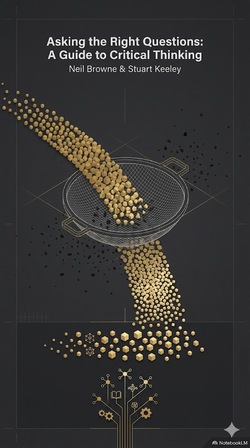
Asking the Right Questions summary and key insights by M. Neil Browne;Stuart M. Keeley
Loading…

Asking the Right Questions

M. Neil Browne;Stuart M. Keeley

4.51193 learners

Living in a world flooded with conflicting claims and biased information, it’s easy to feel overwhelmed or misled—experts contradict each other, advertisers hide flaws, and our brains default to quick, emotional judgments. *Asking the Right Questions* by Neil Browne and Stuart Keeley is your essential guide to building robust critical thinking skills. This book breaks down how to move beyond passive 'sponge-style' learning to active 'gold-panning' thinking, where you engage with information by asking targeted, critical questions. It teaches you to distinguish between weak and strong critical thinking, identify the core components of any argument (thesis, conclusion, reasons), spot hidden assumptions and logical fallacies, and evaluate the reliability of evidence from research reports to surveys. You’ll also learn to navigate common cognitive traps like confusing correlation with causation, avoiding binary thinking, and overcoming biases like belief persistence. Packed with practical exercises and real-world examples, this book empowers you to take control of your beliefs, make rational decisions, and avoid being manipulated by persuasive but flawed arguments. It’s not about being argumentative—it’s about becoming a thoughtful, independent thinker who can cut through the noise to find credible answers.

Carthage Must Be Destroyed summary and key insights by Richard Miles
Loading…

Carthage Must Be Destroyed

Richard Miles

4.6484 learners

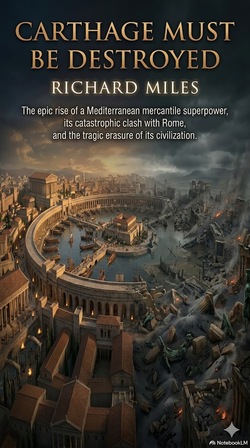
Richard Miles’ *Carthage Must Be Destroyed* traces the epic saga of Carthage, from its Phoenician roots as a dominant Mediterranean trading power to its brutal destruction at the hands of Rome. Drawing on archaeological evidence and debunking ancient Greek and Roman biases, Miles reveals Carthage’s sophisticated civilization—its oligarchic governance, innovative agricultural systems, and controversial religious practices like child sacrifice. The book chronicles the three Punic Wars, highlighting Hannibal’s daring Alpine invasion and Rome’s relentless quest for regional hegemony. Beyond warfare, it explores the cultural fusion between Carthage, Greece, and Rome, showing how Carthaginian traditions subtly shaped Roman identity long after the city’s fall. This definitive work reclaims Carthage’s rightful place in history, offering a nuanced look at a civilization that challenged Rome’s dominance and left an indelible mark on the Mediterranean world.

Beyond the Suburbs and Temples summary and key insights by Lei Wen
Loading…

Beyond the Suburbs and Temples

Lei Wen

3.71200 learners

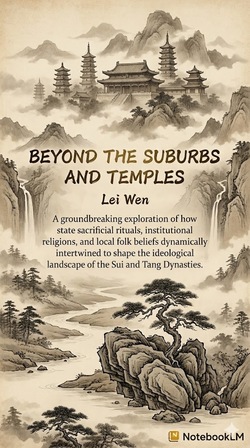
Long dismissed by scholars like Max Weber as rigid, state-separated official ceremonies, medieval Chinese state rituals are reexamined in *Beyond the Suburbs and Temples*. This work challenges the long-held view that imperial sacrifices—such as suburban worship, ancestral temple rites, and Yue Du mountain-water rituals—were disconnected from ordinary people’s personal beliefs. Focusing on the Sui, Tang, and Song dynasties, it reveals how state rituals absorbed folk religious traits, like the personification of natural gods, idol worship, and local shrine practices, creating a shared belief system between rulers and the masses. The book explores key cases: the secularization of the Houtu Earth Goddess cult, the transformation of Confucian temples into popular prayer sites, the fusion of imperial ancestor worship with Taoism and Buddhism, and rain prayer practices that united state rites, religion, and folk faith to reinforce legitimacy and integrate societies. By bridging ritual studies and religious history, it offers a nuanced take on medieval China’s state-society interactions through faith.

Blindsight summary and key insights by Peter Watts
Loading…

Blindsight

Peter Watts

4.5959 learners

In Peter Watts’ groundbreaking hard sci-fi novel *Blindsight*, a crew of biologically augmented specialists—including a genetically resurrected vampire with hyper-efficient cognition—sets out to investigate a mysterious alien signal originating near Neptune. The extraterrestrial craft, codenamed Rorschach, reveals a terrifying truth: its inhabitants possess unparalleled intelligence yet lack any form of self-awareness or consciousness. Watts merges rigorous neuroscience, evolutionary biology, and existential inquiry into a tense, thought-provoking narrative, challenging readers to reexamine humanity’s most cherished assumption: that consciousness is the pinnacle of evolution. As the crew’s mission spirals into chaos, they confront the possibility that self-awareness is not a strength, but a costly evolutionary byproduct—one that leaves humanity hopelessly outmatched by a species that operates without the burden of self-reflection. *Blindsight* isn’t just a space thriller; it’s a radical exploration of what it means to think, feel, and exist.

Alienation and Return summary and key insights by Zhang Kaiyuan
Loading…

Alienation and Return

Zhang Kaiyuan

3.8530 learners

Alienation and Return traces China’s turbulent modern transformation through the lens of cultural conflict—between breaking free from age-old traditions and clinging to ancestral roots. Starting with the little-known Qing Dynasty woman Shan Shili, whose overseas travels sparked radical shifts in her views on society and culture, the book moves through pivotal figures like Gong Zizhen, the first intellectual to declare the Qing’s decline, and Wei Yuan, whose *Sea Map of the World* laid the groundwork for learning from the West. It contrasts China’s slow, struggle-filled modernization with Russia’s sweeping reforms and Japan’s rapid "Leave Asia, Join Europe" push, unpacking why China faced steeper barriers to change. From the Self-Strengthening Movement to the Hundred Days’ Reform and Xinhai Revolution, the book explores how each wave of reform grappled with tradition’s pull, then examines the dual forms of cultural return after the revolution—reactionary backsliding and progressive revival. Finally, it offers insights into balancing tradition and modernity amid globalization, making this complex history accessible through vivid stories and cross-national comparisons.