



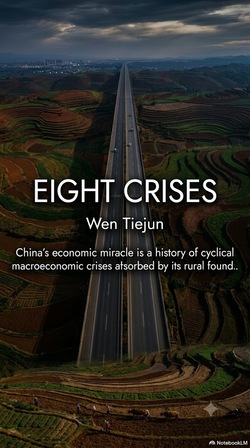
Wen Tiejun explains how rural areas absorbed crisis costs, making China's industrial success possible without collapsing.
Your Review
Wen Tiejun explains how rural areas absorbed crisis costs, making China's industrial success possible without collapsing.

Wen Tiejun explains how rural China absorbed industrial crises for decades, a vital insight for understanding global inequality.

This analysis proves China avoided colonial traps by using rural communities as shock absorbers during eight major economic crises.

The cost transfer theory really changes how I see China's growth, showing that rural areas bore huge costs to fuel industrial success.

This book completely changed how I view China's industrial success, showing it wasn't magic but a deliberate strategy of shifting costs to rural areas.

The explanation of how rural areas absorbed urban crisis costs really changed my view on China's development path.

The idea that China absorbed shocks by sending workers back to rural areas instead of letting cities collapse was a powerful insight for me.

The idea that rural China acted as a shock absorber during crises really changed how I see the country's growth.

This analysis of China's rural cost transfer really changed how I see industrial success.

Three stars because the cost transfer theory explains China's success well, yet the human suffering behind it feels heavy and hard to ignore.

The cost transfer theory really explains why China succeeded where others failed.

This analysis of China's industrial path really changes how I see development and the hidden rural costs involved.

The book shows that China's success relied on pushing crisis costs onto the countryside through price scissors and sending urban youth back to farms, which stabilized the economy but left rural communities aging, impoverished, and unable to absorb future shocks as the buffer frayed.

Wen Tiejun's analysis of the price scissors mechanism really changed how I view China's early industrial growth.

Three stars because the cost transfer theory explains China's growth well but feels too harsh on rural farmers.

Wen Tiejun explains how rural areas absorbed shocks like price scissors and forced youth relocation during crises, preventing urban collapse while shifting heavy costs onto farmers who faced food shortages and lost opportunities, making China's growth possible but deeply unequal.

Interesting take on China's industrial past.

Wen Tiejun shows how China used rural areas to absorb urban crises repeatedly, avoiding the debt traps that destroyed other developing nations trying to copy Western industrialization models. The cost transfer theory explains why China succeeded while neighbors like India and Brazil failed, despite similar post-colonial challenges. By shifting burdens from cities to farms through price scissors and labor relocation, the state kept industrialization alive even when foreign aid stopped or global markets crashed. This book reveals the hidden human cost behind China's growth, showing how farmers and migrant workers bore the pain so cities could build factories and factories could keep running. It challenges the myth that 1978 reforms alone caused success, proving instead that decades of crisis management built a unique safety net. The analysis of how rural buffers weakened over time due to aging populations and land grabs adds urgency to the argument. Understanding this framework helps explain global inequality too, as core nations still offload costs to peripheries. A must-read for anyone studying development economics or China's history, it turns complex data into a clear story of survival through sacrifice.

The idea that rural China absorbed all the pain for industrial growth is shocking and changes how I see history.

The idea that rural areas acted as a shock absorber for decades really changed how I see China's development path.