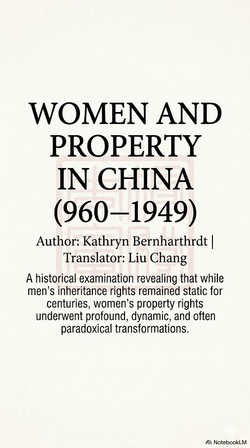
Kathryn Bernhardt’s *Women and Property in China (960—1949)* delivers a rigorous, nuanced analysis of Chinese women’s property rights across nearly a millennium, from the Song Dynasty to Republican rule. The book unpacks pivotal academic debates—including clashes between Japanese scholars Niida Noboru and Shiga Shuzo over Song daughters’ inheritance claims, and Patricia Ebrey’s argument linking dowry trends to elite marriage strategies. Bernhardt critiques existing frameworks, clarifying that the myth of Song “half-share” inheritance stemmed from misinterpreted legal edicts, not widespread custom. She traces evolving rights for widows: from Song-era autonomy in choosing heirs to Ming’s mandatory nephew succession, and Qing’s judicial shifts favoring chaste widows. The work also examines early Republican legal upheaval, as the Dali Court redefined widows’ heir-selecting power, and the 1930 Civil Code’s promise of gender equality that clashed sharply with traditional family practices. Finally, it chronicles concubines’ shifting status: from Song-era marginalization to Qing’s limited legal protections, and Republican-era erasure that paradoxically granted new maternal inheritance rights. By bridging formal legal texts and on-the-ground judicial practice, Bernhardt reveals the persistent gap between law and social reality in shaping women’s access to property.






 Ask about the book's ideas and how they relate to your life.