Tristes Tropiques
Loading…

Tristes Tropiques

Claude Levi-Strauss

4.11259 learners

In *Tristes Tropiques*, Claude Lévi-Strauss crafts a bittersweet, introspective narrative that blends vivid anthropological fieldwork with sharp philosophical critique. Grappling with his conflicting love-hate relationship with travel, he recounts arduous journeys through Brazil’s Amazon rainforest, intimate encounters with Indigenous tribes like the Nambikwara and Bororo, and visits to ancient sites such as Takhshila. Lévi-Strauss dismantles the hollow spectacle of modern adventure tourism, while laying bare the erosion of Indigenous cultures by Western colonialism. Drawing from Marx and Rousseau, he questions the foundations of Western progress, exploring how anthropological research both illuminates and complicates our understanding of humanity. Part memoir, part academic inquiry, this book challenges readers to confront the illusions of civilization and reexamine the core of what binds all people together.

Indigenous CommunitiesTropical FieldworkCivilization CritiqueNambikwara TribeBororo Tribe
Gang Leader for a Day
Loading…

Gang Leader for a Day

Sudhir Venkatesh

4.1889 learners

As a idealistic University of Chicago sociology student, Sudhir Venkatesh grew fed up with his field’s detached, data-obsessed approach to studying urban poverty. When he wandered into Chicago’s Robert Taylor Homes—one of the nation’s largest, most neglected public housing projects—he didn’t expect to be held at gunpoint by gang members, let alone build an unlikely, years-long bond with J.T., the charismatic leader of the Black Kings street gang. Over six years, Venkatesh gained unprecedented access to the gang’s inner workings, even spending a day shadowing J.T. as he managed drug sales, mediated community conflicts, and navigated the tangled power dynamics of the projects. This immersive journey reveals how gangs operate like structured corporations, the critical (and morally gray) role of tenant leaders like Ms. Bailey, and the survival strategies of residents trapped in a system abandoned by the government. Venkatesh also grapples with the ethical dilemmas of his research, shattering stereotypes about urban poverty and exposing the hidden humanity behind the headlines.

Robert Taylor HomesBlack Kings GangJ.T.Sudhir Venkateshunderground economy
Peasant Life in China
Loading…

Peasant Life in China

Fei Xiaotong

4.5853 learners

Based on immersive firsthand fieldwork in Kaihsienkung, a tight-knit village on China’s Taihu Lake, *Peasant Life in China* by Fei Xiaotong delivers a vivid, unfiltered portrait of rural Chinese life in the 1930s. More than just a snapshot, this seminal work unpacks the village’s economic backbone—centered on rice farming and the once-thriving silk industry, which collapsed amid global economic depression and outdated production methods. It dives into intricate social structures shaping daily life: extended family dynamics, arranged marriages, patrilineal inheritance, and tight bonds of kinship and neighborhood. Fei also examines tensions between tradition and modernity, from mismatched school reforms to the cooperative silk mill experiment aimed at reviving the local economy. By focusing on one small community, he fills a critical gap in macro-level studies of China’s economy, offering tangible insights into rural poverty, land tenure issues, and the fragile link between villages and urban centers. This classic remains essential for understanding the roots of China’s rural challenges and the quiet resilience of its peasant population.

Kaihsienkung VillageSericulture IndustryRural Social StructureLand TenureExtended Family
China's Motor
Loading…

China's Motor

Hill Gates

4.2729 learners

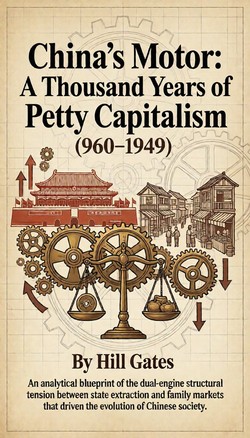
For two decades, anthropologist Hill Gates immersed herself in the daily lives of hundreds of Taipei residents, unlocking the hidden engine of Chinese society in *China's Motor*. She challenges outdated Eurocentric and Sinocentric frameworks, arguing that the clash and coexistence of two distinct production systems—tribute-based feudalism and petty capitalism—have shaped China from late imperial times to the present. Gates breaks down how these systems molded everything from urban planning (debunking G. William Skinner’s market-centric model) to kinship structures, marriage practices, and gender dynamics. She shows how state-controlled tribute systems extracted wealth through taxes and forced labor, while petty capitalism thrived on family/clan networks, prioritizing local trust and flexible labor over formal corporate structures. This book redefines global capitalism studies, highlighting East Asia’s unique trajectory and offering a cross-cultural framework bridging Marxist theory and anthropological fieldwork.

Petty CapitalismTribute SystemGender DynamicsPatriarchyUrban Development
Method

Author's Research Methods

The author used fieldwork (20 months), participant observation, interviews (56 informants), life history studies, and snowball sampling to collect data.

Research MethodsFieldworkEthnography
Scenario

Ghost Incident Trust

The author witnessed a ghost incident in a Nuosu village and didn't deny their beliefs, gaining the community's trust to conduct research.

CultureTrustFieldwork
Scenario

Malinowski Trobriand Study

Trapped by WWI on Trobriand Islands, Malinowski spent years living with local people, collecting first hand data, and completely overturned all old stereotypes about primitive societies.

AnthropologyFieldworkMalinowski
Method

Long-term Participant Observation

1. Live in the target community for at least 1 year, learn local language; 2. Participate in all daily activities of locals; 3. Record first-hand data from local people's own perspective.

Research MethodAnthropologyFieldwork
Insight

Fieldwork Broke Old Bias

Long-term on-site fieldwork led by Malinowski and Boas completely overturned the 19th century biased stereotype that primitive people are inferior and pre-logical.

AnthropologyFieldworkCultural Equality
Scenario

The Haunting Incident

In 2005, the author witnessed a stone thrown horizontally in a widow's house. This incident made locals accept her, helping her gain community access.

FieldworkCommunity AccessLocal Beliefs
No more