History Book Summaries & Key Insights

History Total 180 books

The Book Thief summary and key insights by Markus Zusak
Loading…

The Book Thief

Markus Zusak

4.2986 learners

Set against the brutal backdrop of Nazi Germany during World War II, *The Book Thief* is narrated by Death, who observes 9-year-old Liesel Meminger as she navigates loss, love, and survival. After her younger brother dies en route to a foster home, Liesel steals her first book—the *Gravedigger’s Handbook*—from his snowy gravesite, sparking a lifelong obsession with words. Taken in by the kind-hearted Hans Hubermann and his sharp-tongued but loving wife Rosa, Liesel finds solace in Hans’s late-night reading lessons and the books she steals from bonfires and a wealthy mayor’s library. When the Hubermanns hide Max Vandenburg, a Jewish boxer fleeing persecution, Liesel forms an unbreakable bond with him, sharing her stolen books and their shared trauma of nightmares. As the war closes in, books become a lifeline, weaving moments of warmth and humanity through the chaos of bombings and Nazi tyranny, proving that words can outlast even the darkest of times.

Hidden Rules summary and key insights by Wu Si
Loading…

Hidden Rules

Wu Si

4.1944 learners

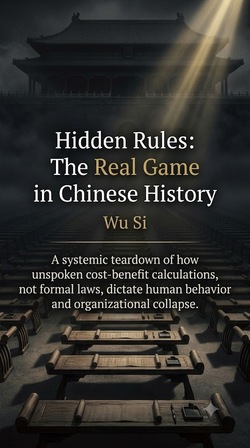
Hidden Rules by Wu Si pulls back the curtain on the unspoken norms that governed China’s imperial bureaucracy—norms that often overshadowed formal laws and shaped every layer of power. At the core of this system lies the "legal right to inflict harm": low-ranking officials and even clerks held the power to legally ruin lives, extort bribes, and manipulate resources, all while hiding behind formal regulations. Wu Si uses vivid historical cases—from a minor clerk controlling military promotions to corrupt prison officials exploiting inmates—to show how these powers spawned hidden rules: unspoken agreements where citizens bribed officials to avoid harm, and bureaucrats colluded to siphon wealth from the people. The book also explores how bad policies filtered out honest officials and elevated ruthless ones, the power struggle between emperors and their lying bureaucracies, and parallels to modern power dynamics, making it an eye-opening look at enduring unspoken power structures.

By Night in Chile summary and key insights by Roberto Bolano
Loading…

By Night in Chile

Roberto Bolano

4710 learners

On his deathbed, Sebastián Urrutia Lacroix, a Chilean priest and literary critic, spills his tangled, guilt-ridden memories of mid-20th-century Chile. From his teenage call to the priesthood to his fateful meeting with literary icon Don Faverel and a surreal run-in with Pablo Neruda, Sebastián’s life weaves through the country’s vibrant literary circles and its brutal political collapse. He recounts quiet compromises: teaching Marxism to Pinochet’s generals to survive, turning a blind eye to atrocities at a wealthy patron’s salon, and letting his silence eat away at his soul. Part confession, part literary manifesto, this raw, darkly humorous narrative lays bare the cost of moral cowardice in a nation torn apart by dictatorship—asking whether literature can ever truly save us from the horrors we choose to ignore.

Great Country, Great People summary and key insights by Wang Zhigang
Loading…

Great Country, Great People

Wang Zhigang

3.41184 learners

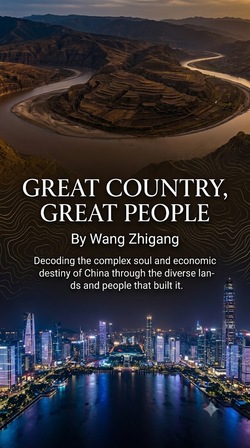
From the ancient cultural bedrock of Shaanxi to the tech-driven transformation of Guizhou, *Great Country, Great People* by Wang Zhigang delivers a vivid, on-the-ground exploration of China’s diverse regions and the people who define its identity. Drawing on decades as a journalist and strategic planner, Wang takes readers on a cross-province journey, unpacking how geography, history, and local traditions forged distinct regional personalities—from the stoic resilience of Shaanxi’s "old soup" civilization to the entrepreneurial grit of Zhejiang’s merchants. He confronts Western misconceptions, arguing China is far from a monolith; it’s a complex tapestry of overlapping cultures, each with unique struggles and triumphs. By examining historical legacies and modern challenges—like Northeast China’s industrial decline and Shanxi’s shift from coal to tourism—Wang provides a nuanced key to understanding China’s past, present, and future, making this book essential for anyone seeking a deeper, more accurate view of one of the world’s most dynamic nations.

The Great Flowing River summary and key insights by Chi Pang-yuan
Loading…

The Great Flowing River

Chi Pang-yuan

4.4537 learners

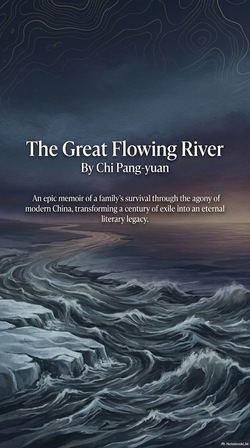
Born in 1924 amid the frozen plains of Manchuria, Chi Pang-yuan’s memoir *The Great Flowing River* weaves an intimate, sweeping tale of survival, love, and cultural resilience through China’s most turbulent decades. From her childhood listening to her mother’s folk songs while war looms over the Liao River, to fleeing the Japanese invasion as a refugee, Chi’s journey takes her to Nankai Middle School in wartime Chongqing, Wuhan University, and finally to Taiwan in 1947. Along the way, she confronts profound loss—including the death of her beloved Zhang Dafei, a pilot who died fighting the Japanese—and finds purpose in teaching literature and championing Taiwanese writing on the global stage. This isn’t just a personal story; it’s a vivid chronicle of a generation displaced, of the quiet courage of ordinary people, and of how literature becomes a lifeline in times of chaos. Chi’s voice is warm, unflinching, and deeply human, making her journey feel both universal and uniquely intimate.

Officialdom Unmasked summary and key insights by Li Baojia
Loading…

Officialdom Unmasked

Li Baojia

4.1928 learners

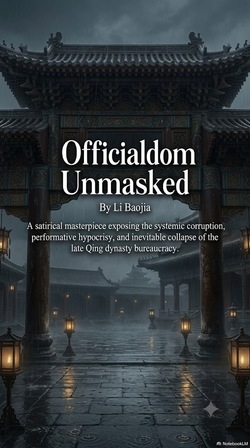
Set in the late Qing Dynasty, *Officialdom Unmasked* pulls back the curtain on the rotten core of imperial Chinese bureaucracy through a series of darkly humorous, interconnected tales. Follow naive scholar Zhao Wen as he stumbles through cutthroat Beijing officialdom after passing the imperial exam, watch schemers like Mao Deguan buy fake credentials or sell family members to climb ranks, and witness corrupt officials like Diao Maipeng embezzle millions from widows and manipulate court cases to save their skins. From local magistrates ignoring people’s suffering to curry favor with superiors, to provincial leaders groveling before foreign powers to avoid diplomatic trouble, every story lays bare the greed, hypocrisy, and absurdity that defined late Qing officialdom. Li Baojia’s sharp satirical pen doesn’t just mock individual crooks—it exposes a system where corruption wasn’t an exception, but the rule, making this classic a timeless critique of power and greed.

The Hunchback of Notre Dame summary and key insights by Victor Hugo
Loading…

The Hunchback of Notre Dame

Victor Hugo

4.4818 learners

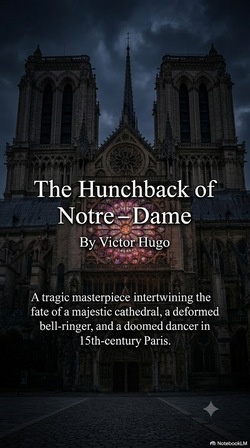
Set against the grand, weathered spires of 15th-century Paris’s Notre-Dame Cathedral, Victor Hugo’s *The Hunchback of Notre Dame* unfolds a haunting, timeless tale of love, prejudice, and the hidden complexity of human nature. At its heart is Quasimodo, the deformed bell-ringer shunned by society yet fiercely devoted to the cathedral that’s his only sanctuary. His quiet loyalty collides with the twisted obsession of Claude Frollo, a pious archdeacon whose religious fervor curdles into destructive lust for Esmeralda—a free-spirited Romani dancer whose beauty and kindness captivate all who cross her path. Hugo doesn’t just craft a tragic romance; he paints a vivid portrait of medieval Paris, from its bustling marketplaces to the shadowy corners of the cathedral, while confronting harsh truths about social inequality, religious hypocrisy, and the chasm between outward appearance and inner goodness. This classic challenges readers to look beyond surface judgments and recognize the dignity in every soul.

Age of Ambition summary and key insights by Evan Osnos
Loading…

Age of Ambition

Evan Osnos

4.4779 learners

Drawing on years of on-the-ground reporting across China, Evan Osnos’ *Age of Ambition* captures the chaotic, exhilarating, and often contradictory era of the country’s post-1978 rise. From Lin Yifu—the Taiwanese army officer who swam to mainland China to embrace reform—to Gong Haiyan, the rural girl who built China’s largest dating app, Osnos weaves intimate stories of ordinary people chasing fortune, freedom, and identity amid explosive economic growth. He also confronts the dark underbelly of this ambition: rampant corruption, strict political censorship, the moral vacuum left by decades of upheaval, and the clash between traditional values and modern individualism. Through portraits of dissidents like Ai Weiwei, activists like Chen Guangcheng, and everyday citizens navigating a rapidly changing society, the book reveals how China’s “age of ambition” is both a story of unprecedented progress and a struggle to reconcile material success with spiritual and political fulfillment.

In the Wilderness summary and key insights by Liu Qing
Loading…

In the Wilderness

Liu Qing

3.4943 learners

Set in the sweltering summer of 1951, just two years after the founding of the People’s Republic of China, *In the Wilderness* follows Zhu Mingshan, a tough, idealistic cadre from northern Shaanxi who leaves a comfortable regional government post to take charge of a rural county in the Wei River Plain. Tasked with leading a desperate fight against a devastating cotton aphid infestation that threatens farmers’ livelihoods and national industrial supply, Zhu must navigate simmering tensions between old revolutionary cadres struggling to adapt to peacetime governance and young, educated officials eager to impose top-down solutions. Alongside coordinating grassroots pest control efforts—using homemade remedies like chili water and tobacco infusions—he grapples with personal struggles: his wife’s fading revolutionary zeal, old comrades’ crises of purpose, and bureaucratic clashes with a stubborn county mayor more focused on grand speeches than on-the-ground action. Through vivid, intimate scenes of rural life, the novel captures the grit, idealism, and messy realities of building a new nation from the fields up.

The Guns of August summary and key insights by Barbara W. Tuchman
Loading…

The Guns of August

Barbara W. Tuchman

4.21204 learners

Barbara W. Tuchman’s Pulitzer Prize-winning *The Guns of August* dissects the chaotic, fateful month of August 1914 that ignited World War I. Starting with the lavish funeral of Britain’s Edward VII—where European monarchs masked simmering tensions beneath pageantry—the book unravels the tangled web of military plans, diplomatic blunders, and human hubris that turned a Balkan assassination into a global cataclysm. Tuchman vividly chronicles the rigid Schlieffen Plan driving Germany’s reckless march through neutral Belgium, France’s disastrous XVII Plan rooted in misplaced offensive zeal, and the bumbling leadership of figures like Kaiser Wilhelm II and Russian Tsar Nicholas II. She also highlights pivotal moments: the stubborn defense of Liège, the catastrophic Battle of Tannenberg, and the Battle of the Marne that shattered Germany’s dream of a quick victory. More than a military history, it’s a gripping narrative of how small, avoidable choices cascaded into a war that destroyed empires and redefined the modern world.

ReOrient summary and key insights by Andre Gunder Frank
Loading…

ReOrient

Andre Gunder Frank

4.3437 learners

In Andre Gunder Frank’s *ReOrient*, we dismantle the centuries-old Eurocentric myth that’s shaped Western historical thought. Frank argues that from 1400 to 1800, Asia—not Europe—was the true core of the global economy. Led by China and India, Asian nations boasted larger populations, higher productivity, and far more robust trade networks than their European counterparts. China, in particular, acted as the world’s ultimate 'silver sink,' drawing massive amounts of silver from the Americas and Japan to fuel its economic expansion. Europe, by contrast, was a marginal player, relying on stolen American silver to even participate in the Asian-dominated trade system. Frank debunks false claims about European 'superiority' in technology, institutions, and culture, showing that Europe’s later rise stemmed from global economic shifts, not inherent greatness. This book is a call to abandon narrow, Europe-focused narratives and embrace a truly global perspective to understand the world economy’s evolution.

Peaks and Valleys summary and key insights by Yan Buke
Loading…

Peaks and Valleys

Yan Buke

3.71042 learners

"Peaks and Valleys" uses an innovative institutional framework to unpack China’s imperial bureaucracy from the Qin-Han dynasties to the Northern and Southern Dynasties. Framing the era as cycles of "normalcy" and "aberration," it details how the Qin and Han built a golden peak of centralized autocracy, merit-based governance, and Confucian orthodoxy—establishing a lasting template for imperial rule. The Wei-Jin and Northern/Southern Dynasties brought a valley of political upheaval: clan aristocrats monopolized power, foreign regimes introduced hybrid systems, and imperial authority weakened. Yet even in chaos, institutions evolved, including the three-department system, legal reforms, and early exam-based selection. The Northern Dynasties, through Hu-Han cultural fusion and strong warrior-led autocracy, revived bureaucratic norms, laying the groundwork for the Sui-Tang golden age. This book reveals how China’s imperial system maintained continuity through fluctuations, highlighting its remarkable resilience and adaptive strength.

Three Hundred Years of North-South Wars summary and key insights by Li Shuo
Loading…

Three Hundred Years of North-South Wars

Li Shuo

3.2595 learners

Spanning nearly three centuries from pre-Qin to Sui Dynasty, *Three Hundred Years of North-South Wars* offers a deep dive into the brutal clashes between China's northern nomadic and southern agrarian regimes. It traces the evolution of cavalry tactics—from the nomadic hit-and-run archery to the Han Dynasty's game-changing shock cavalry, and the transformative role of stirrups in revolutionizing warfare. The book compares the iconic Jin Dynasty's conquest of Wu and Sui's takeover of Chen, highlighting how naval dominance and strategic logistics shaped unification. It also explores the challenges of southern expeditions, constrained by waterway logistics and cavalry shortages, and tracks the Northern Wei's transition from a tribal confederation to a sinicized power with adaptive war strategies. Additionally, it unpacks how southern regimes' financial policies (like debased coinage for war funds) and civil-military tensions undermined their stability, ultimately paving the way for northern unification. Packed with detailed battle cases and cross-disciplinary insights, it reveals how warfare, politics, and culture intertwined to shape ancient China's fate.

Empire of Cotton summary and key insights by Sven Beckert
Loading…

Empire of Cotton

Sven Beckert

4.41027 learners

Sven Beckert’s *Empire of Cotton* unspools the sweeping, brutal history of how a humble fiber reshaped global capitalism over five centuries. Starting with cotton’s independent domestication across India, Peru, and East Africa, the book traces how European powers seized control through 'war capitalism'—a system built on slavery, colonial plunder, and militarized trade. It reveals how the U.S. South’s slave-driven cotton plantations fueled Britain’s Industrial Revolution, creating an interdependent global network that enriched elites while exploiting millions of enslaved people, child laborers, and colonized farmers. The U.S. Civil War shattered this system, forcing Europe to diversify cotton sources and paving the way for industrialization in the Global South. Beckert exposes how state power, corporate greed, and worker resistance shaped every phase of the cotton empire, from its 19th-century peak to its modern iteration, where inequality and exploitation persist in global supply chains.

Ernest Hemingway: A Life Story summary and key insights by Carlos Baker
Loading…

Ernest Hemingway: A Life Story

Carlos Baker

4.3515 learners

Carlos Baker’s definitive biography of Ernest Hemingway traces the legendary author’s turbulent journey from his Oak Park childhood—shaped by his outdoorsman father and artistic mother—to his rise as one of the 20th century’s most influential literary voices. Drawing on intimate details and firsthand accounts, Baker unpacks how Hemingway’s experiences as a Kansas City Star reporter, WWI ambulance driver, Spanish Civil War correspondent, and WWII combatant forged his iconic sparse, hard-hitting prose. The book delves into his complex personal life: his four marriages, passionate romances, friendships with literary giants like F. Scott Fitzgerald and Gertrude Stein, and the trauma that fueled classics such as *The Sun Also Rises*, *A Farewell to Arms*, *For Whom the Bell Tolls*, and *The Old Man and the Sea*. It also chronicles his later years, including his 1954 Nobel Prize win, struggles with injury and mental health, and enduring legacy as a symbol of American grit and literary authenticity.

Year Zero: A History of 1945 summary and key insights by Ian Buruma
Loading…

Year Zero: A History of 1945

Ian Buruma

4.51247 learners

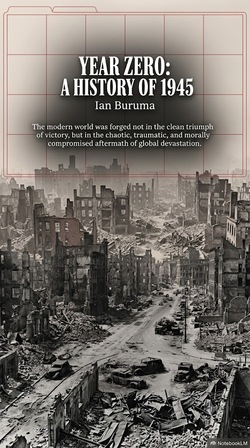
Ian Buruma’s *Year Zero: A History of 1945* frames the end of World War II as a raw, chaotic "zero year"—a moment where old empires collapsed, moral certainties shattered, and the modern world struggled to take shape. Weaving intimate personal narratives with sweeping historical analysis, Buruma takes readers across war-ravaged Europe and Asia: from Dutch civilians starving through the brutal "Hunger Winter" to Japanese "Panpan girls" navigating survival under U.S. occupation, from Jewish survivors facing hostility in their former hometowns to German refugees expelled en masse from Eastern Europe. He unpacks the cycle of vengeance—Polish pogroms against Jewish survivors, Soviet atrocities in Germany, French purges of collaborators—and the messy compromises of justice, where war criminals were sometimes spared to prioritize economic recovery or political stability. Buruma also explores the fragile idealism of the era: the rise of welfare states in Western Europe, the founding of the United Nations, and the quiet seeds of the Cold War that would soon divide the globe. More than a chronicle of defeat and recovery, this book captures the raw humanity of a year that redefined global order, where hope and despair walked hand in hand.

The History of the Decline and Fall of the Roman Empire summary and key insights by Edward Gibbon
Loading…

The History of the Decline and Fall of the Roman Empire

Edward Gibbon

4.31233 learners

Edward Gibbon’s magnum opus, *The History of the Decline and Fall of the Roman Empire*, traces over 1,400 years of Rome’s epic journey—from the peak of Trajan’s territorial expansion to the 1453 fall of Constantinople. Spurred by a moment of reflection amid Rome’s ancient ruins, this six-volume work (condensed here into 14 chapters) blends rigorous Enlightenment-era scholarship with vivid narrative, exploring the empire’s military conquests, administrative innovations, religious transformation from paganism to Christianity, and the internal decay, political chaos, and external barbarian pressures that led to its collapse. A cornerstone of Western historiography and a literary masterpiece, it has influenced iconic figures like Winston Churchill, Adam Smith, and Bertrand Russell. Gibbon’s incisive analysis of power, corruption, and civilization’s fragility remains a timeless lens to understand the rise and fall of great nations.

The Old Regime and the Revolution summary and key insights by Alexis de Tocqueville
Loading…

The Old Regime and the Revolution

Alexis de Tocqueville

4.3895 learners

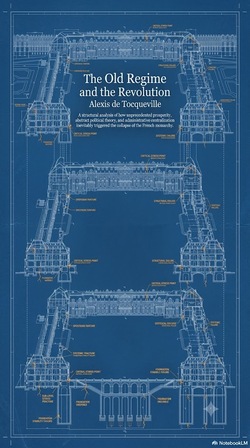
In *The Old Regime and the Revolution*, Alexis de Tocqueville dismantles the myth that the French Revolution was a sudden, unforeseen upheaval. Instead, he argues that the revolution’s seeds were planted deep within the decaying structures of the Old Regime itself. Tocqueville dissects how overbearing centralized governance eroded local autonomy, while a rigid class system—marked by noble privileges, unequal taxation, and a disconnected intellectual elite that seized public opinion—fueled widespread resentment. He highlights the monarchy’s self-defeating contradictions: empty promises of reform, public exposure of injustices without action, and a corrupt venal office system that hollowed out state legitimacy. Most strikingly, Tocqueville reveals an irony: the revolution that claimed to destroy the Old Regime inherited and amplified its most authoritarian trait—centralized power. This seminal work offers a prescient analysis of how systemic decay and unaddressed grievances ignite revolutionary change, making it essential reading for anyone seeking to understand modern political upheaval.

Soulstealers: The Chinese Sorcery Scare of 1768 summary and key insights by Philip A. Kuhn
Loading…

Soulstealers: The Chinese Sorcery Scare of 1768

Philip A. Kuhn

3.61186 learners

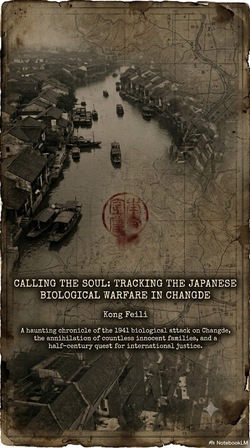
Set against the chaos of World War II, *Soulstealing* pulls back the curtain on one of the most overlooked war crimes of the 20th century: Japan’s 1941 biological attack on Changde, China. Imperial Japanese forces dropped plague-infested fleas and grains on the quiet river town, sparking a devastating epidemic that killed over 7,600 innocent civilians—entire families wiped out, children cut down in their prime, and communities reduced to ghost towns. Through gripping firsthand accounts, the book follows doctors like Tan Xuehua as they fought desperately to contain the outbreak amid wartime shortages, and victims’ families as they grappled with unfathomable loss. Decades later, a group of survivors and their relatives traveled to Tokyo, launching a landmark lawsuit to hold the Japanese government accountable. Supported by Japanese lawyers and global activists, their battle exposes the long legacy of trauma and the unyielding quest for justice for a crime hidden for half a century.

1453 summary and key insights by Roger Crowley
Loading…

1453

Roger Crowley

4.2861 learners

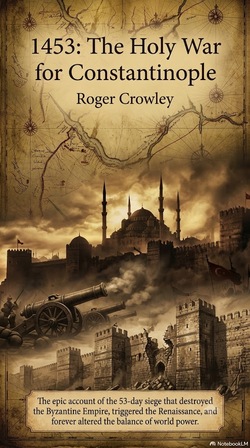
Roger Crowley’s *1453* delivers a gripping, meticulously researched account of the 1453 siege that ended the Byzantine Empire and reshaped global power dynamics. For centuries, Islamic forces had coveted Constantinople—Eastern Christianity’s spiritual capital and a strategic crossroads of trade. At the center of this epic clash is Mehmed II, the 21-year-old Ottoman Sultan driven by ambition and religious zeal, who defied all odds to breach the city’s seemingly impenetrable Theodosian Walls. Crowley vividly recounts pivotal moments: the devastating firepower of Hungarian engineer Urban’s giant cannons, the audacious land transport of Ottoman ships across Galata’s hills to outflank defenses, and the bloody final assault that sealed Constantinople’s fate. The book also explores the crippling divisions within Christendom that left the city abandoned, Mehmed’s complex legacy as both ruthless conqueror and enlightened ruler, and Constantinople’s transformation into Istanbul—a multicultural hub blending Islamic, Christian, and Jewish traditions. A masterful narrative that brings medieval history to life, *1453* reveals how one siege altered the course of civilization for centuries.