Others Book Summaries & Key Insights

Others Total 155 books

Black Box summary and key insights by Shiori Ito
Loading…

Black Box

Shiori Ito

4.4600 learners

Shiori Ito’s *Black Box* is a searing, unflinching memoir that traces her path from an aspiring journalist chasing her dream in New York to a survivor of sexual assault at the hands of Yukihiro Yamaguchi, a powerful TBS Washington bureau chief. After the attack, Ito confronts a maze of systemic barriers: dismissive police who prioritize elite status over victim rights, a Japanese justice system riddled with flaws like the ambiguous “quasi-rape” charge, and a cultural stigma that forces survivors into silence. She documents her grueling fight for accountability—navigating botched investigations, a revoked arrest warrant, and the so-called “wall of consent” that blames victims for not explicitly refusing assault. Drawing stark comparisons to Sweden’s survivor-centric support systems, Ito exposes how Japan’s legal and social structures fail to protect sexual assault victims. Her courageous decision to speak publicly under her own name becomes a rallying cry, challenging societal norms and giving voice to countless unheard survivors. This book is both a personal story of trauma and resilience, and a damning indictment of institutional injustice that demands systemic change.
Eight Crises summary and key insights by Wen Tiejun
Loading…

Eight Crises

Wen Tiejun

3.4748 learners

Pulling back the curtain on China’s industrial journey, *Eight Crises* analyzes 8 cyclical economic crises that shaped its rise from a post-war agrarian nation to a global industrial power. Unlike most post-colonial developing countries that stumbled into development traps copying Western models, China’s unique path relied on a core framework: the Cost Shifting Theory. This theory explains how the nation transferred crisis costs from urban industrial centers to rural areas via its long-standing urban-rural dual structure—using agricultural surpluses, cheap labor, and land resources to cushion shocks. The book ties each crisis to four waves of foreign capital introduction, showing how these inflows drove growth but also sparked debt and deficit pressures. It also explores how China avoided the collapse that plagued peer nations, even as rural resilience fades in the face of aging populations, labor outflows, and global financial shocks. Packed with data and historical context, it offers a fresh lens on China’s economic success and its looming challenges.

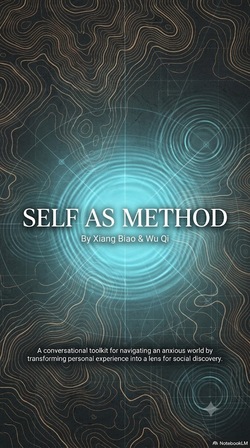
Self as Method summary and key insights by Biao Xiang;Qi Wu
Loading…

Self as Method

Biao Xiang;Qi Wu

4.41245 learners

In this candid, far-reaching conversation between sociologist Xiang Biao and writer Wu Qi, *Using Oneself as a Method* introduces a radical approach to understanding the world: treating your own personal experiences as a critical research tool. Drawing on Xiang’s formative years at Peking University—from a transformative year of military training to his ground-breaking fieldwork in Beijing’s Zhejiang Village—his struggles adapting to Oxford’s rigorous doctoral program, and his eye-opening time in Singapore, the book unpacks the tensions between academic theory and lived reality. It explores globalization’s unspoken dynamics, the rigid divide between 'center' and 'margins' in Chinese society, and the hollowing out of public discourse today. Rejecting abstract jargon and elite-centric thinking, Xiang advocates for rooting research in everyday life, embracing self-reflection, and empowering readers to turn their own stories into a lens to unpack hidden social truths.

The Element summary and key insights by Ken Robinson;Lou Aronica
Loading…

The Element

Ken Robinson;Lou Aronica

3.9828 learners

In *The Element*, Sir Ken Robinson makes a compelling case that every individual possesses unique talents and passions waiting to be unleashed—yet traditional education systems often suppress these gifts by prioritizing narrow academic skills over the full spectrum of human intelligence. Through vivid, relatable stories—from Gillian Lynne, the "disruptive" schoolgirl who grew into a world-renowned choreographer behind *Cats* and *The Phantom of the Opera*, to Matt Groening, the classroom doodler who created the global phenomenon *The Simpsons*—Robinson illustrates how finding your "Element" (the sweet spot where talent meets passion) leads to profound fulfillment and extraordinary success. He dismantles the myth of a single, fixed IQ, drawing on theories of multiple intelligences to show that intelligence manifests in countless forms: musical, kinesthetic, creative, and more. Robinson also emphasizes creativity and imagination as critical tools for navigating an uncertain future, urging readers to reject societal norms that box them in, embrace their true potential, and help others do the same.

The Millionaire Next Door summary and key insights by Thomas J. Stanley;William D. Danko
Loading…

The Millionaire Next Door

Thomas J. Stanley;William D. Danko

4.1408 learners

Based on decades of nationwide research, *The Millionaire Next Door* shatters the myth of flashy, inheritance-dependent millionaires, revealing that 80% of America’s millionaires are self-made. Built on rigorous surveys and real-life case studies, the book exposes the stark gap between high-income earners who overspend to signal status and true wealth builders who prioritize net worth over material displays. It outlines core habits of millionaires: frugality, disciplined saving and investing, intentional financial planning, and avoiding "economic outpatient care" that undermines adult children’s independence. The authors also break down the expected net worth formula to help readers gauge their own wealth progress, compare wealth accumulators vs. under-accumulators, and share insights on raising financially independent kids. This eye-opening guide challenges conventional ideas about wealth, offering actionable strategies for anyone looking to build lasting financial security.

A Compass to Fulfillment summary and key insights by Kazuo Inamori
Loading…

A Compass to Fulfillment

Kazuo Inamori

2.81244 learners

In *IKIKATA* (The Way of Living), legendary Japanese entrepreneur Kazuo Inamori shares the life and business philosophies that turned his tiny startup Kyocera into a global powerhouse and led him to co-found KDDI, one of Japan’s top telecom firms. Drawing from his rags-to-riches journey—from battling tuberculosis as a teen to surviving a failing factory early in his career—Inamori distills timeless lessons: the power of an intense, burning desire to turn the impossible into reality, the importance of making decisions based on simple, universal moral principles like integrity and fairness, and the transformative impact of altruism in both life and business. He introduces his famous 'Life Equation' (outcome = mindset × passion × ability) and the 'Six Refinements' daily practices to cultivate a strong, virtuous character. Inamori also explores how the law of cause and effect can alter predetermined fate, urging readers to view life as a journey to refine their soul. Packed with personal anecdotes and actionable wisdom, this book is a guide to building a meaningful life and successful career rooted in purpose and integrity.

The McKinsey Way summary and key insights by Ethan M. Rasiel
Loading…

The McKinsey Way

Ethan M. Rasiel

3.9731 learners

Drawing from Ethan M. Rasiel’s firsthand experience at McKinsey’s New York office and insights from dozens of consultants, partners, and alumni, *The McKinsey Way* pulls back the curtain on the legendary consulting firm’s playbook for solving complex business problems. It breaks down McKinsey’s core problem-solving framework—rooted in fact-based analysis, the MECE (Mutually Exclusive, Collectively Exhaustive) principle, and hypothesis-driven thinking—while also covering practical skills like project and team management, research and interview techniques, and how to sell solutions effectively. Beyond client work, the book shares actionable tips for thriving in high-pressure careers: from mastering travel hacks and building strong relationships with support staff to setting boundaries for work-life balance. Whether you’re a new consultant, a business leader, or an aspiring professional, this guide turns McKinsey’s decades of expertise into actionable strategies to elevate your problem-solving skills and advance your career.

How to Work summary and key insights by Kazuo Inamori
Loading…

How to Work

Kazuo Inamori

3.71087 learners

In *How to Work*, legendary entrepreneur Kazuo Inamori shares hard-won wisdom from transforming a failing ceramic firm into global giant Kyocera. He upends the common belief that work is just a paycheck, framing it as a profound spiritual practice to refine character and elevate mindset. Through vivid anecdotes—from sleeping with a ceramic pipe to perfect it, to defying skeptics to launch a telecom business—Inamori breaks down actionable principles: learn to love unfulfilling work by diving into its details, set audacious goals and pursue them with relentless effort, embrace radical perfectionism, and dare to take uncharted paths. He also introduces his iconic life equation: Success = Mindset × Passion × Ability, emphasizing that a positive, selfless mindset is the most critical factor. Whether you’re a young professional or seasoned leader, this book shows how daily dedication can transform your career and life.

Bad Blood summary and key insights by John Carreyrou
Loading…

Bad Blood

John Carreyrou

4.1935 learners

Bad Blood by John Carreyrou is the explosive true story of Theranos, the Silicon Valley biotech startup that promised to revolutionize blood testing with just a single drop of finger-pricked blood. Founded by Elizabeth Holmes, a charismatic Stanford dropout who modeled herself after Steve Jobs, Theranos soared to a $9 billion valuation, attracting A-list investors and a star-studded board of former politicians and business leaders. But behind the sleek branding and bold vision lay a massive fraud: the company’s revolutionary technology never worked. Carreyrou, the Wall Street Journal reporter who broke the story, exposes how Holmes and her partner Sunny Balwani lied to investors, manipulated test results, pressured employees into silence, and exploited regulatory loopholes to keep the scam alive. The book uncovers the toxic corporate culture, Silicon Valley’s obsession with 'unicorn' startups, and the failures of oversight that allowed the deception to grow unchecked, culminating in Holmes’ ban from the medical industry and the collapse of Theranos. A gripping tale of ambition, deception, and the high cost of prioritizing hype over science.

Turbulent Thirty Years summary and key insights by Wu Xiaobo
Loading…

Turbulent Thirty Years

Wu Xiaobo

3.3623 learners

"Turbulent Thirty Years" is a definitive narrative of China’s unprecedented economic transformation from 1978 to 2008, tracing the chaotic, exhilarating rise of its business landscape amid sweeping reform and opening-up. Authored by Wu Xiaobo, this immersive account chronicles the birth of iconic enterprises—from Lenovo and Huawei to Vanke and Mengniu—and the larger-than-life entrepreneurs who navigated uncharted waters, breaking rigid state rules, seizing risky opportunities, and enduring dramatic failures. It captures the era’s contradictions: state-owned giants clashing with scrappy private startups, speculative bubbles bursting amid rapid growth, and the tension between traditional values and global market forces. More than a business history, it offers a front-row seat to how a closed, agrarian nation evolved into a global economic powerhouse, revealing the grit, luck, and systemic upheaval that shaped modern China’s commercial identity. For readers seeking to understand China’s rise through its business leaders and pivotal events, this book is an indispensable guide.

My Transformation summary and key insights by Wang Shi
Loading…

My Transformation

Wang Shi

3.8765 learners

Wang Shi’s *My Transformation* chronicles his extraordinary journey from a young truck driver navigating China’s Gobi Desert to a pioneering entrepreneur, world-class mountaineer, and lifelong learner. Overcoming a genetic predisposition to altitude sickness, he defied odds to summit Everest, facing near-death experiences that reshaped his views on physical limits and mental resilience. As founder of Vanke, he built a corporate legacy on uncompromising ethics—refusing bribes even when competitors gained an edge—and championed modern, transparent governance that outlasted his leadership. Later, at 60+, he traded boardrooms for Harvard and Cambridge classrooms, grappling with language barriers and academic rigor to redefine himself beyond business. His story also weaves in environmental advocacy, from leading corporate green initiatives to global climate summits, and profound reflections on life and death shaped by mountain perils and cross-cultural encounters. More than a memoir, it’s a testament to embracing change, confronting vulnerabilities, and living with purpose at every stage of life.

Catching Up to America summary and key insights by Zhu Tian
Loading…

Catching Up to America

Zhu Tian

3.91267 learners

For over four decades, China has stunned the world with its explosive economic growth, soaring from one of the poorest nations to the globe’s second-largest economy—and closing in on the US. In *Catching Up to America*, Zhu Tian cuts through the noise of competing theories to unpack the real drivers behind this miracle. Rejecting oversimplified explanations like low starting income, export-led growth, or state control, Tian uses a global comparative lens to show that Confucian culture—with its emphasis on thrift, education, social trust, and merit-based governance—has been the secret sauce fueling China’s rapid accumulation of capital and human resources. The book also addresses China’s recent growth slowdown, debunks myths about the 'middle-income trap,' and explores how geopolitical tensions with the US might shape its future. Balancing rigorous empirical analysis with accessible prose, it’s essential reading for anyone wanting to understand China’s rise and its impact on the global order.

Powerful summary and key insights by Patty McCord
Loading…

Powerful

Patty McCord

4.1427 learners

In 'Powerful,' former Netflix Chief Talent Officer Patty McCord unveils the streaming giant’s groundbreaking management framework, built to outperform in today’s hyper-fast, unpredictable business world. Rejecting 20th-century rigid control systems—annual reviews, bureaucratic red tape, and paternalistic oversight—Netflix reimagines work by treating employees as responsible adults, not managed assets. McCord breaks down the core pillars of Netflix’s culture: radical candor in feedback, fact-driven decision-making, unwavering focus on high talent density, market-top transparent compensation, and the freedom to act in the company’s best interest without unnecessary rules. Through real anecdotes, she shows how these principles enabled Netflix’s pivot from DVD rentals to global streaming dominance, and offers actionable insights for leaders aiming to build agile, high-performing teams that drive change rather than just adapt to it.

Anna Karenina summary and key insights by Leo Tolstoy
Loading…

Anna Karenina

Leo Tolstoy

4.2579 learners

Leo Tolstoy’s *Anna Karenina* weaves two parallel tales of love, duty, and self-discovery in 19th-century imperial Russia. On one thread, Anna, a married aristocrat, risks everything for a passionate affair with Count Vronsky, defying the rigid social norms that condemn her. Trapped between her love for Vronsky, her guilt over abandoning her son, and the judgment of high society, her journey spirals into tragedy. On the other, Levin, a thoughtful landowner, grapples with existential questions, struggling to reconcile his intellectual doubts with the quiet wisdom of rural life. His path leads him to find purpose in love with Kitty—who heals from her own heartbreak—and in the simple, honest labor of his farm. Tolstoy masterfully explores the chasm between societal expectations and personal desire, asking timeless questions about what it means to live a meaningful life.

Value-Based Selling summary and key insights by Cui Jianzhong
Loading…

Value-Based Selling

Cui Jianzhong

31115 learners

Tired of being trapped in endless price wars and fleeting client deals? *Value-Based Selling* transforms B2B sales from a product-pushing grind into a strategic partnership focused on driving client organizational performance. Unlike traditional sales methods that react to surface-level client demands, this framework empowers sales teams to proactively uncover hidden client pain points, deliver measurable value beyond product features, and build long-term, profitable relationships. It breaks down the sales journey into actionable phases: qualifying high-value leads, converting leads into active opportunities, shaping client expectations to align with your strengths, creating performance-driven value via the Reference Framework, and closing deals by syncing with the client’s procurement process. Packed with practical tools like the MEN Model (Expectations, Needs, Motivation) and real-world strategies, this guide helps you escape commodity competition, boost profit margins, and position yourself as a trusted client performance advisor—perfect for navigating today’s informed, value-focused B2B market.

Throwing Rocks at the Google Bus summary and key insights by Douglas Rushkoff
Loading…

Throwing Rocks at the Google Bus

Douglas Rushkoff

4.1702 learners

In *Throwing Rocks at the Google Bus*, Douglas Rushkoff uses the 2013 protests against Google’s San Francisco shuttles as a vivid opening to unpack the failures of growth-obsessed capitalism. He reveals how the digital economy, once poised to democratize value distribution, has been hijacked by Wall Street to fuel speculative expansion—spawning platform monopolies, widening wealth gaps, and treating workers and local communities as disposable assets. Rushkoff dismantles the myth that endless growth is an inevitable economic law, tracing its origins to centuries-old extractive business models. He presents actionable, people-centered alternatives: shorter workweeks tied to productivity gains, worker-owned enterprises, universal basic income, and distributed economic systems that prioritize human needs over shareholder profits. Drawing on real-world examples from Utah’s 4-day workweek to Brazil’s LETS community currency system, the book makes a compelling case for reimagining capitalism to serve people, not just perpetual, hollow expansion.

True Needs summary and key insights by Liang Ning
Loading…

True Needs

Liang Ning

3.61124 learners

True Needs by Liang Ning is a no-nonsense guide that cuts through the noise of modern life to help you distinguish between fleeting wants and the core needs that drive genuine fulfillment. Packed with relatable real-world examples—from the professional who thinks they crave a promotion but actually longs for respect, to the person chasing luxury goods to fill a void of belonging—this book breaks down actionable frameworks to uncover what you truly need. Ning walks readers through step-by-step reflection exercises, practical conversation techniques to identify others’ true needs, and strategies to align daily choices with your core values. Whether you’re feeling stuck in your career, unfulfilled in relationships, or overwhelmed by endless consumer demands, True Needs gives you the tools to stop chasing empty desires, reduce mental clutter, and build a life that feels purposeful and authentic. It’s not about eliminating wants entirely; it’s about prioritizing the needs that actually matter, so you can live with intention rather than reaction.

In Search of Excellence summary and key insights by Thomas J. Peters;Robert H. Waterman Jr.
Loading…

In Search of Excellence

Thomas J. Peters;Robert H. Waterman Jr.

3.3948 learners

In the late 1970s, McKinsey consultants Thomas J. Peters and Robert H. Waterman Jr. set out to solve a pivotal business puzzle: What sets enduringly successful large companies apart? Drawing on deep interviews with leaders at 43 high-performing firms—including IBM, 3M, and Procter & Gamble—they pushed back against the era’s obsession with rigid rationality, overcomplicated spreadsheets, and tangled matrix structures. Instead, they uncovered 8 timeless traits defining excellence: bias for action, close to the customer, autonomy and entrepreneurship, productivity through people, hands-on value-driven management, stick to the knitting, simple form lean staff, and simultaneous loose-tight properties. They also introduced the McKinsey 7S Framework, emphasizing that "soft" elements like culture and shared values matter as much as "hard" factors like strategy and structure. This landmark book redefined corporate leadership, urging leaders to prioritize practicality, human-centricity, and adaptive experimentation over overly analytical, top-down control, and remains a cornerstone for building resilient, high-performing organizations.

Hidden Champions summary and key insights by Hermann Simon
Loading…

Hidden Champions

Hermann Simon

4.51047 learners

In *Hidden Champions*, Hermann Simon pulls back the curtain on Germany’s best-kept business secret: thousands of little-known companies that dominate global niche markets. Holding 55% of the world’s hidden champions, these firms boast top-3 global or continental market shares, annual revenues under €5 billion, and near-invisibility to mainstream consumers. Simon breaks down their winning playbook: unwavering focus on narrow specialties, early and aggressive globalization, hyper-close customer relationships, relentless innovation, and a culture of loyalty and craftsmanship. He shows how these small-but-mighty businesses outperform giants, with 8.8% annual growth rates and 2.7% average employee turnover—well below Germany’s corporate average. Whether you’re leading a Fortune 500 firm aiming to cut bureaucracy or a small business chasing global leadership, this book delivers actionable lessons to build sustainable, industry-dominating success.

Influencer summary and key insights by Joseph Grenny;Kerry Patterson;David Maxfield;Ron McMillan;Al Switzler
Loading…

Influencer

Joseph Grenny;Kerry Patterson;David Maxfield;Ron McMillan;Al Switzler

4.1753 learners

Ever struggled to get your team to speak up, your kids to adopt healthy habits, or your colleagues to prioritize quality? *Influencer* reveals that true change doesn’t come from commands, bribes, or empty speeches—it comes from mastering systematic influence. Drawing on real-world case studies from top restaurant chains, software teams, public health initiatives, and schools, authors Joseph Grenny and Kerry Patterson break down the science of lasting behavior change. You’ll learn to become a full-time influencer, focus on a handful of key behaviors that drive exponential results, and leverage six sources of influence (personal, social, and systemic motivation and ability) to remove barriers and fuel action. Whether you’re a manager, educator, parent, or community leader, this book gives you actionable strategies to break through resistance, align others with shared goals, and turn ambitious visions into reality.