Others Book Summaries & Key Insights

Others Total 155 books

Starting from the Limit summary and key insights by Chizuko Ueno;Suzumi Suzuki
Loading…

Starting from the Limit

Chizuko Ueno;Suzumi Suzuki

31279 learners

Starting from the Limit is a raw, unfiltered intergenerational dialogue between leading sociologist Chizuru Ueno and former AV actress Suzumi Suzuki, diving headfirst into the messy, often unspoken realities of womanhood under patriarchy. The pair dismantles the myth of "erotic capital"—arguing it’s a misleading framework that masks gendered power imbalances rather than empowering women. They unpack tangled mother-daughter dynamics shaped by conflicting gender norms, Suzuki’s radical rebellion against her mother’s contradictory views of femininity, and the lasting scars of navigating sexual objectification in both the adult industry and mainstream workplaces. From rethinking love, sex, and marriage to exploring true female independence, this conversation bridges generational divides, offering sharp insights into reclaiming identity, challenging systemic bias, and finding solidarity amid life’s most limiting circumstances.

My Students summary and key insights by Huang Deng
Loading…

My Students

Huang Deng

3.6597 learners

For over a decade, author Huang Deng rode Bus 39 through Guangzhou, watching Longdong—once a forgotten suburban village—transform into a bustling hub for young college students and graduates scraping by on tight budgets. As a professor at a second-tier university in Guangdong, he’s spent years observing the quiet battles of his students: rural kids clinging to college as their only shot at escaping poverty, urban teens adrift after years of exam-focused schooling, and 'second-generation migrants' in Shenzhen grappling with their parents’ hard-won legacy and their own uncertain futures. Through intimate stories of students navigating family pressure, housing crises, and career confusion, this book lays bare the unfiltered reality of ordinary young people in modern China. It’s a raw look at how education, class, and shifting economic tides shape lives, proving that while college might not be a guaranteed ticket to success, it’s still a lifeline for many chasing stability and purpose.

Dealing with Darwin summary and key insights by Geoffrey A. Moore
Loading…

Dealing with Darwin

Geoffrey A. Moore

4.3872 learners

"Dealing with Darwin" by Geoffrey A. Moore is a definitive playbook for businesses navigating the unforgiving pace of market evolution. Drawing on real-world case studies from Cisco, Intel, Apple, and Southwest Airlines, the book demystifies how to build and sustain competitive advantage through targeted innovation. Moore breaks down the category lifecycle into growth, mature, and decline stages, outlining 14 distinct innovation types tailored to each phase—from disruptive technology and platform innovation to value engineering and experience-driven tweaks. He contrasts two core business architectures: complex systems (for enterprise clients) and scale operations (for mass markets), detailing how to align innovation strategies with organizational strengths. Beyond strategy, Moore provides actionable frameworks to overcome organizational inertia, including core-periphery analysis to reallocate resources to high-impact innovation and a "resource cycling" model to upskill teams without cultural erosion. This guide equips leaders to avoid commodity traps, outadapt competitors, and thrive in Darwinian markets.

Liar's Poker summary and key insights by Michael Lewis
Loading…

Liar's Poker

Michael Lewis

4.31101 learners

Michael Lewis’s *Liar’s Poker* pulls back the curtain on the raucous, cutthroat world of 1980s Wall Street through his wild journey as an unlikely Solomon Brothers trader. Starting as an art history grad laughed out of investment bank interviews, Lewis lands a spot at Solomon’s legendary training program, where he witnesses the firm’s brutal, profit-obsessed culture firsthand. He dives into the rise of the mortgage-backed securities division, led by the larger-than-life Lewis Ranieri, who turned a neglected corner of finance into a cash cow—only to see it collapse amid internal backstabbing, talent poaching, and market shifts. Along the way, Lewis exposes the absurdities: million-dollar poker bets between executives, ruthless office politics, and a system where greed trumps ethics. By the end, he walks away from seven-figure paychecks, disillusioned by a world where success hinges on deception and self-preservation over real value.

Upward Growth summary and key insights by Jiu Bian
Loading…

Upward Growth

Jiu Bian

3.7726 learners

Upward Growth is a down-to-earth, actionable guide to escaping stagnation and building lasting personal and financial progress. Grounded in principles like entropy increase from thermodynamics, it frames continuous learning as a non-negotiable survival tactic—without steady inputs of knowledge and skills, you’ll slide into decline, relying on outdated expertise. The book breaks down practical, doable learning hacks: start with tiny daily goals to beat procrastination, link new information to existing mental frameworks to retain it, and balance hands-on, immediate skills with long-term knowledge that sparks breakthroughs. It then shifts to upward mobility, debunking myths about innate talent and get-rich-quick shortcuts, and outlines how to break poverty traps by ditching mindless consumption and focusing on long-term value-building. You’ll learn to recognize and escape stagnant low-level cycles, build anti-fragility to thrive under stress, avoid "zombie culture" (passive scrolling and unproductive entertainment), choose high-potential career paths like coding with clear skill benchmarks, and understand economic cycles and wealth logic—including how leverage and global asset allocation work for the wealthy. Packed with relatable real-life stories and step-by-step advice, it’s a roadmap for anyone ready to move from passive living to active, sustainable growth.

Transitional Labor summary and key insights by Sun Ping
Loading…

Transitional Labor

Sun Ping

3.8520 learners

For over a decade, China’s platform economy has exploded, turning food delivery riders from a niche gig into the face of digital precarious work. While U.S. platforms like Grubhub kicked off the global food delivery boom in 2004, China’s market has since grown into the world’s largest, amplifying labor tensions that resonate across gig economies worldwide. *Transitional Labor* dives into the paradox of these riders: most join seeing their jobs as temporary stepping stones to better opportunities, yet many end up trapped in this "permanent transition" for years. Drawing on six years of on-the-ground fieldwork across Beijing, Shanghai, and other cities, Sun Ping unpacks how platform algorithms, layered outsourcing models, and capital logic create a system where riders have the illusion of freedom but are tightly controlled. The book explores riders’ hidden resistance strategies (like outsmarting algorithms), the unique struggles of female riders balancing work and family, and challenges the binary "control vs. resistance" framework in gig work research—highlighting riders’ digital resilience and the urgent need for fairer labor policies.

Tools of Titans summary and key insights by Tim Ferriss
Loading…

Tools of Titans

Tim Ferriss

4.7950 learners

Tools of Titans is Tim Ferriss’s ultimate playbook, distilling actionable wisdom from over 100 world-class performers—including elite athletes, billion-dollar entrepreneurs, leading scientists, and creative visionaries. Drawing on his wildly popular podcast interviews, Ferriss pulls back the curtain on the daily habits, unconventional strategies, and mental frameworks that drive success across health, wealth, and personal growth. You’ll discover science-backed tips like Rhonda Patrick’s sauna routine to boost running endurance by 32%, Dominic D’Agostino’s ketogenic diet protocols for fat loss and disease prevention, and Pavel Tsatsouline’s 5-minute kettlebell workouts to build strength fast. For entrepreneurs, there’s advice from Chris Sacca on building high-value connections and Marc Andreessen on the power of raising prices. Plus, insights on mindfulness from Tony Robbins, Kevin Kelly’s "1000 true fans" marketing theory, and Scott Adams’s "systems over goals" philosophy. Every tip is tested by Ferriss himself, making this a no-fluff guide to upgrading every area of your life.

Tokyo Eight Square Meters summary and key insights by Yoshii Shinobu
Loading…

Tokyo Eight Square Meters

Yoshii Shinobu

3.4773 learners

After decades of moving across Japan, Taiwan, France, and China, Yoshinobu finally finds his anchor in an 8-square-meter apartment in Tokyo—a space once dismissed as temporary for struggling singles. Trading spacious but restrictive homes for this tiny, affordable room, he gains financial freedom to explore art, cinema, and local culture without the pressure of overworking. Through daily routines like visiting old sentos (public bathhouses), chatting with neighborhood shop owners, tuning into late-night radio, and rediscovering the shamisen (traditional three-stringed instrument), he uncovers the hidden warmth of Tokyo’s working-class neighborhoods. This memoir isn’t just about minimalist living; it’s a celebration of small, unplanned connections, the resilience of traditional culture, and the joy of prioritizing time and experiences over material possessions. Yoshinobu proves that happiness doesn’t depend on space size, but on the freedom to live intentionally and embrace the beauty of everyday moments.

The Toyota Way summary and key insights by Jeffrey K. Liker
Loading…

The Toyota Way

Jeffrey K. Liker

4.71309 learners

For decades, Toyota’s unparalleled global success has stemmed not from fleeting tactics, but from a deeply ingrained operational and cultural framework laid out in *The Toyota Way*. Authored by Jeffrey K. Liker, this definitive guide breaks down Toyota’s 14 core principles, organized into four pillars: long-term philosophy, right process, people/partners, and continuous problem-solving. It unpacks the dual helix of Toyota’s DNA—its Toyota Production System (TPS) focused on just-in-time, jidoka, and waste elimination, and the cultural values that sustain it, like genchi genbutsu (go and see) and kaizen (continuous improvement). The book exposes common pitfalls of lean implementation, where companies fixate on tools like kanban instead of nurturing the respect-driven, improvement-focused culture that makes Toyota’s system work. Real-world case studies, from the launch of Lexus to the groundbreaking Prius hybrid, demonstrate how these principles scale across industries, even transforming service-sector organizations. Liker emphasizes that Toyota’s model isn’t just for manufacturing; it’s a blueprint for building resilient, long-term successful organizations centered on people and iterative growth.

The Pillow Book summary and key insights by Sei Shonagon
Loading…

The Pillow Book

Sei Shonagon

4.51268 learners

Written by Sei Shonagon, a sharp-witted lady-in-waiting at the Heian-era Japanese imperial court, *The Pillow Book* is a charming, unfiltered collection of personal observations, anecdotes, and musings. Spanning years of service to Empress Teishi, this classic work captures the quiet magic of seasonal moments—from spring’s pastel dawns to winter’s cozy hearthside mornings—alongside the lively, often humorous chaos of court life: playful banter with fellow ladies-in-waiting, royal pet mishaps, poetry contests, and intimate exchanges with the empress. Shonagon’s keen eye for detail and dry wit bring the 10th-century court to life, offering a rare, intimate glimpse into the elegant, quirky world of Heian nobility. More than a diary, it’s a celebration of small joys, sharp social commentary, and the timeless beauty of everyday moments.

The Perils of Interpreting summary and key insights by Henrietta Harrison
Loading…

The Perils of Interpreting

Henrietta Harrison

3.8597 learners

Henrietta Harrison’s *The Perils of Interpreting* weaves the parallel, interconnected lives of two forgotten translators to unpack the high-stakes world of cross-cultural diplomacy between Qing China and Britain in the late 18th and early 19th centuries. Follow Jacob Li, a Chinese Catholic educated in Naples who served as a critical interpreter for the Macartney Embassy, navigating the risks of bridging his faith, Chinese identity, and British diplomatic goals. Contrast his journey with George Staunton Jr., the precocious British boy trained in Chinese by his father, who grew into a key figure in Sino-British trade and diplomacy, only to see his idealism crumble amid imperial tensions. Harrison reveals how translation was never just linguistic conversion—it was a battlefield of power, loyalty, and cultural compromise, where missteps could ruin careers, spark conflict, or even cost lives. Through their untold stories, the book exposes the hidden perils of connecting two empires on the brink of war.

The Great Mental Models, Volume 1: General Thinking Concepts summary and key insights by Shane Parrish;Rhiannon Beaubien
Loading…

The Great Mental Models, Volume 1: General Thinking Concepts

Shane Parrish;Rhiannon Beaubien

4.3418 learners

Frustrated by the gap between academic theories and real-world decision-making during his early intelligence career, Shane Parrish turned to Charlie Munger’s "latticework of mental models" to navigate uncertainty. In *The Great Mental Models*, Parrish distills cross-disciplinary core principles into actionable cognitive tools—from the foundational "map is not the territory" to practical frameworks like the circle of competence, first principles thinking, and probabilistic reasoning. He walks readers through building, refining, and applying these models to break cognitive biases, avoid decision traps, and approach problems from multiple angles. Packed with real-world examples, from Warren Buffett’s investment strategies to the Cuban Missile Crisis, the book emphasizes that mastering these timeless models isn’t just about smarter thinking; it’s about developing a robust, adaptable decision-making system that thrives in complex, unpredictable environments.

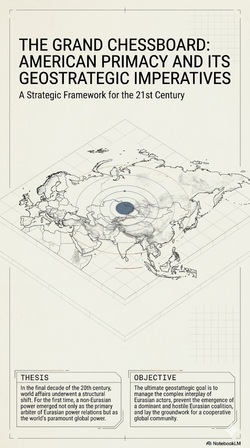
The Grand Chessboard summary and key insights by Zbigniew Brzezinski
Loading…

The Grand Chessboard

Zbigniew Brzezinski

4.2973 learners

In Zbigniew Brzezinski’s seminal geopolitical work *The Grand Chessboard*, he frames Eurasia as the critical battleground for sustaining America’s status as the world’s first true global superpower. Brzezinski traces the evolution of U.S. hegemony, contrasting it with historical empires like Rome, China, and Mongolia to highlight its unique democratic, economic, and cultural foundations. He breaks down Eurasia into a strategic 'chessboard,' identifying core geostrategic players (France, Germany, Russia, China, India) and pivotal states (Ukraine, Azerbaijan, Turkey) that shape regional dynamics. The book dissects America’s key challenges: fostering a unified yet aligned Europe, guiding Russia toward integration rather than imperial revival, balancing power in Central Asia’s volatile 'Eurasian Balkans,' and managing the delicate U.S.-China-Japan triangle in East Asia. Brzezinski concludes that America must act as a stabilizing arbiter, building a cooperative framework to share global responsibility while preserving its leadership for at least a generation, noting it may be the last global superpower in history.

The Fabric of Reality summary and key insights by David Deutsch
Loading…

The Fabric of Reality

David Deutsch

4.51046 learners

In The Fabric of Reality, physicist David Deutsch upends conventional scientific thinking by arguing that the true goal of science is deep explanation—not just predictive accuracy. He weaves four groundbreaking, unifying theories to reveal the hidden structure of our universe: quantum mechanics (framed as proof of parallel universes), Karl Popper’s epistemology of conjecture and refutation, the Turing Principle of universal computation (tied to virtual reality), and evolutionary theory reimagined as the survival of knowledge encoded in replicators. Deutsch dismantles outdated ideas like inductivism and reductionism, resolving longstanding puzzles such as the problem of induction and time travel paradoxes through the lens of multiple universes. This bold, optimistic framework places human creativity and knowledge at the center of cosmic evolution, arguing that our unique capacity to generate explanatory theories lets us shape the universe’s future.

The Expensive Peace summary and key insights by Ji Chen
Loading…

The Expensive Peace

Ji Chen

3.5995 learners

Dive into the tangled diplomacy, internal power struggles, and devastating aftermath of the First Sino-Japanese War in The Expensive Peace. Ji Chen unpacks the lead-up to the 1894 conflict, from the superficial cordiality between the Qing Dynasty and Meiji Japan to the eruption of war over Korea. The book lays bare the Qing court’s bitter divide between war hawks and peace advocates, tracking Li Hongzhang’s desperate, unauthorized attempts to avoid battle and the court’s fumbling efforts to seek foreign mediation as losses mounted. It chronicles the dramatic Shimonoseki negotiations—including Li’s assassination attempt that forced minor Japanese concessions—and the signing of the 1895 Treaty of Shimonoseki, which stripped China of Taiwan, the Liaodong Peninsula, and imposed crippling war reparations. Ji also explores the Three-Power Intervention that forced Japan to return Liaodong (for a hefty ransom) and the lasting scars of this 'expensive peace' on China’s national identity, urging readers to move beyond resentment to learn critical historical lessons.

The End of Illusions summary and key insights by Andreas Reckwitz
Loading…

The End of Illusions

Andreas Reckwitz

4.5920 learners

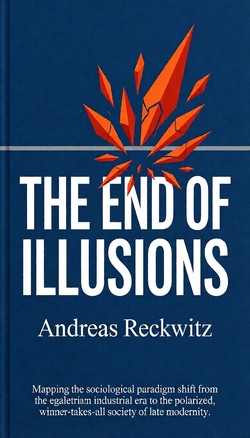
In *The End of Illusions*, sociologist Andreas Reckwitz dismantles the outdated myths of late modern society—from the false promise of universal Western modernization to the illusion of a stable, flat middle class. He dissects the fierce clash between two competing cultural systems: hyperculture, driven by cosmopolitan urban elites who curate global identities through diverse cultural resources, and cultural essentialism, embraced by disenfranchised groups clinging to rigid collective identities to cope with status loss. Reckwitz also maps the seismic shift in Western class structures, replacing the post-war egalitarian middle class with a polarized hierarchy of knowledge-focused new elites, struggling traditional middle classes, and a precarious new underclass. He explores the rise of cognitive-cultural capitalism, where intangible assets and symbolic value dominate economic activity, and unpacks the paradox of late modern self-realization—how the relentless pursuit of personal fulfillment fuels burnout, disillusionment, and social division. Finally, he diagnoses the crisis of open liberalism and outlines a path toward embedded liberalism, a regulatory framework that balances individual freedom with social cohesion, offering a way out of the era’s deepening rifts.

The Checklist Manifesto summary and key insights by Atul Gawande
Loading…

The Checklist Manifesto

Atul Gawande

4.4581 learners

In an era where industries like healthcare, aviation, and construction face overwhelming complexity—where even seasoned experts struggle to avoid costly, preventable errors—Atul Gawande’s The Checklist Manifesto reveals a surprisingly powerful solution: the humble checklist. Drawing on gripping real-world stories, from the miracle Hudson River plane landing to life-saving surgical interventions, Gawande demonstrates how checklists fill gaps in human memory, enforce critical steps, and foster collaborative teamwork. He chronicles the development of the World Health Organization’s surgical safety checklist, which cut post-op complications by 36% and deaths by 47% across global hospitals, and explores how checklists transform investment strategies, construction projects, and more. Far from a rigid rulebook, checklists empower professionals to focus on high-stakes decision-making while mitigating avoidable mistakes. Gawande argues that embracing checklists isn’t about surrendering control—it’s about acknowledging human fallibility and building systems that turn individual expertise into collective success.

The Brothers Karamazov summary and key insights by Fyodor Dostoevsky
Loading…

The Brothers Karamazov

Fyodor Dostoevsky

4.5733 learners

Fyodor Dostoevsky’s magnum opus, *The Brothers Karamazov*, plunges readers into the chaotic, soul-baring world of the Karamazov family in 19th-century Russia. At its core lies the brutal murder of Fyodor Karamazov, a greedy, neglectful patriarch who pits his three sons against one another: hot-headed Dmitri, consumed by rage and lust; Ivan, a brilliant nihilist grappling with the question of God’s existence; and Alyosha, a gentle, devout monk-in-training clinging to faith amid chaos. As the murder investigation unfolds, the novel transcends a simple whodunit, delving into searing debates about morality, free will, redemption, and the nature of evil. Through intense dialogue, vivid characters, and a gripping trial, Dostoevsky lays bare the contradictions of human nature—how virtue and vice coexist in every soul—and challenges readers to confront their own beliefs about faith, guilt, and what it means to be human.

The Apology of Socrates summary and key insights by Plato
Loading…

The Apology of Socrates

Plato

4.31060 learners

Recorded by Plato, *The Apology of Socrates* captures the philosopher’s iconic 399 BCE trial defense—but this is no ordinary legal plea. Socrates refuses to beg for acquittal or use the manipulative rhetoric favored by Athenian court speakers; instead, he frames the trial as a moral exhortation for the entire city. He challenges flaws in Athenian direct democracy, arguing jury members chosen by lack the wisdom and virtue to uphold true justice. Distinguishing his philosophical rhetoric from self-serving sophist tactics, Socrates insists speech must prioritize truth and moral virtue over winning arguments. His mission, sparked by the Delphic Oracle, is to act as an “intellectual midwife,” using relentless questioning to push others to confront their ignorance and care for their souls. Condemned to death, he embraces his fate, declaring the unexamined life is not worth living and imagining death as either a dreamless sleep or a chance to converse with great thinkers in the afterlife.

The Age of Extremes summary and key insights by Eric Hobsbawm
Loading…

The Age of Extremes

Eric Hobsbawm

4.41177 learners

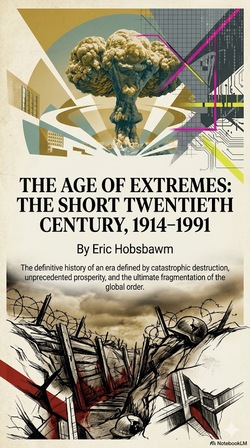
Eric Hobsbawm’s *The Age of Extremes* dissects the turbulent 'short 20th century'—a 77-year period spanning from the outbreak of World War I in 1914 to the collapse of the Soviet Union in 1991. This definitive historical work traces the era’s defining extremes: the catastrophic global wars that shattered 19th-century liberal order, the seismic revolutions that birthed socialist states, the Great Depression that upended capitalist systems, and the decades-long Cold War that divided the world into opposing camps. Hobsbawm also explores the era’s social and cultural upheavals—from decolonization and the rise of youth culture to the transformation of science and art. He analyzes how these interconnected crises reshaped global politics, economies, and societies, leaving a legacy of inequality, ideological fragmentation, and ecological challenges. A masterful synthesis of historical analysis, the book offers critical insights into the forces that defined modernity and warns of the risks of repeating the era’s violent mistakes.