Democracy in America
Loading…

Democracy in America

Alexis de Tocqueville

01590 learners

First published in the 1830s after Alexis de Tocqueville’s extended field research across the United States, *Democracy in America* remains one of the most incisive, timeless accounts of how American democratic systems operate from the ground up. Starting with the grassroots New England township governance model, Tocqueville breaks down how local self-rule cultivates public participation, shared civic belonging, and collective habits that sustain a free society far more effectively than top-down state mandates. He unpacks the carefully calibrated checks and balances of the U.S. federal system, the hidden risks of "tyranny of the majority" that suppress independent thought, and the unique American tradition of voluntary associations that counter the isolating effects of individualism born from widespread social equality. He also explores underdiscussed tensions between democratic civilian priorities and military ambition, the evolution of social honor in a commercialized equal society, and deep structural divides around race and federal vs state power that still shape U.S. politics today.

IndividualismPopular SovereigntyAlexis de TocquevilleTownship self-governanceTyranny of the majority
How Forests Think
Loading…

How Forests Think

Eduardo Kohn

4.31299 learners

Drawing on years of immersive fieldwork with the Runa people of the Ecuadorian Amazon, Eduardo Kohn’s *How Forests Think* dismantles long-held human-centric assumptions by exploring the semiotic lives of non-human beings. Rooted in Charles Peirce’s theory of iconic, indexical, and symbolic signs, Kohn argues that thinking isn’t a uniquely human trait: forests, animals, plants, and even ancestral spirits engage in dynamic semiotic processes to construct selves, navigate relationships, and shape the world around them. He unpacks core concepts like "constitutive absence," where meaning emerges from what’s not present, and examines the Runa’s animist worldview, their nuanced cross-species communication with dogs and jaguars, and how colonial history has reshaped their interactions with the natural world. Blending anthropology, philosophy, and ecology, this book invites readers to step beyond human boundaries, recognize the interconnected web of all life, and rethink what it means to "think" in an era of escalating ecological crisis.

Peircean semioticsRuna peopleconstitutive absenceforest thoughttrans-species communication
Understanding Human Nature
Loading…

Understanding Human Nature

Alfred Adler

4.51269 learners

Alfred Adler’s *Understanding Human Nature* lays the foundational framework of individual psychology, redefining how we perceive human behavior through a social, purpose-driven lens. Rejecting fragmented views of the mind, Adler argues that all actions are guided by a hidden pursuit of superiority, shaped by childhood experiences, family dynamics, and the innate need for social connection. He explores how inferiority feelings—rooted in early struggles or perceived weaknesses—drive either constructive growth or destructive compensation, and how a lack of social interest fuels isolation, aggression, or withdrawal. Packed with clinical case studies and real-world observations, this classic offers practical tools to decode personality traits, resolve interpersonal conflicts, and foster healthy development in children and adults alike. It challenges the idea of fixed 'character' and empowers readers to recognize and redirect unhelpful behavioral patterns, building more meaningful relationships and a deeper understanding of themselves and others.

Life StyleChildhood DevelopmentIndividual PsychologyInferiority ComplexSocial Interest
The Second Mountain
Loading…

The Second Mountain

David Brooks

4.31237 learners

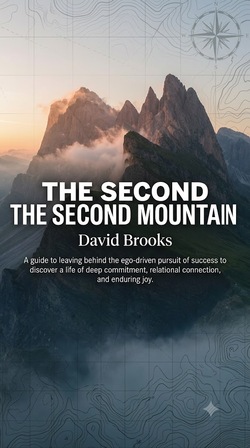
In *The Second Mountain*, David Brooks challenges America’s dominant culture of individualistic success—the "first mountain" of career status, material wealth, and self-gratification. He argues that many who reach this peak end up feeling hollow, unmoored by a lack of deeper purpose. Drawing on real-life stories, philosophical insights, and social research, Brooks outlines the "second mountain": a life rooted in four core commitments—vocational calling, marital connection, spiritual purpose, and community service. He explores how shifting from self-centered ambition to relational generosity addresses modern America’s growing crises of loneliness, distrust, and meaninglessness. Brooks shows that true fulfillment comes not from chasing personal gain, but from embracing interdependence, showing up for others, and aligning one’s life with values that transcend the self. This book is a compelling guide for anyone seeking to move beyond superficial success to a life of purpose, connection, and moral joy.

community buildingSecond MountainFirst MountainVocational CallingMarital Commitment
Great Country, Great People
Loading…

Great Country, Great People

Wang Zhigang

3.41184 learners

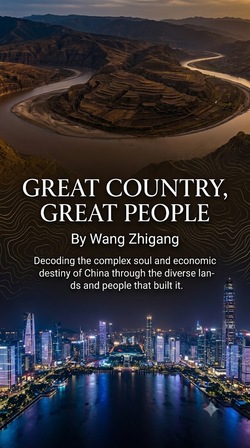
From the ancient cultural bedrock of Shaanxi to the tech-driven transformation of Guizhou, *Great Country, Great People* by Wang Zhigang delivers a vivid, on-the-ground exploration of China’s diverse regions and the people who define its identity. Drawing on decades as a journalist and strategic planner, Wang takes readers on a cross-province journey, unpacking how geography, history, and local traditions forged distinct regional personalities—from the stoic resilience of Shaanxi’s "old soup" civilization to the entrepreneurial grit of Zhejiang’s merchants. He confronts Western misconceptions, arguing China is far from a monolith; it’s a complex tapestry of overlapping cultures, each with unique struggles and triumphs. By examining historical legacies and modern challenges—like Northeast China’s industrial decline and Shanxi’s shift from coal to tourism—Wang provides a nuanced key to understanding China’s past, present, and future, making this book essential for anyone seeking a deeper, more accurate view of one of the world’s most dynamic nations.

Regional CultureChinese CivilizationJin MerchantsHunanese EliteGreater Bay Area
Hidden Champions
Loading…

Hidden Champions

Hermann Simon

4.51047 learners

In *Hidden Champions*, Hermann Simon pulls back the curtain on Germany’s best-kept business secret: thousands of little-known companies that dominate global niche markets. Holding 55% of the world’s hidden champions, these firms boast top-3 global or continental market shares, annual revenues under €5 billion, and near-invisibility to mainstream consumers. Simon breaks down their winning playbook: unwavering focus on narrow specialties, early and aggressive globalization, hyper-close customer relationships, relentless innovation, and a culture of loyalty and craftsmanship. He shows how these small-but-mighty businesses outperform giants, with 8.8% annual growth rates and 2.7% average employee turnover—well below Germany’s corporate average. Whether you’re leading a Fortune 500 firm aiming to cut bureaucracy or a small business chasing global leadership, this book delivers actionable lessons to build sustainable, industry-dominating success.

Hidden ChampionsNiche Market LeadershipGlobalization StrategyCustomer ProximityGerman Manufacturing
The Evolution of Physics
Loading…

The Evolution of Physics

Albert Einstein;Leopold Infeld

4.31025 learners

Co-authored by Albert Einstein and Leopold Infeld, *The Evolution of Physics* takes readers on a captivating, accessible journey through the most transformative shifts in physical thought. Starting with Aristotle’s intuitive, long-dominant views on motion, it traces how Galileo’s experimental rigor laid the groundwork for Newton’s classical mechanics—establishing laws that governed our understanding of the macro world for centuries. The book then explores the cracks in this "mechanical view": the rise of thermodynamics and electromagnetic theory, which challenged the idea that all phenomena could be reduced to particle interactions. It delves into the revolutionary concepts of fields, Einstein’s special and general relativity (redefining space, time, and gravity as curved spacetime), and the birth of quantum mechanics, which upended deterministic views with wave-particle duality and probability waves. More than a textbook, it focuses on the evolution of ideas, making complex physics approachable for anyone curious about how we’ve unlocked the universe’s secrets.

General Relativitywave-particle dualityClassical MechanicsQuantum TheoryField Concept
The Silent Majority
Loading…

The Silent Majority

Wang Xiaobo

4.4999 learners

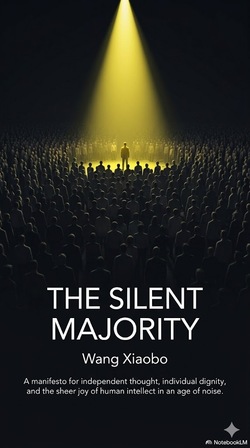
Wang Xiaobo's *The Silent Majority* is a collection of raw, unflinching essays that pulls back the curtain on 20th-century Chinese life through a sharp, witty lens. Drawing from his own experiences—rural labor, university exams, studying abroad—Wang gives voice to the "silent majority": ordinary people who choose quiet resistance over conforming to absurd, oppressive norms. He recounts darkly humorous tales, like the rebellious pig outwitting cadre mobs and chaotic surgeries by untrained hospital workers, to expose rigid systems' absurdity. Wang also critiques Chinese intellectuals' plight, contrasts Western and Chinese approaches to knowledge, and argues fiercely for individual dignity, rational thinking, and courage to speak against hypocrisy. Blending personal anecdotes with incisive social commentary, this book is a rallying cry for free thought and authentic, unshackled living.

Silent MajorityIntellectual ReflectionIndividual DignityRational ThinkingCultural Contrast
Open Veins of Latin America
Loading…

Open Veins of Latin America

Eduardo Galeano

3.5997 learners

Eduardo Galeano’s *Open Veins of Latin America* lays bare 500 years of systemic plunder that has defined the region’s tragic fate. Starting with Columbus’s 1492 arrival, the book traces how Spanish and Portuguese colonizers drained Latin America of gold and silver, decimating indigenous populations through forced labor and violence. Later, British free trade policies crushed fledgling local industries, turning the continent into a raw material supplier and consumer of European goods. In the 20th century, U.S. corporations and political interference took over, controlling key sectors like mining, oil, and manufacturing while extracting massive profits that never benefited local communities. Galeano weaves together harrowing stories of indigenous uprisings, enslaved laborers, and exploited workers, exposing how neocolonial structures perpetuate poverty, inequality, and dependency. A landmark work of critical scholarship, it reveals why Latin America remains trapped in a cycle of resource wealth and widespread deprivation, making it essential reading for anyone seeking to understand global economic injustice.

Resource ExtractionEconomic DependencyIndigenous resistanceNeocolonialismSugar plantations
Descartes’ Error
Loading…

Descartes’ Error

Antonio Damasio

4.4989 learners

For centuries, we’ve clung to Descartes’ belief that reason and emotion are opposing forces—with cool logic as the sole driver of wise decisions. But in *Descartes’ Error*, neuroscientist Antonio Damasio upends this dogma through groundbreaking clinical cases, starting with the iconic story of Phineas Gage, a 19th-century railroad worker whose frontal lobe injury erased his emotional capacity while leaving his intellect intact. Gage’s catastrophic life collapse, alongside modern patients like Elliott (a once-successful manager rendered incapable of sound choices after similar brain damage), reveals a radical truth: emotions aren’t distractions to reason—they’re its critical foundation. Damasio introduces the somatic marker hypothesis, explaining how emotional signals encoded in bodily states guide our decision-making, helping us navigate complex choices efficiently. He dismantles mind-body dualism, arguing that the mind is deeply rooted in the body, with brain and body functioning as an inseparable, dynamic system. This book redefines our understanding of human cognition, proving that rationality can’t exist without the warmth and guidance of our emotional lives.

Rational Decision-MakingSomatic Marker HypothesisVentromedial Prefrontal CortexPhineas GageElliott
Economic Development and Value Choice
Loading…

Economic Development and Value Choice

Chen Chunhua

3.6969 learners

Against the backdrop of China’s seismic shift from a planned economy to a socialist market economy, *Economic Development and Value Choice* by Chen Chunhua explores the intense clash between rapid economic growth and evolving personal values. Rooted in a 1992 research project tracking value transformations across decades, this book draws on extensive surveys of students, workers, and urban/rural residents to unpack the dynamic two-way relationship between economic progress and value systems. It delves into Marxist theories of human nature, the dialectical bond between individuals and society, and critiques prevalent value distortions like egoism, money worship, and hedonism during the transition. The book argues for the enduring relevance of social value principles, emphasizing that personal fulfillment must align with societal progress. It also outlines pathways to self-realization and transcendence, guiding readers to navigate the chaos of economic change, clarify their value coordinates, and achieve meaningful growth for both themselves and their communities.

Socialist Market EconomySelf-TranscendenceMarxist Human Nature TheorySocial Value PrincipleValue Choice
Your Strategy Needs a Strategy
Loading…

Your Strategy Needs a Strategy

Martin Reeves;Knut Haanaes;Janmejaya Sinha

4.5965 learners

In today’s volatile, global business landscape, one-size-fits-all strategic approaches no longer deliver results. Martin Reeves’ *Your Strategy Needs a Strategy* introduces the groundbreaking Strategy Palette framework, designed to help leaders align their strategic choices with the unique demands of their operating environment. Anchored on three critical environmental dimensions—predictability, malleability, and harshness—the framework defines five distinct strategic archetypes: Classic, Adaptive, Visionary, Shaping, and Renewal, each tailored to specific market conditions. Reeves uses real-world case studies (from Mars and Zara to Novartis and American Express) to illustrate how each strategy drives success, backed by data showing that strategy-environment matched firms deliver 4-8% higher total shareholder returns. The book also addresses dual innovation for complex, multi-environment enterprises, outlines common strategic traps, and empowers leaders to build flexible, adaptive strategy portfolios that balance short-term performance and long-term resilience.

Strategic LeadershipStrategy PaletteClassic StrategyAdaptive StrategyVisionary Strategy
Activating the Organization
Loading…

Activating the Organization

Chen Chunhua

3.8942 learners

In an era of constant market shifts, technological disruption, and blurred industry lines, *Activating the Organization* delivers actionable strategies to turn uncertainty into competitive advantage. Drawing on decades of research and real-world case studies—from global leaders like Amazon, IBM, and Starbucks to trailblazing firms such as Huawei and Alibaba—this book outlines how businesses can move beyond rigid, top-down management to unlock individual potential and build symbiotic value communities. It breaks down core principles: adopting a growth-oriented mindset that prioritizes external customer needs over internal constraints, fostering a self-driven change culture that embraces failure as a stepping stone to innovation, and redefining leadership roles as evangelists, designers, and trusted partners. You’ll learn to navigate structural uncertainty, activate employee creativity through agile, decentralized teams, and build ecosystems where every stakeholder thrives. Whether you’re a startup founder or a corporate executive, this guide provides the framework to future-proof your organization and drive sustained, non-linear growth.

Symbiotic EcosystemGrowth-Oriented MindsetOrganizational ActivationValue CommunityStructural Uncertainty
Psychoanalysis and the Cure of Souls
Loading…

Psychoanalysis and the Cure of Souls

Carl G. Jung

4.5904 learners

In *Psychoanalysis and the Cure of Souls*, Carl G. Jung bridges the divide between Western psychoanalysis and spiritual healing, challenging Freud’s narrow focus on sexual instinct and exploring deep connections between psychology, religion, and Eastern wisdom. Jung unpacks his groundbreaking concept of the collective unconscious—an inherited reservoir of universal archetypes like the shadow, anima, and self—that shapes human behavior and spiritual experiences. He contrasts the dualistic Western approach to mind and soul with Eastern traditions such as the I Ching, yoga, and Zen Buddhism, arguing that integrating conscious and unconscious realms is key to overcoming modern humanity’s spiritual fragmentation. The book also examines how religious practices like confession mirror psychoanalytic techniques, and offers a roadmap for individuation: the journey toward wholeness by embracing all parts of the self. Drawing on clinical work, personal experiences, and cross-cultural studies, Jung presents a holistic vision of mental health honoring both science and spiritual depth.

PsychoanalysisCollective UnconsciousArchetypesIndividuationSynchronicity
Steppenwolf
Loading…

Steppenwolf

Hermann Hesse

4.4903 learners

Hermann Hesse’s *Steppenwolf* plunges readers into the tortured mind of Harry Haller, a disillusioned intellectual who sees himself as half man, half wild steppenwolf. Trapped between his longing for high art and spiritual transcendence, and his revulsion toward the complacent bourgeois world around him, Harry grapples with crippling alienation and suicidal despair. His life shifts when he meets Hermina, a sharp, enigmatic woman who forces him to confront repressed parts of his soul—teaching him to dance, love, and embrace the messy, mundane joys he once scorned. Their journey leads to the surreal Magic Theater, where Harry confronts the multiplicity of his self through hallucinatory, symbolic adventures. This timeless classic explores the universal struggle to reconcile conflicting identities, find meaning in a fractured world, and learn to laugh at life’s absurdities instead of succumbing to despair.

Harry HallerSteppenwolfHerminaMagic TheaterDual Personality
Liquid Modernity
Loading…

Liquid Modernity

Zygmunt Bauman

4.2896 learners

Zygmunt Bauman’s *Liquid Modernity* redefines late modern life by contrasting our era of constant flux with the rigid, rule-bound "solid modernity" of Fordist factories, lifelong careers, and fixed social identities. Bauman frames liquid modernity as a world where every structure—jobs, relationships, even self-concepts—has melted into temporary, shifting states. He breaks down its core traits: everything operates on short-term cycles, power functions through speed and escape rather than control, individuals are forced into "involuntary nomadism" without stable anchors, and consumerism dominates as a tool for identity-building and anxiety relief. The book explores how capital’s relentless pursuit of mobility, fueled by digital technology, dismantled solid modernity’s foundations, leaving individuals grappling with precarious work, fragile communities, and pervasive uncertainty. Bauman also examines the crisis of critical theory in this new era, arguing it must shift from challenging state oppression to addressing the erosion of public space and the false freedom of consumer culture, offering a sharp, accessible analysis of life in a world where nothing stays fixed.

ConsumerismCritical TheoryLiquid ModernitySolid ModernityFordism
What Does It All Mean?
Loading…

What Does It All Mean?

Thomas Nagel

4.1871 learners

Thomas Nagel’s *What Does It All Mean?* is a concise, accessible introduction to philosophy tailored for readers with no prior background in the field. Ditching dense jargon, Nagel guides readers through six foundational, mind-bending questions that cut to the core of human existence: How can we confirm the external world isn’t just a figment of our minds? Do other people have conscious experiences like our own? What’s the relationship between the mind and the brain? How do words gain their meaning? Do we truly have free will, or are our actions predetermined? And what does moral responsibility mean if our choices aren’t fully our own? Instead of handing down definitive answers, Nagel sparks critical thinking, inviting readers to grapple with these timeless puzzles using relatable examples—from tasting chocolate to choosing dessert. He makes complex philosophical ideas approachable, fostering curiosity about the big questions that shape our understanding of reality, self, and others.

ConsciousnessFree WillDualismDeterminismSkepticism
A Treatise of Human Nature
Loading…

A Treatise of Human Nature

David Hume

4.4780 learners

David Hume’s *A Treatise of Human Nature* is a landmark empirical philosophy work that upends traditional views of human cognition, emotion, and morality. Starting with a rigorous breakdown of perception—distinguishing vivid "impressions" (sensory experiences, raw emotions) from faint "ideas" (mental reflections)—Hume argues all simple ideas originate from corresponding impressions, rejecting innate knowledge claims. He redefines causality not as an objective law, but as a mental habit forged by repeated event associations. For emotions, he explains pride, humility, love, and hate through dual links of ideas and shared impressions. Finally, Hume anchors morality in sentiment rather than reason: moral judgments stem from feelings of pleasure or pain, shaped by humanity’s innate capacity for sympathy. Alongside this, he explores skepticism about rational certainty, challenging reason’s supposed primacy in human life and laying groundwork for modern empirical psychology and ethics.

SkepticismImpressions and ideasCausal habit theorySympathy principleMoral sentimentalism
Object of Seduction
Loading…

Object of Seduction

Xiaolin Duan

3.1758 learners

"Object of Seduction" traces the global rise of silk from the 16th century onward, weaving together the intertwined histories of Ming China and colonial Mexico. It explores how silk production transformed economies—from Jiangnan’s booming sericulture and commercialization to Mexico’s colonial silk industry integrated into Spanish imperial systems. The book delves into the game-changing Manila Galleon Trade, which flooded the Americas with Chinese silk, reshaping consumption patterns, sparking fashion revolutions, and triggering silver flows that destabilized the Ming Dynasty. It also examines sumptuary laws in both regions: Ming edicts aimed at preserving social hierarchies, and Mexican rules enforcing racial segregation, while both failed to curb the allure of silk. Through vivid primary sources like *Convenience Manual for Farmers* and *Codex Sierra*, the book reveals silk’s role as a catalyst for cultural fusion, labor shifts, and power struggles, offering insights into how this luxury commodity connected distant worlds and shaped modern global trade.

Ming DynastyManila Galleon TradeSilk ProductionSumptuary LawsSericulture
Eight Crises
Loading…

Eight Crises

Wen Tiejun

3.4748 learners

Pulling back the curtain on China’s industrial journey, *Eight Crises* analyzes 8 cyclical economic crises that shaped its rise from a post-war agrarian nation to a global industrial power. Unlike most post-colonial developing countries that stumbled into development traps copying Western models, China’s unique path relied on a core framework: the Cost Shifting Theory. This theory explains how the nation transferred crisis costs from urban industrial centers to rural areas via its long-standing urban-rural dual structure—using agricultural surpluses, cheap labor, and land resources to cushion shocks. The book ties each crisis to four waves of foreign capital introduction, showing how these inflows drove growth but also sparked debt and deficit pressures. It also explores how China avoided the collapse that plagued peer nations, even as rural resilience fades in the face of aging populations, labor outflows, and global financial shocks. Packed with data and historical context, it offers a fresh lens on China’s economic success and its looming challenges.

IndustrializationCost Shifting TheoryUrban-Rural Dual StructureForeign Capital InflowsRural Resilience