History Book Summaries & Key Insights

History Total 180 books

Low Carbon and China's Transition summary and key insights by Yi Peng
Loading…

Low Carbon and China's Transition

Yi Peng

4.2608 learners

Against the backdrop of global climate crisis debates, international treaty negotiations, and the rise of low-carbon economies, *Low Carbon and China's Transition* offers a comprehensive look at China's unique journey toward green development. The book traces the evolution of global climate science, policy frameworks, and social movements shaping the low-carbon agenda, while diving into China’s core challenges: its coal-reliant energy structure, "high-carbon lock-in" from industrialization, and pressure from global trade and carbon tariffs. It outlines China’s pragmatic strategies, including the "Double Carbon" goals (carbon peaking by 2030, carbon neutrality by 2060), the world’s largest national carbon market, investments in renewable energy technologies, and balanced international cooperation rooted in "common but differentiated responsibilities." Blending ancient Chinese middle-way wisdom with modern policy, it presents a roadmap for balancing growth and climate action, offering insights for global governance.
The Great Failure summary and key insights by Wu Xiaobo
Loading…

The Great Failure

Wu Xiaobo

4.3740 learners

The Great Failure, from acclaimed Chinese business author Wu Xiaobo, explores the spectacular rise and sudden collapse of iconic private enterprises in 1990s China—an era of unbridled economic ambition and loose regulatory oversight. Through gripping real-world case studies of brands like Qinchi Liquor, Giant Group, Aido VCD, and Sanzhu Oral Liquid, it dissects why once-thriving companies crumbled almost overnight: overreliance on flashy advertising hype, blind diversification into uncharted industries, fragile financial systems, chaotic internal management, and entrepreneurs’ reckless pursuit of quick wins over sustainable growth. These cautionary tales don’t just highlight individual missteps; they mirror the growing pains of China’s transitioning business landscape, offering timeless lessons for entrepreneurs and managers worldwide on the critical importance of strategic focus, operational discipline, and long-term vision.

The Great Game summary and key insights by John Steele Gordon
Loading…

The Great Game

John Steele Gordon

3.81075 learners

John Steele Gordon’s *The Great Game* delivers an electrifying, page-turning account of Wall Street’s evolution—from its gritty beginnings as a Dutch defensive wall in 17th-century New Amsterdam to its ascent as the world’s dominant financial hub. Gordon brings to life the larger-than-life figures who shaped its destiny: Alexander Hamilton, whose bold fiscal framework turned a fledgling nation into an economic powerhouse; Cornelius Vanderbilt, the tough-as-nails shipping tycoon who outmaneuvered Wall Street’s shadiest speculators to control railroads; and J.P. Morgan, the legendary banker who rescued America from catastrophic financial panics. He doesn’t sugarcoat the chaos: the tulip bubble’s lasting legacy, the 1929 stock market crash, the 2008 subprime crisis, and the endless battle between regulation and unbridled greed. More than a history of a street, this book is a chronicle of America itself—how financial innovation, ambition, and resilience forged the nation’s identity and global influence.

On War summary and key insights by Carl von Clausewitz
Loading…

On War

Carl von Clausewitz

4.3548 learners

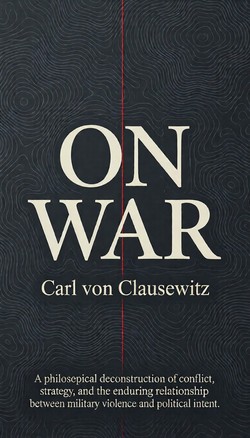
Carl von Clausewitz’s *On War* is a foundational military treatise that redefines conflict through rigorous analysis of its core nature, strategic logic, and the inseparable link between politics and warfare. At its heart lies the iconic assertion: “War is merely the continuation of politics by other means.” Clausewitz dissects war as a dynamic clash of opposing forces, balancing its inherent violent extremes with real-world constraints like human fallibility, shifting political goals, and the “fog of war”—uncertainty, incomplete intelligence, and unforeseen obstacles. He explores critical concepts: combat as war’s irreplaceable core means, the decisive role of spiritual factors (military morale, leadership genius, national will) alongside material strength, and the paradox that defense is a more effective form of warfare than offense. Rejecting rigid dogma, the work advocates for flexible, practice-focused war theory to guide commanders through chaos. Timeless and rigorous, *On War* remains essential for strategists, policymakers, and anyone seeking to grasp conflict’s underlying logic.

Ludwig Wittgenstein summary and key insights by Ray Monk
Loading…

Ludwig Wittgenstein

Ray Monk

4.21060 learners

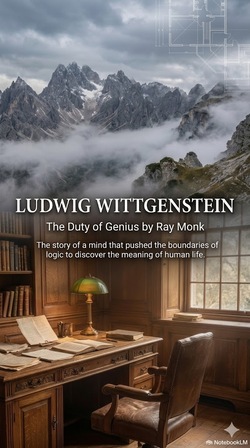
Ray Monk’s definitive biography traces Ludwig Wittgenstein’s extraordinary life—from his privileged yet tormented Viennese childhood, marked by family tragedy and a lifelong obsession with moral truth, to his ascent as one of the 20th century’s greatest philosophers. We follow his journey from engineering student to Bertrand Russell’s protégé at Cambridge, the creation of his groundbreaking *Tractatus Logico-Philosophicus* amid WWI trenches, his post-war rejection of vast wealth to teach rural Austrian children, and his dramatic late-career shift to the pragmatic, language-centered philosophy of *Philosophical Investigations*. Monk vividly captures Wittgenstein’s volatile spirit: his relentless self-scrutiny, religious awakening, struggles with loneliness and identity, and uncompromising commitment to resolving the deepest philosophical puzzles. This biography isn’t just a chronicle of ideas—it’s a portrait of a man whose life and thought were inextricably woven, driven by a desperate quest to live honestly and make sense of the world.

The Story of Philosophy summary and key insights by Will Durant
Loading…

The Story of Philosophy

Will Durant

4.4974 learners

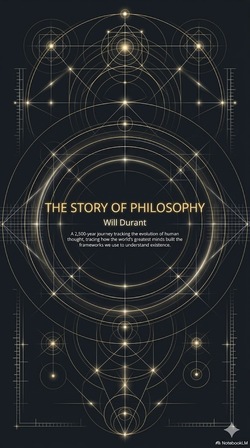
Will Durant’s *The Story of Philosophy* reimagines Western thought as a living, relatable journey, ditching dry jargon to pair each philosopher’s core ideas with their life story and historical context. From ancient Athens, where Socrates challenged Athenian norms and laid the groundwork for ethical inquiry, to the Enlightenment’s fight for reason and freedom, and modern thinkers like Nietzsche and Dewey who redefined human purpose, Durant frames philosophy as a dialogue about life’s most urgent questions: What is justice? How do we find happiness? What does freedom truly mean? He distinguishes science’s focus on facts from philosophy’s pursuit of wisdom, showing how thinkers like Plato, Aristotle, and Spinoza shaped our understanding of ethics, politics, and human nature. More than a textbook, this book invites readers to see philosophy as a practical tool for navigating life’s chaos, linking timeless ideas to modern-day challenges.

A Short History of Chinese Philosophy summary and key insights by Fung Yu-lan
Loading…

A Short History of Chinese Philosophy

Fung Yu-lan

4.31027 learners

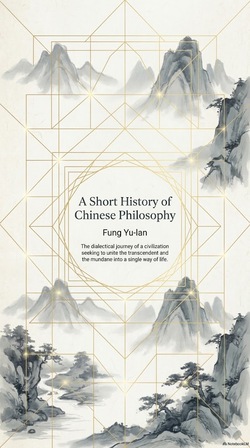
A classic introduction to Chinese philosophy for Western readers, Fung Yu-lan’s *A Short History of Chinese Philosophy* traces the evolution of Chinese thought from the pre-Qin Hundred Schools of Thought to modern Neo-Confucianism. Unlike Western traditions where religion dominates spiritual life, Chinese philosophy has long served as the core of cultural and moral education, emphasizing the harmony between inner transcendence and worldly engagement—epitomized by the ideal of 'Inner Sage, Outer King.' The book unpacks key schools: Confucianism’s focus on social ethics and benevolence, Taoism’s embrace of natural harmony and wu wei, Buddhism’s Chinese transformation into Zen, and Legalism’s pragmatic statecraft. It also explores how China’s agrarian roots shaped its philosophical methodologies, contrasting them with Western deductive reasoning, and highlights timeless insights that offer solutions to modern struggles with balancing personal fulfillment and social responsibility.

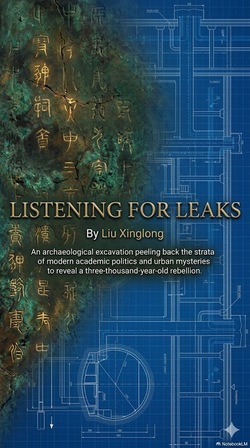
Listening to Leaks summary and key insights by Liu Xinglong
Loading…

Listening to Leaks

Liu Xinglong

3.41125 learners

Follow Ma Yuezhi, a seasoned archaeologist at Chu Academy who’s spent decades avoiding bronze research after a tragic past. When an oracle bone warning about subway leaks lands on his desk, he’s pulled back into a web of secrets: the sudden retirement of his mentor Zeng Benzhi amid a tomb looting scandal, a mysterious leak listener named Zeng Tingchang who communicates through ancient scripts, and a bronze square pot that unlocks both archaeological puzzles and long-buried family truths. As Ma navigates office politics, rivalries with ambitious colleagues like Zheng Xiong, and clues linking artifacts to hidden identities—including a shocking twist about his own forgotten children—he uncovers how small leaks of information, artifacts, and memories can unravel decades-old mysteries tied to the ancient Chu state. Blending archaeological detail with gripping human drama, this story explores the line between history and secrecy, and how the past always finds a way to surface.

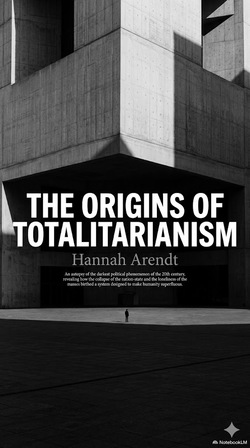
The Origins of Totalitarianism summary and key insights by Hannah Arendt
Loading…

The Origins of Totalitarianism

Hannah Arendt

4.3918 learners

Hannah Arendt’s *The Origins of Totalitarianism* is a seminal examination of the forces that spawned 20th-century’s most brutal authoritarian regimes. Challenging widespread myths, Arendt argues modern anti-Semitism wasn’t an extreme offshoot of nationalism—it flourished as European nation-states declined, targeting Jews who retained wealth but lacked political power. She traces how 19th-century imperialism, driven by unbridled capitalist expansion and racial pseudoscience, eroded national boundaries, merged mob violence with elite ambition, and laid the ideological groundwork for totalitarian movements. Arendt dissects the psychology of atomized masses, stripped of class and social ties, who craved collective identity and were vulnerable to authoritarian appeals. She exposes the unique horror of totalitarian rule: unlike traditional tyranny, it uses terror not just to suppress opponents but to erase individual autonomy, exemplified by concentration camps designed to reduce humans to "superfluous beings." A searing critique of human rights’ fragility without national belonging, this work remains essential for understanding authoritarianism’s enduring threats.

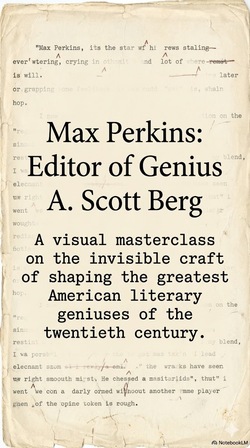
Max Perkins summary and key insights by A. Scott Berg
Loading…

Max Perkins

A. Scott Berg

4.6569 learners

A. Scott Berg’s *Max Perkins* chronicles the extraordinary life of the quiet, visionary editor who redefined 20th-century American literature from his desk at Scribner’s Publishing. For over three decades, Perkins discovered and nurtured some of America’s greatest literary icons—from F. Scott Fitzgerald, whose *This Side of Paradise* he fought to publish, to Ernest Hemingway, whose raw, concise prose he championed, and Thomas Wolfe, whose sprawling manuscripts he shaped into timeless classics. Living by the mantra that editors are “servants of the author,” Perkins prioritized writers’ unique voices over commercial pressures, acting as confidant, financial lifeline, and creative compass through their personal crises and creative blocks. This biography also delves into Perkins’ dual heritage, his quiet resilience, and his lasting impact on defining the Lost Generation, cementing his legacy as the most revered editor in publishing history.

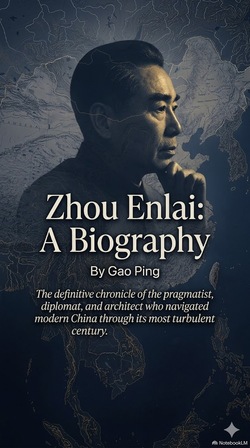
Biography of Zhou Enlai summary and key insights by Gao Ping
Loading…

Biography of Zhou Enlai

Gao Ping

4.3506 learners

This comprehensive biography chronicles Zhou Enlai’s remarkable journey from a patriotic youth in turn-of-the-century China to the revered Premier who guided the nation through decades of upheaval and progress. Raised amid national crisis, Zhou embraced Marxism during the 1919 May Fourth Movement, helped found the Chinese Communist Party (CCP), and led pivotal revolutionary efforts—from organizing the 1927 Nanchang Uprising to negotiating united front alliances against Japanese invaders. As China’s first Premier (1949–1976), he stabilized the post-war economy, spearheaded the nuclear program to secure national defense, and elevated China’s global standing through landmark diplomacy at the Geneva and Bandung Conferences, where he championed the Peaceful Coexistence Principles. Even during the chaotic Cultural Revolution, Zhou courageously protected fellow leaders, maintained state functions, and laid groundwork for future reforms. His life embodies unwavering dedication to China’s independence, unity, and modernization, making this biography a definitive account of one of the 20th century’s most influential statesmen.

Urban and Rural China summary and key insights by Qiren Zhou
Loading…

Urban and Rural China

Qiren Zhou

3.5598 learners

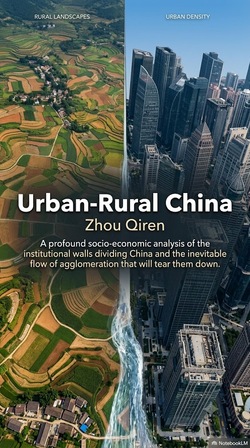
Zhou Qirun’s *Urban-Rural China* delivers a rigorous, accessible exploration of the historical, systemic, and economic forces shaping China’s urban-rural divide. Starting with a comparative analysis of global urbanization drivers—using Tokyo and Seoul as benchmarks—it unpacks why China’s industrialization outpaced its urbanization, fueled by mid-20th century policies restricting rural migration. The book traces the evolution of migration rights, from the 1954 Constitution’s initial recognition of free movement to the 1958 hukou system that entrenched a rigid, hereditary urban-rural hierarchy. It further examines the lopsided "land urbanization" phenomenon, where city expansion outpaces rural-to-urban population integration, rooted in state-controlled land ownership and compulsory land acquisition. Through on-the-ground case studies of Chengdu’s "empowerment through property rights" reform, Chongqing’s innovative land ticket system, and Shenzhen’s urban renewal efforts, Zhou illustrates grassroots and policy-driven solutions. He also debunks common misconceptions about land supply, property rights, and urban governance, arguing that balanced, sustainable development hinges on market-oriented land reform and restoring equitable property rights for rural residents.

Great and Small in History summary and key insights by Ma Boyong
Loading…

Great and Small in History

Ma Boyong

3.1530 learners

From helping his son memorize ancient Chinese texts and uncovering the tender, paternal side of Zhuge Liang, to tracing the rollercoaster career of ghost-story legend Pu Songling, to highlighting forgotten heroes like Xu Yihou—an ordinary merchant who secretly changed the course of a war—*Great and Small in History* by Ma Boyong turns dry historical facts into relatable, engaging tales. Blending personal anecdotes, on-site explorations, and deep dives into quirky historical details (think ancient book piracy, imperial abdication persuasion tactics, and even famous literati’s toothache woes), this collection proves history isn’t just about emperors and battles. It’s the small, human moments—the frustrated bricklayer’s graffiti, the nervous exam-taker’s bold essay, the homesick merchant’s secret intelligence—that truly reveal the past. Perfect for casual history buffs and anyone who loves seeing history through a modern, everyday lens.

Cosmologies and the Modern World summary and key insights by Alan Macfarlane
Loading…

Cosmologies and the Modern World

Alan Macfarlane

3.11107 learners

Based on Alan Macfarlane’s 1982 Cambridge University lecture notes (updated with 30 years of new insights), *Cosmologies and the Modern World* traces 500 years of paradigm shifts in Western social science. It unpacks how changing worldviews—from cyclical time in pre-1700 Europe to Enlightenment progress, 19th-century evolutionary theory, mid-20th-century structuralism, and today’s global rebalancing—shaped disciplines like anthropology, sociology, and history. Drawing on thinkers like Thomas Kuhn, Michel Foucault, and Franz Boas, the book links time perception to technological change, political power, and colonial bias, critiquing the imperial arrogance embedded in 19th-century evolutionary frameworks. It also addresses 21st-century disruptions: AI’s rise, renewable energy innovations, and the shifting East-West power dynamic, offering a nuanced look at how intellectual paradigms reflect and drive global societal change.

Why Nations Fail summary and key insights by Daron Acemoglu;James A. Robinson
Loading…

Why Nations Fail

Daron Acemoglu;James A. Robinson

4.6996 learners

Why Nations Fail dismantles pervasive myths about global inequality—from geographic determinism to cultural stereotypes—and argues that the root of national prosperity or poverty lies in institutional systems. Using vivid case studies, from the divided border city of Nogales (where U.S. inclusive systems drive wealth while Mexican extractive ones trap poverty) to the rise and fall of Venice, the book contrasts two core models: inclusive systems, which distribute power broadly, protect property rights, and encourage innovation, and extractive systems, which concentrate power in elite hands, exploit the majority, and stifle progress. It explores how historical path dependence amplifies small initial institutional differences over time, creating self-reinforcing cycles of prosperity or stagnation, and shows that breaking extractive cycles requires grassroots empowerment and institutional reform, not top-down fixes or foreign aid.

Autumn Courtyard summary and key insights by Yang Benfen
Loading…

Autumn Courtyard

Yang Benfen

3.21001 learners

Set against the sweeping chaos of 20th-century China, *Autumn Courtyard* tells the intimate, unflinching story of Qiuyuan, a young girl from a well-to-do pharmacy family in Luoyang who grows into a woman forged by hardship. From the agony of foot-binding and arranged marriage, to fleeing war-torn Nanjing for rural Hunan, to surviving famine, political persecution, and the loss of beloved children, Qiuyuan’s life is a testament to quiet, unbreakable resilience. She navigates displacement, poverty, and societal judgment, clinging fiercely to the hope of keeping her family alive and giving her kids a shot at education. Through her eyes, we witness the untold struggles of ordinary people caught in history’s tide—small acts of kindness, quiet defiance, and unshakable love that sustain them through the darkest times. This isn’t just one woman’s story; it’s a raw, heartfelt portrait of a generation’s fight to hold on to humanity amid overwhelming adversity.

The Unwinding summary and key insights by George Packer
Loading…

The Unwinding

George Packer

4.6635 learners

George Packer’s *The Unwinding* traces America’s slow, quiet collapse from the late 1970s to the early 2010s, weaving intimate stories of ordinary people and power players to expose the fraying of the nation’s social fabric, economic systems, and political norms. Through figures like Dean Price, a North Carolina farmer turned biofuel entrepreneur fighting to revive his rural community; Tammy Thomas, a laid-off Rust Belt factory worker who becomes a grassroots organizer; Newt Gingrich, the polarizing politician who reshaped Washington’s partisan landscape; and Peter Thiel, the Silicon Valley visionary who both profited from and criticized the tech boom, Packer reveals how old institutions crumbled, inequality exploded, and the American promise slipped out of reach for millions. The book doesn’t just document decay—it captures the gritty, hopeful efforts of individuals to rebuild, offering a raw, human portrait of a nation in transition.

Voices from Chernobyl summary and key insights by Svetlana Alexievich
Loading…

Voices from Chernobyl

Svetlana Alexievich

4.31188 learners

In Svetlana Alexievich’s Pulitzer Prize-winning oral history *Voices from Chernobyl*, the world’s worst nuclear disaster isn’t just a statistic—it’s a collection of raw, unfiltered stories from those who lived through it. Drawing on hundreds of interviews with cleanup workers, displaced residents, grieving parents, scientists, and Soviet officials, Alexievich gives voice to the forgotten victims. Readers hear of elderly villagers sneaking back to their radioactive homes, soldiers forced to clean the reactor without proper protection, parents burying children born with severe birth defects, and officials covering up the disaster’s true scale to avoid panic. These stories don’t just detail the physical toll of radiation; they lay bare the psychological scars, the betrayal of government lies, and the quiet resilience of people clinging to their roots, their memories, and their humanity. More than a historical account, this book is a haunting reminder of the cost of hubris and the enduring power of human storytelling.

Red Star Over China summary and key insights by Edgar Snow
Loading…

Red Star Over China

Edgar Snow

4.4998 learners

In 1936, American journalist Edgar Snow broke through a 9-year news blockade to become the first Western reporter to enter China’s forbidden Red Areas. His firsthand account, *Red Star Over China*, shatters the propaganda and misinformation surrounding the Chinese Red Army, Communist leaders, and the fledgling Soviet movement. Snow reveals the human side of figures like Mao Zedong and Zhu De—ordinary yet extraordinary men driven by a vision of national liberation and land reform. He documents the harrowing yet triumphant Long March, the daily lives of Red soldiers and villagers, and the rise of the Anti-Japanese United Front. More than a war report, this book is a groundbreaking exploration of a revolution in action, offering a rare, unfiltered look at a movement that would reshape China’s destiny. It remains a foundational text for understanding 20th-century Chinese history and the roots of modern China.

Biography of Ren Zhengfei summary and key insights by Sun Like
Loading…

Biography of Ren Zhengfei

Sun Like

3.41149 learners

This biography takes readers on an unfiltered journey through Ren Zhengfei’s extraordinary life and the rise of Huawei, from his humble, hunger-stricken childhood in rural China to building a global tech giant. It traces Ren’s formative years—his family’s sacrifice during the Great Famine, his political awakening amid the Cultural Revolution, and 14 years in the military that forged his resilience and disdain for honors. After a devastating business failure cost him $300k in the 1980s, Ren co-founded Huawei with just $3k, starting as a reseller before pivoting to independent R&D. The book dives into pivotal moments: the risky bet on digital switches that broke foreign monopolies, the landmark patent battle against Cisco, the adoption of IBM’s IPD and ISC systems to modernize operations, and Huawei’s global expansion via the 'rural encirclement' strategy. It also explores Ren’s paradoxical leadership—his extreme humility paired with unyielding resolve, his 'wolf culture' that drove early success, and his later shift to human-centric management. Through candid anecdotes, it reveals how Ren’s values shaped Huawei into a leader in 5G, cloud computing, and global telecommunications.