History Book Summaries & Key Insights

History Total 180 books

Washington: A Life summary and key insights by Ron Chernow
Loading…

Washington: A Life

Ron Chernow

4.1709 learners

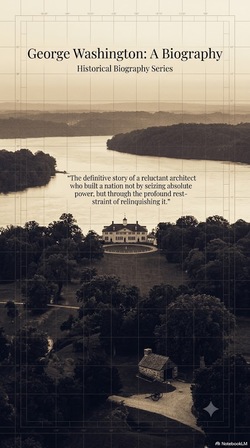
Ron Chernow’s definitive biography of George Washington pulls back the curtain on the man behind the myth, tracing his journey from a quiet Virginia planter to the founding father of the United States. Born into a prosperous colonial family, Washington’s early years shaped his discipline and resilience—from land surveying in the wilderness to brutal lessons in the French and Indian War. When the American Revolution ignited, his steady leadership transformed ragged militias into the Continental Army, turning near-defeats at Valley Forge into triumphs at Trenton and Yorktown. Beyond the battlefield, he guided the drafting of the U.S. Constitution, served two unanimous terms as the first president, and defied calls for monarchy by voluntarily stepping down, setting a precedent for democratic leadership that endures today. Chernow humanizes Washington, exploring his personal struggles, quiet courage, and unwavering commitment to building a nation rooted in liberty.
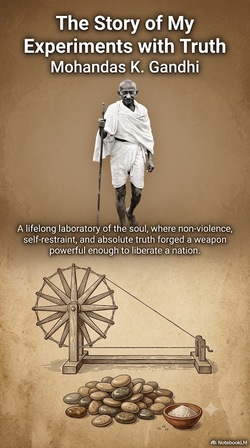
The Story of My Experiments with Truth summary and key insights by Mohandas K. Gandhi
Loading…

The Story of My Experiments with Truth

Mohandas K. Gandhi

4.2545 learners

This intimate autobiography traces Mohandas K. Gandhi’s lifelong journey of moral experimentation and unwavering pursuit of truth, from his humble, flawed childhood in Porbandar to his emergence as a global leader of nonviolent resistance. Gandhi candidly recounts his early mistakes—secret meat-eating, theft, youthful marital jealousy—alongside formative moments that shaped his core beliefs: his vow of vegetarianism, encounters with texts like the Bhagavad Gita and the Sermon on the Mount, and racial injustices in South Africa that sparked his development of Satyagraha (truth force). The book details his decades organizing for Indian diaspora rights in South Africa, his return to India to lead grassroots anti-colonial movements, and his radical commitment to simplicity, celibacy, and self-purification. More than a memoir, it’s a raw, reflective record of one man’s relentless effort to align his life with his principles, offering timeless insights into nonviolence, justice, and moral courage.

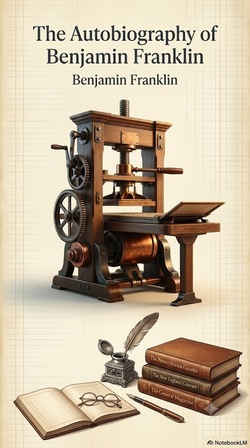
The Autobiography of Benjamin Franklin summary and key insights by Benjamin Franklin
Loading…

The Autobiography of Benjamin Franklin

Benjamin Franklin

4.71074 learners

Benjamin Franklin’s autobiography is a candid, vivid account of his rise from a poor Boston candle-maker’s son to one of America’s most revered founding fathers. Written for his son, it traces his journey as a runaway printing apprentice, his formative years in London, and his eventual success as a Philadelphia publisher, inventor, and civic leader. Franklin shares his rigorous self-improvement strategies—most notably his thirteen-virtue plan—and reflects on the values of hard work, humility, and integrity that shaped his life. He also details his groundbreaking scientific experiments (including the kite experiment proving lightning is electricity), his efforts to build public institutions like libraries and hospitals, and his early political work advocating for colonial unity. More than a personal memoir, it’s a timeless guide to self-made success and a firsthand look at colonial America’s formative years, offering enduring lessons for anyone striving to grow and contribute to their community.

Van Gogh: The Life summary and key insights by Steven Naifeh;Gregory White Smith
Loading…

Van Gogh: The Life

Steven Naifeh;Gregory White Smith

3.91161 learners

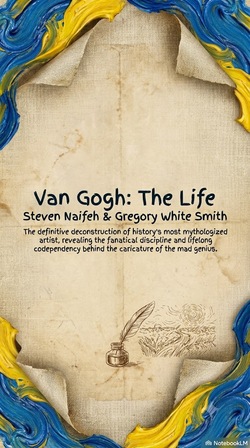
"Van Gogh: The Life" delivers an unflinching, deeply researched portrait of Vincent van Gogh’s turbulent journey from a lonely, misunderstood Dutch child to the post-impressionist genius whose works now captivate the world. Drawing on extensive letters and firsthand accounts, authors Steven Naifeh and Gregory White Smith trace his fraught relationships—especially with his overbearing mother, strict father, and loyal yet conflicted brother Theo—his brief, intense religious fervor, and his gradual, obsessive embrace of art. The book delves into his struggles with mental illness, social isolation, and repeated rejection by the art establishment, from his dark early peasant portraits to the vibrant, explosive colors of his southern French works. It reveals how every heartbreak, manic episode, and quiet moment of inspiration shaped his iconic canvases, painting a vivid picture of a man who turned pain into timeless beauty, even as the world failed to recognize his talent in his lifetime.

Biography of Zeng Guofan summary and key insights by Zhang Hongjie
Loading…

Biography of Zeng Guofan

Zhang Hongjie

4.8896 learners

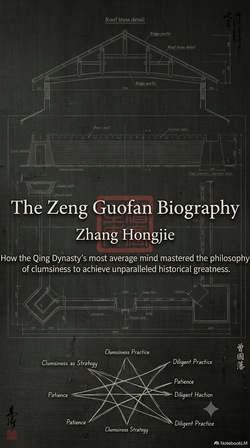
This biography traces the extraordinary life of Zeng Guofan, a late Qing Dynasty statesman who rose from a humble rural family to become one of China’s most revered historical figures. Starting with his grueling journey through imperial examinations—failing seven times before finally securing a position in the capital—Zeng’s story is defined by relentless self-improvement. He transformed his unruly habits through rigorous daily reflection and discipline, ascending rapidly in the imperial bureaucracy before facing political setbacks that pushed him to build the formidable Hunan Army. Leading this force, he crushed the Taiping Rebellion, saving the Qing Dynasty from collapse, yet strategically retreated from power to avoid imperial suspicion. Later, he pioneered China’s early Westernization efforts, founding military factories and launching the first student exchange program to the U.S. His life embodies the clash of traditional Confucian values and modernizing forces, offering timeless lessons on resilience, leadership, and navigating unprecedented change.

Franz Kafka: A Biography summary and key insights by Max Brod
Loading…

Franz Kafka: A Biography

Max Brod

4.6879 learners

Written by Max Brod, Kafka’s closest lifelong friend, *Franz Kafka: A Biography* shatters the myth of the reclusive, despairing genius to reveal the real man behind the iconic works. Drawing on intimate conversations, unpublished letters, and firsthand observations, Brod traces Kafka’s life from his Prague childhood dominated by his tyrannical father—whose shadow shaped *The Metamorphosis* and *The Trial*—to his struggles with unfulfilled love, soul-crushing office work, and debilitating illness. He highlights Kafka’s hidden warmth, dry humor, and relentless dedication to writing as a form of prayer, while exploring how his Jewish identity, friendships, and fleeting moments of happiness (like his late-life relationship with Dora Diamant) fueled his unparalleled literary vision. This biography offers an unfiltered look at the man who turned personal anguish into universal tales of alienation and hope.

The Last Twenty Years of Chen Yinke summary and key insights by Lu Jiandong
Loading…

The Last Twenty Years of Chen Yinke

Lu Jiandong

4.51140 learners

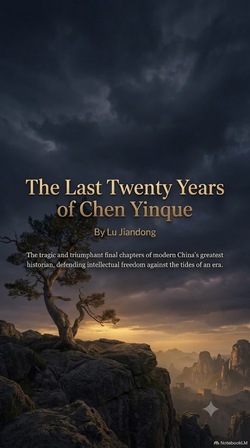
This book chronicles the final twenty years (1949–1969) of Chen Yinke, one of 20th-century China’s preeminent historians, as he navigates profound political upheaval in Lingnan (Guangzhou). After rejecting offers to relocate to Taiwan, Chen was warmly welcomed by Lingnan University president Chen Xujing, who shielded him from early political pressures and enabled his academic work. Though facing declining student interest, ideological campaigns, and repeated attempts to co-opt his scholarship, Chen unwaveringly defended his core creed: "independent spirit, free thought." He refused a top position at the Chinese Academy of Sciences rather than compromise his academic autonomy, and produced landmark works like *On Regeneration* and *Liu Rushi Biography*—pieces blending rigorous textual research with personal lament for fading traditional culture. The book traces his struggles through purges, the Cultural Revolution, and physical decline, highlighting his unyielding commitment to intellectual integrity as a symbol of cultural resilience amid chaos.

Einstein: His Life and Universe summary and key insights by Walter Isaacson
Loading…

Einstein: His Life and Universe

Walter Isaacson

4.71139 learners

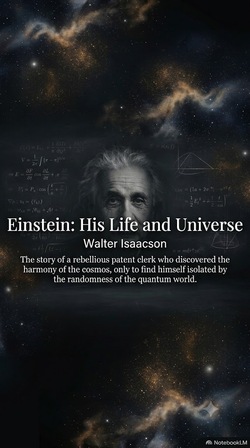
Walter Isaacson’s *Einstein: His Life and Universe* delivers a rich, humanizing portrait of history’s most iconic scientist, weaving groundbreaking physics with the messy, relatable story behind the genius. From his curious childhood—captivated by a compass and Mozart’s violin—to his 1905 “miracle year,” where four papers redefined quantum theory, atomic science, and relativity, Isaacson traces Einstein’s relentless pursuit of cosmic truth. The book explores his turbulent personal life: his marriages to Mileva Marić and Elsa Einstein, complicated relationships with his children, and struggles with global fame. It also delves into his bold political stances—opposing Nazism, advocating for a world government to prevent nuclear war, and fighting for racial equality. Readers witness his fiery debates with Bohr over quantum mechanics, lifelong quest for a unified field theory, and quiet acceptance of death while still scribbling equations. This biography humanizes the icon, showing how his rebellious spirit, childlike curiosity, and unwavering faith in the universe’s order drove his revolutionary discoveries.

The Life and Times of Su Tungpo summary and key insights by Lin Yutang
Loading…

The Life and Times of Su Tungpo

Lin Yutang

4.61098 learners

Lin Yutang’s *The Life and Times of Su Tungpo* delivers a vivid, heartfelt portrait of one of China’s most cherished literary and cultural icons. Set in the Northern Song Dynasty, this biography traces Su’s extraordinary journey: from a prodigious young scholar who excelled in imperial exams to a fearless official who dared oppose Wang Anshi’s controversial New Policies, enduring repeated exiles to remote, harsh regions like Huangzhou, Huizhou, and Hainan. Beyond his unmatched genius in poetry, ci lyrics, prose, calligraphy, and painting, Su was a compassionate leader who built flood defenses, established public hospitals, and saved abandoned infants. Even in dire hardship, his irrepressible humor, love for nature, and fusion of Confucian, Buddhist, and Taoist ideals turned adversity into inspiration, producing timeless masterpieces like the *Red Cliff Rhapsodies*. Lin captures Su’s essence: a man of unwavering integrity who found joy in simplicity and left an indelible mark on Chinese culture.

News of the Empire summary and key insights by Fernando del Paso
Loading…

News of the Empire

Fernando del Paso

4.81304 learners

Locked away in Belgium’s Bouchout Castle for 60 years, Empress Carlota of Mexico clings to the ghost of her husband, Emperor Maximilian I, and the fleeting empire they built. In *News of the Empire*, Fernando del Paso weaves Carlota’s fragmented, mad recollections with the brutal reality of Mexico’s short-lived Second Empire. Born from Napoleon III’s imperial ambitions—taking advantage of the U.S. Civil War to install a European puppet—Maximilian, a Habsburg archduke, is lured by dreams of building a progressive New World monarchy. But their reign collapses as French troops withdraw, Mexican republicans led by Benito Juárez fight back, and betrayal eats away at the empire’s core. Maximilian’s execution in 1867 pushes Carlota into irreversible madness, her life a tragic testament to the cost of colonial meddling, idealism crushed by geopolitics, and love enduring beyond empire and sanity. This sweeping narrative bridges European court intrigue and Mexican national struggle, revealing the human toll of a forgotten chapter in hemispheric history.

Embers summary and key insights by Sandor Marai
Loading…

Embers

Sandor Marai

4.1648 learners

For forty-one years, an aging Hungarian general has waited in his remote countryside estate for Conrad, his oldest and only true friend. When Conrad finally arrives at dusk, the two men spend a long, tense night confronting the secrets that tore them apart decades earlier: a 1899 hunting trip where Conrad aimed his rifle at the general, the mysterious disappearance of their shared love Kristina, and the quiet betrayal that shattered their unbreakable bond. As they sip vintage wine and revisit memories of the vanished Austro-Hungarian Empire, they grapple with the weight of loyalty, the nature of male friendship, and the guilt of outliving the world—and the woman—they once cherished. By dawn, the old wounds begin to heal, not with clear answers, but with a quiet acceptance that some secrets are better left to the embers of the past.

Two Thousand Years summary and key insights by Hu Sheng
Loading…

Two Thousand Years

Hu Sheng

4608 learners

Breaking free from traditional dynastic chronologies, *Two Thousand Years* offers a panoramic, cross-dynastic analysis of over 2,000 years of Chinese feudal autocracy. By focusing on core institutional and social dynamics rather than isolated events, the book unpacks the evolution of imperial power—from Qin Shi Huang’s centralized authority to the extreme autocracy of the Ming and Qing dynasties. It delves into the symbiotic yet contradictory relationship between the monarchy and the bureaucratic system, the transformation of military institutions from aristocratic privilege to professional armies, and the harsh realities of peasant life tied to land and exploited by both the state and landlords. The work also examines recurring peasant uprisings, their role in challenging dynasties, and their ultimate failure to break the feudal cycle, alongside complex, often violent interactions between Han Chinese and northern nomadic groups. Ultimately, it reveals the inherent contradictions of feudal rule that led to its inevitable collapse, providing readers with a deep understanding of China’s historical continuity and complexity.

From the Opium War to the May Fourth Movement summary and key insights by Hu Sheng
Loading…

From the Opium War to the May Fourth Movement

Hu Sheng

4.21195 learners

This sweeping narrative traces China’s turbulent transformation from a stagnant feudal empire to a nation grappling with semi-colonial rule, spanning from the 1840 Opium War to the 1919 May Fourth Movement. Hu Sheng dissects pivotal events: the Opium War that shattered imperial isolation, the Taiping Rebellion’s radical peasant uprising, the Self-Strengthening Movement’s failed efforts to modernize without systemic change, the First Sino-Japanese War’s devastating defeat that fueled partition fears, the short-lived Hundred Days’ Reform, the Boxer Rebellion’s violent anti-foreign backlash, and the Xinhai Revolution that toppled the Qing Dynasty. Culminating in the May Fourth Movement—where workers, students, and intellectuals united to demand national sovereignty and cultural renewal—the book illuminates how each crisis pushed China closer to awakening, laying the groundwork for the country’s revolutionary turn toward communism. It offers a rigorous, accessible account of how external aggression and internal upheaval reshaped China’s identity and set the stage for 20th-century revolution.

Midnight in Chernobyl summary and key insights by Adam Higginbotham
Loading…

Midnight in Chernobyl

Adam Higginbotham

4.31200 learners

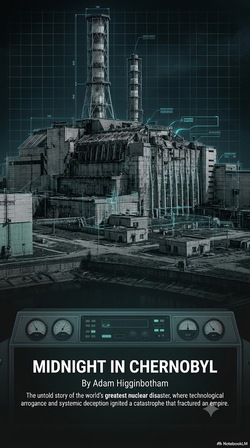
Adam Higginbothan’s *Midnight in Chernobyl* delivers a gripping, meticulously researched account of the world’s worst nuclear disaster. It traces the Soviet Union’s reckless rush to build the Chernobyl plant as a symbol of its technological dominance, exposing the fatal design flaws in the RBMK reactor that were ignored for political expediency. From the fateful test on April 26, 1986, that triggered the explosion to the chaotic initial response, the book follows brave firefighters, trapped engineers, and selfless liquidators who risked their lives to contain the crisis. Higginbothan also unpacks the systemic cover-ups that delayed evacuations, the long-term health toll on survivors, and the disaster’s role in eroding public trust in the Soviet regime. More than a technical report, it’s a haunting narrative of human fallibility, resilience, and the permanent shift in global nuclear safety standards that followed the catastrophe.

Jerusalem: The Biography summary and key insights by Simon Sebag Montefiore
Loading…

Jerusalem: The Biography

Simon Sebag Montefiore

4.41147 learners

Spanning over 7,000 years of human history, Simon Sebag Montefiore’s *Jerusalem: The Biography* unfolds the epic, turbulent story of a city that has been the spiritual heartbeat of Judaism, Christianity, and Islam. From its earliest Neolithic settlements and King David’s conquest that made it Israel’s capital, to the rise and fall of Solomon’s Temple, Constantine’s Christian transformation, and the Umayyad Islamic golden age, every chapter brims with tales of conquest, faith, and power struggles. The book traces Jerusalem’s journey through Crusader rule, Ottoman grandeur, the Zionist movement, and modern division and reunification. Montefiore brings iconic figures—Saladin, Richard the Lionheart, David Ben-Gurion—and everyday residents to life, revealing how this city’s sacredness has fueled both unbreakable devotion and brutal conflict, making it a microcosm of humanity’s greatest aspirations and deepest divides.

Peasant Life in China summary and key insights by Fei Xiaotong
Loading…

Peasant Life in China

Fei Xiaotong

4.5853 learners

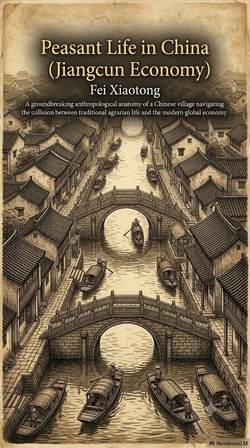
Based on immersive firsthand fieldwork in Kaihsienkung, a tight-knit village on China’s Taihu Lake, *Peasant Life in China* by Fei Xiaotong delivers a vivid, unfiltered portrait of rural Chinese life in the 1930s. More than just a snapshot, this seminal work unpacks the village’s economic backbone—centered on rice farming and the once-thriving silk industry, which collapsed amid global economic depression and outdated production methods. It dives into intricate social structures shaping daily life: extended family dynamics, arranged marriages, patrilineal inheritance, and tight bonds of kinship and neighborhood. Fei also examines tensions between tradition and modernity, from mismatched school reforms to the cooperative silk mill experiment aimed at reviving the local economy. By focusing on one small community, he fills a critical gap in macro-level studies of China’s economy, offering tangible insights into rural poverty, land tenure issues, and the fragile link between villages and urban centers. This classic remains essential for understanding the roots of China’s rural challenges and the quiet resilience of its peasant population.

The Wager summary and key insights by David Grann
Loading…

The Wager

David Grann

4.2692 learners

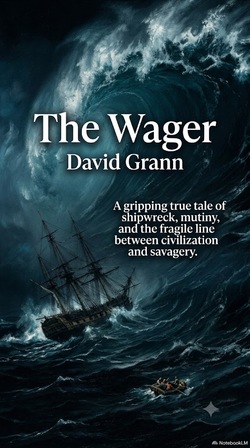
Set against the brutal backdrop of the 1740s War of Jenkins’ Ear, *The Wager* tells the harrowing true story of British naval officer David Cheap and his crew aboard the repurposed merchant ship HMS Wager. Tasked with joining Commodore George Anson’s fleet to seize Spanish treasure galleons, the Wager faces catastrophic delays, disease, and the unforgiving fury of Cape Horn—ultimately wrecking on a desolate Patagonian island. Stranded with dwindling supplies, the survivors descend into chaos: hunger, mutiny, and a violent power struggle between Cheap, who clings to his military mission, and gunner John Bulkeley, who pushes for escape. Split into factions, the crew takes separate paths to survival, only to return to Britain years later to face a shocking cover-up. David Grann masterfully unravels the layers of betrayal, resilience, and the British Empire’s desperate effort to erase the messy truths of its colonial ambitions.

History of China: The An Shi Rebellion summary and key insights by Yi Zhongtian
Loading…

History of China: The An Shi Rebellion

Yi Zhongtian

3.61151 learners

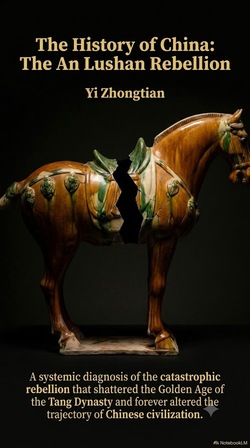
Yi Zhongtian’s *History of China: The An Shi Rebellion* offers a gripping narrative of the Tang Dynasty’s rise, peak, and catastrophic collapse. Starting with Emperor Xuanzong’s ambitious early reign—where shrewd chancellors Yao Chong and Song Jing built the prosperous Kaiyuan Era—the book traces how imperial complacency, corrupt officials like Li Linfu and Yang Guozhong, and the rise of warlord An Lushan sparked the devastating An Shi Rebellion. Beyond the conflict, it explores the Tang’s chaotic final decades: eunuch control of the military, regional warlords (fanzhen) defying central authority, and bitter court factionalism. Woven into the political drama are insights into Tang poetry, showing Li Bai’s bold verses mirrored the dynasty’s glory, while Du Fu’s somber works reflected its unraveling. This book reveals how a once-mighty empire fell apart, offering a vivid look at power, corruption, and cultural transformation in ancient China.

Emotions and Institutions summary and key insights by Zheng Yaru
Loading…

Emotions and Institutions

Zheng Yaru

3.61024 learners

Focused on the Wei-Jin period (220–420 CE) of medieval China, *Emotions and Institutions* explores the tense interplay between patriarchal norms and real-life mother-child bonds. Drawing on historical records, ritual texts, and case studies—most notably the tragic story of Yu Shi, a childless wife who fought to keep her adopted son—the book examines how patriarchal systems (from mourning rituals to lineage rules) defined and constrained maternal roles, while also highlighting how maternal love, nurture, and filial piety pushed back against these rigid structures. Inspired by anthropologist Margery Wolf’s 'uterine family' concept and Adrienne Rich’s distinction between institutionalized motherhood and lived maternal experience, this work fills gaps in existing scholarship by integrating both institutional and emotional dimensions. It delves into debates over mourning practices for mothers, the formation of mother-son cliques in polygamous households, and how women leveraged maternal roles to challenge patriarchal authority, offering a nuanced portrait of women’s lives and family dynamics in ancient China.

Logics of History summary and key insights by William H. Sewell Jr.
Loading…

Logics of History

William H. Sewell Jr.

4.6957 learners

In *Logics of History*, William H. Sewell Jr.—a scholar who witnessed the rise and fall of U.S. New Social History and its shift to Cultural History—calls for a rigorous theoretical dialogue between history and the social sciences. He traces how these fields split from a shared intellectual root in the late 19th century, developing distinct methods, vocabularies, and norms that now hinder meaningful collaboration. Sewell highlights history’s unique strength: a deep understanding of temporal contingency, where past actions shape irreversible, context-dependent outcomes, a perspective missing from most social science. Conversely, he notes social science’s strengths in structural thinking and grand problem-solving, while critiquing its fixation on static structures and quantitative precision. The book lays out core theoretical frameworks: event-centric temporality (replacing teleological and experimental time), a revised structure theory integrating cultural schemas and material resources, and a nuanced analysis of cultural concepts. Through case studies like the storming of the Bastille and 19th-century Marseille dockworkers, Sewell demonstrates how these theories explain dynamic social change, aiming to build a unified social theory that captures the messy, contingent nature of the world.