History Book Summaries & Key Insights

History Total 180 books

The Chrysanthemum and the Sword summary and key insights by Ruth Benedict
Loading…

The Chrysanthemum and the Sword

Ruth Benedict

4.51136 learners

During World War II, anthropologist Ruth Benedict took on a critical mission: unravel the enigma of Japanese culture to help the U.S. navigate its Pacific enemy. Barred from traveling to Japan, she relied on interviews with Japanese-Americans, analysis of Japanese films and literature, and cross-cultural comparisons to decode the nation’s seemingly contradictory traits—polite yet ruthless, traditional yet innovative, loyal yet adaptable. Benedict breaks down Japan’s core cultural pillars: the rigid hierarchy that shapes every social interaction, the complex system of 'on' (gratitude/debt) and 'giri' (obligation) governing relationships, shame-based morality dictating behavior, and unique self-cultivation practices tied to Zen Buddhism. She also explores how these norms influenced Japan’s wartime actions and made the U.S.’s post-war occupation strategy (working through existing institutions like the Emperor) surprisingly effective. This landmark work remains a go-to guide for understanding the cultural logic behind Japan’s most puzzling behaviors.

The Unwomanly Face of War summary and key insights by Svetlana Alexievich
Loading…

The Unwomanly Face of War

Svetlana Alexievich

4.41279 learners

In *The Unwomanly Face of War*, Nobel Prize-winning author Svetlana Alexievich amplifies the unheard voices of Soviet women who fought in World War II, shattering the male-centric narrative of combat. Drawing on hundreds of intimate oral interviews, she weaves together raw, unflinching stories of snipers, nurses, pilots, engineers, and logistics workers—ordinary girls torn from peaceful lives and thrust into the horrors of war. These accounts don’t focus on grand battles or military strategy; instead, they lay bare the quiet, brutal realities: a sniper’s first kill, a nurse’s guilt over a dying soldier, a pilot’s secret longing to wear a dress, and the crippling post-war trauma that haunted survivors for decades. Alexievich captures the duality of these women—both fierce warriors and tender humans—revealing how their resilience and hidden moments of humanity defied the dehumanizing machinery of war. This book is a vital testament to the millions of women whose sacrifices were erased by history, offering a deeply personal, unforgettable look at conflict’s true cost.

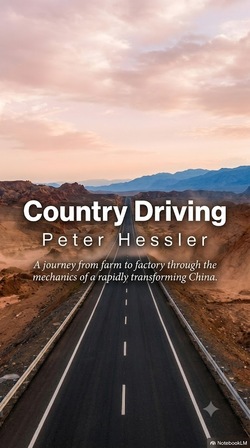
Country Driving summary and key insights by Peter Hessler
Loading…

Country Driving

Peter Hessler

4.1547 learners

Peter Hessler’s *Country Driving* takes readers on a vivid, eye-opening road trip across early 2000s China, using his newly obtained driver’s license as a key to unlock the nation’s hidden corners. Split into three interconnected parts, the book begins with a meandering journey along the Great Wall, where Hessler encounters rural villagers, crumbling historical sites, and the quiet erosion of traditional life amid desertification. Next, he dives into China’s burgeoning auto industry, shadowing Chery’s test drives and meeting young engineers eager to build a domestic car brand from scratch. Finally, he settles in Sancha Village, documenting a farmer’s transition to running a guesthouse, and later explores southern industrial zones—from bra adjuster factories to art “workshops” churning out paintings for export. Through intimate portraits of ordinary people, Hessler captures the chaos, hope, and contradictions of a country racing toward modernity, offering a nuanced alternative to Western stereotypes of China.

This Time Is Different summary and key insights by Carmen M. Reinhart;Kenneth S. Rogoff
Loading…

This Time Is Different

Carmen M. Reinhart;Kenneth S. Rogoff

4.4917 learners

This book dismantles the persistent 'This Time Is Different' myth by drawing on centuries of global financial crisis data—from 14th-century sovereign defaults to the 2008 subprime meltdown. Carmen Reinhart and Kenneth Rogoff systematically unpack recurring patterns across crises, including sovereign debt defaults, banking collapses, hyperinflation, and currency devaluations, revealing that overconfidence, excessive borrowing, and disregard for historical precedents drive every crisis. They introduce pivotal concepts like 'debt intolerance,' explaining why emerging markets face default risks at far lower debt thresholds than developed nations, and shed light on the overlooked role of domestic public debt in triggering financial meltdowns. By cross-referencing cross-country and historical case studies, the authors prove financial crises are predictable, not random, and urge policymakers and investors to prioritize historical warning signs over the illusion of 'new era' immunity.

Civilization, Modernization, Value Investment and China summary and key insights by Li Lu
Loading…

Civilization, Modernization, Value Investment and China

Li Lu

4.21206 learners

Li Lu’s *Civilization, Modernization, Value Investment and China* blends cross-disciplinary historical research, economic analysis, and hands-on investment expertise to demystify China’s rise and its place in global civilization. Drawing on Jared Diamond’s geographic determinism and Ian Morris’s Social Development Index, Lu traces 16,000 years of human progress, breaking down why the West pulled ahead after 1800 and how China is now catching up. He unpacks the Malthusian trap that constrained agricultural civilizations, the catalysts of modernization (free markets, constitutional democracy, steam power), and China’s turbulent journey from Opium Wars to reform-era growth. Shifting to investing, Lu makes a compelling case for value investing’s viability in China, using examples like BYD to show how focusing on business ownership, safety margins, and staying within one’s circle of competence delivers long-term returns. His unique perspective—shaped by 20+ years in both China and the U.S.—bridges East-West divides, offering investors and global thinkers a clear roadmap to understand China’s past, present, and future.

War and Peace summary and key insights by Leo Tolstoy
Loading…

War and Peace

Leo Tolstoy

4.21100 learners

Leo Tolstoy’s magnum opus *War and Peace* isn’t just a historical novel—it’s an immersive tapestry of 19th-century Russian life, weaving together the fates of four noble families and the sweeping tides of war over 15 years (1805–1820). Begun as a story about the Decembrists, Tolstoy expanded his vision to encompass the Napoleonic Wars, culminating in the pivotal 1812 Russian Campaign. Through vivid, realistic battle scenes—from Austerlitz to Borodino—and intimate portraits of characters like the idealistic Andrei Bolkonsky, the searching Pierre Bezukhov, and the spirited Natasha Rostov, Tolstoy challenges the myth of "great men" shaping history, arguing instead that ordinary people are the true architects of change. Blending meticulous historical research, profound psychological insight, and unflinching critiques of aristocratic decay, the novel celebrates the redemptive power of love, community, and the quiet dignity of peace amid chaos.

The Partnership summary and key insights by Charles D. Ellis
Loading…

The Partnership

Charles D. Ellis

4.4518 learners

Tracing Goldman Sachs’ century-long journey from a humble street-side bill business to Wall Street’s most dominant investment bank, *The Partnership* pulls back the curtain on the larger-than-life partners who shaped its fate. From rags-to-riches trailblazer Sidney Weinberg, who turned a janitorial assistant gig into firm leadership, to trading visionary Gus Levy, who revolutionized block trading, and crisis navigator Lloyd Blankfein, who steered the firm through the 2007 subprime meltdown, this book chronicles the firm’s triumphs and near-collapse. It unpacks how Goldman survived the 1929 stock crash, the Penn Central bankruptcy, and the LTCM crisis, while pioneering game-changing strategies like merger defense and bond proprietary trading. More than a financial history, it explores the unwritten rules of partner culture—teamwork, integrity, and relentless talent recruitment—that turned a family-run firm into a global financial powerhouse, revealing the power struggles, tough calls, and unyielding ambition that defined its rise.

Say Nothing summary and key insights by Patrick Radden Keefe
Loading…

Say Nothing

Patrick Radden Keefe

4.6540 learners

Patrick Radden Keefe’s *Say Nothing* delves into the dark heart of Northern Ireland’s Troubles through the 1972 disappearance of Jean McConville, a widowed mother of ten abducted and killed by the IRA for aiding a wounded British soldier. Weaving together intimate portraits of key figures—from radical sisters Dolours and Marian Price, who abandoned nonviolence for armed struggle, to IRA commander Brendan Hughes, whose later bitterness exposed Gerry Adams’ alleged role in McConville’s murder—the book uncovers layers of betrayal, secrecy, and moral collapse. Keefe also explores the fragile peace process, the groundbreaking Boston College oral history project that unlocked long-buried truths, and the lingering scars of conflict: unresolved justice, segregated communities, and families still searching for answers. A gripping narrative that humanizes the chaos of the Troubles, it reveals how silence and violence shaped a nation’s identity and the slow, painful fight toward reconciliation.

Has China Won? summary and key insights by Kishore Mahbubani
Loading…

Has China Won?

Kishore Mahbubani

4.3553 learners

Renowned Singaporean scholar Kishore Mahbubani’s *Has China Won?* dissects the high-stakes geopolitical rivalry between the U.S. and China, challenging pervasive Western myths while offering a nuanced look at both nations’ strategic missteps. Mahbubani argues the U.S. has already lost the first round of competition due to its lack of a coherent long-term China strategy, wasteful defense spending driven by lobbying, and domestic decay marked by soaring income inequality and money-dominated politics. He refutes claims of Chinese expansion, highlighting China’s historical non-imperialist roots and defensive military posture. The book also analyzes how key global players—Australia, Europe, Japan, India, and ASEAN—navigate their conflicting economic and security ties to both powers. Finally, Mahbubani identifies five critical areas of shared interest, from climate action to counterterrorism, urging both nations to prioritize cooperation over zero-sum confrontation to secure global stability and mutual prosperity.

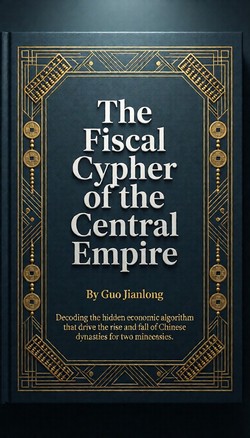
The Fiscal Code of the Central Empire summary and key insights by Guo Jianlong
Loading…

The Fiscal Code of the Central Empire

Guo Jianlong

3.11205 learners

Spanning over 2,000 years from the Qin Dynasty to the fall of the Qing, *The Fiscal Code of the Central Empire* unpacks how fiscal policies shaped the rise and collapse of China’s imperial dynasties. Guo Jianlong traces the origins of centralized finance in Qin’s aggressive unification reforms, explores failed experiments like Wang Mang’s retro fiscal overhauls, and analyzes the delicate balance between state control and economic vitality in eras like the Han, Tang, and Song. The book reveals how dynasties grappled with fiscal dilemmas: from funding wars and suppressing local elites to managing currency systems and adapting to changing economic realities. It also examines the fatal flaws of imperial finance—such as over-reliance on land taxes, state monopolies stifling private enterprise, and reckless currency printing—that eventually led to systemic collapse. Finally, it chronicles the Qing’s failed attempts at modernizing its fiscal system amid Western pressures, offering a compelling lens into how financial decisions determined the fate of one of history’s longest-lasting imperial systems.

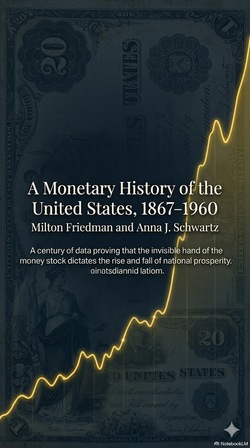
A Monetary History of the United States summary and key insights by Milton Friedman;Anna Jacobson Schwartz
Loading…

A Monetary History of the United States

Milton Friedman;Anna Jacobson Schwartz

4.51100 learners

Co-authored by Milton Friedman and Anna J. Schwartz, *A Monetary History of the United States* is a landmark work spanning 93 years of U.S. economic and financial history (1867–1960). Through rigorous empirical analysis, the book traces fluctuations in the money supply and their profound, often underrecognized, impact on pivotal events—from the paradoxical Greenback Era where deflation coincided with rapid economic growth to bitter gold-silver debates, the creation of the Federal Reserve, the catastrophic policy failures of the Great Depression, and post-WWII monetary policy evolution. Challenging conventional wisdom, Friedman and Schwartz argue that changes in the money stock are independent drivers of economic booms and busts, not just passive responses to shifts. This seminal text redefined monetary policy’s role, offering timeless insights into how monetary decisions shape national prosperity and crisis.

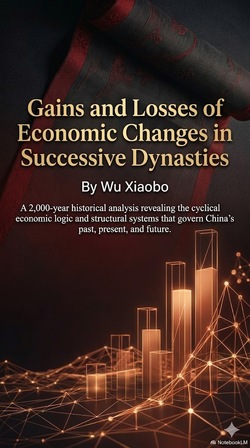
Successes and Failures of Historical Economic Reforms summary and key insights by Wu Xiaobo
Loading…

Successes and Failures of Historical Economic Reforms

Wu Xiaobo

4.21305 learners

This book traces 2,000 years of Chinese economic reforms, starting with Guan Zhong’s groundbreaking pro-commerce policies in the Spring and Autumn Period and contrasting them with Shang Yang’s state-led, agriculture-focused reforms that laid the groundwork for Qin’s unification. It unpacks the enduring cycle of Chinese economic governance: balancing growth through liberalizing private sectors and maintaining stability via centralization, exemplified by Emperor Wu of Han’s state monopolies, Wang Anshi’s controversial state-led reforms, and the stagnation of Ming-Qing isolationism. Moving to modern times, it analyzes the failures of the late Qing’s Self-Strengthening Movement, the Nationalist government’s state capitalism, and the radical experiments of planned economy, before diving into the pragmatic 'crossing the river by feeling the stones' of China’s reform and opening up. Through these case studies, it reveals the recurring tensions between state control and market freedom, offering critical lessons for understanding China’s economic trajectory and its ongoing challenges.

The Third Chimpanzee summary and key insights by Jared Diamond
Loading…

The Third Chimpanzee

Jared Diamond

4.8661 learners

Jared Diamond’s *The Third Chimpanzee* redefines humanity by framing us as the third species of chimpanzee, rooted in groundbreaking molecular biology evidence revealing our 98% genetic similarity to chimps and bonobos. Beyond our evolutionary origins, Diamond dives into the quirks of human behavior that set us apart: hidden ovulation, menopause, complex language, and art—all traced to evolutionary pressures. He also confronts the darker side of our species’ journey: the agricultural revolution’s hidden costs (health decline, inequality), Neanderthal extinction, colonial-era genocide, and the ongoing ecological crisis threatening our planet. Blending anthropology, biology, and history, this eye-opening book challenges human exceptionalism, urging readers to confront our animal roots and take responsibility for our shared ecosystem’s future.

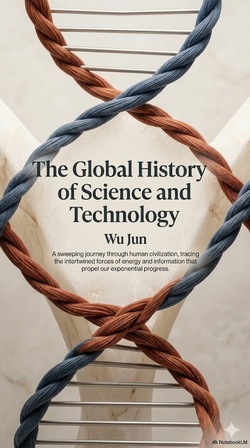
The Global History of Science and Technology summary and key insights by Jun Wu
Loading…

The Global History of Science and Technology

Jun Wu

3.41039 learners

Spanning from humanity’s first stone tools to cutting-edge gene editing and quantum communication, *The Global History of Science and Technology* traces how technological breakthroughs have shaped every era of human civilization. Starting with the 1.76-million-year-old Acheulean handaxe and controlled fire use that let early humans expand beyond Africa, it moves through agricultural revolutions, the rise of metallurgy, and the birth of systematic scientific methods in ancient Greece and the Islamic Golden Age. The book highlights pivotal moments like the Industrial Revolution’s steam engines, Einstein’s relativity, the atomic age, and the digital revolution’s computers and internet. It also explores emerging technologies—CRISPR, quantum communication, artificial photosynthesis—and their ethical implications. More than a timeline, it connects tech advancements to social shifts, from early settlement to modern globalization, showing how science has always been intertwined with human survival, progress, and ambition.

The History of Science summary and key insights by Wu Guosheng
Loading…

The History of Science

Wu Guosheng

4.4535 learners

Spanning millions of years, The History of Science chronicles humanity’s awe-inspiring journey from primitive toolmaking and celestial observations to cutting-edge quantum physics and genetic engineering. It starts with the scientific sparks in ancient civilizations—Egyptian solar calendars, Mesopotamian 60-进制 math, and China’s Four Great Inventions—then moves to the Greek rational revolution, where thinkers like Aristotle and Archimedes laid Western science’s foundational framework. The book navigates the medieval era by highlighting Arab scholars’ critical role in preserving and advancing classical knowledge, then dives into the Scientific Revolution: Copernicus’s heliocentrism, Galileo’s experimental breakthroughs, and Newton’s universal laws. It covers 19th-century milestones like Darwin’s evolution and Mendel’s genetics, 20th-century revolutions in relativity and quantum mechanics, and the rise of high-tech fields like nuclear energy, aerospace, and the internet. Finally, it explores modern debates over scientific unity and time’s role in the universe, offering a comprehensive look at how science has shaped civilizations and humanity’s understanding of the world.

The Evolution of the Chinese National Character summary and key insights by Zhang Hongjie
Loading…

The Evolution of the Chinese National Character

Zhang Hongjie

3.31332 learners

This book traces the dynamic evolution of Chinese national character across millennia, revealing it as a product shaped by politics, culture, and historical upheaval rather than an inherent trait. Starting with the noble spirit of the Spring and Autumn Period—marked by honor, courage, and dignity—it explores how the rise of autocratic systems eroded these virtues, leading to the emergence of servility, apathy, and pragmatism in later dynasties. It examines the impact of foreign conquests, such as the Mongol and Manchu rule, which further distorted societal values, and delves into the reflections of modern intellectuals like Liang Qichao, Lu Xun, and Hu Shi, who proposed competing paths to reform national character. From the open vitality of the Han and Tang dynasties to the stagnation of the late imperial era, the book illustrates how power structures, cultural norms, and historical events continuously reshaped the collective psyche of the Chinese people.

The Death of Woman Wang summary and key insights by Jonathan Spence
Loading…

The Death of Woman Wang

Jonathan Spence

4.1472 learners

Jonathan Spence’s *The Death of Woman Wang* pulls back the curtain on 17th-century rural China, using the remote Shandong county of Tancheng as a raw, intimate microcosm of chaos and resilience. Set against a relentless cycle of catastrophic earthquakes, brutal famines, warlord raids, and Qing Dynasty conquests, the book weaves together official gazettes, magistrate Huang Liuhong’s memoirs, and tales from Pu Songling’s *Strange Tales* to bring ordinary people’s struggles to life. At its core is the tragic story of Woman Wang, a young wife whose desperate elopement and eventual murder expose the suffocating constraints of gender norms, poverty, and familial violence in a society shattered by decades of crisis. Spence doesn’t just recount disasters—he explores how local officials fought to restore order, how widows clung to dignity amid systemic oppression, and how marginalized people navigated a world where survival often meant making impossible choices. This vivid narrative turns dry historical documents into a compelling portrait of human endurance, offering American readers a rare, unflinching look at a forgotten corner of early modern China.

The Silk Roads summary and key insights by Peter Frankopan
Loading…

The Silk Roads

Peter Frankopan

4.3662 learners

Spanning millennia, Peter Frankopan’s *The Silk Roads* redefines global history by shifting focus from Europe to Eurasia’s interconnected heart. Far more than a commercial network, these routes were the crucible where civilizations collided, empires rose and fell, and ideas reshaped the world. From the Persian Empire’s rise and Alexander the Great’s eastward expansion to the spread of Buddhism, Christianity, and Islam, the book traces medieval trade booms, Mongol conquests that linked continents, the Age of Exploration that shifted power westward, 19th-century British-Russian geopolitical rivalries, the oil-driven transformation of the Middle East, and Cold War proxy conflicts. It concludes with the modern revival of the Silk Roads via initiatives like China’s Belt and Road, arguing this historic crossroads remains key to understanding today’s global power dynamics and cultural shifts.

The Land of Green Plums summary and key insights by Herta Muller
Loading…

The Land of Green Plums

Herta Muller

4.2557 learners

Set against the suffocating backdrop of 1980s Romania under Nicolae Ceaușescu’s brutal totalitarian regime, *The Land of Green Plums* follows a tight-knit group of four young friends grappling with the dehumanizing weight of state surveillance, censorship, and pervasive fear. When one of their circle takes his own life to escape the regime’s relentless pressure, the remaining three are pushed to confront the cost of silence and the urgency of resistance. Through secret writing, quiet acts of defiance, and a desperate bid for freedom, they navigate a world where every word and gesture could lead to imprisonment or worse. Drawing from her own experiences as a dissident, Herta Müller weaves a raw, lyrical narrative that explores the erosion of innocence, the bonds of friendship in crisis, and the fragile persistence of humanity under oppression. The eponymous green plums serve as a haunting symbol of lost youth and the quiet longing for a life unshackled by tyranny.

The Path to Power summary and key insights by Robert A. Caro
Loading…

The Path to Power

Robert A. Caro

4.6510 learners

Robert A. Caro’s *The Path to Power* launches his definitive biography of Lyndon B. Johnson, tracing the future president’s brutal, relentless ascent from the poverty-stricken Texas Hill Country to Washington’s power corridors. From his rebellious childhood—shaped by his father’s failed political legacy and family hardship—to his awkward, ambitious college years, transformative stints as a rural teacher and congressional secretary, and first victorious bid for Congress, Caro lays bare LBJ’s all-consuming drive for power. Drawing on millions of archival documents and firsthand interviews, the book exposes his ruthless political tactics: manipulating campus elections, leveraging New Deal programs to build rural support, forging lucrative alliances with corporate giants like Brown & Root, and shifting ideological stances to align with those in power. It also unpacks contradictions in his early career—genuine efforts to lift rural Texans out of poverty paired with willingness to bend rules to climb the ladder—setting the stage for his eventual presidency.