Others Book Summaries & Key Insights

Others Total 155 books

How the Mighty Fall summary and key insights by Jim Collins
Loading…

How the Mighty Fall

Jim Collins

4.3999 learners

Jim Collins’ *How the Mighty Fall* unpacks the hidden patterns of corporate decline through rigorous analysis of 11 once-great companies—from Bank of America to Motorola—that tumbled from peak success to irrelevance or collapse. Drawing on over 6,000 years of combined corporate lifecycle data, Collins identifies five sequential (yet often overlapping) stages of decline: from the insidious arrogance that makes firms take success for granted, to blind expansion that stretches resources thin, to ignoring crisis signals amid superficial prosperity, to grasping for quick fixes that deepen trouble, and finally to irreversible irrelevance. Crucially, Collins emphasizes that decline is not inevitable: firms can reverse course if they act early, abandoning shortcuts to return to core principles, talent-centric leadership, and strategic focus. He contrasts failing firms with resilient ones like IBM and Xerox, which revived by sticking to foundational values and disciplined management. The book’s comparative approach—pitting declining firms against thriving peers—avoids hindsight bias, offering actionable insights for leaders to spot warning signs, course-correct before it’s too late, and build enduring organizational strength.


Great by Choice summary and key insights by Jim Collins;Morten T. Hansen
Loading…

Great by Choice

Jim Collins;Morten T. Hansen

4.11303 learners

Over 9 years, Jim Collins and Morten Hansen analyzed companies that flourished amid extreme uncertainty—from market crashes and 9/11 to rapid tech disruption—to uncover what sets "10x companies" apart: firms that outperformed their industry by 10x or more, even when chaos seemed unavoidable. Shattering myths that success depends on visionary foresight, relentless innovation, or sheer luck, their research reveals that 10x leaders rely on three core pillars: strict discipline, evidence-based creativity, and constructive paranoia. They break down actionable strategies like the 20 Mile March (steady, consistent growth regardless of conditions), the Bullet-Then-Cannon approach (low-risk tests before big bets), and SMaC Methods (specific, consistent operating rules). This playbook proves excellence isn’t about predicting the future, but about building resilience and making disciplined, data-driven choices to take control of your destiny in an unpredictable world.

Visual Hammer summary and key insights by Laura Ries
Loading…

Visual Hammer

Laura Ries

3.2772 learners

In *Visual Hammer*, marketing strategist Laura Ries unlocks the key to standing out in crowded markets: pairing a clear, focused "verbal nail" (your brand’s core message) with a memorable visual hammer—an iconic symbol that anchors your brand in consumers’ minds. Using real-world case studies spanning industries, from Toyota Prius’s distinctive hybrid design to Tiffany’s signature blue box, Ries breaks down how visual elements like shape, color, packaging, dynamic imagery, founder personas, and animal symbols can transform generic products into unforgettable brands. She also highlights the double-edged nature of visuals: over-the-top designs (like Smart’s "half-car" aesthetic) can spark backlash, while disconnected symbols fail to reinforce brand value. This guide equips business leaders and marketers to align visual strategy with core positioning, ensuring their brand resonates emotionally, maintains long-term relevance, and outperforms competitors.

Acquiring Customers summary and key insights by He Run;Zhang Yanlin
Loading…

Acquiring Customers

He Run;Zhang Yanlin

3.61284 learners

For CMOs and B2B/high-ticket business leaders grappling with skyrocketing customer acquisition costs and stagnant growth, *Acquiring Customers* delivers a data-backed, actionable playbook to turn marketing from a cost center into a profit driver. The book opens by addressing urgent industry pain points: 60% of B2B CMOs still waste time on outdated traditional tactics, while 40% face blame for missed revenue targets. It introduces the game-changing "Fishpond Nurturing Model"—framing customers as fish, businesses build dedicated pools to attract, qualify, and nurture leads instead of casting wide, inefficient nets. Dive into step-by-step strategies: build multi-channel content matrices tailored to buyer journeys, leverage inbound marketing and Account-Based Marketing (ABM) for targeted reach, use SCRM tools to unify lead data, and implement scientific lead scoring and nurturing to boost conversion rates. Real-world case studies from Microsoft China, Budweiser APAC, and Sigma prove these tactics work, showing how to cut acquisition costs by 67%, boost lead conversion by 47%, and align marketing and sales teams for seamless, sustainable growth.

The Second Curve summary and key insights by Charles Handy
Loading…

The Second Curve

Charles Handy

4573 learners

In *The Second Curve*, Charles Handy lays out a game-changing framework to beat decline across businesses, careers, and society. Built on the universal S-curve lifecycle—where every system rises, peaks, and fades—Handy’s core insight is simple: launch a new growth trajectory before your current success hits its peak, when resources are still plentiful. Using real-world examples, he shows how Kodak’s failure to embrace digital photography led to its collapse, while Apple’s seamless shifts from Mac to iPod to iPhone kept it ahead. He also shares his own career pivot from Shell executive to full-time author, proving the model works for individuals too. Beyond business, Handy explores DIY and acorn economies, reimagines workplaces as citizen-focused communities, critiques broken pension systems, and advocates for education that nurtures hidden talents. He challenges readers to reject short-term thinking, embrace proactive change, and redefine success as sustainable, meaningful progress rather than endless growth.

Buffett: The Making of an American Capitalist summary and key insights by Roger Lowenstein
Loading…

Buffett: The Making of an American Capitalist

Roger Lowenstein

4.11010 learners

Roger Lowenstein’s *The Making of an American Capitalist* delivers an intimate, unvarnished account of Warren Buffett’s extraordinary rise from a numbers-obsessed Omaha kid to the legendary “Oracle of Omaha.” Tracking Buffett’s life from his first gum stand at age 5 to launching Berkshire Hathaway with just $100, the book unpacks how his childhood fascination with counting and profit laid the groundwork for his revolutionary value-investing philosophy. It dives into his mentorship under Benjamin Graham, his decades-long partnership with Charlie Munger, and pivotal bets—from GEICO and *The Washington Post* to Coca-Cola—that turned modest investments into billions. Lowenstein also explores Buffett’s unyielding principles: rejecting market speculation, prioritizing the “margin of safety,” and clinging to radical simplicity despite immense wealth. The book doesn’t shy away from his flaws, including strained family ties and high-stakes missteps like the Solomon Brothers rescue, painting a full portrait of the man who redefined American capitalism through patience, integrity, and unwavering focus on long-term value.

Brandwashed summary and key insights by Martin Lindstrom
Loading…

Brandwashed

Martin Lindstrom

4.3548 learners

In *Brandwashed*, veteran marketer Martin Lindstorm pulls back the curtain on the hidden tactics brands use to manipulate consumer behavior—starting with his own eye-opening year-long "brand detox" experiment, which he shockingly failed. Lindstorm reveals how brands infiltrate our lives from before birth, leveraging maternal sensory exposure to implant lifelong preferences. He explores how marketers target children with addictive ads, exploit fear and peer pressure to drive purchases, use nostalgia to trigger emotional connections, and wield data mining to track every consumer move. Through groundbreaking experiments like the Morgensons family social test, he proves that peer recommendations and trusted social circles are far more persuasive than traditional ads. Packed with neuroscience insights and real-world case studies, this book empowers readers to recognize the invisible forces shaping their buying decisions and reclaim control over their spending.

How to Read a Book summary and key insights by Mortimer J. Adler;Charles Van Doren
Loading…

How to Read a Book

Mortimer J. Adler;Charles Van Doren

4.1797 learners

For anyone tired of surface-level reading that leaves you unfulfilled, *How to Read a Book* by Mortimer J. Adler is the definitive guide to mastering active, meaningful reading. Adler draws a clear line between reading for information and reading for understanding—arguing that true growth comes from engaging with texts that challenge your current knowledge. He breaks down reading into four cumulative levels: foundational reading (the basics of literacy), inspectional reading (quickly grasping a book’s core), analytical reading (deep, comprehensive understanding of a single text), and syntopical reading (the highest level, where you synthesize ideas across multiple books on a single theme). Alongside these frameworks, he shares actionable strategies for different genres, from fiction to philosophy, and emphasizes the critical role of note-taking, asking targeted questions, and maintaining objectivity. More than a reading manual, this book is a roadmap to sharpening your critical thinking, expanding your mental horizons, and unlocking lifelong learning.

Altitude summary and key insights by Wu Jun
Loading…

Altitude

Wu Jun

31024 learners

From former Google engineer and seasoned investor Jun Wu comes *Altitude*—a no-nonsense guide to thriving in an era of constant change, drawing on decades of cross-cultural experience between China and the U.S. Wu distills hard-earned lessons on career strategy, personal growth, and decision-making, challenging readers to reject herd mentality and embrace proactive action. He breaks down why "fake busywork" traps people in stagnation, how to communicate effectively in high-stakes workplaces, and the critical role of mentorship in long-term success. The book also explores bigger-picture themes: the clash between agrarian and commercial civilizations, the pitfalls of pessimism in a rapidly evolving world, and the keys to creating rare, irreplaceable value in the digital age. Packed with relatable anecdotes (from Google’s office culture to ancient wisdom) and actionable strategies, *Altitude* equips readers to elevate their mindset, navigate uncertainty, and build a life of purpose and impact.

Danshari summary and key insights by Hideko Yamashita
Loading…

Danshari

Hideko Yamashita

4.6611 learners

Danshari, or the practice of “discard, detach, let go,” isn’t just a tidying trick—it’s a life-changing framework that puts your present self at the center of every choice. Unlike traditional organizing methods that focus on squeezing more into tight spaces, this approach uses two core axes to filter belongings: your relationship to the item and its relevance to your current life. By letting go of unused, ill-fitting, or emotionally draining items, you clear not just physical space, but also break free from attachments to the past, anxieties about the future, and self-limiting beliefs. Through practical steps like starting small (a drawer, a cabinet), using the 3-category sorting method, and setting quantity limits, you’ll shift from hesitant clutter-hoarding to intentional, confident decision-making. Along the way, you’ll unlock emotional freedom, deepen self-awareness, and even reshape how others interact with you—all while building a living space that truly nurtures the person you are today.

The Long Tail summary and key insights by Chris Anderson
Loading…

The Long Tail

Chris Anderson

4.51112 learners

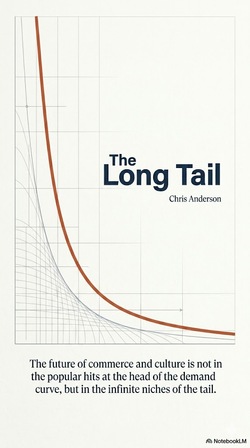
In *The Long Tail Theory*, Chris Anderson unpacks how digital technology has dismantled the old blockbuster-centric business model. For decades, physical limits—limited shelf space, geographic barriers, and high distribution costs—trapped retailers in a cycle of prioritizing mainstream hits, leaving countless niche consumer demands unfulfilled. Anderson uses relatable, real-world examples to illustrate his point: the stunning comeback of Joe Simpson’s *Touching the Void*, driven by Amazon’s algorithmic recommendations and user reviews; Rhapsody’s music data showing niche tracks make up nearly 40% of its monthly downloads; and Alibris’s revival of the stagnant used book market by aggregating scattered inventory from small shops. He breaks down the three core forces powering the long tail: democratized content creation via personal computers, low-cost digital distribution, and optimized supply-demand matching through algorithms and collective intelligence. This theory proves that when enough niche products are aggregated, their combined market share rivals or even outpaces blockbusters, unlocking untapped revenue streams and reshaping how we consume and create content.

The Innovator’s Solution summary and key insights by Clayton M. Christensen;Michael E. Raynor
Loading…

The Innovator’s Solution

Clayton M. Christensen;Michael E. Raynor

4.4709 learners

For leaders trapped in the cycle of stagnant corporate growth, *The Innovator’s Solution* is a data-driven playbook for unlocking sustainable, disruptive success. Drawing on decades of research into hundreds of Fortune 500 wins and failures, Clayton M. Christensen and Michael E. Raynor debunk the myth that innovation is random, revealing predictable patterns that explain why 95% of top firms stall—and how to break free. The book argues growth struggles stem not from poor management, but from rigid internal processes and values that filter out game-changing ideas. It lays out actionable frameworks: the RPV (Resources, Processes, Values) model to assess organizational capability, two core disruptive strategies (new-market and low-end disruption), guidance on balancing deliberate vs. emergent strategic processes, and clarity on "good money" (patient for growth, urgent for profit) vs. "bad money" (pressured for quick scale). Whether leading a mature firm escaping stagnation or a startup challenging industry giants, this book turns abstract innovation theory into a step-by-step guide to outcompete and grow.

Single Point Breakthrough summary and key insights by Zhang Benwei;Zhao Xin;Yang Yanhua
Loading…

Single Point Breakthrough

Zhang Benwei;Zhao Xin;Yang Yanhua

3.61265 learners

For early-stage founders navigating the brutal startup landscape, *Single Point Breakthrough* is a no-nonsense playbook for cutting through chaos and building sustainable success. Rooted in real-world case studies—from Lockin China’s hyper-targeted hiring to AKB48’s niche-to-mass growth—this book breaks down the core principle of focusing on one high-impact area to dominate your niche before industry giants move in. It walks you through actionable strategies: building dynamic customer tag systems to pinpoint your audience, turning non-rigid demands into profitable opportunities, mastering low-cost customer acquisition via private outreach, content broadcasting, and social sharing, and using closed-loop iteration to refine your product fast. You’ll also learn how to spot trillion-dollar market windfalls, build unbeatable competitive barriers, assemble a high-performing team with smart equity design, and apply lean startup methodologies to minimize risk. Whether you’re a first-time founder or scaling a small venture, this guide turns vague startup ideas into concrete, executable plans that maximize your odds of survival and growth.

The Baillie Gifford Way summary and key insights by Li Zheng;Han Shenghai
Loading…

The Baillie Gifford Way

Li Zheng;Han Shenghai

3.5435 learners

For over 110 years, Baillie Gifford has defied market chaos—surviving the Great Depression, world wars, and tech bubbles—to become a $300B+ global asset management leader. This book breaks down the firm’s secret sauce: a relentless focus on long-term growth investing, not quarterly gains. Led by legends like James Anderson, Baillie Gifford bet early on Amazon, Tesla, Tencent, and other transformative companies, outperforming Berkshire Hathaway and the Nasdaq over two decades. You’ll dive into their unique playbook: from the 'Due Diligence 10 Questions' that spot high-growth firms to partnerships with academic institutions like the Santa Fe Institute, which shape their understanding of complex economic systems. The book also explores their patient capital model, ESG integration, and strategic bets on tech disruption (AI, EVs) and the Chinese market. Even as rates rise and geopolitics shift, Baillie Gifford’s commitment to decades-long thinking offers a blueprint for successful investing in uncertain times.

Yu Jun's Product Methodology summary and key insights by Yu Jun
Loading…

Yu Jun's Product Methodology

Yu Jun

3.71025 learners

Yu Jun’s Product Methodology demystifies the evolving role of product managers (PMs) from its origins as Procter & Gamble’s brand-focused role to the data-driven, user-centric demands of the internet era. This comprehensive guide breaks down core frameworks defining successful PM work: mastering user models to predict behavior, designing sustainable transaction models for mutual value exchange, and applying rational decision-making strategies (data, logic, subjective judgment) to navigate trade-offs. It also addresses critical topics like balancing user and business value, reducing transaction costs, and navigating unique internet product iteration challenges. For aspiring and seasoned PMs alike, the book offers actionable career progression insights—from identifying high-potential candidates to overcoming mid-career bottlenecks—emphasizing that great PMs are shaped by practice, empathy, and deep understanding of economic and psychological principles.

Self-Breakthrough summary and key insights by Shi Yigong
Loading…

Self-Breakthrough

Shi Yigong

3.5948 learners

Self-Breakthrough takes readers on a deeply personal journey from Shi Yigong’s humble rural childhood in central China—where he learned resilience from his father and tight-knit village community—to his transformative years as a struggling international student in the U.S., working long hours in Chinese restaurants to make ends meet. The book traces his rise to become a leading structural biologist at Princeton, then his bold decision to resign from a tenured position to return to Tsinghua University, where he spearheaded sweeping reforms in education and research. It also chronicles his founding of Westlake University, a groundbreaking private research institution aimed at nurturing China’s next generation of scientific leaders. Along the way, Shi shares hard-won insights on academic integrity, critical thinking, and balancing personal ambition with a commitment to serving one’s country, offering a vivid portrait of self-growth and purpose-driven leadership.

Everything is a Contract summary and key insights by Nie Huihua
Loading…

Everything is a Contract

Nie Huihua

3.81306 learners

"Everything is a Contract" redefines how we navigate the world by framing every economic and social relationship as a contract—from job offers and corporate mergers to marriages and government regulations. Drawing on relatable real-world examples, from Tesla’s CEO compensation structure to Haidilao’s failed KPI experiments and Geely’s successful Volvo acquisition, this book breaks down core contract theory concepts like information asymmetry, incentive compatibility, and moral hazard. It explains why cash rewards sometimes kill intrinsic motivation, how to fix unfair performance ratcheting in the workplace, and why most corporate mergers fall apart. Whether you’re navigating office politics, running a business, or managing personal relationships, this book provides a rational decision-making framework to cut through complexity and make smarter choices aligned with your goals.

Think Like a Horse summary and key insights by Grant Golliher
Loading…

Think Like a Horse

Grant Golliher

3.3517 learners

In Think Like a Horse, Grant Golliher draws on decades of horse training experience to reveal timeless lessons for human relationships, leadership, and personal healing. Through vivid stories—from taming the fearful wild horse Wildfire to guiding the traumatized cowboy Jeremy toward recovery, and partnering with the 'Heroes and Horses' program to heal veterans—Golliher unpacks core principles: making the right choice easy and the wrong choice hard, building trust through respect and boundaries, embracing failure as a learning tool, and seeing others (and ourselves) through the honest lens of a horse. These lessons aren’t just for equestrians; CEOs, parents, and anyone seeking deeper connections will learn to lead with empathy, confront hidden traumas, and foster authentic bonds rooted in humility and integrity.

The Water of Canglang summary and key insights by Yan Zhen
Loading…

The Water of Canglang

Yan Zhen

2.61122 learners

Chi Dawei, a promising graduate from Beijing University of Chinese Medicine, inherits his father’s legacy as a disgraced former doctor who clung to traditional scholar ethics. Fueled by youthful idealism, he dreams of reforming public health, but his entry into a provincial health bureau shatters his naive beliefs. Navigating cutthroat office politics, clashing with opportunistic colleagues like Ding Xiaohuai, and grappling with a failed relationship with Xu Xiaoman, Chi finds his principles tested at every turn. When family pressures—his son’s limited access to elite education, cramped living conditions, and medical emergencies—mount, he’s forced to abandon lofty ideals to survive. Climbing the bureaucratic ladder, he confronts the moral compromises of power, yet retains a flicker of his father’s integrity. This raw, unflinching novel tracks one man’s journey from principled idealist to seasoned bureaucrat, exploring the tension between personal dignity, survival, and the quiet struggle to keep one’s soul intact in a world driven by power and pragmatism.

Nickel and Dimed summary and key insights by Barbara Ehrenreich
Loading…

Nickel and Dimed

Barbara Ehrenreich

4.4906 learners

In *Nickel and Dimed*, journalist Barbara Ehrenreich leaves her middle-class life behind to go undercover as a low-wage worker, taking jobs as a waitress, house cleaner, and Walmart associate across three U.S. cities. Earning just $7 to $8 an hour, she quickly discovers that even full-time, backbreaking labor isn’t enough to cover basic needs like rent, food, and healthcare. She navigates predatory housing markets where a month’s rent eats up most of her paycheck, endures demeaning management tactics, and witnesses how coworkers rely on food banks, skip medical care, and work multiple jobs just to survive. Ehrenreich’s eye-opening experiment dismantles the myth that hard work alone lifts people out of poverty, exposing a broken economic system where millions of working Americans are trapped in cycles of insecurity and exploitation. Her raw, firsthand account forces readers to confront the hidden crisis of working poverty in the U.S.