Philosophy Book Summaries & Key Insights

Philosophy Total 127 books

Shorter Logic summary and key insights by G. W. F. Hegel
Loading…

Shorter Logic

G. W. F. Hegel

4.3879 learners

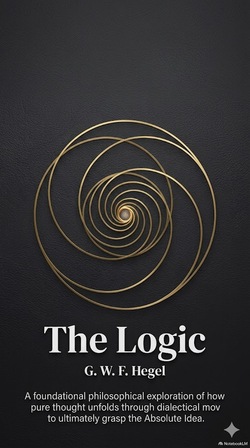
This condensed edition of G.W.F. Hegel’s foundational Logic distills his complex dialectical system for both new readers and seasoned philosophers. It opens by framing philosophy as a unique discipline—distinct from science and religion—that examines reality through rigorous conceptual thought, not surface perceptions or untested assumptions. Hegel critiques outdated metaphysics, Kant’s critical philosophy, and theories of immediate knowledge, while laying out his core maxim: what is rational is real, and what is real is rational. The text guides readers through the dialectical evolution of logical categories, starting from the abstract "pure being" and moving through essence, concept, and finally the absolute idea, the culmination of universal truth. It explores how contradiction drives all change, how finite concepts evolve into true infinity, and why logic is not just a formal tool but the key to grasping absolute, concrete truth—one that unifies opposing ideas rather than treating them as isolated abstractions.
A Short History of Chinese Philosophy summary and key insights by Fung Yu-lan
Loading…

A Short History of Chinese Philosophy

Fung Yu-lan

4.31027 learners

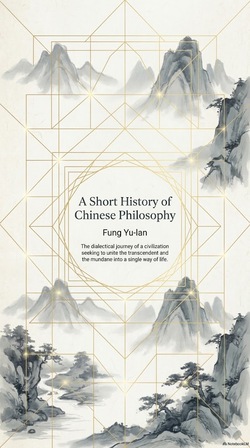
A classic introduction to Chinese philosophy for Western readers, Fung Yu-lan’s *A Short History of Chinese Philosophy* traces the evolution of Chinese thought from the pre-Qin Hundred Schools of Thought to modern Neo-Confucianism. Unlike Western traditions where religion dominates spiritual life, Chinese philosophy has long served as the core of cultural and moral education, emphasizing the harmony between inner transcendence and worldly engagement—epitomized by the ideal of 'Inner Sage, Outer King.' The book unpacks key schools: Confucianism’s focus on social ethics and benevolence, Taoism’s embrace of natural harmony and wu wei, Buddhism’s Chinese transformation into Zen, and Legalism’s pragmatic statecraft. It also explores how China’s agrarian roots shaped its philosophical methodologies, contrasting them with Western deductive reasoning, and highlights timeless insights that offer solutions to modern struggles with balancing personal fulfillment and social responsibility.

A Theory of Justice summary and key insights by John Rawls
Loading…

A Theory of Justice

John Rawls

4.41007 learners

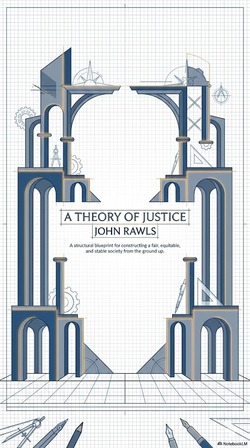
John Rawls’ *A Theory of Justice* redefines social justice through a groundbreaking contractarian framework, positing that fair principles of justice would be chosen by rational, free individuals in an 'original position'—a hypothetical state shielded by a 'veil of ignorance' that erases personal status, wealth, or talents. Rawls argues these individuals would select two core principles: first, the Equal Liberty Principle, guaranteeing all citizens the broadest possible set of basic freedoms compatible with others’ freedoms; second, the Difference Principle, which permits social and economic inequalities only if they benefit the least advantaged members of society, paired with fair equality of opportunity. Contrasting sharply with utilitarianism’s focus on maximizing total welfare, Rawls prioritizes individual rights over collective good, emphasizing that justice is the 'first virtue' of social institutions. This landmark work provides a rigorous, egalitarian blueprint for structuring just societies, influencing debates in philosophy, politics, and economics for decades.

A Treatise of Human Nature summary and key insights by David Hume
Loading…

A Treatise of Human Nature

David Hume

4.4780 learners

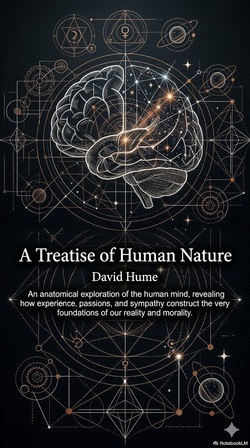
David Hume’s *A Treatise of Human Nature* is a landmark empirical philosophy work that upends traditional views of human cognition, emotion, and morality. Starting with a rigorous breakdown of perception—distinguishing vivid "impressions" (sensory experiences, raw emotions) from faint "ideas" (mental reflections)—Hume argues all simple ideas originate from corresponding impressions, rejecting innate knowledge claims. He redefines causality not as an objective law, but as a mental habit forged by repeated event associations. For emotions, he explains pride, humility, love, and hate through dual links of ideas and shared impressions. Finally, Hume anchors morality in sentiment rather than reason: moral judgments stem from feelings of pleasure or pain, shaped by humanity’s innate capacity for sympathy. Alongside this, he explores skepticism about rational certainty, challenging reason’s supposed primacy in human life and laying groundwork for modern empirical psychology and ethics.

Ethics summary and key insights by Baruch de Spinoza
Loading…

Ethics

Baruch de Spinoza

4.7552 learners

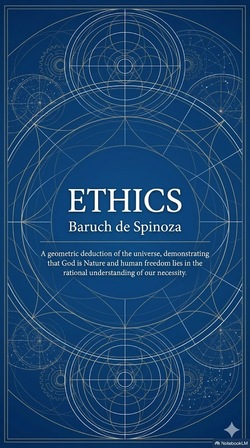
Baruch Spinoza’s *Ethics* redefines philosophical thought through a strict, geometry-inspired deductive framework to explore reality, humanity, and flourishing. Starting with core definitions—substance, God, attribute, mode—Spinoza argues God is the only infinite, self-caused substance, with all existing things being mere expressions (modes) of God’s infinite attributes. He unpacks the mind-body relationship as two perspectives of the same entity, outlines three tiers of human knowledge (empirical, rational, intuitive), and dissects emotions, separating passive passions from active, reason-driven states. The work concludes with a blueprint for freedom: by cultivating clear rational understanding and embracing the intellectual love of God, individuals can transcend emotional bondage, find inner tranquility, and attain eternal happiness rooted in recognizing their place within nature’s deterministic order.

What Does It All Mean? summary and key insights by Thomas Nagel
Loading…

What Does It All Mean?

Thomas Nagel

4.1871 learners

Thomas Nagel’s *What Does It All Mean?* is a concise, accessible introduction to philosophy tailored for readers with no prior background in the field. Ditching dense jargon, Nagel guides readers through six foundational, mind-bending questions that cut to the core of human existence: How can we confirm the external world isn’t just a figment of our minds? Do other people have conscious experiences like our own? What’s the relationship between the mind and the brain? How do words gain their meaning? Do we truly have free will, or are our actions predetermined? And what does moral responsibility mean if our choices aren’t fully our own? Instead of handing down definitive answers, Nagel sparks critical thinking, inviting readers to grapple with these timeless puzzles using relatable examples—from tasting chocolate to choosing dessert. He makes complex philosophical ideas approachable, fostering curiosity about the big questions that shape our understanding of reality, self, and others.

The Social Contract summary and key insights by Jean-Jacques Rousseau
Loading…

The Social Contract

Jean-Jacques Rousseau

4.4871 learners

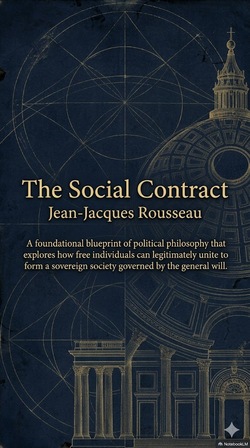
Jean-Jacques Rousseau’s *The Social Contract* redefines the foundations of legitimate political authority by rejecting the idea that power stems from force or divine right. Starting from the iconic premise that “man is born free, and everywhere he is in chains,” Rousseau explores how people can escape the chaos of the natural state by forming a collective through a voluntary social contract. This agreement requires individuals to surrender unrestricted natural freedom to the community, in exchange for protected civil freedom and moral freedom—the ability to act rationally and autonomously under self-imposed laws. Central to his theory is the “general will,” the collective desire for the common good that guides the sovereign (the people as a whole). Rousseau critiques thinkers like Grotius and Hobbes for justifying tyranny, outlines ideal contexts for democracy, aristocracy, and monarchy, and emphasizes that sovereignty is inalienable and must be exercised directly by citizens. A cornerstone of modern political philosophy, this work lays out the principles for a free, equal, and just civil society.

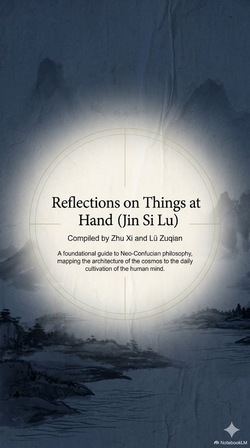
Reflections on Things at Hand summary and key insights by Zhu Xi;Lü Zuqian
Loading…

Reflections on Things at Hand

Zhu Xi;Lü Zuqian

4.2905 learners

Co-authored by Zhu Xi and Lu Zuqian, *Reflections on Things at Hand* is a foundational collection of Neo-Confucian teachings, curated from the writings of Northern Song thinkers like the Cheng Brothers and Zhang Zai. Far from a dry academic text, it distills practical, timeless wisdom for self-cultivation, scholarly practice, and ethical daily living. Perfect for readers seeking cross-cultural insights to navigate modern challenges—whether it’s building self-discipline, fostering meaningful relationships, or making thoughtful decisions—this book bridges ancient Chinese philosophy and contemporary life. Each entry offers concise, actionable guidance, making complex Neo-Confucian ideas accessible to anyone curious about ethical growth or looking to enrich their approach to work, family, and personal development.

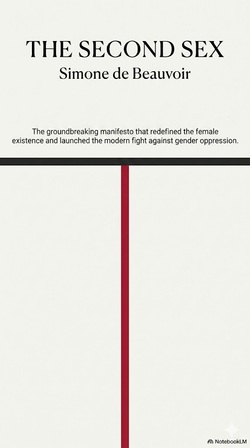
The Second Sex summary and key insights by Simone de Beauvoir
Loading…

The Second Sex

Simone de Beauvoir

4.3876 learners

Simone de Beauvoir’s groundbreaking 1949 work *The Second Sex* upends the myth that women are “naturally” subordinate to men. Drawing on biology, history, psychology, and existential philosophy, de Beauvoir argues that “one is not born, but rather becomes, a woman”—gendered roles and the label of “the Other” are imposed by patriarchal societies, not innate traits. She traces how women have been reduced to reproductive tools, confined to domestic labor, and denied access to political, economic, and creative freedom across centuries. From ancient matriarchies to 20th-century feminist movements, de Beauvoir dissects the contradictions of male attitudes toward women—simultaneously idealizing and fearing them—and explores the psychological toll of societal conditioning on girls, wives, and mothers. More than a critique, this landmark text calls for women to claim their autonomy, reject passive “feminine” stereotypes, and forge equal, mutually respectful relationships with men. It remains a foundational voice in feminist theory, challenging readers to rethink the very fabric of gender inequality.

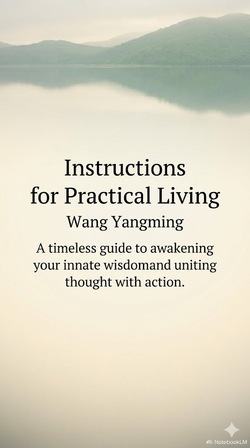
Instructions for Practical Living summary and key insights by Wang Yangming
Loading…

Instructions for Practical Living

Wang Yangming

4.2989 learners

Instructions for Practical Living (Chuan Xi Lu) is the definitive collection of Wang Yangming’s transformative Neo-Confucian teachings, drawn from decades of dialogues with his disciples. Rejecting the rigid, text-focused scholarship of his era, Wang argues that moral truth isn’t found in external books or objects—it lives inherently in every person’s heart, a concept he calls 'Mind as Principle.' His core doctrines include the 'Unity of Knowledge and Action' (true knowledge demands immediate, consistent action) and 'Extend Innate Conscience' (Liangzhi), the practice of nurturing and following one’s innate moral intuition to guide daily choices. Through relatable anecdotes and sharp critiques, he teaches that self-cultivation happens not in isolated meditation but in everyday moments: resolving family conflicts, managing official duties, or even tending to garden weeds. He emphasizes that anyone can become a virtuous sage by tending to their inner conscience, not chasing external achievements, making his teachings accessible to all seeking purpose and ethical clarity in daily life.

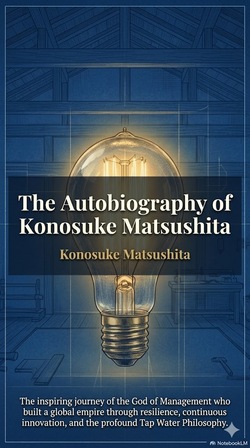
My Way of Life and Thinking summary and key insights by Konosuke Matsushita
Loading…

My Way of Life and Thinking

Konosuke Matsushita

4.11168 learners

Konosuke Matsushita, the visionary behind Panasonic, pulls back the curtain on his rags-to-riches journey and timeless business wisdom in *My Way of Life and Thinking*. Born into a struggling Japanese farming family, he left home at 9 to work as an apprentice—polishing firepots, fixing bicycles, and learning hard lessons in grit and customer care. After a failed early attempt at making light sockets, he founded Panasonic in 1918, turning a tiny workshop into a global empire. This memoir details his iconic 'Tap Water Philosophy' (making essential goods affordable for all), his refusal to lay off employees during the Great Depression, navigating wartime production shifts, and leading Panasonic’s post-WWII revival and global expansion. Beyond business, Matsushita shares his thoughts on leadership, employee trust, and corporate social responsibility, including his creation of the PHP Institute to foster peace and prosperity. It’s a raw, inspiring account of how resilience, integrity, and a focus on serving others can turn adversity into success.

X Thinking: Building Better Brands in the Age of Experience summary and key insights by Jason Huang;Michael T. Lai
Loading…

X Thinking: Building Better Brands in the Age of Experience

Jason Huang;Michael T. Lai

3.3913 learners

Experience Thinking presents a transformative framework for thriving in the experience economy, redefining business innovation around three core pillars: people, value, and sustainability. Drawing on real-world case studies from brands like Xiaomi, Starbucks, and Luckin Coffee, the book explores how shifting consumer expectations—from functional needs to emotional resonance and co-creation—are reshaping industries. It contrasts traditional models like positioning theory and design thinking with a holistic experience approach, emphasizing the transition from transactional relationships to symbiotic ecosystems. The book also delves into digital transformation’s three phases, the rise of social commerce, and strategies for engaging Gen Z consumers. Packed with actionable insights, it guides businesses to prioritize user-centric experiences, leverage data for personalized services, and build long-term, mutually beneficial connections with customers. Whether you’re a marketer, entrepreneur, or business leader, this book provides the tools to thrive in an era where experience is the ultimate competitive advantage.

Structural Thinking summary and key insights by Li Zhongqiu
Loading…

Structural Thinking

Li Zhongqiu

3.21233 learners

Structural Thinking is an essential core skill for every professional, acting as the foundational "basic training" for navigating workplace tasks—from problem-solving and decision-making to writing reports and verbal communication. This book breaks down the core of structural thinking: the "top-down, then bottom-up" approach, and introduces practical tools like the Pyramid Structure (rooted in Barbara Minto’s work) and the MECE Principle to streamline thinking and communication. It walks readers through a 5-step actionable framework: establishing core concepts, defining goal-aligned themes, building vertical hierarchies, choosing horizontal logical orders, and crafting visual presentations. Packed with real workplace scenarios and hands-on exercises, it not only helps individuals fix messy reports, boost communication efficiency, and advance their careers but also shows how teams can unify thinking standards to cut internal communication costs. For organizations, it bridges the gap between traditional "bottom-up" communication habits and fast-paced business needs, making it a must-read for anyone looking to think more clearly and communicate more persuasively.

Zero Second Thinking summary and key insights by Yuji Akaba
Loading…

Zero Second Thinking

Yuji Akaba

3.2550 learners

Tired of overthinking, messy mental clutter, and delayed decisions that drain your productivity? Yuji Akaba’s *Zero Second Thinking* introduces a game-changing, no-fuss A4 note-taking method designed to unlock your brain’s natural speed and clarity. Perfect for busy professionals stuck in endless unproductive meetings or anyone overwhelmed by scattered thoughts, this method teaches you to jot down every idea, worry, or frustration the second it pops up—no filtering, no over-editing. Each note takes just 1 minute: a clear topic at the top, 4-6 lines of raw, unpolished text. Over time, this daily practice trains your brain to cut through chaos, organize ideas instantly, and make confident decisions in zero seconds. You’ll notice sharper communication, reduced stress, faster problem-solving, and tangible career growth as you stop second-guessing and start acting. Packed with actionable steps, relatable workplace examples, and tips to adapt the method to daily life, this book turns mental stagnation into sharp, efficient thinking that works for you.

The Hitchhiker's Guide to the Galaxy summary and key insights by Douglas Adams
Loading…

The Hitchhiker's Guide to the Galaxy

Douglas Adams

4.51165 learners

When Arthur Dent’s house is marked for demolition to build a bypass, his best friend Ford Prefect drops a bombshell: Earth is about to be destroyed by Vogons to make way for an intergalactic highway. Whisked away just in time, Arthur becomes an accidental cosmic hitchhiker, teaming up with Ford, the two-headed ex-Galactic President Zaphod Beeblebrox, sharp-witted Trillian, and Marvin, the perpetually depressed paranoid android. Their absurd, chaotic journey uncovers mind-bending secrets: Earth was a supercomputer built by hyper-intelligent mice to calculate the Ultimate Question to life, the universe, and everything—only to be destroyed moments before completion. The answer? 42. Packed with dry humor, surreal twists, and iconic one-liners, this cult classic turns existential questions into a hilarious, unforgettable adventure through the cosmos.

Addicted to Thinking summary and key insights by Takashi Saito
Loading…

Addicted to Thinking

Takashi Saito

2.2623 learners

From his 15 years as a lead producer for NHK’s educational programs to his decades of teaching, Takashi Saito knows the critical difference between mindless rumination and productive thinking. In *Addicted to Thinking*, he breaks down how many people confuse worrying or vague “daydreaming” with focused, output-driven work—especially vital in an AI-dominated world where routine jobs are fading fast. Saito walks readers through actionable steps to build a sustainable thinking habit: rejecting mindless tasks, defining clear thinking goals, and keeping a physical thinking journal. He also shares advanced strategies to elevate your thinking, like debating with a creative partner, practicing self-dialogue, and using comparison and recombination to spark innovation. Beyond practical skills, he explores how true thinking addiction triggers beta-endorphin releases, bringing lasting joy and fulfillment, and profiles iconic figures like Balzac and Hideyoshi Toyotomi who turned relentless thinking into extraordinary success.

The World as Reference Answers summary and key insights by Liu Qing;Yan Fei
Loading…

The World as Reference Answers

Liu Qing;Yan Fei

3.3546 learners

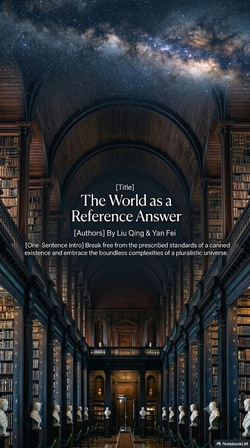
From the shores of Walden Pond to Harvard’s hallowed halls, scholars Liu Qing and Yan Fei engage in intimate, thought-provoking dialogues during their year as visiting fellows at the Harvard-Yenching Institute. Drawing on personal reflections, classic works like *Walden* and *The World of Yesterday*, and cutting-edge social theory, they unpack the quiet crises of modern life: the suffocating grip of hustle culture, the erosion of humanistic education, the persistent ache of nostalgia in a rapidly changing world, and the struggle to confront pain instead of avoiding it. They also tackle urgent public issues, from anti-intellectualism’s rise to the moral duty of scholars in public discourse. More than academic debates, these conversations offer actionable wisdom for anyone feeling adrift in chaos—teaching readers to find meaning in daily moments, rebuild genuine human connections, and reclaim their sense of purpose amid modernity’s noise.

Liao-Fan's Four Lessons summary and key insights by Yuan Liaofan
Loading…

Liao-Fan's Four Lessons

Yuan Liaofan

4.6591 learners

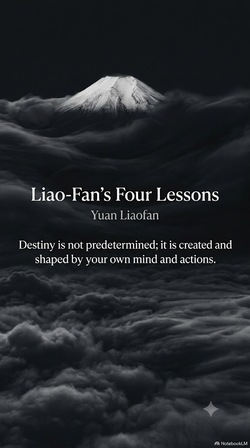
Meet Yuan Liaofan, a scholar who once accepted his life was entirely preordained—until a chance encounter with Zen Master Cloud Valley changed everything. For years, a fortune-teller’s predictions about his career, childlessness, and early death had come true, leaving him resigned to his fate. But the master revealed that destiny isn’t fixed: by amending one’s faults, accumulating hidden virtues (yin de), and living with humility, anyone can rewrite their future. Inspired, Liaofan vowed to perform 3,000 good deeds, kept a strict merit journal, and embraced self-reflection. Over time, he defied the fortune-teller: he fathered a son, achieved unexpected career success, and lived far beyond his predicted lifespan. *Liao-Fan's Four Lessons* is his timeless letter to his son, blending Confucian ethics, Buddhist karma, and practical wisdom to teach readers how to take control of their lives, cultivate virtue, and attract lasting good fortune.

The Operational Logic of Grassroots China summary and key insights by Nie Huihua
Loading…

The Operational Logic of Grassroots China

Nie Huihua

31088 learners

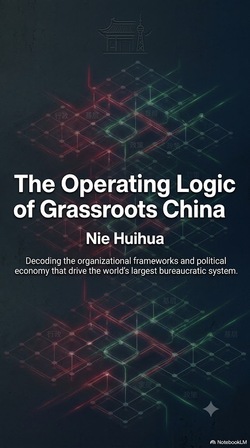
Drawing on on-the-ground research and decades of historical context, *The Operational Logic of Grassroots China* pulls back the curtain on the hidden mechanics of China’s local governance system. From the 'tiao-kuai' (vertical vs. horizontal) power dynamics between central and local governments to the intricate hierarchy of cadre ranks and promotion rules, this book breaks down how policies are crafted, implemented, and adapted at the grassroots level. It uses real-world anecdotes—like a small-town mayor stuck between conflicting bureaucratic demands, or Kunshan’s innovative path to becoming a national development zone—to illustrate trade-offs between central control and local autonomy. It also dives into pressing economic challenges: the rise and fall of land finance, the risks of local government debt, and how e-commerce revives shrinking counties. For anyone seeking to understand how China’s 1.4 billion people are governed, this book offers a clear, accessible guide to the rules, incentives, and tensions shaping daily governance.

Hard-Boiled Wonderland and the End of the World summary and key insights by Haruki Murakami
Loading…

Hard-Boiled Wonderland and the End of the World

Haruki Murakami

4.51222 learners

Haruki Murakami’s *Hard-Boiled Wonderland and the End of the World* weaves a mesmerizing dual narrative that blurs the line between reality and the subconscious. In the gritty, neon-drenched streets of Tokyo’s “Hard-Boiled Wonderland,” a freelance “calculator” is drawn into a dangerous conspiracy involving a rogue scientist’s mind-altering experiments, shadowy “Symbolists,” and subterranean “Night Crawlers.” As he uncovers the truth—his own consciousness is tethered to a parallel realm—we follow his other self in “The End of the World,” a walled, eerily utopian town where he lives without a shadow, working as a “Dream Reader” who unlocks memories stored in animal skulls. As the two worlds collide, he faces an impossible choice: return to the chaotic, lived reality of Tokyo, or embrace the quiet, constructed peace of the town, where love and belonging await. Blending existential philosophy, cyberpunk thrills, and Murakami’s signature whimsical melancholy, the novel explores identity, the cost of escape, and the fragile boundary between self and imagination.