Toyota Production System
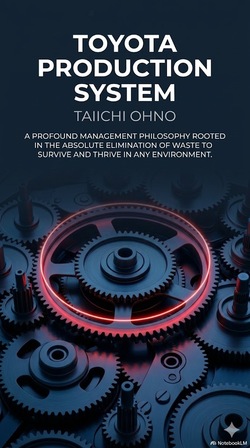
Born from Toyota’s relentless drive to close the post-WWII manufacturing gap with the U.S., the Toyota Production System (TPS) emerged as a game-changing framework that redefined efficiency—especially after proving its resilience during the 1973 oil crisis, when Toyota outperformed competitors amid Japan’s economic stagnation. Unlike Ford’s mass-production model built for large, uniform batches, TPS centers on eliminating all forms of waste, anchored by two core pillars: Just-in-Time (JIT), where parts arrive exactly when needed to avoid excess inventory, and Jidoka, "smart automation" that stops machines at the first sign of error to prevent defects. Taiichi Ohno breaks down how tools like kanban (visual production cards), the 5 Whys problem-solving method, and heijunka (leveled production) transform factory floors into flexible, customer-aligned systems. Designed for Japan’s small-batch, high-variety market, TPS isn’t just a manufacturing process; it’s a continuous-improvement mindset, making it indispensable for businesses navigating slow-growth economies.