History Book Summaries & Key Insights

History Total 180 books

The Great Transformation summary and key insights by Karl Polanyi
Loading…

The Great Transformation

Karl Polanyi

4.41205 learners

In Karl Polanyi’s landmark work *The Great Transformation*, we explore the rise and catastrophic collapse of 19th-century Western civilization, anchored by four interconnected institutions: the balance-of-power system, international gold standard, self-regulating market, and liberal state. At the core of this structure was the gold standard, whose collapse triggered the chaos of the early 20th century. Polanyi dismantles the myth of the self-regulating market: treating labor, land, and money as "fictitious commodities"—not produced for sale—destroys human community bonds and natural ecosystems. As markets expanded unchecked, societies launched self-protective measures, from labor laws to tariffs, which undermined market autonomy, sparking a fatal conflict that shattered the 19th-century order. Polanyi traces how post-WWI attempts to revive the gold standard failed, giving rise to fascism and socialism as desperate responses to market failure. Blending history, sociology, and economics, this book challenges us to rethink the relationship between markets and human needs, offering urgent lessons for today’s global economy.
Modern Chinese History summary and key insights by Jiang Tingfu
Loading…

Modern Chinese History

Jiang Tingfu

3.9762 learners

Jiang Tingfu’s *Modern Chinese History* is a seminal, nuanced exploration of China’s tumultuous transition from a self-isolated imperial power to a nation grappling with modernity. Spanning from 19th-century Sino-British trade conflicts and the Opium War to the fall of the Qing Dynasty, the rise and collapse of the Taiping Rebellion, the failed Self-Strengthening Movement, and the early years of the Republic, this work rejects simplistic villain-hero narratives. Instead, it frames China’s struggles as clashes between a stagnant agrarian civilization and industrializing Western powers, highlighting systemic flaws in the Qing bureaucracy, military, and worldview. It also reevaluates controversial figures like Qi Shan, arguing his diplomatic choices stemmed from impossible odds rather than treachery. More than a chronicle of wars and treaties, this book unpacks missed opportunities and deep-seated barriers that shaped China’s painful journey toward modern nation-building.

The Big Short summary and key insights by Michael Lewis
Loading…

The Big Short

Michael Lewis

4.4928 learners

Michael Lewis’ *The Big Short* pulls back the curtain on the 2008 financial crisis, following a ragtag group of misfit investors who saw what Wall Street, regulators, and rating agencies refused to acknowledge: the U.S. subprime mortgage market was a ticking time bomb. From the socially awkward doctor-turned-investor Michael Burry, who first used credit default swaps (CDS) to bet against overvalued mortgage bonds, to the fiery Steve Eisman, who spent years exposing the industry’s systemic fraud, and the small-time Cornwall Capital team that turned a $30 million stake into $800 million, these outsiders navigated a rigged system to profit from the crash. Lewis lays bare the greed, corruption, and collective denial that fueled the bubble—from banks packaging toxic loans into AAA-rated CDOs to rating agencies rubber-stamping garbage assets—while capturing the hollow victory of those who won, even as ordinary Americans bore the brunt of the crisis.

What is Science summary and key insights by Wu Guosheng
Loading…

What is Science

Wu Guosheng

4.1568 learners

Wu Guosheng’s *What is Science* demystifies the often-muddled concept of science by bridging East-West perspectives and tracing its deep historical roots. It opens with how modern Chinese understandings of science—shaped by 19th-century quests for national survival and Western technological adoption—blur the line between science and practical technology, tying the term to national strength rather than its Western philosophical origins. The book then dives into Western science’s foundations: Greek rational science, a non-utilitarian pursuit of truth centered on deduction and free scholarship; its fusion with Christian theology during the Middle Ages, which laid groundwork for modern universities and rigorous scientific thought; and the shift to power-oriented, mathematical experimental science in the early modern era. It also highlights the overlooked natural history tradition, a parallel scientific path focused on observation, classification, and empirical documentation. Finally, it reexamines ancient Chinese natural knowledge, arguing that while China lacked Western-style rational science, it boasted a rich, holistic natural history tradition rooted in astronomy, geography, agriculture, and medicine. This eye-opening work challenges readers to move beyond narrow definitions and grasp science’s diverse cultural identities.

Aristocratic Politics of the Eastern Jin Dynasty summary and key insights by Tian Yuqing
Loading…

Aristocratic Politics of the Eastern Jin Dynasty

Tian Yuqing

4.41060 learners

Drawing on rigorous historical analysis, *Aristocratic Politics of the Eastern Jin Dynasty* by Tian Yuqing unpacks the unique power dynamics that shaped China’s Eastern Jin era (317–420 CE). Starting with the iconic "Wang and Sima ruling together" framework—where the elite Langya Wang clan shared authority with the imperial Sima family—the book traces the rise and fall of five dominant aristocratic clans: Langya Wang, Yingchuan Yu, Qiaoxian Huan, Chenjun Xie, and Taiyuan Wang. It examines pivotal events like Wang Dun’s rebellion, the Su Jun uprising, and the decisive Fei River Battle, revealing how elite families balanced power, controlled military forces (including the legendary Northern Garrison Army), and navigated tensions with the imperial court. Tian argues this "aristocratic co-rule" was a temporary deviation from traditional imperial governance, sustained by ethnic conflicts, imperial weakness, and inter-clan alliances. The book concludes with Liu Yu, a lower-elite military leader, who toppled the Eastern Jin and restored centralized rule, marking the end of a century of aristocratic dominance. A must-read for anyone interested in medieval Chinese political history.

One Hundred Years, Many People, Many Things summary and key insights by Yang Yi;Yu Bin
Loading…

One Hundred Years, Many People, Many Things

Yang Yi;Yu Bin

3.7505 learners

Yang Yi, a beloved Chinese translator and centenarian, invites readers into her extraordinary life in this intimate oral memoir. Born into a prominent aristocratic family in early 20th-century Tianjin, she recounts her sheltered yet constrained childhood, shaped by traditional family hierarchies and the shadow of her mother’s concubine status. Her journey takes a dramatic turn during the Sino-Japanese War, as she escapes her stifling home to study at the renowned Southwest Associated University in Kunming, where she befriends literary giants like Ba Jin and Shen Congwen, falls in love with fellow scholar Zhao Ruihong, and discovers her passion for translation. The memoir traces her post-war years in Chongqing and Nanjing, the joys and struggles of marriage and motherhood, and her later rise to fame for translating *Wuthering Heights* into Chinese. More than a personal story, it’s a vivid firsthand account of China’s turbulent 20th century, told with warmth, candor, and the sharp memory of a woman who lived through a century of change.

Seeing Like a State summary and key insights by James C. Scott
Loading…

Seeing Like a State

James C. Scott

4.3760 learners

In *Seeing Like a State*, James C. Scott exposes how modern states impose sweeping simplifications on complex natural and social systems to exert control. Drawing on vivid historical examples—from Prussia’s scientific forestry that reduced diverse ecosystems to timber-producing factories, to Soviet agricultural collectivization and Brazil’s Brasilia, a rigidly planned city that failed to serve real human needs—Scott reveals that these top-down, one-size-fits-all schemes often backfire catastrophically. While they boost short-term bureaucratic efficiency, they erase local practical knowledge (or 'metis')—the context-specific wisdom communities develop over generations to adapt to their environments. Scott argues that ignoring this on-the-ground expertise leads to ecological collapse, social unrest, and failed policies. In the end, he advocates for humble, adaptive governance that respects diversity, embraces uncertainty, and makes space for the flexible, problem-solving skills that keep societies and ecosystems resilient.

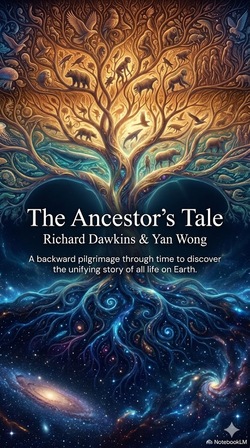
The Ancestor's Tale summary and key insights by Richard Dawkins;Yan Wong
Loading…

The Ancestor's Tale

Richard Dawkins;Yan Wong

4.2828 learners

Join Richard Dawkins and Yan Wong on a groundbreaking reverse evolutionary pilgrimage in the 10th-anniversary edition of *The Ancestor's Tale*. Starting from modern humans, we trace our lineage backward through time, pausing at "concestors"—the shared ancestors linking us to every other species on Earth. Updated with cutting-edge molecular genetic evidence, this edition refines evolutionary timelines, expands on horizontal gene transfer in early life, and replaces outdated stories with new discoveries like Denisovans. Using reverse chronology, the book dismantles human-centric biases, showing we’re just one branch on the vast tree of life. Enhanced with OneZoom’s fractal tree visualizations, it offers an immersive look at how all life connects, from primates and mammals to fish, microbes, and the very origins of genetic replication itself.

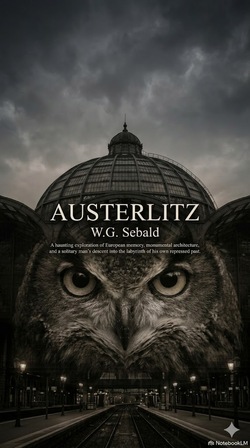
Austerlitz summary and key insights by W. G. Sebald
Loading…

Austerlitz

W. G. Sebald

4.5974 learners

Spanning decades of chance encounters, W.G. Sebald’s *Austerlitz* follows the quiet, obsessive journey of its eponymous protagonist, an art historian haunted by a fragmented past. What begins as meandering conversations about architecture—from Antwerp’s grand colonial-era train station to London’s labyrinthine subway systems—unfolds into a profound reckoning with identity. Austerlitz, raised in Wales by Calvinist missionaries, gradually uncovers his hidden origins: a Jewish boy sent to Britain on a Kindertransport during WWII, separated from his parents who perished under Nazi rule. Sebald weaves together architectural analysis, philosophical meditations on time, and raw, suppressed trauma, framing buildings as silent witnesses to history’s atrocities. The novel blurs the line between memory and reality, inviting readers to confront the lingering weight of unspoken grief and the ways the past infiltrates the present. More than a story of personal discovery, it’s a haunting exploration of how history is etched into the spaces we inhabit and the lives we lead.

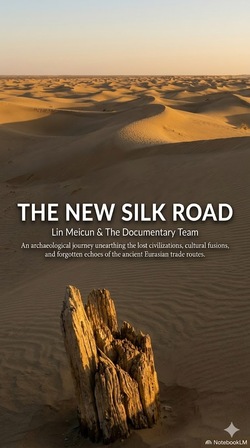
The New Silk Road summary and key insights by Lin Meicun
Loading…

The New Silk Road

Lin Meicun

3.31050 learners

Embark on a captivating journey along the ancient Silk Road through *The New Silk Road*, which brings to life the forgotten civilizations, cross-cultural fusions, and dramatic rise-and-fall stories of key nodes spanning from Chang’an, the bustling imperial capital, to the mysterious vanished city of Loulan. Drawing on decades of archaeological discoveries and historical research, each chapter dives into a unique site: explore Turpan’s religious melting pot where Zoroastrianism, Buddhism, and Manichaeism coexisted; uncover the profound impact of grassland nomadic peoples on global civilization; trace Kucha’s Buddhist legacy through the translations of Kumārajīva; and marvel at Hotan’s jade trade that linked the Kunlun Mountains to imperial courts. From Dunhuang’s priceless murals to Kashgar’s enduring role as a cultural crossroads, this book reveals the Silk Road was far more than a trade route—it was a dynamic artery where ideas, art, religions, and technologies flowed, shaping the world we know today.

Midnight's Children summary and key insights by Salman Rushdie
Loading…

Midnight's Children

Salman Rushdie

4.3446 learners

Salman Rushdie’s *Midnight’s Children* spins a mesmerizing magical realist narrative stitched to India’s chaotic birth as an independent nation. Born exactly at midnight on August 15, 1947, Salim Sinai’s fate is irrevocably tied to his country’s destiny—blessed with the ability to hear the thoughts of all children born in that fateful hour, yet cursed by a nurse’s vengeful act that swaps him with Shiva, a slum-born boy. As India navigates partition, brutal wars, and Indira Gandhi’s repressive Emergency rule, Salim’s journey spans privileged Mumbai estates, Pakistani exile, military service, and a prison where his gifted "midnight children" peers are stripped of their powers. Through his fragmented, vivid storytelling, Rushdie explores identity, belonging, and how a nation’s turmoil mirrors one man’s unraveling, eventual redemption, and quiet acceptance of his place in a messy, vibrant world.

Rewalking summary and key insights by Yang Xiao
Loading…

Rewalking

Yang Xiao

3.5952 learners

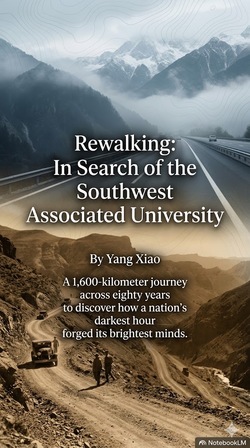
In 1938, as war devastated China, nearly 300 students and 11 professors from Changsha Temporary University formed the Xiangqian-Yunnan Travel Group, trekking over 990 miles (1,600 km) to Kunming in 68 days. This grueling journey launched the legendary Southwest Associated University (SWU), yet it’s often overshadowed by tales of its renowned scholars. More than a wartime evacuation, it was a defiant act of Chinese intellectuals grounding themselves in their land and people—trading lecture halls for muddy trails to rebuild connections amid national crisis. Eight decades later, author Yang Xiao retraces this path, pushing back against our screen-reliant, fragmented understanding of history. Along the way, he explores the wartime social fabric of southwest China, interacts with local communities, and breathes life into the 1938 journey: walking in the scholars’ footsteps, feeling their doubts and resolve, and reexamining his own bond with his country. He also shares the post-war fates of the travel group members, who carried SWU’s spirit of "perseverance and resilience" into their lifelong work. This isn’t just a historical account; it’s a modern quest to find meaning in a fast-paced world, linking past courage to present purpose.

The Proud Tower summary and key insights by Barbara W. Tuchman
Loading…

The Proud Tower

Barbara W. Tuchman

4.3601 learners

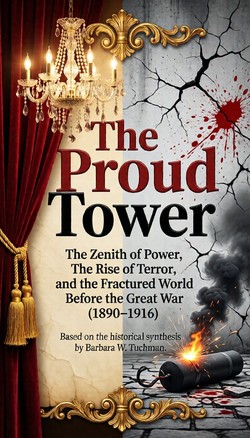
Barbara W. Tuchman’s *The Proud Tower* delivers a vivid, unflinching portrait of Europe and America on the brink of World War I—a world where glittering elites clung to fading traditions while radical movements, imperial ambitions, and simmering social tensions gnawed at the old order’s foundations. From Britain’s last aristocratic government led by Lord Salisbury to Alfred Mahan’s sea-power doctrine that propelled U.S. imperial expansion, from France’s divisive Dreyfus Affair to Germany’s feverish nationalism and militarism, Tuchman weaves together stories of power, idealism, and hubris. She explores the rise of anarchism, the fractured socialist movement that collapsed amid war fever, and the futile Hague Peace Conferences that failed to stem conflict. More than a historical account, it’s a cautionary tale of how complacency and division can topple even the most seemingly stable societies, leaving the proud tower of pre-war civilization in ruins.

Zeng Guofan's Family Letters summary and key insights by Zeng Guofan
Loading…

Zeng Guofan's Family Letters

Zeng Guofan

4.4903 learners

More than just personal correspondence, *Zeng Guofan's Family Letters* offers an intimate window into the life of one of the Qing Dynasty's most revered statesmen. Spanning decades, these letters cover every facet of Zeng's world: his struggles as a cash-strapped Beijing official, his grueling military campaigns against the Taiping Rebellion, and his unwavering guidance for his family on self-cultivation, academic pursuit, and household management. Zeng shares timeless wisdom—from the importance of frugality and humility to the value of persistence in learning and strategic caution in power. He emphasizes core principles like avoiding arrogance and laziness, adhering to the 'eight-character family motto' centered on scholarship and farming, and maintaining balance during times of success. For readers, these letters aren't just historical documents; they're a practical guide to navigating life, career, and family with integrity and foresight.

Women and Property in China (960—1949) summary and key insights by Kathryn Bernhardt
Loading…

Women and Property in China (960—1949)

Kathryn Bernhardt

4.4643 learners

Kathryn Bernhardt’s *Women and Property in China (960—1949)* delivers a rigorous, nuanced analysis of Chinese women’s property rights across nearly a millennium, from the Song Dynasty to Republican rule. The book unpacks pivotal academic debates—including clashes between Japanese scholars Niida Noboru and Shiga Shuzo over Song daughters’ inheritance claims, and Patricia Ebrey’s argument linking dowry trends to elite marriage strategies. Bernhardt critiques existing frameworks, clarifying that the myth of Song “half-share” inheritance stemmed from misinterpreted legal edicts, not widespread custom. She traces evolving rights for widows: from Song-era autonomy in choosing heirs to Ming’s mandatory nephew succession, and Qing’s judicial shifts favoring chaste widows. The work also examines early Republican legal upheaval, as the Dali Court redefined widows’ heir-selecting power, and the 1930 Civil Code’s promise of gender equality that clashed sharply with traditional family practices. Finally, it chronicles concubines’ shifting status: from Song-era marginalization to Qing’s limited legal protections, and Republican-era erasure that paradoxically granted new maternal inheritance rights. By bridging formal legal texts and on-the-ground judicial practice, Bernhardt reveals the persistent gap between law and social reality in shaping women’s access to property.

The Whisperers summary and key insights by Orlando Figes
Loading…

The Whisperers

Orlando Figes

4.7886 learners

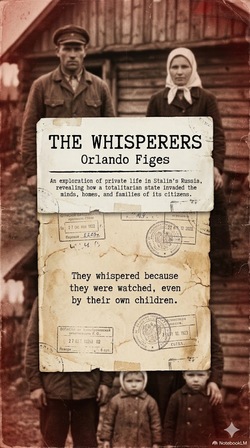
Orlando Figes’ *The Whisperers* delivers an intimate, unflinching portrait of ordinary Soviet families navigating the brutal tides of totalitarian rule, from the 1917 Bolshevik Revolution to the post-Stalin thaw. Drawing on personal diaries, letters, and oral histories, Figes centers stories like poet Konstantin Simonov’s tangled loyalty to the regime, peasant families destroyed by forced collectivization, and “enemies of the people” survivors grappling with lifelong trauma. The book exposes how Stalin’s regime infiltrated every corner of private life—eroding family bonds, fostering a culture of betrayal and whispered secrecy, and forcing individuals to choose between survival and conscience. It humanizes the grand, brutal history of the Soviet Union, revealing the quiet resilience, guilt, and longing that defined daily life for millions under oppressive rule.

The Shortest History of Europe summary and key insights by John Hirst
Loading…

The Shortest History of Europe

John Hirst

4.5503 learners

This concise, engaging history unpacks Europe’s chaotic, world-shaping journey from its three foundational roots—Greek-Roman intellectual legacy, Christian faith, and Germanic warrior culture—to the modern European Union. John Hirst traces how these clashing elements fused into the medieval world, then fractured through the Renaissance, Reformation, Scientific Revolution, and Enlightenment, sparking secularization, political upheaval, and the rise of democracy. He explores feudalism’s evolution into constitutional governance, the Industrial Revolution’s social divides, and the catastrophic world wars that reshaped the continent. Hirst highlights Europe’s unique power fragmentation as the secret to its innovation, while also confronting its dark legacy of nationalism and genocide. Perfect for readers seeking a clear, accessible overview, this book reveals how Europe’s messy, contradictory past created the global systems and ideas we live with today.

The Shadow of the Sun summary and key insights by Ryszard Kapuściński
Loading…

The Shadow of the Sun

Ryszard Kapuściński

4.5527 learners

For decades, Polish journalist Ryszard Kapuściński wandered across Africa, embedding himself in the continent’s rawest, most unfiltered moments—from Ghana’s triumphant independence to the horrors of the Rwandan genocide, from chaotic military coups to the quiet resilience of nomadic tribes. Rejecting Western stereotypes of a monolithic "Africa," he captures the continent’s dizzying diversity: the communal warmth of Ghanaian street life, the rigid clan rules of the Ashanti, the brutal legacy of colonial border-drawing, and the daily fight for survival amid famine, disease, and war. Through intimate encounters with leaders, rebels, and ordinary villagers, Kapuściński reveals Africa not as a land of despair, but as a place where ancient traditions clash with modern upheaval, where every hardship is met with unyielding spirit, and where the sun casts shadows holding untold stories of hope and suffering.

The Secret Readers of the GDR summary and key insights by Siegfried Lokatis;Ingrid Sonntag
Loading…

The Secret Readers of the GDR

Siegfried Lokatis;Ingrid Sonntag

4.21226 learners

In the repressive authoritarian era of East Germany, reading was often an act of quiet defiance. *The Secret Readers of the GDR* by Siegfried Lokatis uncovers the hidden world of citizens who risked fines, imprisonment, and surveillance to access banned Western literature, dissident works, and even pop culture magazines. From copying entire texts at the Leipzig Book Fair to smuggling volumes in cake tins or accessing restricted library "poison cabinets," the book details the ingenious, dangerous methods people used to bypass strict state censorship. It explores underground publishing circles, the conflicting roles of customs officials who were secret readers themselves, and how figures like George Orwell and Karl May became symbols of resistance. Beyond gripping personal stories, it examines how this secret reading culture shaped dissent, challenged authoritarian control, and offers timeless insights into the universal fight for free access to information.

The Scholar's Blueprint summary and key insights by Yan Gengwang
Loading…

The Scholar's Blueprint

Yan Gengwang

31083 learners

The Scholar's Blueprint is a practical, experience-driven guide to mastering historical research from veteran Chinese historian Yan Gengwang. Drawing on decades of hands-on work, Yan breaks down core principles for studying Chinese history: balancing deep specialization with broad, cross-disciplinary knowledge, avoiding overly narrow time constraints in dynastic studies, prioritizing holistic 'big picture' research over isolated topics, and mining fresh insights from common, widely available sources instead of chasing rare materials. He also shares actionable tips for academic writing—from choosing the right structure (like outline formats for dense research) to proper source citation and rigorous revision. Beyond technical skills, Yan emphasizes the personal discipline needed for long-term scholarly success: setting ambitious goals, maintaining consistent effort, and focusing on research over fame or power. The book also includes his own academic journey, reflections on towering figures like Qian Mu and Chen Yinque, and lessons from mentors, making it invaluable for aspiring historians and seasoned scholars alike.